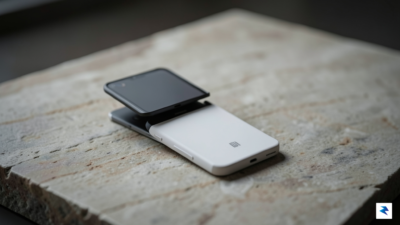
The Light Flip: Why Minimalism Is Making a Comeback
The Evolution of Minimalism: From Light Phone III to the Flip For years, the philosophy behind Light has been rooted in a singular,…

For years, Samsung has stood as the undisputed pioneer and market leader in the nascent foldable smartphone segment. Ever since the ambitious, albeit initially troubled, launch of the original Galaxy Fold, the company has consistently pushed the boundaries of mobile form factors, iterating and refining its clamshell Flip and tablet-esque Fold lines. This relentless pursuit of innovation has allowed Samsung to carve out a significant first-mover advantage, establishing a brand synonymous with foldable technology while other manufacturers cautiously observed from the sidelines. This dominance, built on engineering prowess and an unwavering belief in the foldable future, has positioned the company as the benchmark against which all other foldable devices are measured, cementing its legacy in modern mobile history.
However, the landscape is rapidly shifting. What was once a niche, experimental category has matured, shedding its novelty status and evolving into a legitimate, albeit still premium, segment of the smartphone market. This transition has inevitably attracted a wave of formidable competitors, each vying for a share of this burgeoning space. No longer is Samsung the sole proprietor of groundbreaking foldable designs; instead, it faces increasingly sophisticated offerings from rivals who have learned from its early trials and tribulations. The era of simply being “first” or “the only option” has decisively ended, ushering in a new phase where true differentiation and compelling value are paramount.
Consequently, the upcoming Galaxy Unpacked event isn’t just another product launch; it represents a pivotal crossroad that could define Samsung’s mobile future for years to come. The stakes have never been higher, particularly given the broader context of slowing global smartphone sales, which places immense pressure on growth segments like foldables to deliver substantial returns. Consumers and industry observers alike are not merely looking for incremental improvements; they demand significant leaps in technology, durability, and user experience. This event is being viewed as Samsung’s most important in years because it must not only maintain its market leadership but also unequivocally demonstrate that it remains at the forefront of innovation, capable of surprising and delighting a more discerning audience.
The challenge for Samsung now extends beyond simply perfecting the hinge or offering a slightly faster processor. The market has grown accustomed to the basic premise of a folding screen, and the wow factor has diminished. What is now crucial are advancements that address real-world user needs: enhanced durability against daily wear and tear, more intuitive and optimized software experiences that truly leverage the unique form factor, improved camera systems, and perhaps most critically, a compelling value proposition that justifies the premium price point. This means demonstrating a clear vision for how foldables integrate seamlessly into users’ lives, offering tangible benefits that traditional slab phones cannot match, pushing the boundaries of what a smartphone can truly be.
Ultimately, this Unpacked event is Samsung’s opportunity to reaffirm its commitment to innovation and solidify its position as the undisputed leader in a market it helped create. The company cannot afford to play it safe with minor tweaks. It must deliver a compelling narrative and groundbreaking products that resonate deeply with consumers, proving that its years of investment in foldables are not just about being first, but about consistently being the best. The mobile world is watching closely, eager to see if Samsung can once again set the pace and navigate this critical juncture with the bold vision required to secure its long-term success.
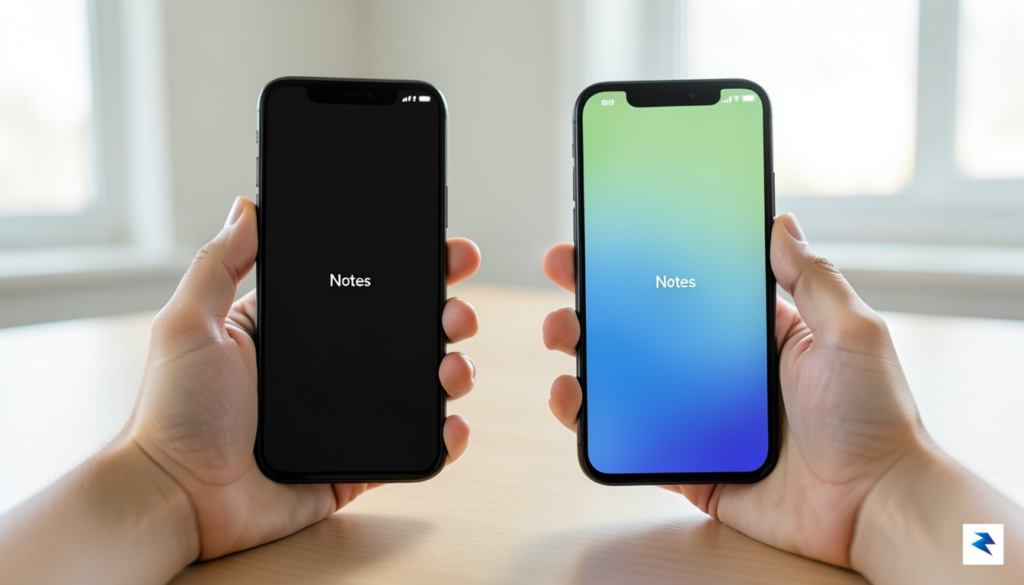
For years, the Galaxy Z Fold series has been defined by a tall, narrow outer display that felt more like a remote control than a smartphone. While this design choice was a necessary byproduct of early foldable engineering—intended to ensure the device felt comfortable in one hand—it has become the primary source of friction for power users. When typing on the front screen, the cramped keyboard layout frequently leads to input errors, and the resulting aspect ratio often forces apps to render in awkward, letterboxed configurations. This lack of screen real estate effectively relegates the cover display to a secondary status, forcing users to unfold the device for even the simplest tasks, which contradicts the goal of a seamless mobile experience.
Transitioning to a wider, shorter display profile is not merely an aesthetic preference; it is a fundamental shift in ergonomic utility. By widening the chassis, Samsung can provide a typing experience that mimics standard flagship devices, allowing for larger touch targets and a more natural finger reach. From a productivity standpoint, this adjustment is transformative. A wider cover screen allows for a more functional home screen layout, better notification management, and improved media consumption without the need to deploy the internal display. When the phone is closed, it should feel like a flagship smartphone first, and a foldable second, rather than a specialized device that demands constant unfolding to be useful.
Engineering such a shift is far from trivial, as it requires balancing structural integrity with the delicate mechanics of the hinge and screen layers. Widening the device alters the weight distribution and the stress points on the fold, necessitating a complete redesign of the internal support structure to ensure long-term durability. Samsung must account for how a broader surface area impacts the folding mechanism, ensuring that the screen remains creaseless and resilient against the added torque. However, the technical difficulty is secondary to the competitive necessity of the move. As rivals begin to introduce thinner, wider, and more ergonomic foldable designs, Samsung can no longer rely on its “first-mover” advantage to justify a form factor that feels increasingly dated.
The true test of a foldable device is how well it integrates into the daily workflow of a general user, not just how impressive its folding mechanism appears in a laboratory setting.
Ultimately, the move toward a wider footprint is about respecting the user’s need for versatility. When the outer screen is usable, the foldable becomes an extension of the user’s workflow rather than a hurdle to it. By embracing this change, Samsung stands to bridge the gap between traditional slab-style smartphones and the future of mobile computing. If the company fails to prioritize this ergonomic evolution, it risks ceding its market leadership to competitors who have listened closely to the chorus of feedback demanding a more practical, standard aspect ratio.
For years, Samsung has enjoyed a comfortable position as the undisputed king of the foldable market, iterating through hardware refinements while the rest of the industry played catch-up. However, the industry is bracing for a tectonic shift as rumors of an Apple-branded foldable device gain momentum. Historically, Apple has employed a “wait and see” approach, allowing competitors to shoulder the risks of pioneering nascent technologies and identifying consumer pain points. By the time Apple enters a product category, they do not merely participate; they refine the experience into a polished, seamless standard that often resets consumer expectations overnight. For Samsung, this means the window to solidify its “first-mover” advantage is rapidly closing, turning their innovation cycle into a high-stakes race against an inevitable titan.
The threat is not merely about hardware specifications or hinge durability; it is fundamentally about the ecosystem. Apple’s greatest strength has always been the vertical integration between its hardware and software, a synergy that Samsung has struggled to replicate with the same level of fluidity. While Samsung’s One UI has made massive strides in multi-tasking and display optimization, it still operates within the fragmented boundaries of the broader Android ecosystem. If Apple introduces a foldable device, they will likely do so with a version of iPadOS or iOS specifically engineered to make the “fold-to-tablet” transition feel instantaneous and indispensable. Samsung must therefore evolve One UI from a feature-packed overlay into a cohesive, intuitive platform that feels as native to the foldable form factor as Apple’s software inevitably will.
The true test for Samsung is no longer just about who can fold a screen, but who can make the foldable form factor feel like an essential evolution of the smartphone rather than a niche gimmick.
To withstand this looming challenge, Samsung can no longer afford to play it safe with incremental annual upgrades. The company must move beyond the current plateau of hinge improvements and cover-screen adjustments to deliver a transformative user experience that justifies the premium price point. This requires a deeper commitment to cross-app integration and developer partnerships that make the foldable screen a workspace rather than just a larger display. As Apple looms on the horizon, Samsung’s strategy must pivot from simply defending its market share to proactively defining the category’s utility. Failure to do so risks relegating the company to the status of a legacy hardware manufacturer once Apple inevitably turns its vast design resources toward the foldable segment.
For years, Samsung has operated under the philosophy of iterative refinement, turning the Galaxy Z Fold and Flip series from fragile curiosities into reliable daily drivers. By focusing on hinge durability, water resistance, and the gradual mitigation of the dreaded display crease, the company has successfully captured a niche of power users who value productivity above all else. However, this commitment to perfectionism now faces a significant crossroads. As Apple looms on the horizon with its own rumored entry into the foldable space, Samsung can no longer afford to rely solely on internal hardware tweaks. The market has reached a point of diminishing returns where simply shaving a few grams off the chassis or marginally improving the battery life is no longer enough to justify the steep four-figure price tag for the average consumer.
The core challenge lies in balancing the needs of the loyalist base with the necessity of broad-market appeal. Existing power users are deeply invested in the current form factor, often prioritizing the multitasking capabilities of the inner screen above aesthetic flourishes. If Samsung pivots too aggressively toward a radical new design—perhaps shifting to a rollable display or a drastically different aspect ratio—they risk alienating the very people who carried the brand through its experimental phase. Conversely, playing it safe leaves the door wide open for a competitor to capture the narrative by launching a device that feels like a generational leap rather than a refinement of a five-year-old concept. The tension between refinement and reinvention has never been more palpable.

Ultimately, the success of the next iteration will hinge on three technical pillars that Samsung must master simultaneously: weight management, crease reduction, and structural longevity. A device that feels as thin and light as a standard flagship phone would be a game-changer, effectively removing the primary barrier to entry for casual buyers who are currently deterred by the bulk of current foldables. Furthermore, while enthusiasts have learned to overlook the visible crease, mainstream adoption requires a display surface that feels indistinguishable from a traditional slab phone. If Samsung can deliver these hardware milestones while maintaining the robust software ecosystem of One UI, they may successfully insulate themselves from the impending competitive pressure.
The true test for Samsung is not just building a better foldable, but proving that the foldable form factor is no longer a luxury experiment, but the new standard for the modern mobile experience.
By effectively communicating that these changes are not just aesthetic, but fundamental to the utility of the device, Samsung can shift the conversation from “why would I need this” to “why would I ever go back.” This delicate dance between maintaining a reliable, proven platform and taking the necessary risks to evolve the hardware will dictate whether Samsung remains the category leader or becomes a historical footnote in the evolution of mobile technology.

The success of the upcoming Galaxy Z Fold and Flip iterations is not merely a matter of annual sales targets; it represents a fundamental litmus test for the entire Android foldable landscape. For the next half-decade, these devices will serve as the primary benchmark against which all other competitors—including the inevitable entry from Apple—are measured. To remain the undisputed market leader, Samsung must pivot away from hardware-centric marketing and focus on the deeper, more intangible layers of the user experience. This transition demands a seamless fusion of Galaxy AI and the unique, expansive screen real estate that only a folding device can provide, turning a niche gadget into an indispensable productivity engine.

Central to this evolution is the deepening of the software partnership between Samsung and Google. It is no longer sufficient to simply optimize apps for a larger display; the ecosystem must evolve to make foldable form factors feel like the natural, intuitive evolution of the smartphone. By leveraging Google’s advancements in Android’s adaptive interface, Samsung can create a proprietary environment where context-aware AI anticipates user needs—whether that is auto-formatting documents during a meeting or splitting the screen for complex multitasking without manual intervention. This level of software sophistication is the only way to build genuine ecosystem lock-in, ensuring that users find the transition to a rigid, flat-screen device from a rival feel like a downgrade in capability rather than just a change in preference.
The long-term health of the foldable market depends on transforming these devices from expensive experiments into essential tools that define the next generation of mobile computing.
Looking ahead, Samsung’s ability to defend its territory against a looming Cupertino competitor relies on its “first-mover” advantage being transformed into a “best-mover” legacy. While hardware specifications like hinge durability and crease reduction have been the main focus for years, the future will be won through software fluidity, battery management, and the integration of artificial intelligence that actually enhances daily workflows. If Samsung can successfully demonstrate that their foldable ecosystem is more cohesive, intelligent, and productive than anything Apple can produce, they will secure their position at the top of the hierarchy. If they fail to innovate beyond the screen itself, however, they risk being relegated to a hardware supplier in an industry where software and ecosystem synergy will dictate the final outcome.
You must be logged in to post a comment.