Einstein’s Relativity Is Redefining How Atoms Bond in Heavy Elements
Introduction: When Einstein Meets the Periodic Table For over a century, the periodic table has served as the foundational map of the chemical…

When you sit down to watch a high-stakes soccer final, your brain does not perceive the distance between you and the pitch as a boundary. Instead, through a phenomenon often described as the “spectator-as-participant” effect, your neural pathways undergo a process of vicarious experience. The mirror neuron system in your brain activates, firing as if you were the one dribbling the ball or defending a corner kick. Consequently, your body begins to mirror the emotional and physical trajectory of the players, effectively turning a passive viewing experience into a full-body physiological event. Your nervous system treats the drama unfolding on the screen not as a fictional narrative, but as a direct threat or opportunity, triggering a cascade of hormonal responses that originate deep within the brain’s amygdala.

As the match reaches its climax—perhaps during a tense penalty shootout or the dying minutes of injury time—your sympathetic nervous system kicks into high gear. This is your body’s classic “fight-or-flight” response, which evolved to prepare our ancestors for physical combat. Even though you are physically stationary on your sofa, your heart rate climbs significantly, sometimes reaching levels comparable to light cardiovascular exercise. Your adrenal glands release a surge of adrenaline and cortisol, chemical messengers that prepare your muscles for action, sharpen your focus, and increase your respiratory rate. This creates a fascinating biological paradox: while you remain physically still, your internal metabolism is operating as if you were sprinting across the grass.
The intense physiological strain of spectating is not merely mental; it is a measurable, total-body engagement that forces the heart to handle increased pressure despite the fan’s lack of physical movement.
This surge of activity is entirely involuntary and serves as a testament to how deeply invested we become in the collective outcome of the game. Because the brain struggles to distinguish between the physical reality of the pitch and the perceived reality of the screen, it subjects the body to these repetitive cycles of peak tension and subsequent release. Each whistle, foul, or near-miss acts as a trigger for your internal state, causing your blood pressure to fluctuate in rhythmic sync with the match’s intensity. This physiological rollercoaster is precisely why a major final feels so exhausting; you are essentially running a marathon of nerves, enduring the same metabolic spikes as the athletes, all while never leaving your seat.

When the whistle blows to signal the start of a high-stakes soccer final, your body immediately begins to process the event not as a leisure activity, but as a genuine survival challenge. This physiological shift is driven by the activation of the sympathetic nervous system, which triggers a rapid hormonal cascade. Adrenaline, often called the “fight or flight” hormone, surges into your bloodstream, causing your heart rate to climb and your pupils to dilate. Simultaneously, your endocrine system releases cortisol, the primary stress hormone, which readies your body for intense physical output. Even though you are physically confined to a stadium seat or a living room sofa, your brain interprets the uncertainty and competitive pressure of the match as an immediate threat, forcing your internal chemistry to prepare for a confrontation that never actually occurs.

This hormonal response creates a peculiar biological paradox. Because the “threat” posed by a missed penalty or a narrow goal is purely psychological, your body’s preparation for movement—such as increased blood flow to the muscles and heightened alertness—has nowhere to go. This energy remains trapped, manifesting as the jittery restlessness or clenched jaw muscles that many fans experience throughout the 90 minutes of regulation time. Over the course of a match, the sustained presence of these chemicals can be taxing. Adrenaline keeps your nervous system in a state of hyper-arousal, while the persistent elevation of cortisol disrupts your baseline metabolic state, essentially forcing your organs to work at an accelerated pace while your body remains entirely sedentary.
The body’s inability to distinguish between a physical threat and a symbolic one is the root of the “fan stress” phenomenon; your heart beats as if you are running a marathon, yet your legs remain perfectly still.
Furthermore, the endocrine system’s reaction is not a static event but a fluctuating process that mirrors the narrative arc of the game. As momentum shifts between teams, your hormone levels rise and fall accordingly. Each near-miss or VAR decision acts as a secondary trigger, re-stimulating the adrenal glands and preventing the body from returning to a state of homeostasis. By the time the final whistle concludes the match, the cumulative impact of this sustained stress can leave a fan feeling physically exhausted, mirroring the fatigue of an athlete who has just completed a grueling physical contest. Understanding this process reveals that being a spectator is a far more active physiological experience than most realize, turning every fan into a participant in their own intense biological drama.
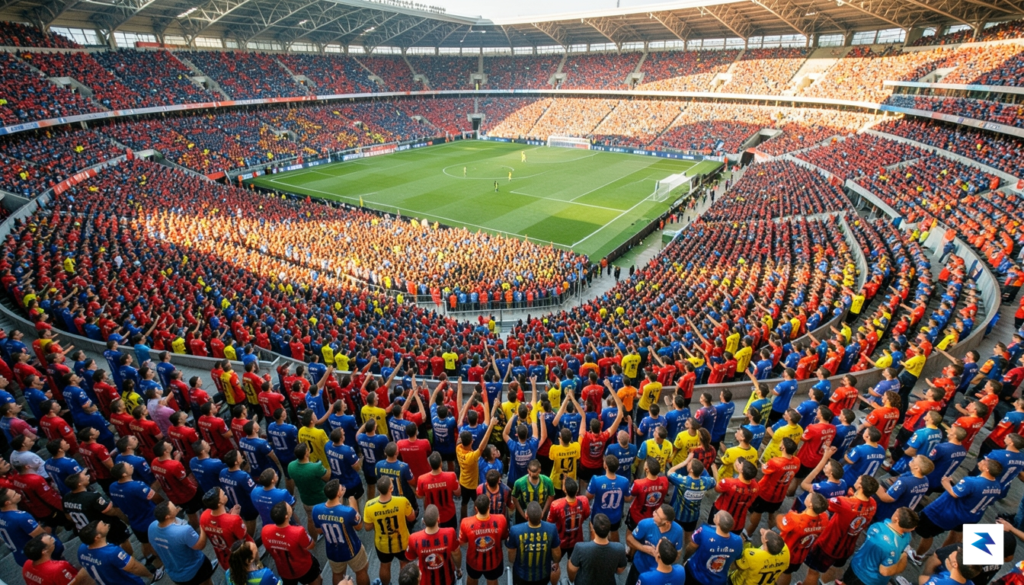
When you find yourself surrounded by tens of thousands of cheering fans during a high-stakes soccer final, your body ceases to operate as an isolated system. Instead, you become part of a biological collective, a phenomenon rooted in the psychological concept of emotional contagion. This process describes the involuntary tendency to mimic the emotional expressions, vocalizations, and postures of those around us. In the context of a stadium, this means that the collective anxiety or euphoria of the crowd acts as a powerful amplifier for your own internal state, often pushing your physiological responses to levels that would be impossible to reach while watching the game alone on your couch.
The mechanism behind this shared experience is driven largely by mirror neurons—a specialized group of brain cells that fire both when we perform an action and when we observe someone else performing that same action. As you watch a striker line up a penalty kick, your mirror neurons simulate the physical tension, the rapid heart rate, and the precise motor movements of the player on the pitch. When the crowd around you erupts in a synchronized roar or sinks into a collective gasp, those signals provide a feedback loop that reinforces your own neural simulation. Your brain begins to process the player’s stress as if it were your own, creating a powerful, multisensory bridge between the action on the field and your autonomic nervous system.
The synchronization of heart rates within a crowd is more than a metaphor; it is a measurable biological reality that turns thousands of individual spectators into a single, high-arousal organism.
This biological syncing extends beyond simple observation; it manifests as a measurable increase in physical arousal. When thousands of people shout in unison, the resulting auditory stimulation triggers a surge of adrenaline and cortisol throughout the entire section of the stands. Because humans are social animals evolved to thrive in groups, our nervous systems are hardwired to attune to the collective mood of our peers as a survival mechanism. Consequently, the shared anxiety of a penalty shootout creates a feedback loop where individual heart rates climb in tandem. You are not just watching the game; you are biologically participating in a communal stress response that turns the stadium into a pressurized environment where every second of gameplay is physically felt by every person in the building.

When the final whistle blows, your body does not immediately pivot back to a state of calm. Instead, it enters a critical transition phase where your physiological response is dictated entirely by the scoreboard. For the winning side, the brain experiences a massive surge of dopamine and serotonin, creating a profound sense of euphoria that can mask physical fatigue for hours. This “winner’s high” is a potent neurological reward, reinforcing the fan’s bond with the team and triggering a cascade of positive feedback loops that make the heart rate settle more quickly, as the sympathetic nervous system begins to dial back the “fight or flight” response.
Conversely, the experience of defeat plunges the body into a much more taxing physiological environment. Rather than the quick stabilization seen in victors, those on the losing side often face a prolonged elevation of cortisol, the body’s primary stress hormone. This chemical lingering can keep blood pressure and heart rates artificially high long after the players have left the pitch. Because the brain perceives the loss as a genuine threat or a significant social setback, the parasympathetic nervous system struggles to regain control, leaving the fan feeling physically drained, irritable, and unable to achieve restorative rest.
Neurologically, this phenomenon is often described as a “post-match blues” or an emotional hangover. Even after the initial shock of defeat fades, the amygdala—the brain’s emotional processing center—remains hyper-alert, searching for an explanation for the loss. This cognitive dissonance creates a state of internal tension that can last for days, manifesting as muscle tension, headaches, or a lingering sense of lethargy.
The physiological difference between victory and defeat is not merely psychological; it is a measurable hormonal divergence that dictates how quickly your body repairs the wear and tear of a high-stakes match.
Ultimately, the time it takes to return to true homeostasis is significantly longer following a loss than a win. While a victory acts as a physiological reset button, a defeat forces the body to process a complex cocktail of disappointment and stress. Understanding this mechanism helps explain why intense fandom is not just a hobby, but a genuine physical commitment that demands a period of genuine recovery regardless of the final score.


For the vast majority of spectators, the physiological spikes experienced during a championship match—the racing heart, the shallow breathing, and the sudden adrenaline dumps—are merely part of the exhilarating theater of sports. However, for individuals living with pre-existing cardiovascular conditions, these intense fluctuations represent a genuine physiological risk. Clinical data has consistently shown a discernible correlation between high-stakes athletic events and an uptick in acute cardiac episodes among vulnerable populations. When the body is forced into a state of prolonged “fight or flight” due to the emotional volatility of a penalty shootout or a last-minute goal, the resulting surges in cortisol and adrenaline can place an unsustainable workload on a compromised heart, potentially triggering arrhythmias or exacerbating underlying hypertension.
Understanding one’s own physical limitations is, therefore, a critical component of being a responsible fan. It is not about abandoning the passion that defines a sports culture, but rather about practicing a form of “emotional pacing.” For those with a history of heart disease, it is essential to monitor physical symptoms such as chest tightness, lightheadedness, or unexplained fatigue during a match. Recognizing these red flags early can allow a fan to de-escalate their emotional engagement—perhaps by taking a brief walk, practicing rhythmic breathing, or stepping away from the screen—before a physiological reaction transitions into a medical emergency.
True fandom is sustained over a lifetime, not just through a single ninety-minute match; prioritizing your long-term health ensures you remain in the stands to witness the triumphs of future seasons.
Ultimately, while the social benefits of fandom—the sense of community, the shared joy, and the belonging—are vital for mental well-being, they must be balanced with a pragmatic approach to physical health. Moderation does not strip the game of its meaning; instead, it reinforces the necessity of longevity. By maintaining an awareness of how high-stress environments affect your specific cardiovascular profile, you can enjoy the beautiful game without compromising your own physical integrity. Engaging with sports as a mindful spectator allows for a sustainable relationship with the teams you love, ensuring that your heart remains strong enough to celebrate the next big win.
You must be logged in to post a comment.