The Hidden Trade-Off: How China Became the Backbone of Affordable US EVs
The Global Shift Toward LFP Battery Technology For over a decade, the electric vehicle industry was dominated by Nickel Manganese Cobalt (NMC)…
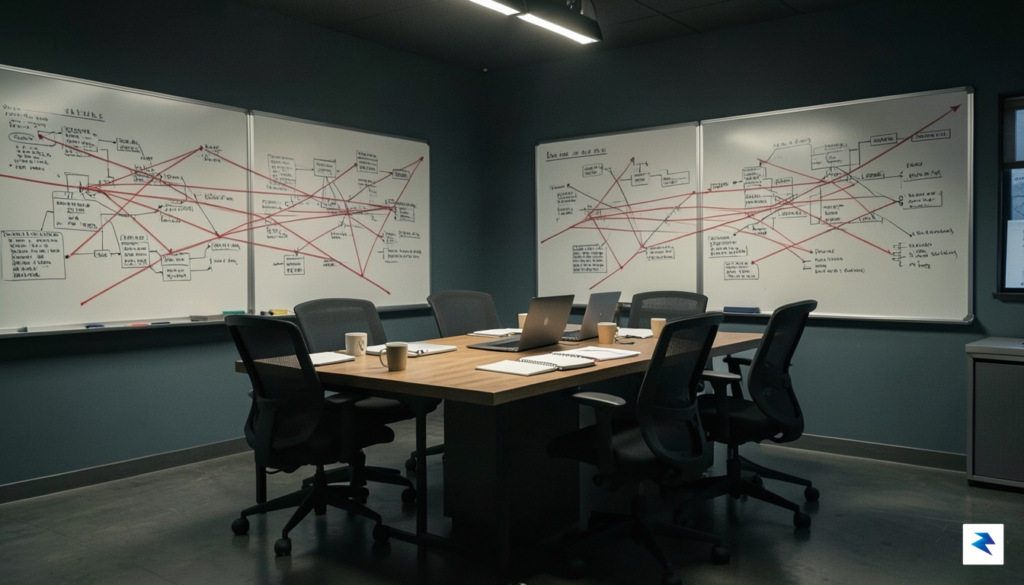
The “mystery box” storytelling format, popularized by architects of serialized television like J.J. Abrams, relies on a fundamental promise: that every strange occurrence, hidden symbol, and unanswered question is a breadcrumb leading to a profound, cohesive truth. At its core, this genre thrives on the tension between what the audience knows and the vast, often terrifying, reality hidden just out of frame. However, in the current landscape of prestige streaming, this narrative structure has morphed from a compelling hook into a high-stakes logistical tightrope. Creators are no longer just writing a story; they are constructing intricate, multi-layered puzzles that must remain internally consistent across dozens of hours of television, often spanning several years of production.
Maintaining long-term continuity in such a dense environment is an Herculean task that frequently leads to what can best be described as narrative cognitive overload. When a showrunners develop a series like Silo, they are not simply tracking character arcs; they are managing a labyrinthine mythology where a minor background detail in the pilot episode might be intended to serve as the structural foundation for a revelation three seasons later. This requires a level of forensic attention to detail that can easily overwhelm even the most disciplined writers’ rooms. As the scope of the world expands, the sheer number of moving parts increases exponentially, making the task of balancing character-driven drama with the demands of an overarching, labyrinthine plot feel increasingly precarious.
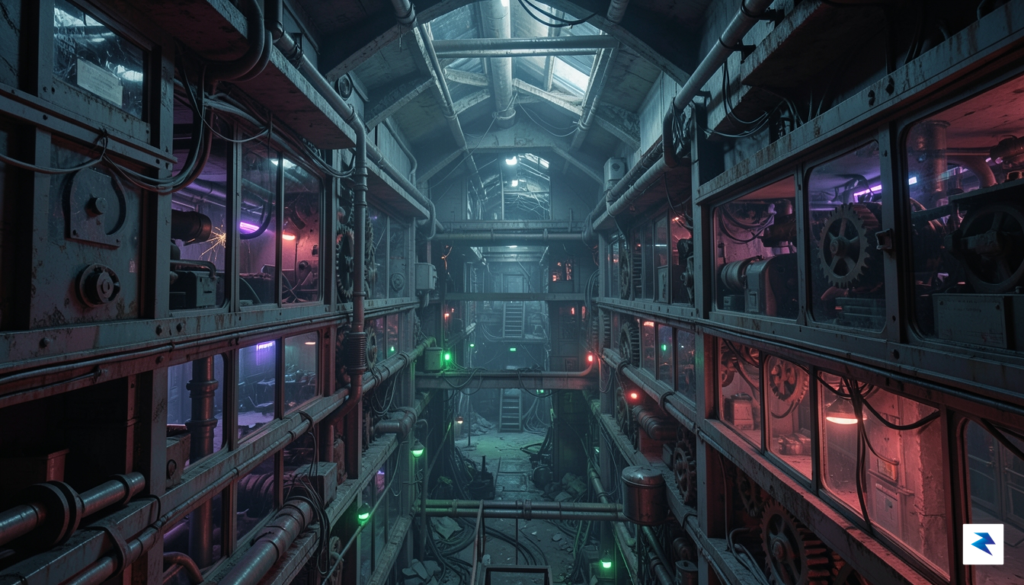
The difficulty is further compounded by the realities of modern television production, where long hiatuses between seasons and shifting creative priorities can fracture the intended vision. For actors, this complexity is particularly jarring. They often find themselves playing characters who are intentionally kept in the dark, forced to perform reactions to events they do not fully understand because the “big picture” is being guarded behind a veil of secrecy to prevent leaks. Consequently, the actors are often as perplexed as the audience, navigating a script that demands emotional authenticity while the logical framework of their world remains purposefully obscured.
The true challenge of the mystery box isn’t just creating the questions; it is ensuring that the eventual answers possess enough gravity to justify the years of speculation invested by the audience.
Ultimately, the inherent instability of these shows arises from the conflict between mystery and resolution. If a series holds its secrets too tightly for too long, the audience risks losing interest; if it resolves them too quickly, the foundational tension evaporates. This delicate equilibrium is why shows like Silo remain so fascinating yet notoriously difficult to manage. The showrunners are effectively playing a high-stakes game of chess against their own past decisions, constantly fighting to ensure that the logic of their world doesn’t collapse under the weight of its own ambition.

The sheer scale of a project like Silo presents a Herculean task for any creative team, as the internal logic of the subterranean world must remain ironclad even as the plot grows increasingly labyrinthine. Showrunner Graham Yost has been remarkably candid about the vertigo that sets in when managing such an intricate narrative, admitting that even he has occasionally found himself bewildered by the complex web of secrets he helped weave. This confusion isn’t a sign of poor planning; rather, it is a testament to the density of the show’s mythology. When a story is built upon layers of historical revisionism, hidden technical schematics, and shifting political allegiances, keeping track of what every character knows—and when they learned it—becomes a full-time logistical nightmare.
Yost has shared anecdotes regarding the painstaking process of maintaining continuity, noting that there were moments during production where the team had to pause and re-evaluate whether a specific revelation had already been seeded or if a character’s movement through the levels of the Silo violated their previously established constraints. These aren’t just minor script tweaks; they involve the fundamental physics and sociology of a closed-loop society. Because the show refuses to rely on easy exposition, the burden of truth rests on the visual cues and subtle dialogue exchanges that ripple across seasons. For the actors, this requires a form of mental gymnastics, as they must perform scenes while navigating a world where the floor they are standing on might hold a secret that renders their current motivation obsolete.
“There were times where I’d look at a script and think, ‘Wait, do we know that yet?’ or ‘Did she already find that key?’ You realize that when you’re deep in the weeds of a mystery, the architect of the maze is just as likely to get lost as the person trying to escape it.”
The rigors of on-set production often clash with the idealized version of the show mapped out in the writers’ room. While the narrative architecture is meticulously planned with charts and timelines, the reality of filming—where scenes are often shot out of order and across different locations—can obscure the emotional and logical arc of the characters. To combat this, the production team employs a rigorous system of continuity oversight, ensuring that every prop, glance, and line of dialogue adheres to the rigid laws of the Silo. By treating the setting as a character in its own right, the creators manage to preserve the integrity of the mystery, proving that even in a world defined by confinement, the possibilities for narrative complication remain infinite.

In the labyrinthine world of modern “mystery box” television, the sheer weight of narrative threads often exceeds the capacity of any single showrunner or writer to track alone. When a plot spans decades or relies on intricate, hidden connections, the responsibility for maintaining coherence shifts from a top-down mandate to a collective, daily negotiation. Actors frequently emerge as the most vital guardians of this continuity, acting as the primary stewards of their characters’ internal histories. Because they live inside the skin of their roles for months at a time, they often possess an intuitive, granular understanding of how a character would react to a new discovery. When a script calls for a moment that contradicts a piece of lore established in a previous season, it is often the actor who flags the inconsistency, forcing a collaborative pivot that protects the integrity of the arc.

This collaborative process is anchored by the unsung hero of the production: the script supervisor. In an era where shows are shot out of sequence and complex timelines are layered upon one another, the script supervisor acts as the living database of the series. They are not merely tracking continuity of props or costumes; they are the gatekeepers of narrative logic, constantly cross-referencing pages to ensure that a line of dialogue in Episode 8 doesn’t inadvertently collapse a mystery introduced in Episode 2. It is a high-stakes role that requires an encyclopedic knowledge of the show’s mythology, as they must often anticipate the ripple effects of a minor change across the entire season’s trajectory.
The burden of narrative consistency is a shared weight; when the writers provide the map, the actors and crew must ensure that the path remains traversable through every unexpected turn.
Because television production is an inherently reactive environment, the script is rarely treated as a static document. Instead, it becomes a living organism that undergoes constant refinement on the set. If a temporal discrepancy is discovered during rehearsals, the production often enters a frantic, iterative cycle of rewriting. This is where the magic—and the tension—of the process truly lives. Writers, directors, and actors huddle together to brainstorm quick fixes that maintain the mystery without sacrificing character authenticity. This collective problem-solving ensures that even when the plot becomes intentionally obfuscated, the emotional reality of the show remains grounded, preventing the audience from feeling cheated by the sheer complexity of the narrative.

The persistent allure of the “mystery box” format lies in its promise of discovery, yet it frequently falls into the trap of prioritizing intricate puzzles over the human beings tasked with solving them. When a series becomes obsessed with the mechanics of its own secret—layering riddle upon riddle without anchoring the stakes in genuine emotional reality—the result is often a form of narrative exhaustion. We saw this phenomenon reach its peak with Lost, where the sheer volume of unexplained phenomena eventually outpaced the audience’s capacity for investment. As the show pivoted toward metaphysical complexity, the initial visceral connection to the cast’s personal traumas began to fray, teaching creators a hard lesson: without a foundation of character-driven stakes, a mystery is merely an intellectual exercise that viewers will eventually abandon when the frustration of unanswered questions outweighs the joy of speculation.
To avoid this fatigue, modern series like Silo have found success by rooting their high-concept enigmas in the intimate perspective of a single, deeply flawed individual. By tethering the grand scale of the subterranean world to the protagonist’s personal quest for truth, the show ensures that every revelation feels earned rather than merely arbitrary. When the audience learns a new piece of the puzzle, it is framed through the character’s reaction—their betrayal, their sorrow, or their newfound resolve—rather than being presented as a cold, detached data point. This approach creates a symbiotic relationship between plot and personhood, where the mystery acts as a catalyst for growth rather than a distraction from it.
The most effective mysteries are not those that hide the answers longest, but those that force the characters to change the most in their pursuit of them.
Ultimately, the pacing of these reveals must mirror the internal evolution of the people on screen. If a character discovers a world-altering secret, the narrative must pause to allow that discovery to resonate, ensuring that the emotional impact is felt before the plot rushes toward the next cliffhanger. By matching the tempo of the mystery to the internal arc of the characters, creators can maintain audience engagement over the long term. This balance prevents the show from becoming a hollow scavenger hunt, transforming it instead into a compelling exploration of how human nature holds up under the weight of impossible, hidden truths. When the stakes are personal, the mystery becomes more than just a box to open—it becomes a mirror for the audience to reflect upon their own search for meaning.

The era of the “mystery box” originally gained traction through serialized storytelling that prioritized immediate shock value over long-term narrative integrity. Shows in the early 2000s often relied on a string of inexplicable cliffhangers—smoke monsters, hatch doors, and sudden disappearances—designed primarily to keep viewers glued to their screens from week to week. In those days, the mystery was the destination, and the lack of a concrete endgame was often masked by high-octane drama. However, modern audiences have grown significantly more discerning. We have moved past the age of “making it up as we go along,” and viewers now demand a level of internal logic and thematic payoff that early mystery-box progenitors rarely provided.
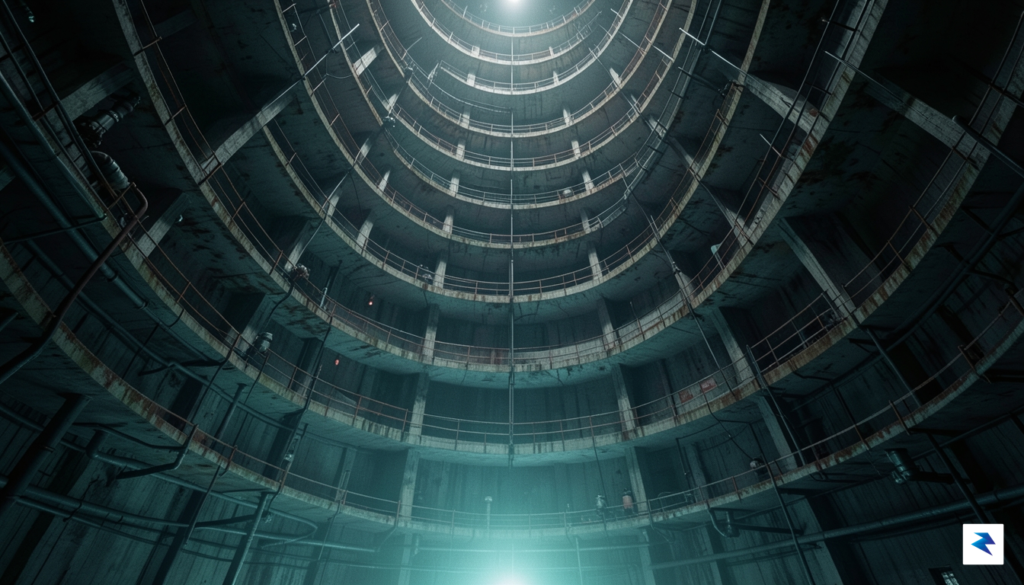
Today’s landscape, exemplified by series like Silo or Severance, represents a sophisticated maturation of the genre. Rather than merely throwing questions at the audience, these shows invest heavily in meticulous world-building and philosophical inquiry. The mystery is no longer just a hook; it is an organic outgrowth of the setting itself. In Silo, the central enigma—the truth about the outside world—is inextricably linked to the social hierarchy, the history of the characters, and the claustrophobic architecture of their environment. Modern viewers expect a coherent narrative architecture, meaning that every piece of information revealed must serve the broader truth rather than just prolonging the suspense for another season.
The true success of modern mystery storytelling lies not in the question itself, but in the structural integrity of the answer.
To achieve this level of complexity, the industry has shifted toward a more rigorous approach to production. Writing rooms now rely on comprehensive internal “bibles”—massive, evolving documents that map out the rules, histories, and ultimate resolutions of a show’s universe before the first frame is even filmed. This collaborative showrunning process ensures that even when the mystery seems impenetrable to the audience, the actors and writers are working from a foundation of absolute clarity. As streaming platforms continue to demand high-concept content, the future of the genre rests on this balance: the ability to maintain a sense of wonder without sacrificing the narrative rigor that prevents a story from collapsing under the weight of its own secrets.
You must be logged in to post a comment.