
Stablecoin Market Cap Drops $10B: Why Experts Say Don’t Panic
Understanding the Recent Contraction in Stablecoin Liquidity The stablecoin market, a critical pillar of the broader cryptocurrency ecosystem,…
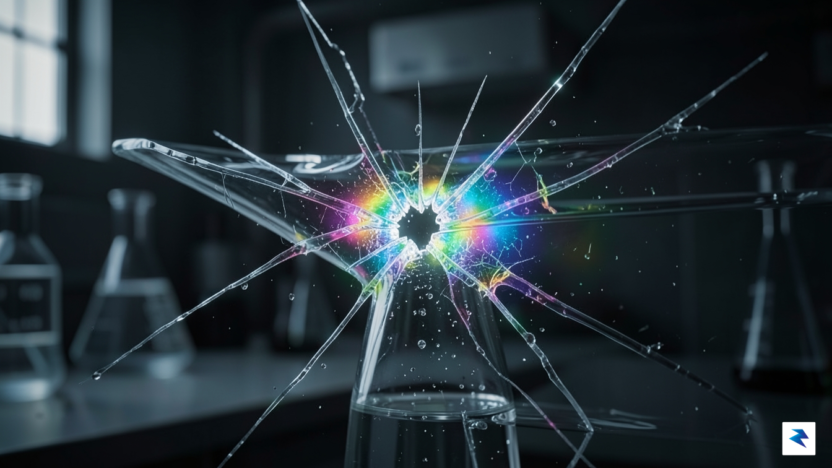
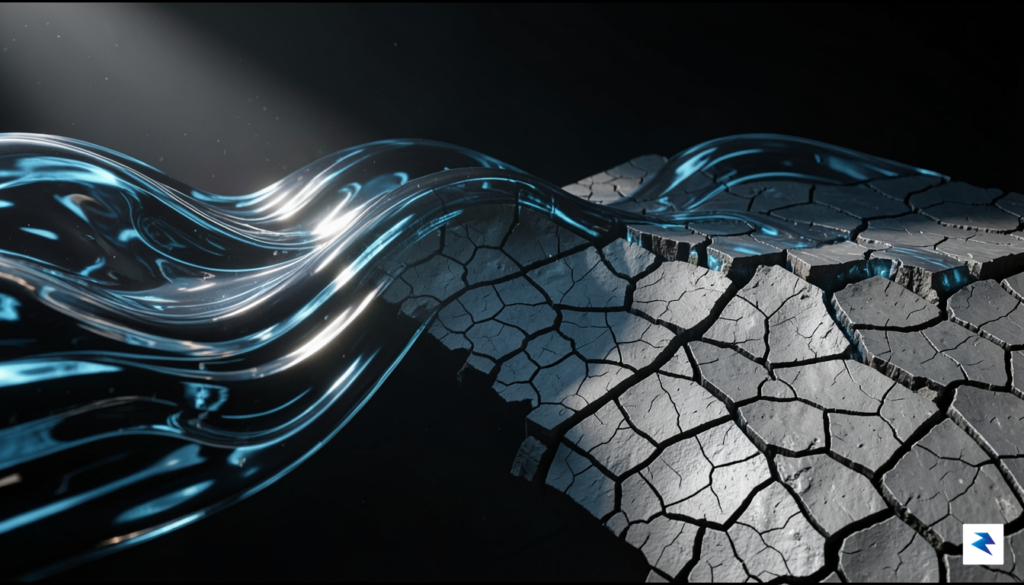
For centuries, the fundamental distinction between the states of matter has been defined by how a substance responds to stress. In our classical understanding of fluid dynamics, liquids are characterized by their inability to resist shear forces; they flow, deform, and conform to the shape of their containers. Conversely, solid mechanics dictates that rigid materials possess a stable internal structure capable of sustaining elastic deformation and, eventually, suffering a catastrophic structural failure known as fracture. This binary classification has served as the bedrock of physics and engineering, creating a clear demarcation between the substance that yields and the substance that breaks.
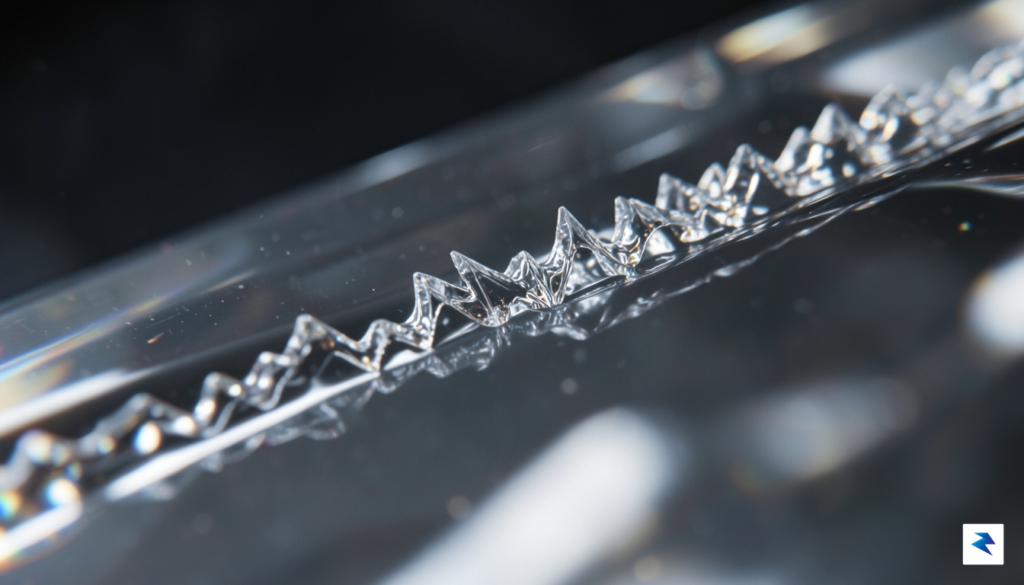
However, recent experimental observations are profoundly destabilizing this long-held paradigm, revealing a bizarre behavioral overlap that defies our standard intuition. Researchers have discovered that under extreme, highly specific conditions, simple, low-viscosity liquids can undergo a process that mimics the brittle fracture of a solid. Instead of simply flowing or churning when subjected to rapid mechanical separation, these liquids develop sharp, jagged fissures—cracks that propagate through the fluid body as if it were a pane of glass or a solid polymer. This phenomenon suggests that at high strain rates, the molecules within a liquid are capable of maintaining a temporary, localized rigidity that allows for a clean mechanical break.
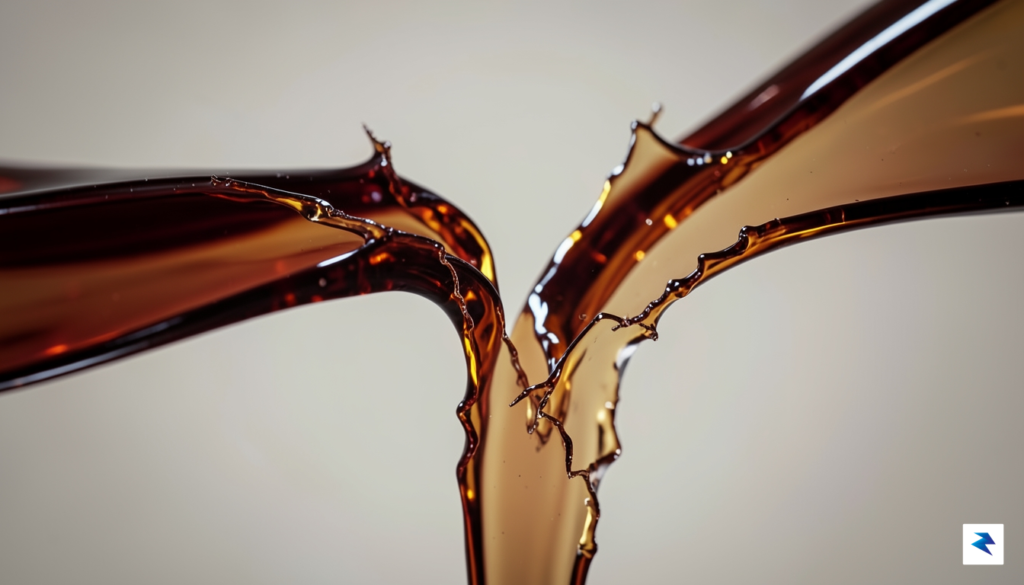
This discovery is nothing short of revolutionary for the field of condensed matter physics, as it forces us to reconsider the very nature of structural integrity at the microscopic level. If a simple liquid—a substance we define by its capacity to flow—can exhibit the characteristic signatures of solid-state fracture, then our current models of material response are incomplete. It implies that the transition between “liquid” and “solid” behavior is not merely a change in state, but a dynamic, time-dependent response to force that is far more nuanced than previously realized. When we witness a liquid “snap,” we are essentially observing a breakdown in the fluid’s molecular cohesion that echoes the way atomic bonds rupture in a crystalline lattice.
The ability of a simple liquid to undergo brittle-like fracture challenges the fundamental assumption that flow and fracture are mutually exclusive physical realities.
By probing the limits of these “impossible” observations, scientists are now beginning to map the transition zone where liquid behavior begins to mimic solid mechanics. This work does more than just add a quirk to our textbooks; it offers a new lens through which to examine everything from industrial manufacturing processes to the complex behaviors of biological fluids. As we peel back the layers of this counter-intuitive phenomenon, we are forced to acknowledge that the distinction between a flowing medium and a rigid structure is far more porous than we ever dared to imagine.
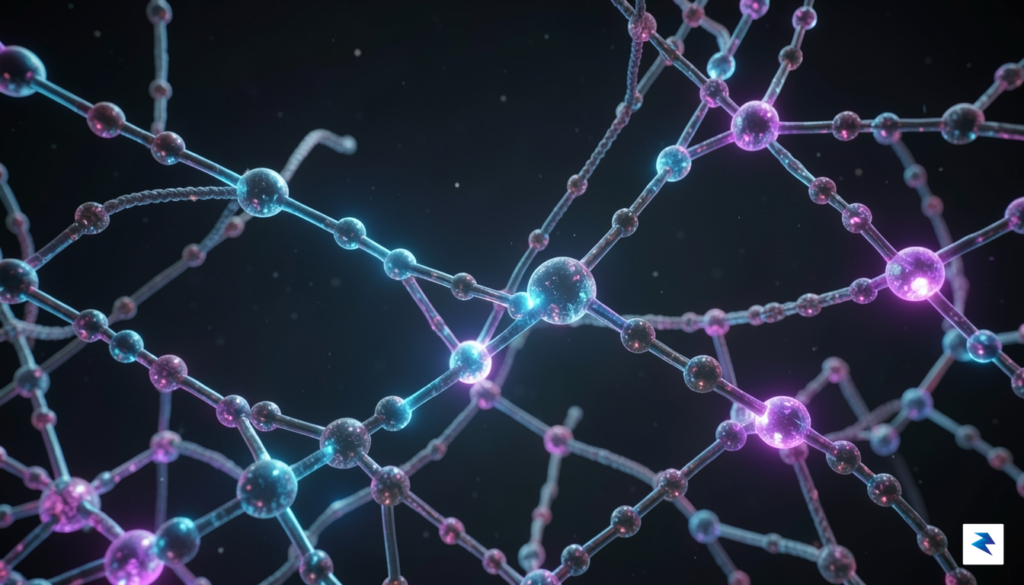
To the naked eye, a liquid is defined by its fluid nature—the constant, fluid rearrangement of molecules that allows it to conform to any container. However, this definition relies entirely on the observer’s perception of time. If we zoom into the microscopic scale, we discover that what we perceive as continuous flow is actually a series of rapid, discrete events. Under normal conditions, liquid molecules are in constant motion, dancing past one another in a frantic, disordered rhythm. Yet, when we subject a liquid to an incredibly sudden, high-frequency stress, we effectively outrun the ability of these molecules to rearrange themselves, forcing them into a state that defies their liquid identity.
The secret to this behavior lies in the molecular relaxation time—the brief window required for atoms to bounce, shift, and settle into new positions. When a mechanical force is applied over a duration shorter than this relaxation time, the molecules do not have the opportunity to flow or slide past one another. Instead, they become momentarily “trapped” by their neighbors, creating a transient, rigid structure. In this high-frequency regime, the liquid ceases to be a dissipater of energy and begins to act as a temporary lattice, storing elastic energy much like a solid crystal or a rubber band would.
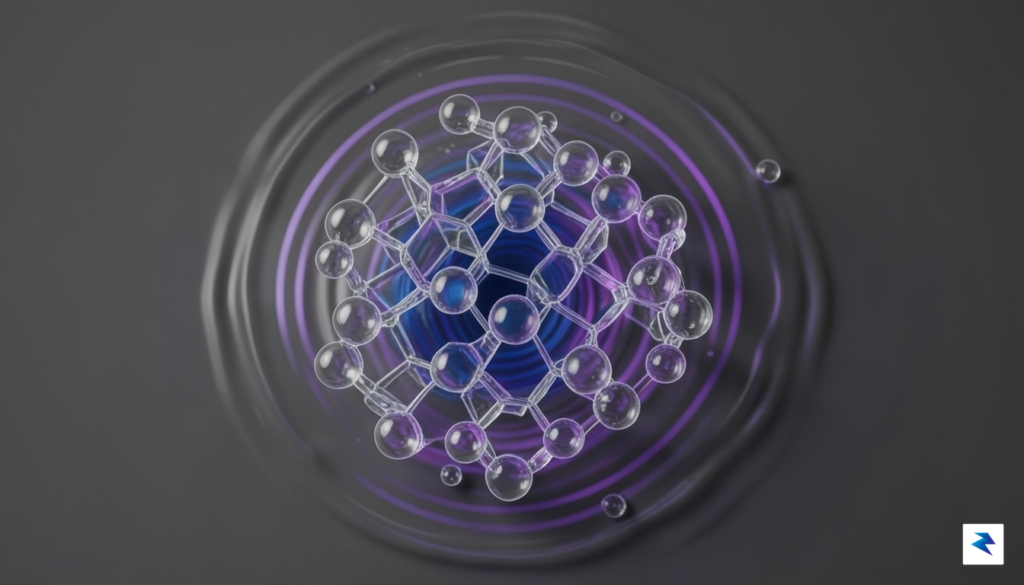
This phenomenon is closely linked to the concept of jamming, a state where particles become so crowded or kinetically constrained that they lose the ability to move freely. In a simple liquid, jamming is not a permanent state but a fleeting transition triggered by the intensity of the applied force. When the stress is applied faster than the fluid can respond, the local molecular environment becomes effectively “jammed.” Because the molecules cannot move to relieve the strain, the material develops a shear modulus—a definitive hallmark of solid-state behavior. This means the liquid can actually sustain a fracture, as the stress accumulates at a microscopic point until the temporary lattice structure snaps, creating a clean break rather than a smooth deformation.
The transition from flow to fracture is essentially a race between the speed of the applied force and the inherent speed of molecular reorganization. When the force wins the race, the liquid is forced to behave as a solid.
Understanding this transition requires us to rethink our traditional categorization of matter. It suggests that the boundary between solid and liquid is not merely a matter of temperature or chemical composition, but a dynamic relationship defined by how quickly we interact with the material. By uncovering these hidden elastic properties, researchers are revealing that even the most “simple” fluids possess a latent, rigid architecture just beneath the surface, waiting for the right conditions to emerge.

Under normal circumstances, we perceive liquids as substances that yield indefinitely to applied force, flowing around obstacles and rearranging their molecular structures in response to stress. However, when a liquid is subjected to a rapid, intense force that exceeds its ability to reorganize, it undergoes a startling transformation. At this critical threshold, the liquid stops flowing and begins to behave like a brittle solid. Instead of smoothly dissipating the stress through viscous movement, the fluid undergoes a localized mechanical failure. It essentially tears, creating a physical cleavage that radiates through the medium just as a crack would propagate through a pane of glass or a rigid polymer.
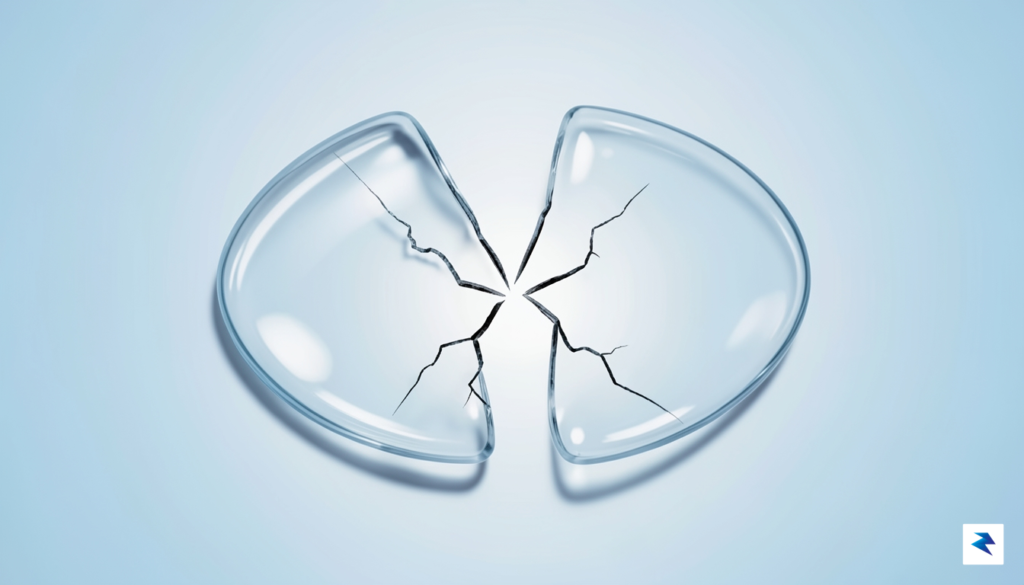
The transition from laminar flow to this sudden rupture represents a fundamental breakdown in the way we classify states of matter. In a typical flow regime, molecules slide past one another with relative ease, allowing the fluid to maintain its continuity even under deformation. Yet, when the application of stress is faster than the molecular relaxation time—the time it takes for molecules to adjust to their new positions—the internal structure of the liquid becomes “frozen” in a metastable state. Because the molecules cannot move quickly enough to accommodate the tension, the liquid loses its capacity to flow and instead develops a structural weakness. This localized failure is not a mere dispersion or a separation of bubbles; it is a true fracture, characterized by the concentration of energy at the tip of a developing crack.
The emergence of fracture in simple liquids suggests that the boundary between solid-like brittleness and liquid-like fluidity is dictated less by the substance itself and more by the speed and intensity of the forces applied to it.
Unlike cavitation, where a liquid vaporizes due to a sudden drop in pressure, this fracture process involves the mechanical cleavage of the fluid’s bulk structure. During this event, energy is dissipated not through heat generated by internal friction, but through the creation of new surface area as the crack propagates. As the “tear” expands, it follows the path of least resistance, mirroring the complex, branching patterns seen in brittle materials. This phenomenon highlights that even in the most basic liquids, there exists an inherent, latent capacity for structural rigidity. By reaching beyond the limits of traditional fluid dynamics, scientists have uncovered a hidden mechanical duality, revealing that under the right conditions, even the most fluid of substances can shatter under pressure.
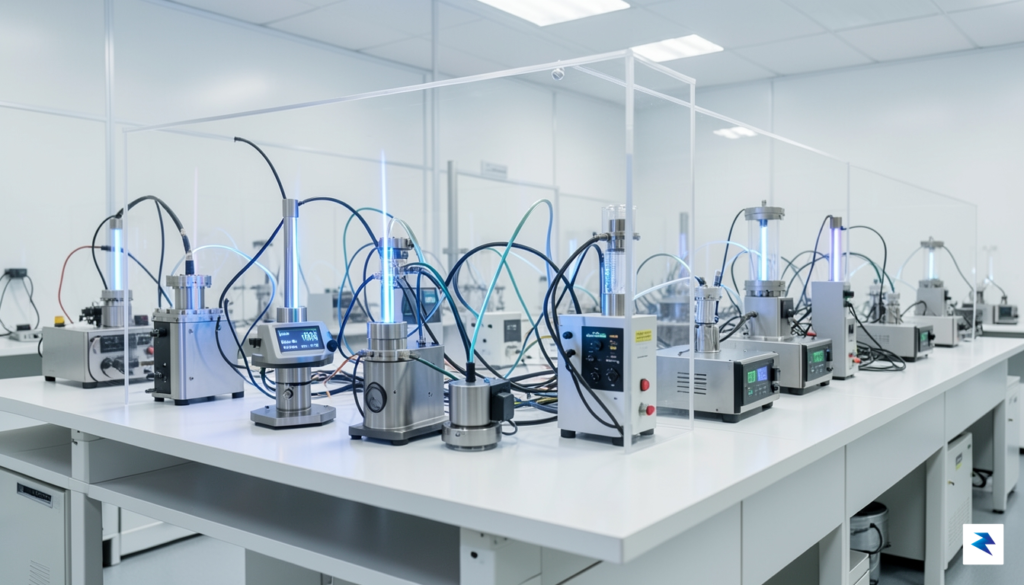
Observing a fracture within a simple liquid is akin to attempting to photograph a lightning strike in a dark room; the phenomenon occurs on timescales and spatial dimensions that defy standard human perception. To overcome this hurdle, researchers had to push the boundaries of current experimental physics, integrating ultra-precise rheometers—devices typically used to measure how fluids deform under stress—with cutting-edge high-speed cinematography. By subjecting these liquids to sudden, intense shear forces, the team created the necessary conditions for a crack to initiate, but the true challenge lay in capturing the rapid propagation of the fracture before the liquid’s natural tendency to flow obscured the evidence.
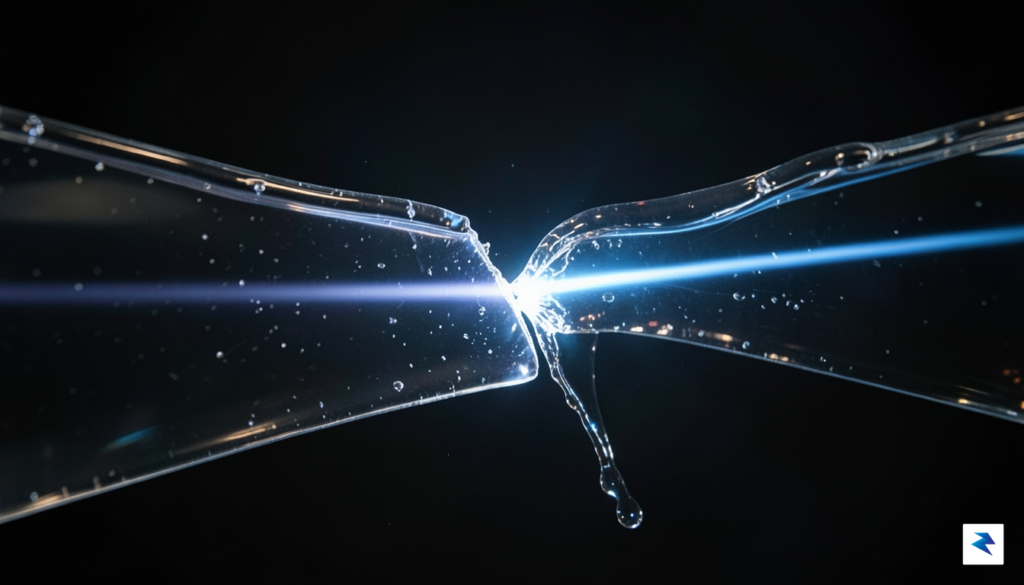
The experimental setup relied on high-frame-rate cameras capable of recording thousands of frames per second, allowing scientists to slow down the “birth and death” of these microscopic cracks into a manageable sequence. However, visual confirmation alone was insufficient to distinguish a true solidlike fracture from a common vapor bubble or air pocket. To ensure rigor, the team utilized specialized light scattering techniques, which probe the structural density of the medium at a molecular level. By analyzing how light refracted through the suspected crack, they could determine whether they were looking at a vacuum-filled fissure—a true fracture—or merely a cavity filled with gas. This dual approach of visual imaging and laser-based structural analysis provided the definitive proof needed to confirm that the liquid was failing in a brittle manner.
The distinction between a bubble and a fracture lies in the physics of the cavity; a bubble is a pressurized inclusion, whereas a liquid fracture is a transient, tension-driven void that mirrors the structural failure of a glass or a crystal.
Data analysis was further bolstered by synchronized rheological measurements, which tracked the exact moment of stress release as the fracture formed. By mapping the mechanical resistance of the fluid against the optical data from the high-speed cameras, the researchers were able to correlate the physical “snap” of the liquid with the visible appearance of the crack. This sophisticated integration of hardware and analytical software allowed the team to rule out experimental artifacts or impurities. Ultimately, this methodology transformed the ephemeral nature of liquid fractures into a measurable, repeatable scientific observation, proving that under extreme conditions, the boundary between the solid and liquid states is far more porous than classical physics once suggested.
The revelation that simple liquids can undergo fracture—a behavior traditionally reserved for rigid solids—fundamentally alters our blueprint for engineering the next generation of materials. By shifting our perspective from viewing fluids merely as substances that flow to recognizing their hidden structural vulnerabilities, scientists can now approach the design of non-Newtonian fluids with unprecedented precision. This insight is particularly transformative for the development of high-performance lubricants used in aerospace and heavy machinery. If engineers can predict the exact conditions under which a lubricant might “crack” or experience a structural breakdown, they can formulate oils that remain stable under the extreme, rapid-fire pressure changes found in jet engines and turbine systems, thereby preventing catastrophic mechanical wear.
Beyond the realm of industrial lubrication, this discovery paves the way for a revolution in additive manufacturing and 3D printing. Modern resins used in stereolithography rely on complex polymerization processes that must balance viscosity with structural integrity. By leveraging the principles of liquid fracture, researchers can fine-tune the rheological properties of these resins to prevent microscopic internal failures during the printing process. This ensures that the resulting 3D-printed components possess superior mechanical strength and density. Moreover, the ability to control how a liquid “tears” allows for the creation of smart materials—fluids that can instantly transition into protective, solid-like barriers upon impact, potentially leading to advanced kinetic energy absorption systems or next-generation body armor.
The transition from fluid flow to fracture represents a hidden frontier in soft matter physics, where the distinction between liquid and solid becomes a matter of timing and stress rather than just material state.
In the field of biological tissue modeling, understanding how simple liquids behave under high-stress conditions provides a crucial framework for simulating cellular mechanics. Many biological gels and intracellular fluids exhibit complex, time-dependent behaviors that mimic these newly discovered solid-like traits. By modeling these substances as materials capable of fracture, scientists can more accurately simulate how tissues respond to trauma, such as the rapid impact forces experienced during a fall or a collision. This deeper understanding of fluid dynamics is already driving future research into high-pressure systems, where the goal is to map the phase space of liquids under extreme conditions. As we continue to bridge the gap between fluid mechanics and solid-state physics, we are uncovering a universal language of failure that will allow us to design materials that are not only more resilient but also fundamentally more capable of adapting to the chaotic environments of the modern world.

The observation of fracture in simple liquids fundamentally disrupts our long-standing reliance on the rigid binary that separates the fluid world from the solid one. For generations, the scientific community has categorized matter based on its response to stress—liquids flow and dissipate energy, while solids fracture and store it. By demonstrating that simple molecular structures can mimic the brittle behavior typically reserved for crystals or polymers, this discovery suggests that the transition between states is far more porous than our current textbooks allow. We are now forced to confront the possibility that the “solid-like” characteristics of liquids are not anomalies, but inherent properties that emerge only under specific, extreme conditions that we are finally beginning to measure.
This paradigm shift invites us to move toward a more unified theory of matter, one that transcends simple classification and embraces the nuanced mechanics of how molecules pack and interact. As we refine our understanding of these transient fractures, we are essentially building a new language for material science—a framework that accounts for the dynamic, time-dependent nature of substances that exist in the grey areas of physics. This is not merely an academic exercise in redefining definitions; it is an essential step in bridging the gap between molecular interactions and macroscopic material performance. By acknowledging that the boundaries between flow and fracture are fluid themselves, we gain a deeper, more accurate lens through which to view the complexity of the physical world.
The discovery that simple liquids can fracture teaches us that the most profound scientific breakthroughs often hide in the spaces between our established rules, waiting for the right moment of observation to reveal their complexity.
Looking toward the future, the implications of this research extend far beyond the laboratory, potentially revolutionizing how we approach engineering and material design. When we learn to predict and control the conditions under which a liquid might behave like a solid, we open the door to unprecedented technological applications, from responsive shock-absorption systems to advanced micro-fluidics that operate with the stability of solid-state components. History has repeatedly shown that when we move past the “impossible” and begin to quantify it, we transition from merely observing natural phenomena to actively engineering with them. By embracing this newfound complexity, we are not just correcting a misunderstanding of fluid dynamics; we are unlocking a new toolkit for the technologies of tomorrow.
You must be logged in to post a comment.