
Beyond Flow: Scientists Discover Simple Liquids Can Fracture Like Solids
Introduction: Challenging the Nature of Liquids For centuries, the fundamental distinction between the states of matter has been defined by…

The landscape of higher education is currently experiencing a profound transformation, driven by a growing recognition that a college degree must deliver tangible economic value. For years, the narrative surrounding higher education often focused on the intrinsic value of learning or the prestige of an institution, sometimes overlooking the escalating financial burden placed on students. This unchecked growth in tuition fees, coupled with stagnant wage growth for many graduates, led to a national student loan crisis, trapping millions in debt with degrees that, in too many cases, failed to translate into meaningful economic advancement. It’s against this backdrop of mounting debt and dashed expectations that federal regulators have stepped in, fundamentally altering the relationship between colleges, financial aid, and student success.
This shift represents a significant departure from an era where institutional reputation or enrollment numbers were the primary metrics of success. Instead, the focus is now squarely on return on investment (ROI) for students. The government is signaling a clear move away from a “degree-at-all-costs” mentality, where federal dollars flowed largely without stringent accountability for graduate outcomes. This new paradigm demands that colleges justify their value by demonstrating that their programs genuinely prepare students for gainful employment and improved financial standing post-graduation. It’s about ensuring that the significant investment of time, effort, and money in higher education actually pays off for the individual and, by extension, for the broader economy.

The legislative intent behind these new federal rules is multifaceted, aiming to protect students, safeguard taxpayer interests, and restore faith in the value proposition of a college education. By tying a college’s eligibility for federal financial aid—a lifeline for most institutions and students—to the economic outcomes of its graduates, the government seeks to align the incentives of educational providers with the prosperity of their students. This means colleges can no longer simply enroll students, collect tuition, and disburse degrees without proving that those degrees lead to better lives. It’s a powerful mechanism designed to weed out predatory programs and underperforming institutions that have historically left students with substantial debt and limited career prospects.
However, this new emphasis on economic outcomes inevitably introduces a tension between the traditional ideals of academic freedom and the imperative of economic protection. Critics might argue that a singular focus on job placement and salary metrics could stifle innovation, diminish the humanities, or narrow the scope of what higher education is meant to achieve, reducing it merely to vocational training. Yet, proponents counter that ensuring students are not financially crippled by their education is a fundamental responsibility, especially when public funds are involved. The underlying rationale is not to dictate curricula entirely but to ensure that, whatever academic path a student chooses, the institution providing that education has a demonstrable track record of preparing them for a financially viable future. This critical balance ensures that while colleges maintain their role in fostering intellectual growth, they are also held accountable for the economic realities their graduates face.
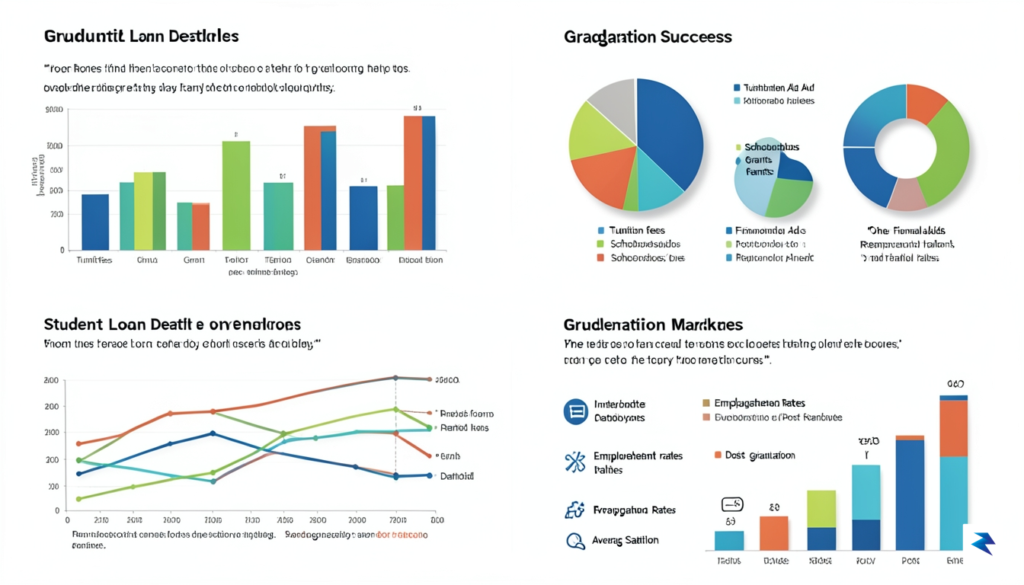
At the center of the recent federal policy shift is the formalization of the “gainful employment” standard, a rigorous framework designed to ensure that post-secondary education serves as a pathway to financial stability rather than a trap of insurmountable debt. While the term may sound like typical administrative lexicon, it functions as a critical accountability mechanism. Essentially, this mandate requires that career-focused programs demonstrate a tangible return on investment for their students by proving that graduates are earning enough to comfortably manage the loans they took out to earn their credentials. Programs that fail to meet these specific economic benchmarks risk losing their eligibility to participate in federal student aid programs, which serves as a powerful incentive for institutions to align their curricula and tuition costs with real-world labor market outcomes.
The Department of Education enforces this accountability through two primary quantitative metrics: the debt-to-earnings ratio and the earnings premium test. To pass the debt-to-earnings threshold, a program must demonstrate that the typical annual loan payments of its graduates do not exceed 8% of their total annual earnings, or alternatively, 20% of their discretionary income. This creates a hard ceiling on how much debt a student can be reasonably expected to carry relative to their entry-level salary. Furthermore, the earnings premium test assesses whether the graduates of a specific program are actually earning more than the typical high school graduate in that same state. By utilizing these dual metrics, the government can effectively filter out programs that consistently saddle students with significant debt while providing little to no boost in professional earning potential.
The core objective of these regulations is to shift the burden of proof back onto the institutions, ensuring that the promise of a “career-ready” education is backed by hard economic data rather than marketing rhetoric.
To ensure institutions have the opportunity to course-correct, the Department of Education has implemented a structured warning system. If a program fails to meet these metrics in a given year, it is not immediately shuttered; instead, it is placed on a formal watch list that requires transparency with both current and prospective students. If a program fails to meet these standards for two out of three consecutive years, it becomes ineligible for federal financial aid, effectively cutting off its access to the federal student loan pipeline. This tiered approach serves as both a deterrent against predatory enrollment practices and a diagnostic tool for colleges to evaluate the efficacy of their vocational and certificate offerings. Ultimately, this framework forces a necessary conversation about institutional value, compelling colleges to justify their tuition costs by the verifiable success of the students they serve.

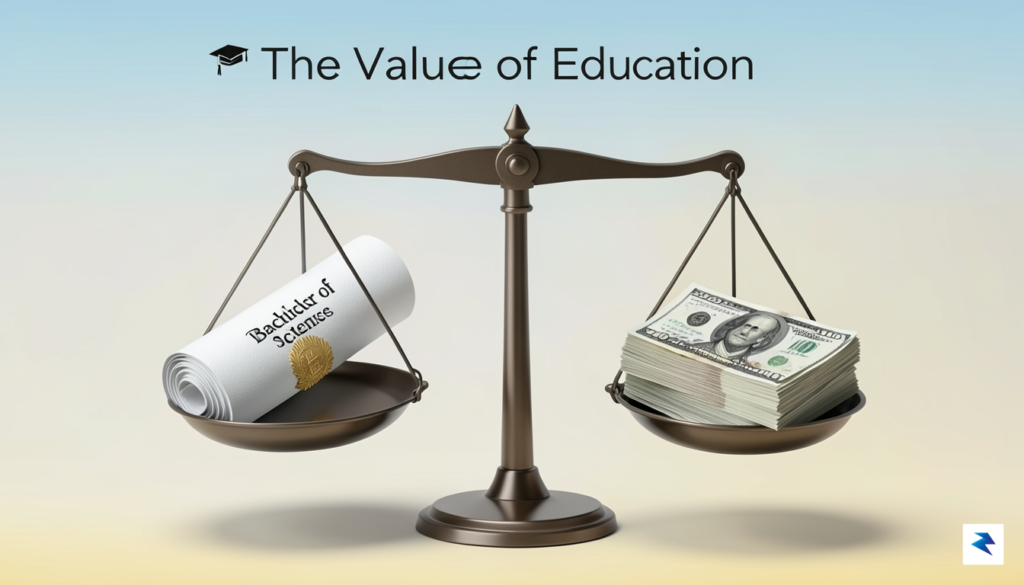
For the average student, the sticker price of a degree is only half the story; the true cost is revealed in the years spent tethered to monthly loan payments that devour your early-career disposable income. When you borrow heavily to fund a program that fails to deliver competitive market wages, you aren’t just paying for tuition—you are effectively mortgaging your future autonomy. A high debt-to-earnings ratio acts as a financial anchor, delaying your ability to save for a home, invest in retirement, or even navigate basic emergencies. Consequently, understanding how your projected debt stacks up against the typical salary of a graduate in your chosen field is the most effective safeguard against the trap of underperforming academic programs.

It is essential to distinguish between what many economists classify as “good debt” and “bad debt.” Good debt generally refers to educational loans used for degrees with a high return on investment (ROI), where the increase in lifetime earnings comfortably outpaces the interest accrued on the principal balance. Conversely, bad debt occurs when the cost of attendance significantly outweighs the earning potential of the resulting career path. If you take on debt that requires thirty percent or more of your monthly take-home pay just to service interest, you are likely in a precarious position. By running these numbers before you sign a master promissory note, you can determine if a program is a sound investment or a fiscal liability that will hinder your financial independence for decades.
To protect your financial future, treat your education like a major business investment: if the projected revenue—your future salary—does not justify the cost of acquisition, you should reconsider the program or explore more cost-effective alternatives.
Before you commit to any institution, you must perform your due diligence by researching the program’s typical outcomes. Fortunately, you do not have to guess at these figures. The U.S. Department of Education’s College Scorecard is an invaluable resource that provides transparent data on median earnings, typical debt loads, and graduation rates for specific institutions and programs. Furthermore, the Bureau of Labor Statistics (BLS) Occupational Outlook Handbook allows you to cross-reference these educational costs with projected industry growth and salary tiers. By layering this data, you can create a realistic roadmap of your potential financial trajectory, ensuring that your pursuit of higher education leads to lasting prosperity rather than a cycle of unmanageable debt.

The new federal guidelines, designed to ensure students receive a tangible return on their educational investment, are poised to trigger a profound re-evaluation within the higher education sector. This isn’t merely about tweaking financial aid policies; it’s a fundamental challenge to how institutions conceive of their value proposition and allocate resources. Colleges, from sprawling public universities to specialized private academies, must now scrutinize their offerings through a new lens: demonstrable graduate success and manageable debt loads. This seismic shift will undoubtedly necessitate difficult decisions, pushing institutions to move beyond reputation alone and actively prove their efficacy in the competitive landscape of post-secondary learning.
Consequently, one of the most immediate and visible effects will be a significant internal audit of academic programs. Institutions are now incentivized to identify and potentially trim or eliminate courses of study that consistently lead to poor employment outcomes or disproportionately high student loan defaults. This rigorous self-assessment is likely to accelerate a pivot towards more vocational training, STEM fields, and other curricula directly aligned with high-demand industries and clear career pathways. While this could streamline offerings and enhance graduate employability in certain sectors, it also raises questions about the future of less “marketable” but culturally vital disciplines within the humanities and arts.
The differential impact on various types of institutions also warrants close examination. For-profit colleges, which have historically faced greater scrutiny regarding student outcomes and debt, are likely to feel the most immediate and intense pressure. Many may struggle to meet the new performance metrics, potentially leading to closures or significant restructuring as their business model is directly challenged. Non-profit universities, while often having larger endowments and more diversified funding sources, are by no means immune. They too will need to justify the value of their degrees, potentially forcing them to enhance career services, strengthen alumni networks, and more explicitly link academic programs to post-graduation success metrics, rather than relying solely on their academic prestige.
A significant concern arising from this outcome-driven approach is the potential for reduced access to education for vulnerable populations. If institutions are pressured to cut programs deemed “ineffective” based on immediate financial returns, some pathways that traditionally serve students from lower socio-economic backgrounds, first-generation students, or those seeking non-traditional career paths might be disproportionately affected. There is a risk that colleges, in their drive to meet federal benchmarks, might inadvertently narrow educational opportunities, focusing primarily on students who are already well-positioned for high-earning careers, thus exacerbating existing inequities rather than alleviating them. Ensuring equitable access while maintaining accountability will be a delicate balancing act.
Looking ahead, the landscape of college marketing and recruitment is also set for a dramatic overhaul. Prospective students and their families will increasingly seek — and institutions will be compelled to provide — concrete data on graduate earnings, employment rates, and loan repayment statistics, moving beyond glossy brochures and campus amenities. Transparency will become a non-negotiable cornerstone of institutional communication, with colleges actively showcasing their success metrics as a core part of their brand identity. This shift will empower consumers with more actionable information, fundamentally altering how students choose where to invest their time and money, thereby fostering a more results-oriented and accountable higher education market overall.

While new federal accountability standards provide a vital safety net, they should serve as a starting point rather than a final verdict for your academic journey. Empowering yourself to make a sound financial decision requires moving beyond flashy marketing brochures and diving deep into the actual data. Before signing an enrollment agreement, you should treat your education like a major capital investment by vetting schools through a rigorous, evidence-based lens. Focus on long-term outcomes rather than campus amenities, ensuring that the institution’s historical performance aligns with your personal career aspirations and financial realities.

To effectively evaluate a potential program, start by utilizing the federal transparency tools designed to expose the gap between tuition costs and post-graduation earnings. When reviewing these disclosures, prioritize metrics such as the debt-to-earnings ratio and the percentage of graduates who successfully transition into full-time employment within their field of study. If a school’s data shows a consistent trend of high student debt paired with low median starting salaries, view this as a red flag that warrants further investigation. You should also cross-reference these official figures with independent career outcome reports to ensure the school’s claims regarding job placement are both accurate and realistic.
Your goal is to ensure that the total cost of your degree does not outpace the potential salary you expect to earn in your early-career years.
Once you have narrowed down your list of institutions, shift your focus toward understanding the long-term impact of your borrowing choices. It is essential to compare federal loan repayment options early in the process to understand how different plans, such as income-driven repayment, might affect your financial flexibility after graduation. Furthermore, practice career-first academic planning by mapping out how specific coursework and internships lead directly to industry-standard certifications or job titles. By maintaining a critical eye toward these metrics and prioritizing programs that demonstrate a proven commitment to student success, you are not just selecting a college—you are actively safeguarding your economic future. Remember that while regulations help weed out underperforming institutions, your personal vigilance remains the most effective tool in your academic arsenal.
You must be logged in to post a comment.