
Meta Scraps ‘Muse’ AI Feature After User Privacy Backlash
The Rise and Rapid Fall of Meta’s Muse Feature Meta’s introduction of the Muse feature on Instagram was initially positioned as a…
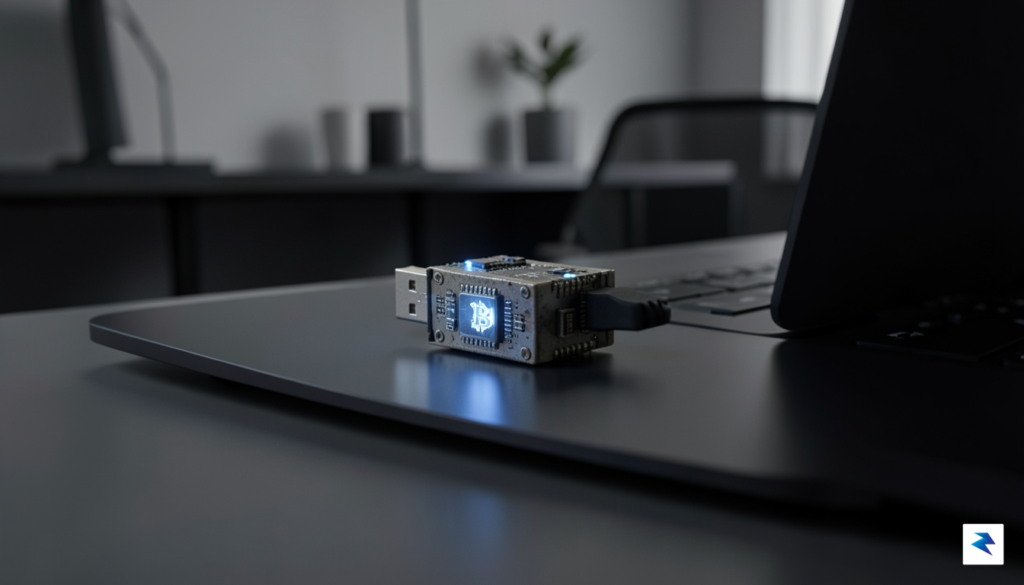
In an era where Bitcoin mining has evolved into a hyper-competitive arms race dominated by multi-million dollar industrial facilities and massive, specialized server farms, the notion of a home hobbyist striking gold feels like a relic of the past. Yet, against all conventional wisdom, a solo miner recently managed to validate a block using equipment that cost roughly $150—an achievement that resulted in a windfall of approximately $200,000. This event sent shockwaves through the digital asset community, as it defied the mathematical probability of a “lottery ticket” scenario. For the average enthusiast, this story serves as a stark reminder that while the odds are infinitesimally slim, the decentralized nature of the Bitcoin network remains fundamentally open to anyone with the right software and a spark of sheer, dumb luck.
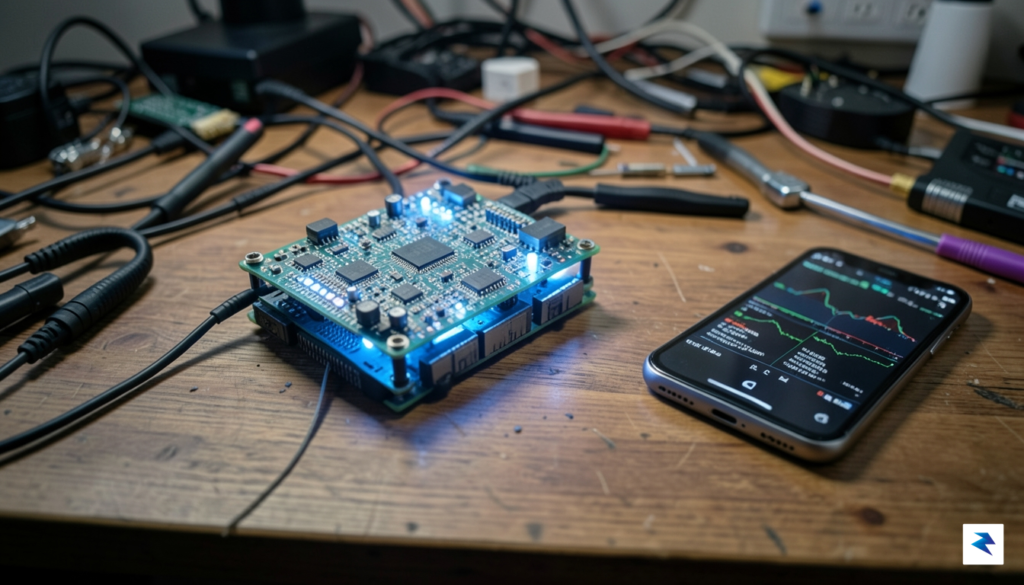
To understand why this is such a profound anomaly, one must distinguish between the two primary ways to participate in the network. Most miners join “mining pools,” which are collaborative groups that combine their computational power—known as hashrate—to solve blocks more consistently. In these pools, participants receive smaller, frequent payouts that correspond directly to their share of the total work contributed. Conversely, solo mining is akin to playing a global lottery; the miner works entirely on their own, hoping to solve the complex cryptographic puzzle required to secure a block before the thousands of industrial giants do. By going solo, the miner assumes 100% of the risk, but they also claim 100% of the block reward and associated transaction fees if they are the first to cross the finish line.
The reality of solo mining is that it is no longer a business model, but rather an exercise in high-stakes probability where the house advantage is held by massive, energy-intensive data centers.
The role of luck in this Proof-of-Work ecosystem cannot be overstated. In the current landscape, the difficulty adjustment mechanism ensures that the network regulates how hard it is to mine a block based on the total global hashrate. Because this solo miner was operating with such a minuscule fraction of that power, their probability of success was statistically negligible—often compared to winning a major powerball drawing while using a broken ticket. However, because Bitcoin operates on a random cryptographic challenge, every single “guess” generated by a machine has the same theoretical chance of being the winning one. This recent victory captivated the world not because it proved solo mining is a viable investment strategy, but because it reaffirmed the democratic, permissionless ethos that Satoshi Nakamoto originally envisioned for the protocol.

To understand why a solo miner hitting a jackpot feels like a miracle, one must first grasp the sheer scale of the Bitcoin network. Mining is essentially a massive, global cryptographic scavenger hunt where millions of specialized machines—known as ASICs—compete to solve a complex mathematical puzzle every ten minutes. The difficulty of this puzzle adjusts automatically to ensure that no matter how much computing power joins the network, the block production rate remains constant. When an individual attempts to mine solo with consumer-grade hardware, they are essentially walking into a hurricane armed with a handheld fan, hoping to catch a single specific leaf out of a billion.
The probability of success for a solo miner is mathematically infinitesimal. Because mining rewards are distributed based on the percentage of the total network hash rate you control, a solo miner with a modest setup commands a fraction of the network power that is rounded down to nearly zero. In technical terms, the expected value of such an endeavor is negative; you are far more likely to spend thousands of dollars on electricity and cooling over several years without ever validating a single block. This is not a business model based on consistent returns, but rather a digital lottery where the odds of winning are significantly worse than hitting the jackpot at a major casino.
It is crucial to distinguish between expected value and actual variance. While the mathematical expectation of solo mining is a financial loss, the variance—or the statistical “swing”—allows for the extreme anomaly where an individual happens to guess the correct hash by pure, blind luck. These stories of unlikely wins are classic examples of survivorship bias. We hear about the one person who beat the odds and walked away with a fortune, but we never hear from the thousands of other enthusiasts who quietly spent their savings on electricity bills and hardware, only to end up with empty digital wallets. News outlets highlight these outliers because they are sensational and inspiring, but they fail to capture the silent majority whose equipment never produced a single satoshi.
The reality of Bitcoin mining is that it has shifted from a hobbyist activity to an industrial-scale enterprise. Unless you have access to specialized, high-efficiency hardware and remarkably cheap or free electricity, the math simply does not support solo mining as a viable path to profitability.
Ultimately, treating solo mining as an investment strategy is a dangerous misconception. If you choose to engage in it, it should be viewed strictly as a hobby or a “for-fun” experiment with a high probability of total capital loss. By understanding that these rare successes are statistical anomalies rather than a repeatable strategy, you can protect yourself from the allure of “get-rich-quick” narratives that ignore the harsh, unforgiving laws of probability governing the Bitcoin blockchain.
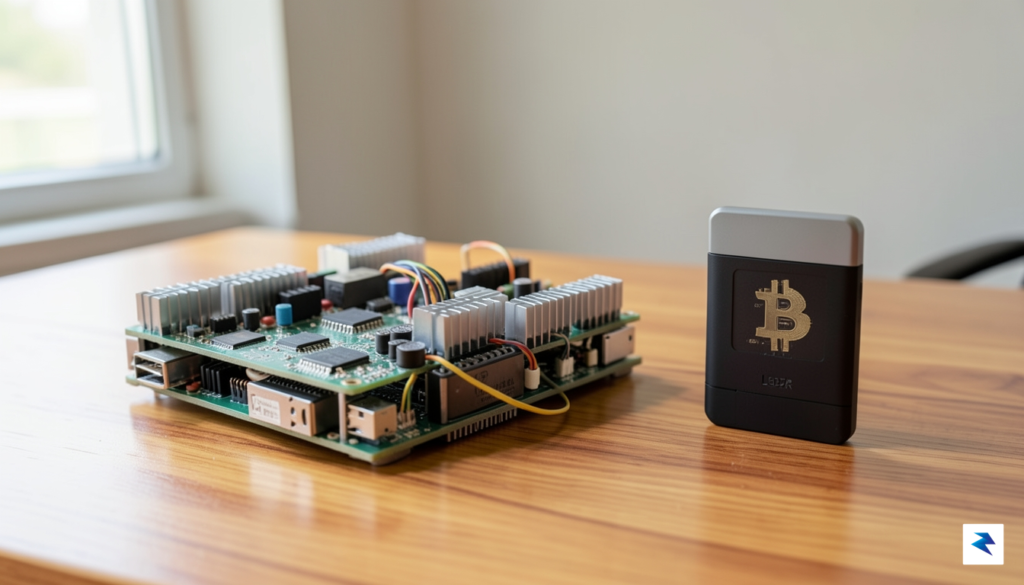
The recent story of a solo Bitcoin miner striking it rich with modest equipment undeniably sparks curiosity, suggesting that the barrier to entry might not be as high as commonly perceived. While it highlights an exciting outlier, it’s crucial to delve into the practical realities and technical specifications that govern the world of cryptocurrency mining. Indeed, one doesn’t necessarily require an industrial warehouse filled with the latest, most powerful Application-Specific Integrated Circuits (ASICs) to participate in the network, but understanding the efficiency and limitations of consumer-grade or older hardware is key to setting realistic expectations.
In today’s market, a budget of approximately $150 for Bitcoin mining equipment typically places you squarely in the realm of used or significantly older generation ASICs. These devices, while once cutting-edge, have been superseded many times over by newer, more powerful, and vastly more efficient models. For example, a $150 investment might secure a decade-old Antminer S9 or a similar vintage unit. These machines, while still functional, offer a fraction of the hash rate—the measure of computing power dedicated to mining—compared to current flagship ASICs that can cost thousands of dollars. Crucially, the cost of acquisition is only one piece of the puzzle; the ongoing operational expenses, particularly electricity, often represent the true financial hurdle.
This brings us to the fundamental trade-off between power consumption and hash rate, the very core of mining economics. Older ASICs, by their very design, are far less energy-efficient. They consume a disproportionately higher amount of electricity for each terahash (TH/s) of processing power they produce compared to modern units. A brand-new ASIC might offer hundreds of terahashes while drawing a few kilowatts, whereas an older $150 unit might only manage 10-15 TH/s, yet still consume 1.5 kilowatts or more. This means that for continuous operation, the cost of electricity can quickly eclipse any potential earnings, especially in regions with higher energy prices. Consequently, what seems like a cheap entry point can quickly become a money pit if not carefully managed or if a significant stroke of luck doesn’t intervene.
The evolution of mining hardware underscores why efficiency is paramount. Bitcoin mining began on standard Central Processing Units (CPUs) in the network’s infancy. As the difficulty increased, miners transitioned to Graphics Processing Units (GPUs), which offered superior parallel processing capabilities. This was followed by Field-Programmable Gate Arrays (FPGAs), custom hardware that provided another leap in efficiency. However, all these methods were ultimately rendered obsolete for Bitcoin by the advent of ASICs. These Application-Specific Integrated Circuits are purpose-built silicon chips designed solely to perform the SHA-256 hashing algorithm required by Bitcoin. Each generation of ASICs has brought exponential improvements in hash rate per watt, pushing the competitive edge further and further, making older technology increasingly inefficient for profitable, day-to-day operations.
Therefore, when we look at the extraordinary success story of a solo miner with $150 equipment, it’s essential to understand that this scenario falls firmly into the category of “lottery mining.” With an extremely low hash rate, the statistical probability of a single, older ASIC discovering a block on its own is astronomically small, akin to winning the lottery. Miners using such hardware are essentially making a small investment (the equipment cost plus ongoing electricity) for an infinitesimal chance at winning the entire block reward, which is currently 6.25 BTC plus transaction fees. This contrasts sharply with joining a mining pool, where even small miners contribute their modest hash rate to a collective effort and receive a proportional share of any blocks found, offering a more predictable, albeit smaller, return. While the allure of a massive solo payout is undeniable, relying on $150 equipment for consistent, profitable Bitcoin mining in today’s landscape is not a sustainable strategy; it’s a high-stakes gamble against overwhelming odds.
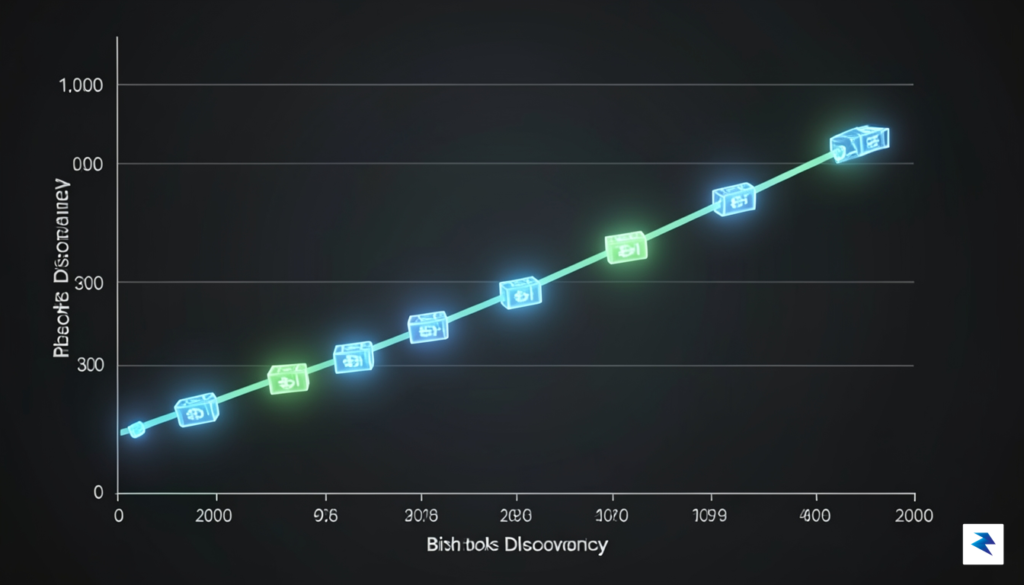
The landscape of Bitcoin mining is undergoing a quiet, yet statistically significant, transformation. Over the past twelve months, the industry has witnessed a remarkable 41% year-over-year increase in the number of solo blocks successfully validated by individual miners. While the sheer scale of global hash rate continues to be dominated by massive, industrial-grade data centers, these isolated victories for independent operators suggest that the “lottery” nature of solo mining is shifting from a near-impossible dream into a measurable, albeit still rare, phenomenon.
This surge in solo-mined blocks—totaling 24 instances in the last year—raises a fundamental question: are we witnessing a sudden streak of extreme luck, or is there a structural evolution in how individual participants interact with the network? The data points toward a convergence of factors. Primarily, the rise of “solo-mining-as-a-service” platforms has effectively lowered the technical barrier to entry. These services act as a bridge, allowing hobbyists to connect their hardware to a solo-mining node without needing to maintain complex, local infrastructure. By simplifying the configuration process, these platforms have allowed a broader demographic of enthusiasts to participate in the network, effectively increasing the number of “tickets” held in the grand lottery of Bitcoin block validation.
Furthermore, the accessibility of hardware has played a crucial role in this shift. As Bitcoin’s difficulty adjustments continue to fluctuate, the cost of entry for older or secondary-market ASIC hardware has become increasingly attractive to the average consumer. When individuals can acquire functional, albeit older, equipment for a fraction of what large-scale mining operations invest, the incentive to “try their luck” becomes more compelling. It is no longer necessary to own a warehouse full of cooling fans and high-voltage power supplies to have a non-zero probability of finding a block. Instead, a handful of units in a garage can now theoretically contribute to the network, provided the operator has the patience to play the long game.
The democratization of mining hardware, combined with streamlined pooling software, has effectively turned a once-exclusive pursuit into a grassroots hobby for the tech-savvy individual.
Ultimately, while the odds remain astronomically low for any single participant, the 41% increase suggests that the ecosystem is becoming more decentralized in its participation, even if the total hash power remains heavily concentrated. This trend highlights a fascinating paradox: as Bitcoin mining becomes more professionalized at the top, the tools available to the bottom-tier participants are simultaneously becoming more sophisticated. Whether this trend continues or reverts to the mean remains to be seen, but the data clearly indicates that for a growing number of people, the allure of the solo block is far more than just a passing curiosity; it is a calculated bet on the underlying mechanics of the network itself.

If the prospect of hitting a massive Bitcoin jackpot sounds enticing, it is essential to ground your expectations in the harsh realities of the current mining landscape. Before you consider diving into solo mining, you must first secure a stable, high-speed internet connection and a reliable source of electricity, as even brief interruptions can render your mining attempts futile. Furthermore, you will need to configure specialized software to manage your hardware—typically an ASIC (Application-Specific Integrated Circuit) miner—while ensuring your cooling solutions are robust enough to handle the immense heat generated by these machines. Unlike pool mining, where rewards are shared incrementally, solo mining is an “all-or-nothing” endeavor; if your rig does not solve the block, you receive zero compensation for the energy consumed.
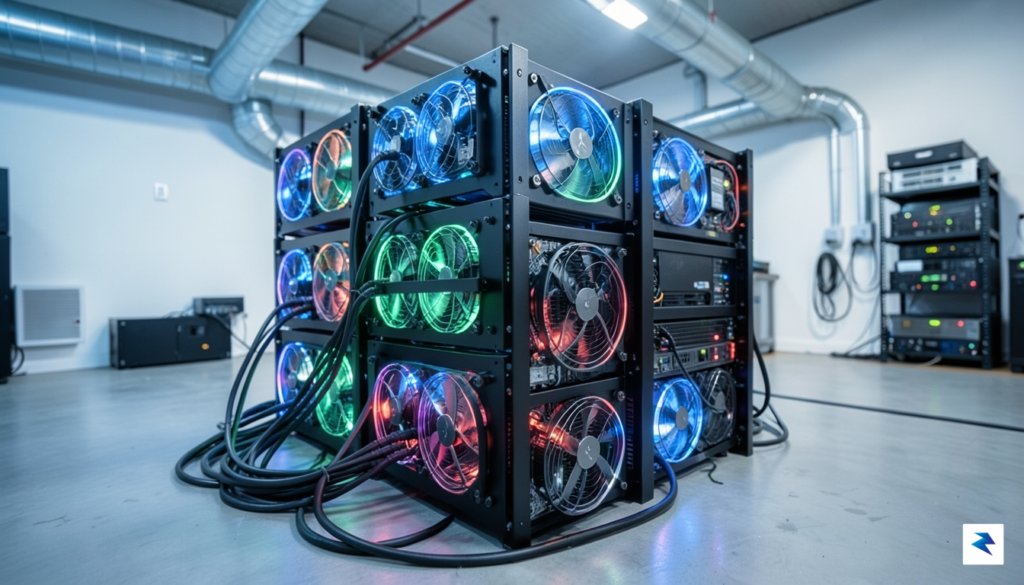
The financial math involved in this pursuit often favors the house, or rather, the massive industrial mining farms that dominate the network hash rate. You must meticulously calculate your “sunk cost” of electricity against the infinitesimal probability of validating a block. Because electricity costs are often fixed and recurring, you are essentially paying for a high-stakes lottery ticket every single day your machine is powered on. Many hobbyists underestimate the impact of fluctuating energy prices, which can quickly turn a potential windfall into a significant monthly debt. It is vital to view this expenditure as an entertainment or educational cost rather than an investment, as the probability of a solo miner finding a block is statistically comparable to winning a regional lottery.
The Golden Rule of Mining: Never allocate funds toward mining hardware that you cannot afford to lose entirely. For the vast majority of participants, solo mining is a technical hobby rather than a reliable financial strategy.
Beyond the financial risks, there are significant security implications to consider when running your own mining node. By connecting your hardware to the Bitcoin network, you are exposing your local network to potential vulnerabilities if your security protocols are not properly hardened. Ensuring that your firmware is up-to-date and that your node is protected by a robust firewall is non-negotiable, as malicious actors frequently scan for unsecured mining equipment to hijack or repurpose. Ultimately, while stories of solo miners striking it rich are technically possible, they are extreme outliers. If you choose to proceed, do so for the thrill of the technology and the educational value, but keep your financial expectations strictly tethered to reality.

Beyond the allure of a life-changing windfall, solo mining serves as a fundamental pillar for the integrity of the Bitcoin network. When hashing power is dispersed across thousands of individual households rather than concentrated in massive, industrial-scale data centers, the network becomes inherently more resistant to censorship and systemic failure. A highly distributed hash rate ensures that no single entity or geographic region can exert undue influence over transaction verification, thereby upholding the core tenet of Bitcoin as a trustless, peer-to-peer system. By participating as an individual, miners act as the decentralized immune system of the blockchain, reinforcing the very security model that makes the asset valuable in the first place.
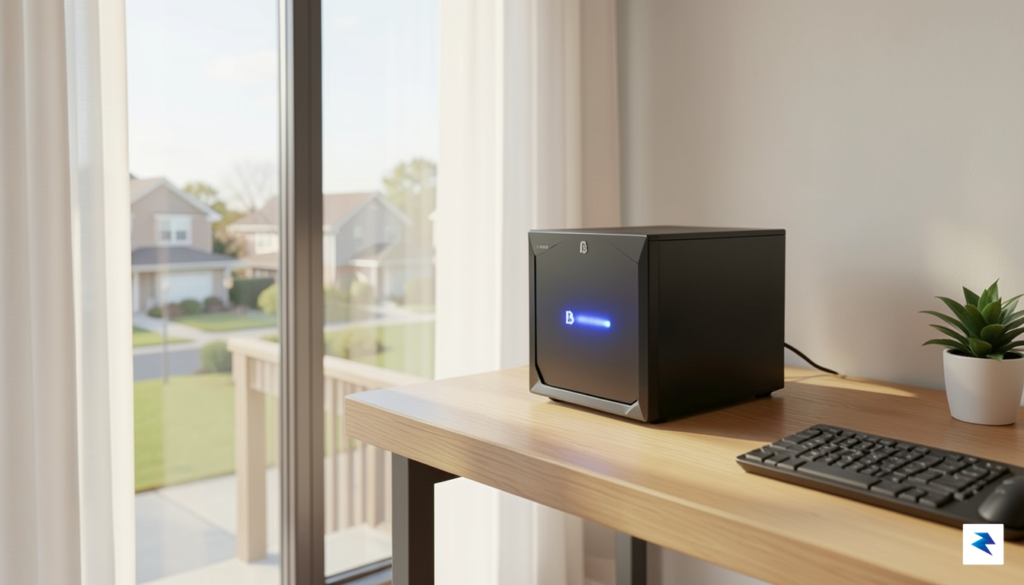
The barrier to entry for home-based mining is also being lowered by a surge of community-driven innovation. Developers and enthusiasts are increasingly focused on creating open-source software and low-power hardware solutions that allow even the most modest setups to contribute meaningfully to the network. These efforts are not merely about profitability; they are about democratization. By simplifying the technical hurdles associated with node operation and solo hashing, these tools empower people from all walks of life to engage with the Bitcoin protocol directly. As more individuals join the network, the distribution of power broadens, making the infrastructure more robust against external pressures and regulatory shifts.
True decentralization is not just about the distribution of wealth; it is about the distribution of authority. Every solo miner who connects to the network represents a vote for a sovereign, open financial system.
This resurgence of interest in home-based solo mining reflects a deep-rooted commitment to Satoshi Nakamoto’s original vision, where the network was intended to be secured by “one CPU, one vote.” While the era of mining Bitcoin profitably on a standard home laptop has long since passed, the philosophy remains relevant. Today’s solo miner, equipped with modern ASIC technology, is the spiritual successor to those early pioneers. Even if the statistical probability of finding a block remains low, the act of attempting it preserves the spirit of individual participation that differentiates Bitcoin from traditional, centralized banking systems. Looking ahead, as long as there are individuals willing to dedicate energy and hardware to secure the ledger, the network will maintain its core identity as a resilient, decentralized force in the global economy.
You must be logged in to post a comment.