The Hidden Carbon Cost of the World Cup: Why Fan Travel Matters
The True Carbon Cost of Global Sports For generations, mega-events like the FIFA World Cup have been framed as the ultimate pinnacle of human…

For decades, the concept of an index fund was synonymous with the ultimate “boring” investment strategy. Originally designed by pioneers as a way to provide retail investors with broad market exposure at a low cost, index funds were meant to be silent observers of the financial landscape. These “buy and hold” vehicles were never intended to dictate the fortunes of individual corporations; instead, they were passive benchmarks, mirroring the performance of the overall economy. However, as trillions of dollars have migrated from active management into these automated trackers, the fundamental nature of the index has evolved from a mirror into a market-moving engine.
The core mechanism fueling this transformation is market-capitalization weighting. Under this structure, an index fund must purchase more shares of the companies that grow the largest, creating a self-reinforcing feedback loop. As a company’s valuation rises, index funds are contractually obligated to buy more of its stock, which in turn pushes the price even higher. What was once a passive reflection of market sentiment has effectively become a mechanical driver of asset prices, where the mere act of being included in an index like the S&P 500 or the Nasdaq-100 triggers a massive, automatic influx of capital from passive investors worldwide.
The shift from “passive observer” to “market driver” means that index providers now hold more power over capital allocation than almost any traditional hedge fund manager.
This power shift has fundamentally changed the role of index providers, such as MSCI, S&P Dow Jones, and FTSE Russell. These organizations are no longer just maintaining a list of stocks; they are acting as the gatekeepers of the modern retirement system. When a committee decides to “fast-track” a company into a top-tier index, they are essentially granting that firm a permanent subsidy in the form of guaranteed, recurring investment from millions of passive accounts. This process creates a high-stakes environment where the criteria for inclusion—whether it involves profitability requirements, governance standards, or specialized sector weighting—can determine the long-term viability of a company.
Consequently, the line between passive investing and active market engineering has blurred beyond recognition. Investors who believe they are simply “buying the market” are often unwittingly participating in a system where the index provider’s subjective decisions carry immense weight. When private, high-growth entities like SpaceX eventually become eligible for index inclusion, the implications go far beyond simple portfolio diversification. It represents the final integration of the private venture capital cycle into the public retirement system, forcing everyday savers to become the ultimate liquidity providers for the most ambitious firms on the planet.

For the average investor, an index fund is often viewed as a meritocratic reflection of the “best” companies in the market. However, the reality of index inclusion is far more clinical; it is a rigid mathematical function rather than a subjective assessment of a company’s vision or technological prowess. To earn a spot in a prestigious benchmark like the Nasdaq-100, a company must satisfy a specific set of quantitative criteria, primarily centered on market capitalization and liquidity. Because these indices are designed to represent broad segments of the economy, the selection process favors scale and tradeability over the speculative allure of private innovation. When a colossus like SpaceX eyes a public listing, the transition from a private valuation—often based on venture capital funding rounds and internal growth projections—to a public market capitalization requires a fundamental shift in how the company is valued by the broader trading ecosystem.
The friction between private status and public index inclusion is significant. Private valuations are often opaque and insulated from the daily volatility of the stock exchange, whereas public market capitalization is a living, breathing metric driven by millions of retail and institutional buy-and-sell orders. This distinction is crucial because index providers cannot simply “add” a company based on its hype; they must ensure that the stock possesses sufficient liquidity—the ability to be traded in large volumes without causing extreme price swings. If a company as massive as SpaceX were to go public, its entry into an index would force passive funds to purchase billions of dollars worth of shares, regardless of whether those shares are currently overpriced or represent a sustainable long-term value.

Index inclusion is not a meritocracy; it is a mathematical function based on market capitalization, liquidity, and regulatory status.
This reality creates an inevitable clash between the pressure to include “hot” growth companies and the traditional risk-mitigation benchmarks that define index funds. Investors often clamor for exposure to innovative industry leaders, believing that their portfolio is incomplete without the next big disruptor. Yet, index managers are tasked with maintaining a basket of stocks that minimizes idiosyncratic risk. Adding a high-beta, volatile giant like a newly public space-tech firm can fundamentally alter the risk profile of a portfolio that was previously balanced for stability. Consequently, the inclusion of such a company is not merely a matter of prestige; it is a complex reconfiguration of the underlying index strategy, often requiring the removal of established, stable companies to make room for the newcomer. This ensures that the fund remains a reflection of market-wide performance, even if the price of that inclusion is a sudden increase in the portfolio’s overall sensitivity to market speculation.

The core philosophy behind index fund investing has always been rooted in the safety of broad diversification and the steady, predictable growth of established market leaders. By spreading capital across hundreds or thousands of companies, investors theoretically shield themselves from the catastrophic failure of any single entity. However, the potential inclusion of high-profile, high-valuation private giants—like SpaceX—threatens to introduce a new, volatile variable into these traditionally stable portfolios. When a company carries a massive, speculative valuation into the public market, it often brings a “hype premium” that bears little resemblance to current cash flows or traditional earnings metrics. For the average retirement saver, this shift risks transforming a defensive, long-term wealth-building vehicle into an unintended bet on speculative growth.

The danger inherent in this transition is exacerbated by the mechanics of market-cap-weighted indices. In these funds, the largest companies by valuation command the biggest share of the portfolio, meaning that if a speculative giant enters with an astronomical price tag, it immediately consumes a significant slice of the investor’s exposure. This creates a reliance on momentum investing, where the index is forced to track the rapid, often irrational, price appreciation of a single stock. Should that company fail to meet the lofty expectations priced into its valuation, the resulting market correction can be swift and severe. Because the index is heavily weighted toward that specific name, a sharp decline does not just affect a small portion of the fund; it can drag down the total index performance, causing disproportionate losses for investors who believed they were safely diversified.
The integration of high-valuation growth giants into passive indices effectively forces a speculative risk profile onto conservative, long-term investors who never intended to chase market hype.
Furthermore, the “overpriced” sentiment often surrounding these private titans creates a disconnect between the company’s long-term utility and its short-term stock performance. While a firm may be revolutionary in its technological ambitions, the price paid by the public market often anticipates perfection for decades to come. When investors buy into an index fund, they are typically seeking the “average” return of the market, not the boom-or-bust cycles of early-stage venture capital. By absorbing these high-valuation entities, index funds inadvertently expose retirement accounts to the same volatility that characterizes private equity, but without the benefit of the liquidity protections or specialized risk management that professional venture capitalists employ. Consequently, the safety net that millions of investors rely on to preserve their future stability becomes increasingly tethered to the whims of sentiment-driven market corrections.
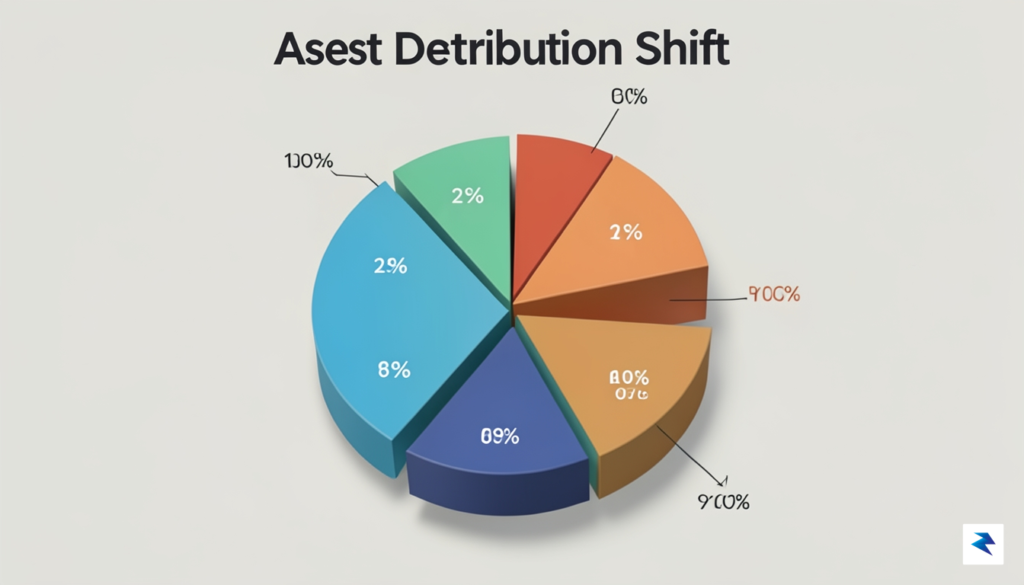
The core idea of an index fund is to provide broad market exposure, allowing investors to own a small piece of many companies, thereby spreading risk. However, this seemingly straightforward concept becomes significantly more complex when a colossal company, such as a hypothetical SpaceX, is introduced into an established market index. Indices are typically market-capitalization weighted, meaning companies with larger market values command a greater “slice” of the index’s overall pie. When an entity with an immense valuation enters, it doesn’t just add another name to the list; it fundamentally reweights the entire structure. This phenomenon is known as weight dilution, where the proportional representation of every other company in the index is automatically reduced to accommodate the new titan. Consequently, the balance shifts dramatically, potentially without the individual investor ever realizing the profound alteration to their underlying portfolio.
For passive index funds, which are designed to precisely mirror the performance and composition of their benchmark index, this rebalancing act has tangible consequences. When an index announces the inclusion of a new, massive company, all funds tracking that index are compelled to adjust their portfolios accordingly. This isn’t an optional decision; it’s a mandatory directive. To acquire the substantial number of shares needed to correctly reflect the new entrant’s immense weight, these funds must often sell off portions of their existing, smaller, and frequently more stable holdings. The capital generated from divesting these established entities is then redirected to purchase shares of the new, often more speculative, behemoth. This mechanical process means that an investor’s money, which was once spread across a carefully curated basket of diverse businesses, is now involuntarily concentrated more heavily into a single, potentially high-growth but also high-risk, entity.
This forced reallocation raises critical questions about the true nature of diversification versus concentration within an index fund. For investors who initially chose an index fund for its promise of broad market exposure and a balanced risk-return profile, the sudden increased weighting of a single, massive company can significantly skew their portfolio. While some might argue this provides valuable “exposure” to cutting-edge industries and potential high growth, others contend it introduces an unnecessary layer of concentration risk. Instead of maintaining a portfolio with many smaller, stable companies acting as ballast, the fund’s performance becomes disproportionately tied to the fortunes of the new, massive entrant. This shift can fundamentally alter the fund’s volatility and overall risk characteristics, pushing it away from the stable, diversified investment strategy many passive investors originally intended.
Ultimately, the inclusion of a colossal new entity into an index represents a subtle yet profound transformation of an investor’s underlying holdings. It’s a re-engineering of the investment vehicle that often goes unnoticed by the very people it impacts most. Passive investors, relying on the index to provide a diversified and balanced portfolio, may find their capital involuntarily shifting towards a more concentrated bet on a single, massive company. This raises important considerations for anyone relying on index funds for their long-term financial goals, as the risk and return profile they initially signed up for may have quietly evolved into something entirely different, often without their explicit knowledge or consent.

In an investment landscape that shifts with unprecedented speed, the days of truly passive indexing are largely behind us. While index funds remain a cornerstone for long-term growth and diversification, the astute investor recognizes that “passive” doesn’t equate to “unobserved.” Understanding the specific companies and sectors that comprise your seemingly broad index fund is no longer an optional exercise but a fundamental component of responsible financial planning. This proactive approach ensures your portfolio aligns with your risk tolerance and long-term goals, particularly as market dynamics introduce new, sometimes unexpected, exposures.
The first step in demystifying your index fund is to examine its top holdings. Think of it as peeking under the hood of a car you’re about to drive for a long journey. Many investors assume that a fund tracking a broad market index like the S&P 500 is inherently diversified enough, but market capitalization weighting means that a handful of dominant companies can exert significant influence. These top ten, or even top twenty, holdings can often represent a substantial portion of the fund’s total value, meaning their individual performance can disproportionately affect your overall returns and risk exposure. This is precisely where seemingly broad diversification can become concentrated risk without you even realizing it.
Accessing this critical information is straightforward and should be a regular part of your financial review. Most fund providers prominently display their top holdings on their official websites, often under sections like “Portfolio” or “Holdings.” Beyond the fund provider, independent financial platforms such as Morningstar, Yahoo Finance, or Bloomberg offer detailed breakdowns, including the percentage each company represents within the fund. When reviewing this data, look not just at the company names, but also consider their industry, their current market valuation, and any significant news or trends impacting them. This due diligence transforms you from a passive recipient of market returns into an engaged steward of your own financial future.
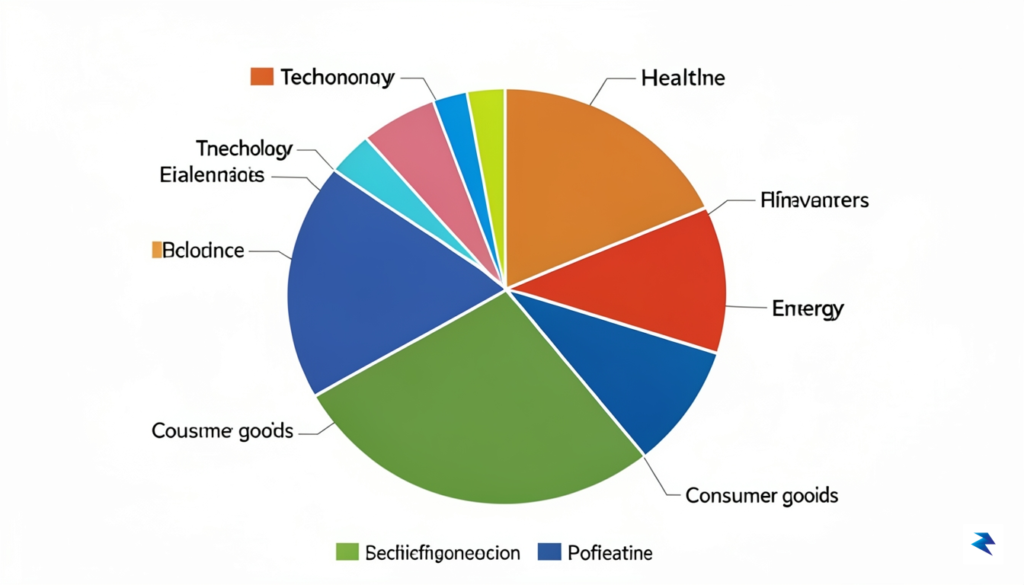
Once you’ve identified the top companies within your index fund, the next crucial step is to analyze their sector distribution. True diversification isn’t just about owning many different companies; it’s about owning companies across a variety of industries and economic sectors. For instance, if your broad-market index fund is heavily weighted towards technology giants, and you also hold a separate tech-focused ETF, you might have a far greater concentration in the technology sector than you realize or intend. This kind of unintended overlap can amplify risk, making your portfolio overly vulnerable to downturns in that particular sector.
Sector diversification acts as a vital shock absorber for your portfolio, helping to smooth out returns over time. When one sector experiences a downturn, others may be performing well, balancing the overall impact. To assess your fund’s sector exposure, again, look at the detailed breakdowns provided by fund websites or financial data platforms. Understand the primary business activities of the top holdings. Is your “diversified” fund, for example, largely composed of companies whose fates are intricately linked to the consumer discretionary sector, or perhaps heavily reliant on advertising revenue? Identifying these concentrations allows you to make informed decisions about whether your current allocation truly provides the balanced exposure you desire across different economic engines.
For many long-term investors, particularly those new to the market or seeking a hands-off approach, sticking with broad-market index funds remains an excellent strategy. These funds offer instant diversification across hundreds or thousands of companies, generally low fees, and typically outperform actively managed funds over the long run. If your primary goal is broad market exposure, and you are comfortable with the inherent volatility that comes with tracking the overall economy, a well-chosen, diversified index fund can be a powerful tool for wealth accumulation. The simplicity and efficiency are undeniable benefits, especially when paired with consistent contributions and a long investment horizon.
However, there are specific scenarios where considering more specialized or lower-volatility alternatives, or at least adjusting your broader portfolio allocation, becomes a prudent move. If your top holdings analysis reveals an uncomfortable concentration in a few companies or a single sector, especially one you perceive as overvalued or facing significant headwinds, it might be time to strategize. For instance, if your index fund is heavily skewed towards high-growth, high-valuation companies, and your personal risk tolerance has shifted towards capital preservation, exploring value-oriented funds, dividend ETFs, or even bonds could provide a more suitable risk-return profile. This isn’t about abandoning indexing entirely, but rather about supplementing
You must be logged in to post a comment.