Jon Prosser Fights Back Against Apple Lawsuit: A Deep Dive
The Collision of Tech Journalism and Corporate Secrecy In the perpetually accelerating realm of technological innovation, the once distinct…
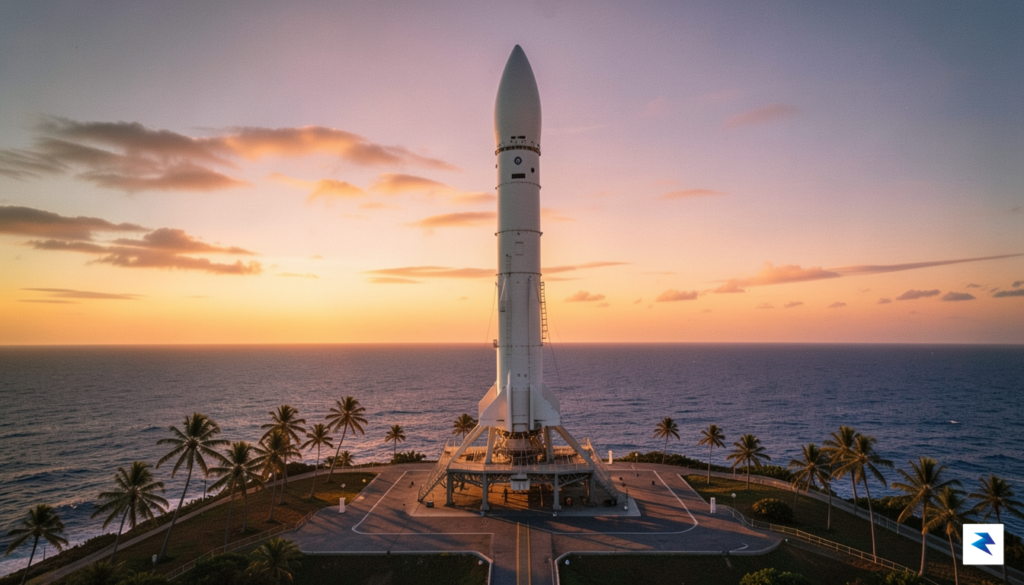
When Elon Musk founded SpaceX in 2002, the aerospace industry was dominated by entrenched, multi-billion-dollar incumbents who viewed the concept of a private, cost-effective launch provider as a dangerous fantasy. Armed with the proceeds from his PayPal exit and a bold vision to make humanity a multi-planetary species, Musk set out to disrupt a stagnant market. However, the early years were defined not by triumph, but by a relentless series of technical setbacks and the looming shadow of insolvency. The company’s primary focus, the Falcon 1 rocket, was a modest two-stage vehicle designed to carry small payloads to orbit, yet it proved to be a formidable adversary that nearly consumed Musk’s entire fortune.
The path to space was paved with three consecutive failures between 2006 and 2008, each more demoralizing than the last. The first attempt ended in a fire shortly after liftoff, while the subsequent two missions were thwarted by engine malfunctions and separation failures. By the time the third Falcon 1 failed to reach orbit in August 2008, SpaceX was essentially out of capital. Musk had poured nearly all his remaining personal funds into the venture, and the team was operating on a shoestring budget, working around the clock in a hangar at Kwajalein Atoll. The atmosphere within the company was thick with the realization that they had exactly one rocket left—a final “all or nothing” attempt—before the dream of affordable spaceflight would be permanently grounded.
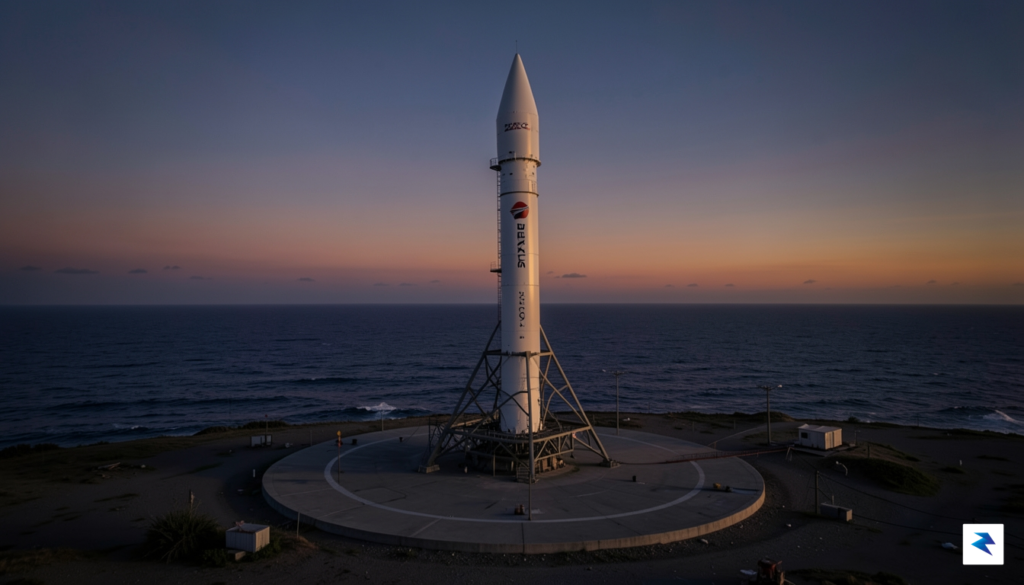
On September 28, 2008, the fourth launch attempt became the defining moment in the history of commercial spaceflight. As the Falcon 1 ascended flawlessly into the sky, it successfully reached orbit, carrying a dummy payload and proving that a private company could achieve what had previously been the exclusive domain of sovereign nations. This victory was not merely a technical milestone; it was a psychological breakthrough that silenced industry skeptics who had dismissed Musk as an amateur. The success served as the primary catalyst for NASA’s decision to award SpaceX a $1.6 billion Commercial Resupply Services contract just months later.
The success of the fourth Falcon 1 flight was the difference between SpaceX becoming a footnote in aviation history and the company evolving into the cornerstone of the modern space economy.
This pivotal win secured the necessary capital to scale operations, develop the larger Falcon 9 architecture, and begin the transition from a scrappy startup to a global powerhouse. By proving that they could deliver hardware to orbit reliably, SpaceX fundamentally shifted the risk-reward calculus for government agencies and private satellite operators alike. The persistence demonstrated during those harrowing years established a corporate culture of rapid iteration and failure-tolerant engineering that remains the bedrock of the company’s current multi-trillion-dollar empire.
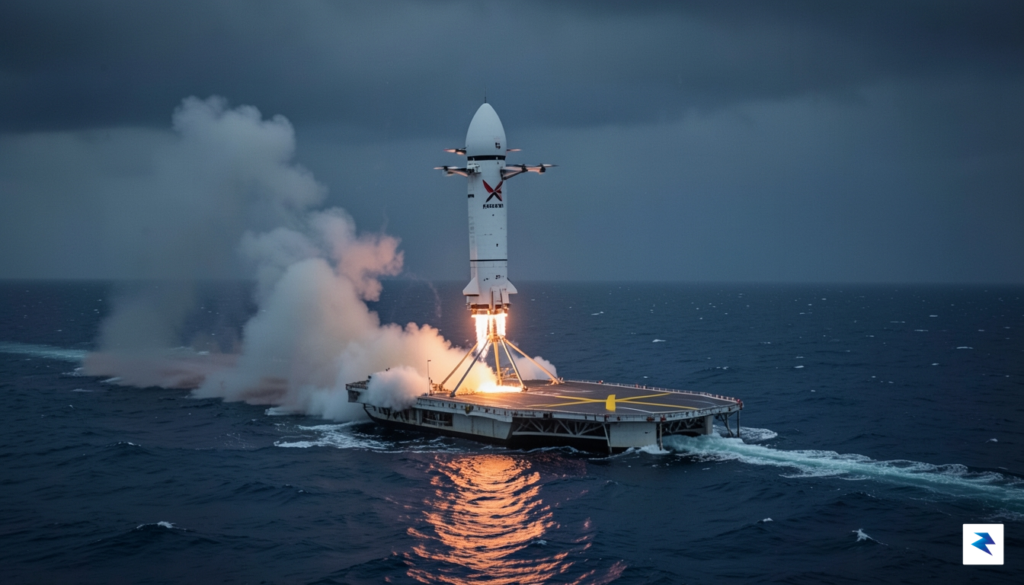
For decades, the aerospace industry operated under the assumption that space travel was inherently disposable. Every mission required the construction of a multi-million dollar rocket that would be jettisoned into the ocean after a single flight, effectively treating a piece of high-precision engineering like a single-use paper cup. SpaceX shattered this paradigm by mastering the physics of vertical landing, an engineering feat once dismissed as science fiction. To pull this off, engineers had to solve the chaotic problem of retro-propulsion—firing engines while moving at supersonic speeds to slow a massive, top-heavy steel cylinder enough to touch down on a target with surgical precision. This transition from expendable hardware to reusable boosters required entirely new flight control algorithms, grid fins for atmospheric steering, and landing legs capable of absorbing the immense shock of touchdown.
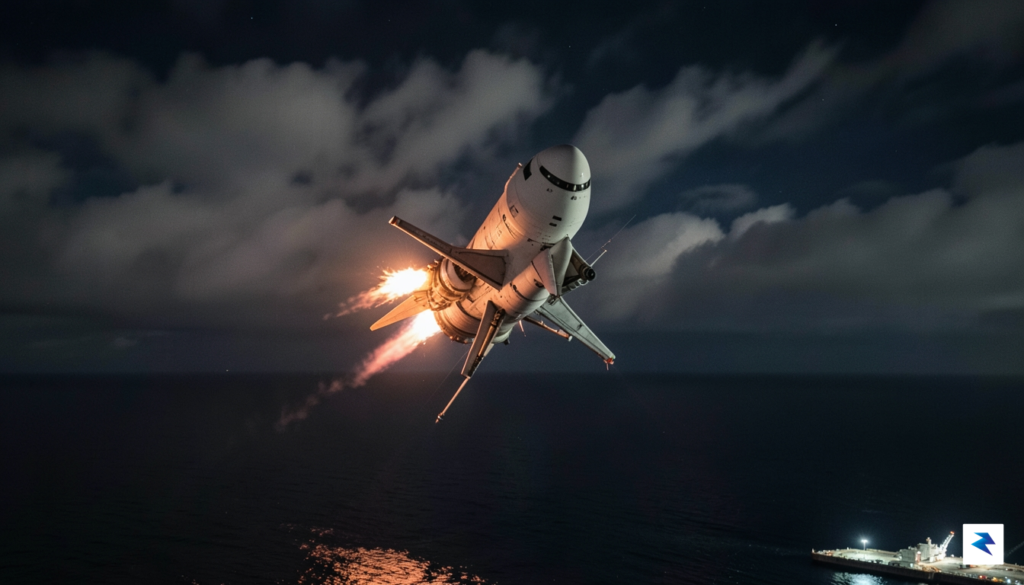
The turning point for this vision arrived on December 21, 2015, with the successful landing of the Falcon 9 flight 20 (Orbcomm-2) at Cape Canaveral. That night did more than just prove a technical theory; it fundamentally rewrote the financial calculus of the entire space industry. By recovering the most expensive portion of the rocket—the first-stage booster—SpaceX could theoretically amortize the cost of manufacturing across dozens of missions rather than just one. This shift effectively lowered the price of putting a kilogram of payload into orbit by an order of magnitude, transforming space from a playground accessible only to superpowers into a viable frontier for private enterprise.
The ability to reuse rockets is the difference between a society that remains confined to one planet and a true spacefaring civilization.
This economic pivot acted as a massive catalyst for the modern satellite industry, specifically enabling the rapid deployment of mega-constellations. Before reusability, launching hundreds of small satellites was prohibitively expensive, keeping global internet connectivity projects on the drawing board for years. With the cost of flight significantly reduced, companies were finally empowered to launch high-frequency, low-latency broadband networks, fueling a gold rush in low Earth orbit. Today, the routine sight of a booster landing on a robotic drone ship has become the standard for the industry, proving that when the cost of access to space drops, the pace of human innovation accelerates exponentially.
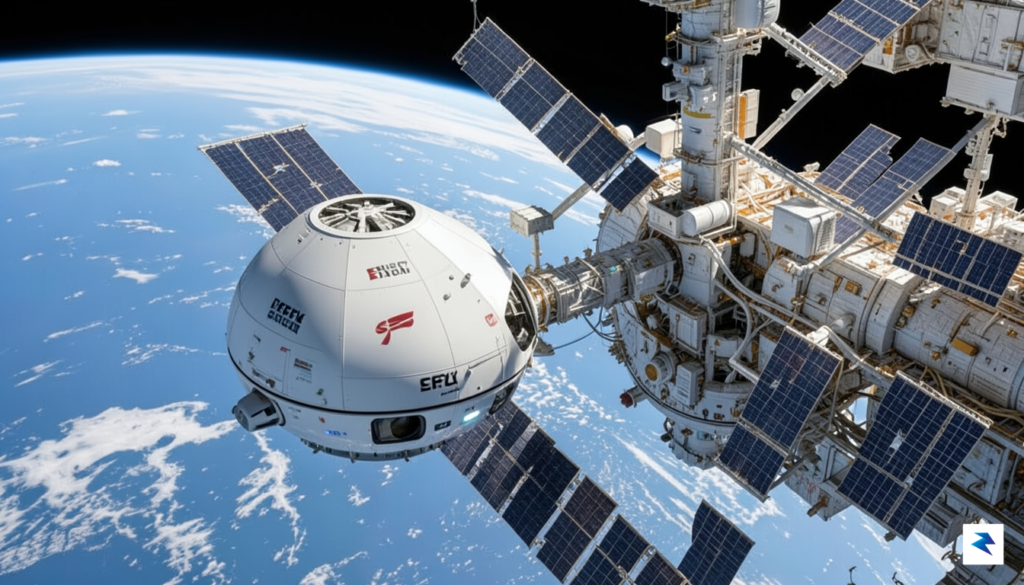
For nearly a decade following the retirement of the Space Shuttle program in 2011, the United States found itself in a precarious position: it possessed no indigenous capability to launch its own astronauts into orbit. Instead, NASA was forced to rely on Russian Soyuz spacecraft, paying hundreds of millions of dollars for seats to ferry American crews to the International Space Station (ISS). This dependency finally shattered in May 2020 with the historic Demo-2 mission. By successfully launching NASA astronauts Bob Behnken and Doug Hurley aboard the Crew Dragon capsule, SpaceX transitioned from a mere cargo delivery service to a cornerstone of human space exploration, effectively restoring America’s status as a preeminent spacefaring nation.
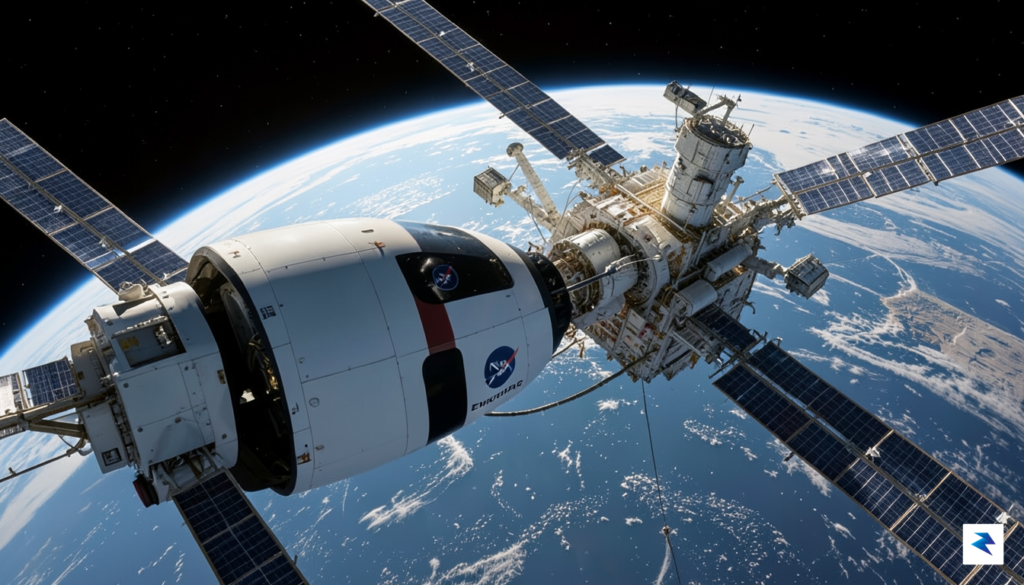
The path to the launchpad was anything but simple, as the shift from transporting inanimate cargo to human beings required a paradigm shift in safety and engineering protocols. NASA’s Commercial Crew Program imposed some of the most rigorous testing requirements in aerospace history, mandating that SpaceX demonstrate an unparalleled level of reliability and redundancy. Engineers had to develop sophisticated launch-abort systems, life-support architectures, and heat shielding capable of surviving the blistering temperatures of atmospheric reentry. Every subsystem was subjected to exhaustive scrutiny, from the high-fidelity simulations of orbital maneuvers to the brutal physical testing of the parachute recovery systems, ensuring that the spacecraft could protect its precious cargo under even the most catastrophic circumstances.
The successful completion of the Demo-2 mission proved that private industry could manage the complexities of human spaceflight, transforming the ISS from a destination for government-exclusive missions into a hub for commercial innovation.
Beyond the technical achievement, this milestone fundamentally altered the economics of modern space travel. By proving that a private company could safely transport humans to low Earth orbit, SpaceX effectively lowered the barriers to entry for future explorers and researchers. This partnership with NASA served as the ultimate validation of Elon Musk’s long-term vision, proving that the company’s iterative design philosophy—which had already revolutionized the launch market with the Falcon 9—could be applied to the high-stakes world of human life support. Today, the Crew Dragon remains the reliable workhorse of the American space program, serving as a testament to what can be accomplished when private agility is paired with the deep expertise and oversight of a government agency.
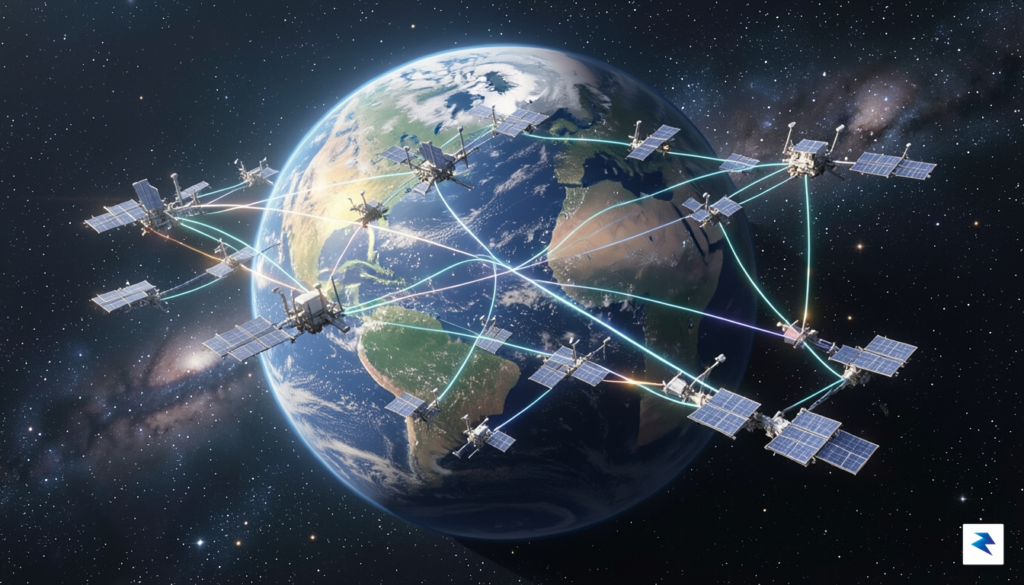
The transformation of SpaceX from a launch provider into a global telecommunications juggernaut began with the ambitious deployment of the Starlink constellation. By populating Low Earth Orbit (LEO) with thousands of mass-produced satellites, SpaceX effectively created the world’s largest commercial satellite network, bridging the digital divide for millions of users in remote, underserved, and conflict-torn regions. Unlike traditional geostationary satellite internet, which suffers from high latency due to the immense distance between the satellite and the ground, Starlink utilizes a dense mesh of satellites close to Earth. This technical paradigm shift has enabled high-speed, low-latency connectivity that rivals terrestrial fiber-optic infrastructure, fundamentally changing how the world perceives space-based communications.
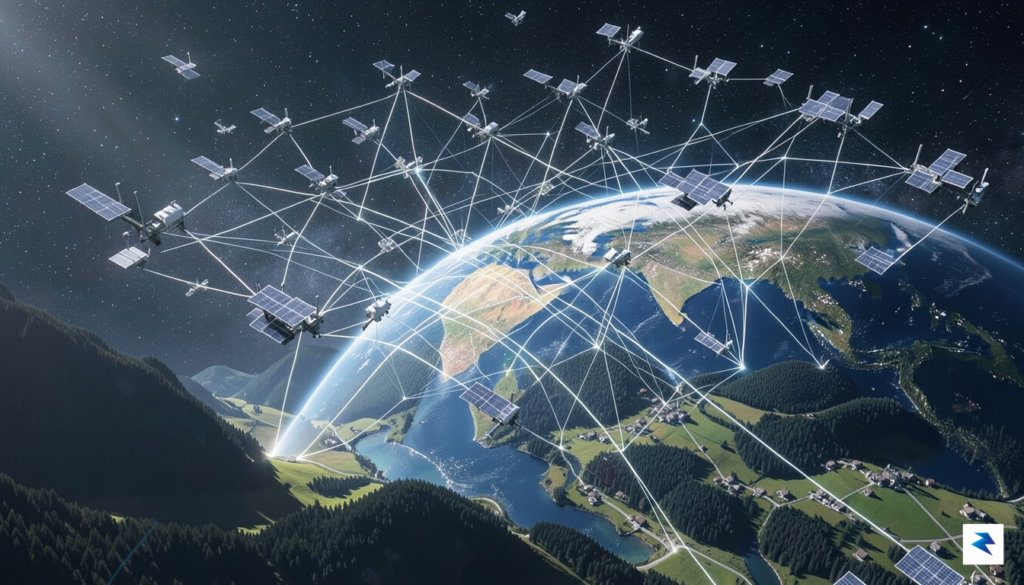
The secret to this rapid scaling lies in SpaceX’s aggressive embrace of vertical integration, a strategy that has become the hallmark of Musk’s industrial empire. By manufacturing their own satellites in-house and utilizing the reusable Falcon 9 rocket as a dedicated delivery vehicle, SpaceX has slashed the cost of deployment to unprecedented levels. They no longer rely on external vendors or third-party launch providers, allowing them to iterate on satellite hardware designs at a pace that traditional aerospace companies find impossible to match. This closed-loop ecosystem means that every dollar spent on a launch directly benefits the company’s own infrastructure, creating a compounding advantage that has effectively locked out competition in the LEO marketplace.
Starlink is not merely a service; it is the financial engine that provides the recurring revenue necessary to fund the development of Starship and the eventual colonization of Mars.
Beyond the immediate utility of providing high-speed internet, Starlink serves as the essential financial backbone for SpaceX’s most radical long-term goals. The steady stream of subscription revenue from global users provides the capital required for the intensive research and development of the Starship launch system. Because the current launch cadence is optimized by SpaceX’s own internal demands, the company has mastered the logistics of rapid, routine access to space. This model—where a telecommunications business subsidizes the advancement of heavy-lift rocket technology—has redefined the economics of the aerospace industry, proving that space exploration can be self-sustaining rather than solely dependent on government contracts or venture capital infusions.
Looking toward the future, the lessons learned from scaling Starlink are already being applied to the next generation of space logistics. The ability to mass-produce complex spacecraft with consistent reliability has set a new industry standard, forcing legacy players to rethink their slow, bespoke manufacturing processes. As SpaceX continues to expand its constellation and enhance its ground-based hardware, the company is effectively turning the orbital environment into a utility as ubiquitous as electricity. This trajectory suggests that the true value of SpaceX’s $2 trillion valuation lies not just in their rockets, but in their unique ability to bridge the gap between orbital infrastructure and everyday global necessity.
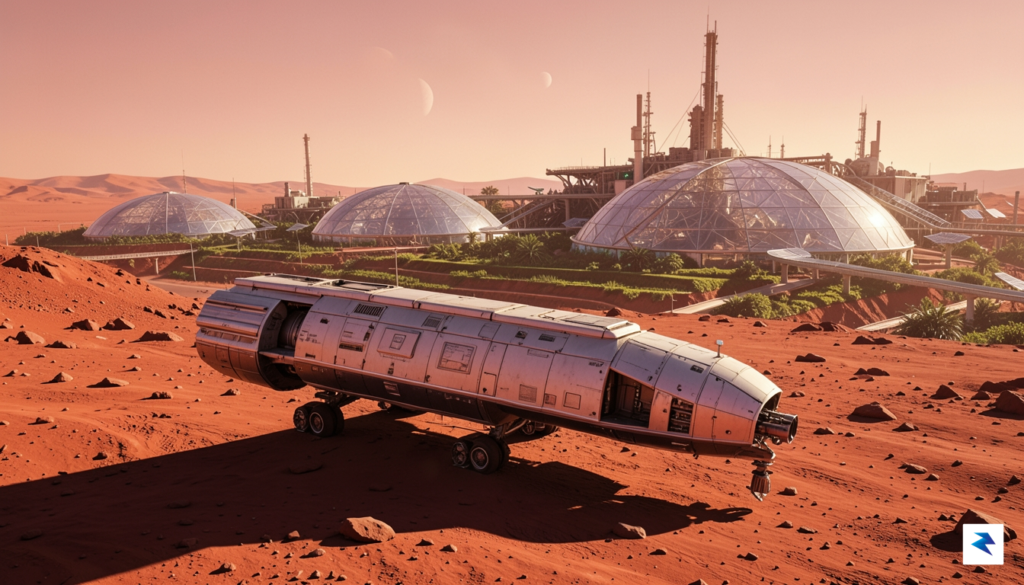
At the heart of SpaceX’s audacious vision lies Starship, a monumental leap in aerospace engineering designed to fundamentally rewrite the economics of spaceflight. Unlike the expendable rockets of the 20th century, Starship is built on the philosophy of rapid, full reusability, a necessity for lowering the cost of reaching orbit by several orders of magnitude. The engine behind this ambition is the Raptor, a groundbreaking liquid methane and liquid oxygen power plant. By utilizing methane—a fuel that can potentially be synthesized on Mars through the Sabatier process—SpaceX has ensured that Starship isn’t just a transport vehicle, but a self-sustaining system capable of fueling its own return journey.
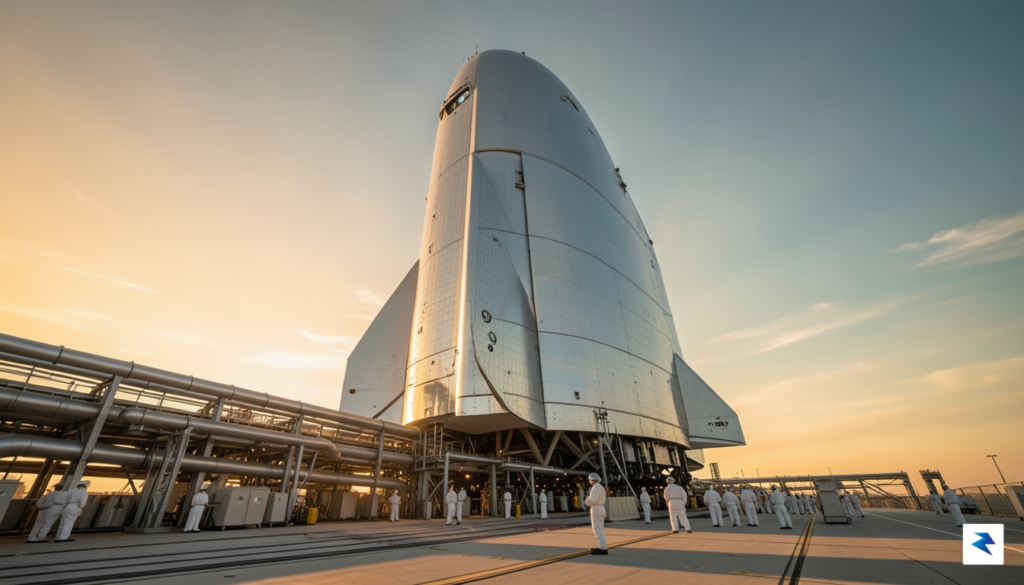
The development of this massive architecture has been defined by an aggressive, iterative testing cadence at Starbase, Texas. Eschewing the traditional aerospace approach of years of paper-based analysis followed by a single, high-stakes flight, SpaceX embraces a “build, fly, fail, learn, repeat” methodology. Each prototype—from the early hopper tests to the increasingly sophisticated flight models—has provided critical telemetry that informs the next iteration. This rapid hardware-rich testing cycle allows engineers to identify design flaws in real-time, accelerating the maturation of the vehicle far faster than conventional industry standards would permit.
“Making life multi-planetary is not just a scientific curiosity; it is an insurance policy for the future of consciousness, and Starship is the only vessel capable of turning that necessity into reality.”
Starship is not merely an improvement over existing technology; it is the essential linchpin for deep space exploration. With its massive lift capacity, capable of delivering over 100 metric tons of payload to orbit, it opens the door to permanent lunar bases, asteroid mining, and the long-term colonization of the Martian surface. By normalizing the transport of massive amounts of cargo and crew to the moon and beyond, Starship effectively bridges the gap between limited, short-term scientific missions and the establishment of a lasting human presence in the solar system. As the program moves toward orbital refueling and complex deep-space maneuvers, humanity is shifting from a species that visits space to one that truly inhabits it, realizing Elon Musk’s ultimate goal of creating a multi-planetary civilization.
You must be logged in to post a comment.