
Inside the Politburo Purge: What the Latest High-Level Expulsion Reveals
The Fall of a Political Heavyweight: Analyzing the Latest Politburo Expulsion The recent expulsion of a high-ranking Politburo member…


For the better part of a century, the landscape of American antitrust enforcement was defined by a federal monopoly. The Federal Trade Commission (FTC) and the Department of Justice (DOJ) acted as the exclusive gatekeepers of corporate consolidation, maintaining a centralized vision of market competition that prioritized consumer pricing above almost all other metrics. During this era, corporations seeking to merge or acquire competitors focused their regulatory lobbying and legal strategy almost entirely on Washington, D.C. If a deal passed the federal litmus test, it was generally considered cleared for takeoff, leaving state-level concerns as little more than background noise in the broader economic theater.
However, the modern era has ushered in a profound decentralization of this power. Today, state attorneys general are no longer content to play a secondary role; instead, they have evolved into aggressive, independent watchdogs that are increasingly willing to challenge mega-mergers that federal agencies might view with indifference or tentative approval. By leveraging state-specific consumer protection laws and broader interpretations of antitrust statutes, these state officials are finding new legal pathways to block transactions that threaten local labor markets, regional competition, and the economic vitality of their respective jurisdictions. This shift signals a move away from a “one-size-fits-all” federal enforcement model toward a more fragmented, multi-front regulatory environment.
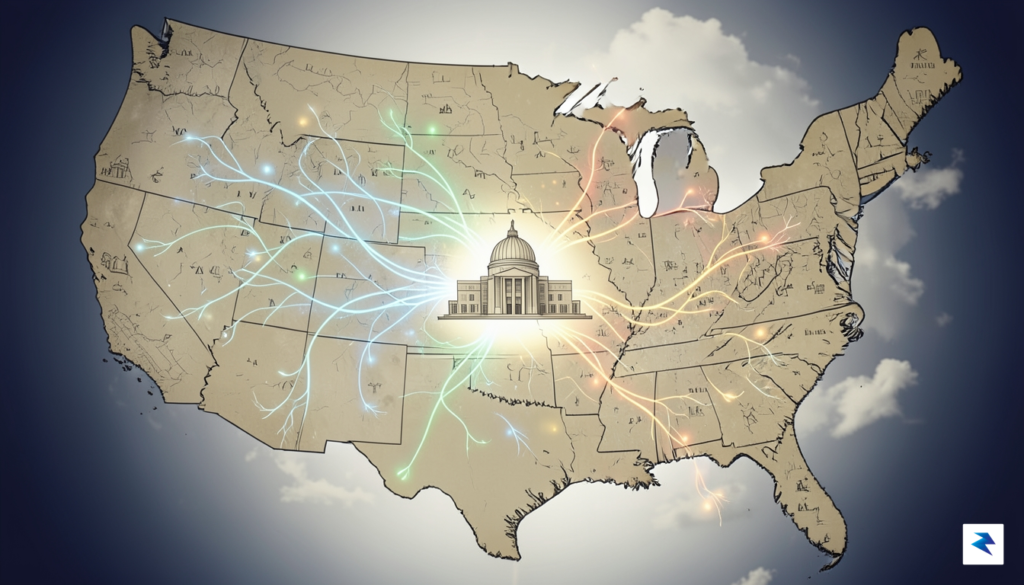
The rise of state-level intervention is not merely a procedural change; it is a fundamental shift in the philosophy of market oversight that forces corporations to defend their business strategies in multiple courtrooms simultaneously.
The implications for national business strategy are significant and far-reaching. No longer can a corporation rely solely on securing a federal blessing to finalize a merger; they must now build a comprehensive, state-by-state compliance strategy to mitigate the risk of litigation from local authorities. This “balkanization” of antitrust enforcement creates a higher barrier to entry for large-scale consolidation and increases the cost of uncertainty for executives and shareholders alike. As states continue to assert their sovereignty in matters of economic competition, the legal environment is becoming more volatile, requiring companies to navigate a complex web of regulatory interests that often transcend the traditional boundaries of federal influence.
Ultimately, this new front in antitrust law suggests that the era of predictable, centralized regulation is waning. Whether through specific challenges to retail giants, tech conglomerates, or healthcare networks, state attorneys general are proving that their capacity to shape the economy is no longer just a peripheral concern. For the business community, this means that the road to a successful merger is no longer a straight line to Washington, but a winding, unpredictable journey through the halls of state government across the country.

For decades, the rhythm of American antitrust enforcement was dictated by the deliberate, often glacial pace of federal agencies like the Department of Justice and the Federal Trade Commission. However, the potential consolidation involving Paramount and Warner Bros. Discovery signals a seismic shift: state attorneys general are no longer content to serve as junior partners in the regulatory ecosystem. Instead, they are increasingly positioning themselves as aggressive first responders, utilizing localized consumer protection statutes to challenge massive media mergers that federal authorities might otherwise let slide or approach with caution. By focusing on the specific impacts of price hikes and reduced content variety within their own jurisdictions, these state-level actors are effectively nationalizing their influence, creating a multi-front legal battleground that forces corporations to defend their business models in dozens of courts simultaneously.

The legal strategy employed by states often hinges on the granular nuances of state-level competition laws, which frequently grant broader authority than the federal Sherman or Clayton Acts. While federal regulators must often prove a profound, nationwide harm to competition, states can argue that a merger will cause tangible, localized injury, such as reduced service options for rural cable subscribers or higher prices for regional streaming bundles. This localized approach allows state attorneys general to bypass the bureaucratic bottlenecks of Washington D.C., applying pressure through state supreme courts where the political appetite for “big business” oversight is often more robust. By tethering their arguments to the immediate, everyday financial burden on their constituents, they transform abstract corporate mergers into pressing kitchen-table issues.
The rise of state-led antitrust intervention represents a shift from passive observation to active disruption, effectively forcing corporations to navigate a fragmented regulatory landscape that can extend merger timelines indefinitely.
This tactical pivot is further fueled by the divergent resource realities between state and federal offices. Although federal agencies possess deep expertise and massive budgets, they are often hamstrung by the necessity of building an unassailable national case that can withstand years of appellate scrutiny. In contrast, state attorneys general often collaborate in multi-state coalitions, pooling their investigative resources to create a cumulative weight that is difficult for any corporation to ignore. This disruption of the traditional M&A timeline is not merely a legal nuisance; it is a strategic weapon. By introducing uncertainty and requiring compliance with a patchwork of state-specific demands, these regulators can effectively stall or even dismantle the momentum of a deal, turning a streamlined corporate strategy into a protracted, expensive, and public relations nightmare.
Ultimately, the motivations driving these state-level challenges are as much political as they are legal. In an era where public distrust of media consolidation is at an all-time high, taking a stand against a titan like Paramount offers significant political capital for state leaders. By painting themselves as the defenders of local consumer interests against distant, monolithic entities, these attorneys general are rewriting the rules of engagement. This creates a volatile environment for global media companies, which can no longer rely on a single federal “green light” to finalize their deals. As states continue to assert their authority, the era of centralized, predictable antitrust regulation is rapidly giving way to a more chaotic, localized, and hyper-vigilant legal reality.
The modern media landscape has evolved into a complex web where the lines between content creation and distribution are increasingly blurred, creating a fertile ground for intense regulatory scrutiny. When giants like Warner Bros. Discovery solidify their market position, they do not merely gain a larger share of the audience; they gain the ability to dictate the terms of cultural consumption. State regulators view this vertical integration with profound skepticism, fearing that the promise of operational efficiency is merely a mask for monopolistic control. Because media conglomerates now own both the production studios—which create the intellectual property—and the platforms—which deliver that content to living rooms—they possess an unprecedented ability to stifle competition from independent producers and smaller streaming services.
This structural dominance has immediate, tangible impacts on the average consumer’s wallet and viewing options. As these behemoths consolidate, the leverage they hold over cable carriage agreements allows them to force bundling practices that inflate monthly bills, leaving subscribers with little choice but to pay for channels they never watch. Furthermore, the push toward streaming consolidation often leads to aggressive pricing strategies. Once a single entity controls a vast library of essential entertainment, they can hike subscription fees with minimal fear of customer attrition, knowing that the “must-have” content is locked behind their digital walls. This is precisely why state-level attorneys general are stepping into a sphere traditionally occupied by federal regulators: the harm is not abstract, but is instead felt directly by citizens in their monthly household budgets.

The visibility of media mergers makes them a unique political and economic lightning rod; when a citizen loses access to local news or faces rising costs for their favorite programming, the grievance becomes a localized issue that state leaders can no longer ignore.
Beyond the cost of entertainment, there is a deep-seated concern regarding the health of local advertising markets and the diversity of voices. When a massive conglomerate acquires local stations or regional sports networks, they frequently streamline operations by centralizing production and cutting local staff, which erodes the unique identity of community-focused journalism. This reduction in local competition means fewer outlets for small businesses to advertise effectively, forcing them to compete for ad space on platforms that are increasingly optimized for national giants. States perceive these mergers as uniquely harmful because they threaten to homogenize the cultural and civic fabric of their regions. Unlike industrial mergers that might increase the efficiency of manufacturing a steel part, media mergers directly alter the information ecosystem, making them a high-priority target for regulators determined to preserve a vibrant, competitive marketplace for their constituents.

The modern regulatory landscape for media consolidation has shifted dramatically, moving away from federal-only oversight toward a complex patchwork of state-level litigation. For Paramount and Warner Bros. Discovery, this evolution represents a formidable barrier that threatens to stall, or entirely dismantle, the proposed merger. Unlike previous eras where federal approval from the Department of Justice or the Federal Trade Commission was the final word, states are now actively leveraging their own antitrust statutes to file injunctions. These state-led efforts often focus on localized impacts—such as labor market concentration or regional content distribution—creating a legal quagmire where a deal approved at the federal level could still be blocked by a single state attorney general.
To navigate this hostile environment, the companies must adopt a multi-jurisdictional legal strategy that is as aggressive as it is defensive. Paramount and Warner Bros. Discovery are effectively forced into a game of legal whack-a-mole, defending the merger’s legitimacy in several state courts simultaneously. This strategy requires deploying specialized legal teams to manage discovery and hearings across disparate jurisdictions, each with different procedural rules and political pressures. Furthermore, these firms must anticipate the trend of forum shopping, where state regulators choose to file challenges in courts perceived to be more skeptical of big-tech or media monopolies, thereby increasing the likelihood of securing an injunction that could halt the merger process indefinitely.

The rise of state-led antitrust intervention means that even a “green light” from Washington no longer guarantees a smooth path to closing; companies must now treat each state house as a potential veto point.
The core risk here is that these prolonged legal battles force the companies into a position of diminished financial viability. Every month spent fighting off injunctions in state courts adds significant operational costs and increases the uncertainty surrounding the deal’s final valuation. If the costs of concessions—such as forced divestitures of key assets or employment guarantees—become too high, the deal may lose its strategic appeal for shareholders. Consequently, the probability of a successful merger hinges not just on the strength of their economic arguments, but on their ability to negotiate preemptive settlements with individual states to avoid a permanent stalemate.
Ultimately, the current environment suggests that the path to approval is narrower than ever before. Success will likely depend on the companies’ willingness to offer targeted remedies that appease state-specific concerns without crippling the broader synergy goals of the merger. If they fail to streamline their defense and manage the influx of state litigation, the timeline for this consolidation could stretch well beyond the limits of patience for both investors and industry partners, potentially leading to a quiet withdrawal from the negotiation table.

The turbulence surrounding potential media consolidations, such as the widely discussed Paramount-Warner Bros. Discovery scenario, marks a permanent shift in how American corporations must approach growth. For decades, the primary hurdle for any massive merger was securing approval from federal regulators in Washington, D.C. However, the current landscape has evolved into a complex, fragmented gauntlet where individual state attorneys general wield significant power to block or complicate deals that cross regional borders. This transition from a centralized federal review process to a multi-front legal battleground is creating a tangible “chilling effect” on boardroom ambition, as executives now face the prospect of endless litigation even after clearing the traditional hurdles of the Department of Justice or the Federal Trade Commission.

As a result, the strategic playbook for mergers and acquisitions is undergoing a radical redesign. Corporations can no longer rely solely on high-powered federal lobbyists to grease the wheels of progress; instead, they must implement a dual-track strategy that treats state-level relations with the same level of urgency as federal advocacy. This new reality demands that companies proactively engage with regional regulators and state officials long before a deal is formally announced. Failing to account for the unique political and consumer-protection concerns of individual states now poses an existential risk to deal completion, potentially rendering multi-billion dollar transactions dead on arrival before they ever reach a federal court.
The era of the “national consensus” on corporate size is over; today’s dealmakers must navigate a localized patchwork of antitrust enforcement that favors caution over scale.
Looking ahead, this trend will likely force a new form of corporate compliance that prioritizes hyper-local political intelligence. We are moving toward a period where “regulatory readiness” involves mapping the ideological leanings of various state legislatures and attorney general offices across the country. Companies that fail to anticipate this shift will find themselves trapped in a state of perpetual legal limbo, unable to execute the economies of scale necessary to compete in a global market. Ultimately, the future of corporate growth will not be defined by the size of a firm’s balance sheet, but by its ability to harmonize its expansion plans with the increasingly assertive priorities of a fragmented regulatory map. Those that master this decentralized diplomacy will be the only ones capable of surviving the new, more restrictive era of antitrust law.
You must be logged in to post a comment.