
Paradigm Launches $1.2B Fund: Why AI is the Next Frontier for Crypto VCs
The Strategic Pivot: Paradigm’s $1.2 Billion AI Bet Paradigm, long recognized as a titan within the crypto-native venture capital landscape,…

It is not every day that a casual trip to the clothing store leads to a deep-dive into high-level network infrastructure, yet that is exactly what happened when security researcher Tris Sherliker examined a standard Uniqlo t-shirt. While checking the garment’s care instructions, Sherliker noticed something peculiar printed on the internal fabric tag: a dense, cryptic string of characters that looked far more like a terminal command than a suggestion for cold-water washing. What initially appeared to be a manufacturing error or a random aesthetic choice quickly revealed itself to be a snippet of legitimate, highly specialized bash code, triggering a cascade of questions about how digital infrastructure could bleed into the physical world of retail apparel.
The script itself was far from gibberish; it was a compact, obfuscated command designed to interface with Akamai’s Content Delivery Network (CDN) infrastructure. To the untrained eye, the characters were merely a confusing jumble of symbols, but to a developer, the syntax hinted at a self-evaluating bash command intended to verify server configurations or manage cloud-based assets. The presence of such technically dense, functional code on a piece of mass-produced clothing suggests a bizarre breakdown in the digital supply chain. It is highly probable that a stray data stream, intended for a server configuration or a logistics database, was inadvertently funneled into the automated printing systems responsible for generating garment labels.
The discovery serves as a stark reminder that in our hyper-connected era, the digital and physical realms are linked by invisible threads, and sometimes, those threads get tangled in the most unexpected places.
This is far more than a mere curiosity or a humorous prank; it represents a fascinating anomaly in the modern digital supply chain. When we consider how complex the manufacturing process is for global retailers, we often overlook the layers of automation, server-side scripting, and data management that underpin every single item on a store rack. The fact that an Akamai CDN command ended up on a shirt suggests that the pipeline used to manage supply chain data might have been compromised or misconfigured, allowing production-level server instructions to overwrite standard textile information. This incident forces us to look closer at the hidden complexity behind the products we buy, proving that even a simple cotton tee can harbor a digital ghost from the server room.
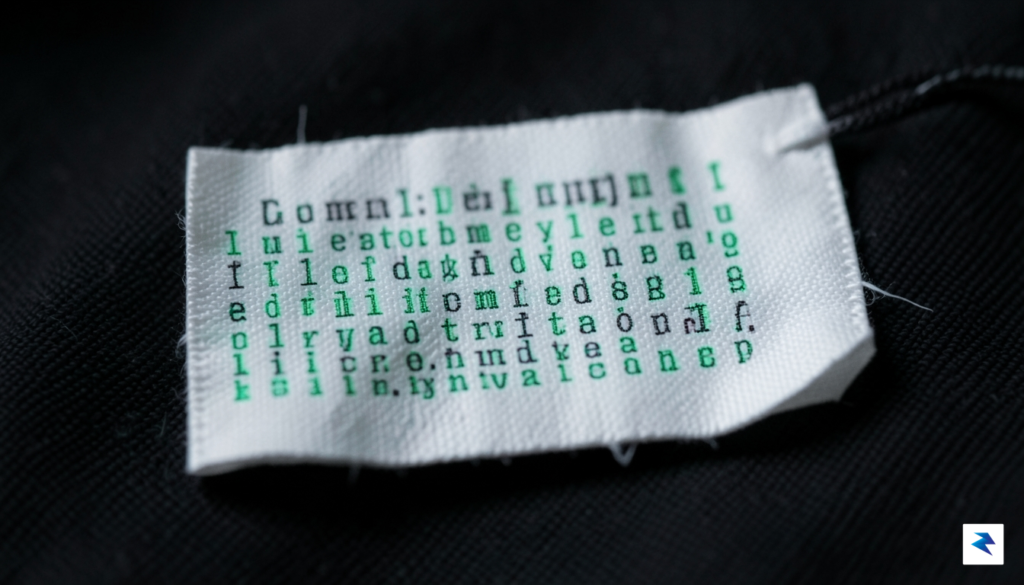
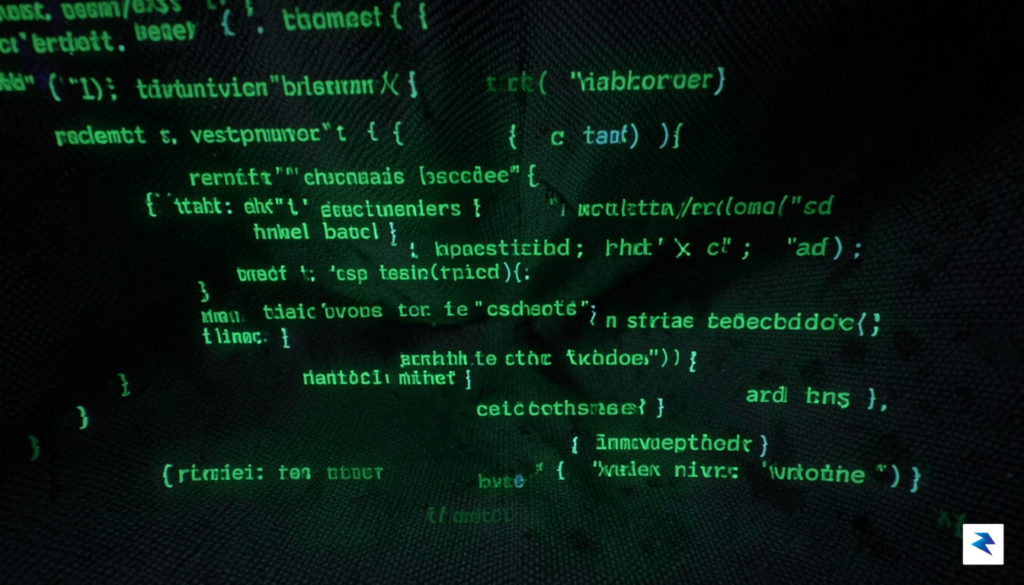
To the casual observer, the cryptic text adorning the Uniqlo t-shirt tag looked like nothing more than a random assortment of characters—a jumbled sequence of letters, numbers, and symbols devoid of apparent meaning. However, for those with a keen eye for code, this seemingly nonsensical string was in fact a highly compressed and intricately obfuscated Bash script. Bash, short for Bourne-Again Shell, is a powerful command language interpreter commonly used on Unix-like operating systems, essentially serving as the language through which users and programs interact with the computer’s core functions. This wasn’t just any script; it was a sophisticated piece of programming designed to perform very specific operations within the Akamai edge computing environment, hidden in plain sight.
The first layer of complexity lay in its obfuscation. Obfuscation is a technique where developers intentionally make their code difficult to read and understand, often by using unconventional syntax, encoding, or compression. In this instance, the script utilized various methods to mask its true intent, transforming what would typically be straightforward commands into a dense, almost impenetrable block of text. This practice serves multiple purposes: it can protect intellectual property, make it harder for unauthorized parties to reverse-engineer software, or, as in this case, condense a lot of functionality into a minimal footprint. Deciphering it required a systematic approach, peeling back layers of encoding and clever tricks to reveal the underlying logic.
Once the layers of obfuscation began to unravel, the script’s technical functions came into focus. A significant portion involved robust string manipulation. This wasn’t merely about simple text replacement; the script employed sophisticated techniques like Base64 decoding, string reversal, and complex pattern matching to reconstruct executable commands from fragmented data. Imagine having a puzzle where each piece is itself encoded; the script was adept at decoding these individual pieces and then assembling them into coherent instructions that the Bash interpreter could understand and execute. This dynamic reconstruction of commands is a hallmark of advanced scripting.
Beyond string acrobatics, the script was also designed to perform crucial execution environment checks. Before proceeding with its primary tasks, it would likely interrogate its surroundings, querying system variables, checking the operating system version, or even looking for specific files and directories. These checks are vital in a distributed computing environment like Akamai’s, ensuring that the script only runs on authorized servers, under specific conditions, and perhaps even tailoring its behavior based on the particular server’s role or configuration. This adaptive nature prevents unintended execution and helps maintain the integrity of the Akamai CDN (Content Delivery Network) infrastructure.
Ultimately, the script’s purpose was deeply intertwined with its intended home: the Akamai CDN. Akamai is a global leader in edge computing, providing services that accelerate and secure online content delivery by bringing data closer to users. This script was likely tasked with managing aspects of this vast network. This could involve fetching updated configuration files from central Akamai servers, purging cached content at specific edge locations to ensure users see the latest versions of web pages, or pushing log data back for analysis. Its operations were critical for maintaining the speed, reliability, and security that Akamai promises its clients, directly impacting how quickly and smoothly millions of websites deliver content daily.
Perhaps one of the most fascinating aspects of this script was its ‘self-evaluating’ property. In simple terms, this means that parts of the script were designed to generate new commands on the fly and then immediately execute them within its own runtime. Instead of having all instructions explicitly written out, the script would build new instructions based on internal logic or external data it had just processed. This dynamic execution, often facilitated by the eval command in Bash, makes the script incredibly powerful and flexible, able to adapt its behavior without needing external updates. It’s like a set of instructions that not only tells you what to do but also how to write the next set of instructions you need to follow, all encapsulated within itself, making it a highly compact and efficient, albeit complex, piece of software.


The mystery of how a piece of server-side infrastructure code migrated from a tech company’s backend to a mass-produced garment is a testament to the precarious nature of modern digital supply chains. In a globalized retail environment, the path from a design concept to a finished product involves a complex web of interconnected databases, automated content management systems (CMS), and third-party printing vendors. It is highly probable that this incident was not the result of a deliberate design choice, but rather a catastrophic failure in data mapping. When metadata fields are ingested into a manufacturer’s design portal, a simple database mismatch—perhaps a swapped asset ID or a misinterpreted file path—can easily replace a high-resolution graphic file with a raw text string pulled from an unrelated repository.
Modern retail giants rely heavily on automated workflows to manage the sheer volume of designs required for seasonal collections. These systems are designed to pull assets from centralized digital asset management (DAM) servers, where code snippets for web configurations often reside in close proximity to marketing collateral. If the automated pipeline responsible for feeding design files to the printing hardware was misconfigured, it might have inadvertently treated a server configuration script as a graphic asset. Because these processes are largely “headless”—meaning they operate without constant human supervision until the final quality assurance check—the error remained invisible until the finished garments rolled off the assembly line.
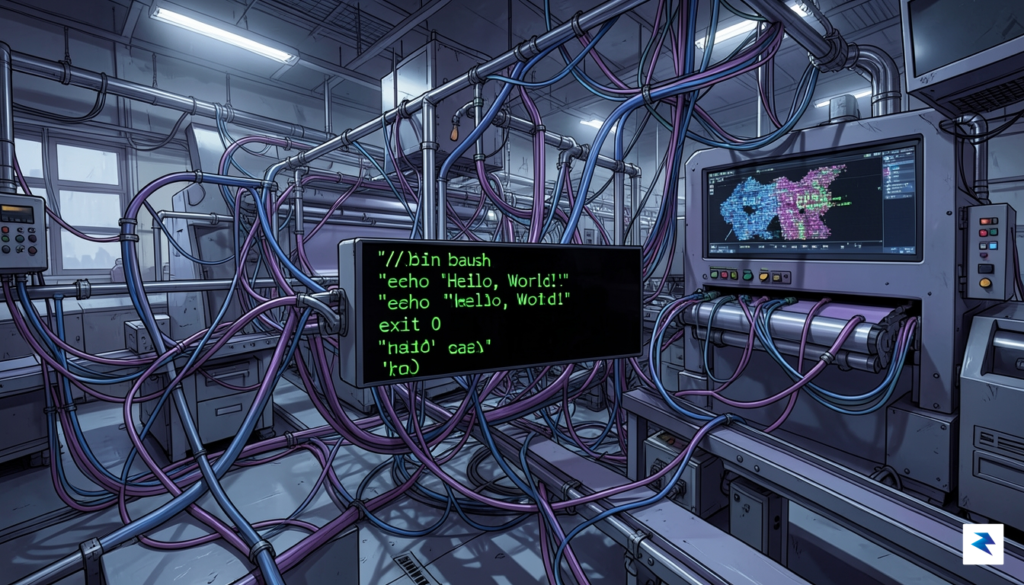
The “human element” is often the final line of defense, yet it is also the most susceptible to the phenomenon of automation bias. In industrial-scale printing, operators are tasked with managing thousands of units per hour; they are trained to look for obvious defects like ink splatters, misalignment, or color bleeding. A block of obfuscated bash code, however, looks remarkably like a complex graphic design or a piece of abstract “cyber-aesthetic” typography to an untrained eye. If the proofing department saw the script, they likely assumed it was a trendy, “hacker-chic” design choice rather than a critical infrastructure leak.
The core of the issue lies in the fragmentation of data, where automated systems treat all file types as identical binary payloads, stripping away the necessary context that would otherwise flag a server script as inappropriate for a consumer product.
Ultimately, this incident highlights the dangers of relying on high-velocity, automated pipelines that lack semantic awareness of their contents. When the barrier between backend infrastructure and frontend consumer goods becomes this thin, the risk of “data bleed” increases exponentially. This glitch serves as a stark reminder that in an era of hyper-connectivity, our digital footprints can sometimes wander into the physical world in ways that are as baffling as they are ironic.

When a consumer discovers a snippet of obfuscated bash code printed on a garment, the immediate reaction might range from confusion to genuine alarm. It is natural to wonder if this represents a sophisticated malware vector or a clandestine attempt to compromise personal devices. However, it is essential to distinguish between a functional cybersecurity threat and a catastrophic failure of operational data integrity. In this instance, the code—which appears to be a configuration script related to content delivery network (CDN) processes—is entirely inert. Because the script is printed as static ink on fabric, it lacks the ability to execute, communicate with external servers, or interact with an operating system. For the wearer, there is zero risk of data theft, system infection, or privacy compromise; the garment is, for all intents and purposes, just a canvas displaying a collection of nonsensical characters.
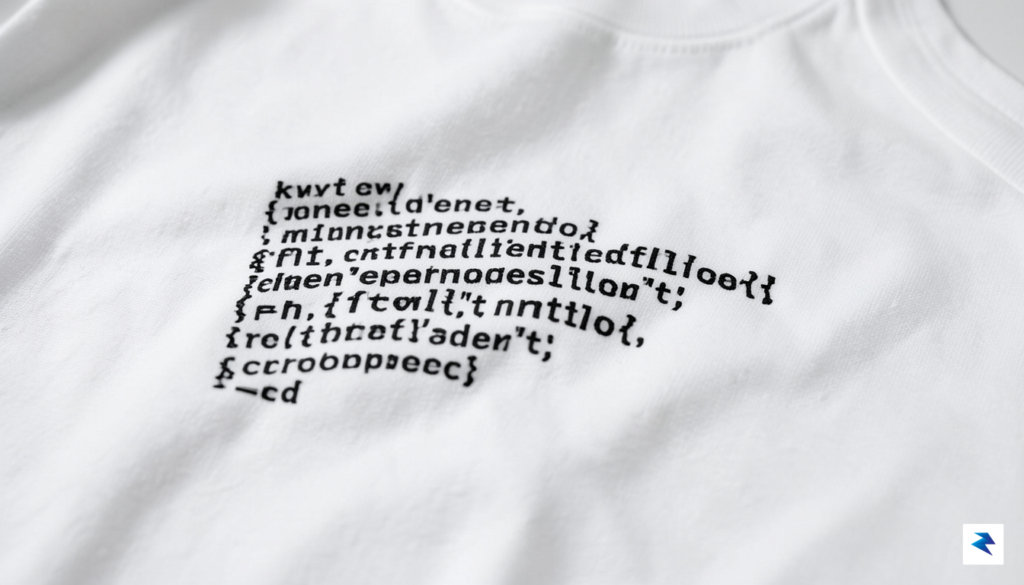
While the consumer remains safe, the implications for the brand are far more complex and troubling. This incident is not a malicious hack in the traditional sense, where an attacker purposefully breached a system to cause harm; rather, it represents a significant breakdown in the company’s internal production pipeline. The presence of sensitive configuration data on a mass-produced consumer product suggests that automated workflows—likely those designed to prepare digital assets for print—were improperly filtered or accidentally merged with internal deployment scripts. This points to a failure in the “data hygiene” protocols that should prevent technical assets from entering the creative design environment. When such sensitive operational strings are leaked into the public domain, it signals to competitors and cybersecurity researchers that the brand’s internal data management and print-on-demand workflows lack the necessary safeguards to scrub proprietary information before it reaches the factory floor.
The primary casualty here is not the consumer’s digital security, but the brand’s reputation for operational precision and quality control.
Ultimately, this blunder serves as a stark reminder of the convergence between physical manufacturing and digital infrastructure in the modern era. As companies increasingly rely on automated systems to manage everything from supply chain logistics to aesthetic graphic design, the lines between these two worlds become dangerously blurred. A mistake that once would have been limited to a misspelled word or an inverted logo can now expose the raw guts of a digital architecture. While there is no direct risk to the person wearing the shirt, the brand must now grapple with the reality that their internal processes were transparent enough to be literally worn on someone’s sleeve. This is less a security breach and more a profound operational embarrassment, highlighting the urgent need for better auditing processes in an age where code is increasingly treated as just another graphic element.

The appearance of a functional, obfuscated bash script on a piece of mass-produced apparel serves as a fascinating, if unintentional, case study in the vulnerability of modern supply chain automation. In an era where digital data flows seamlessly from cloud infrastructure to physical manufacturing floors, the line between software code and consumer goods has blurred significantly. This incident underscores a critical reality: when automated data pipelines lack rigorous verification, they become conduits for “data pollution,” where extraneous backend diagnostics or accidental snippets of code can inadvertently bleed into customer-facing products. For global retailers, this highlights the urgent need to treat design assets with the same security scrutiny applied to critical enterprise software.

To prevent these types of digital artifacts from tarnishing brand reputation, retail and manufacturing companies must implement strict “data sanitization” protocols at every stage of the design process. Organizations often rely on complex, interconnected systems where developers, designers, and printing vendors share assets in real-time. Without a robust verification layer—what security professionals might call a “digital provenance” check—there is no guarantee that a file sent to a printer contains only the intended visual elements. Companies should mandate that all files destined for production undergo automated scanning, not just for quality control, but for the presence of non-visual data, such as scripts, metadata, or embedded code segments that have no business being on a garment.
The integration of digital and physical security is no longer just an IT concern; it is a fundamental pillar of brand integrity in a hyper-connected manufacturing landscape.
Furthermore, the broader takeaway for the tech industry is that the “infrastructure-as-code” philosophy must extend to the physical outcomes it generates. When developers push updates or maintain data pipelines, they must account for the downstream impact on non-digital endpoints. Establishing clear provenance—the ability to trace a piece of art or a design element back to its verified source—is essential for mitigating the risks of accidental data leakage. By adopting a “security-by-design” approach that treats every output as a potential vector for data exposure, industries can better protect their physical products from becoming repositories for stray digital debris. Ultimately, this incident serves as a modern cautionary tale: as our physical world becomes increasingly digital, the importance of maintaining strict hygiene over our data assets will only continue to grow.
You must be logged in to post a comment.