The Private Credit Boom: Is the Market Heading for a Correction?
Defining the Private Credit Boom Following the seismic tremors of the 2008 financial crisis, the landscape of global lending underwent a…

To grasp the gravity of the current economic climate, one must first understand what the labor force participation rate actually measures. Unlike the traditional unemployment rate, which only tracks individuals who are actively searching for work, the participation rate accounts for the entire civilian population aged 16 and older who are either employed or actively seeking a job. When this percentage dips to levels not witnessed since the 1970s, it signifies a profound departure from the post-war era of expansion. We are not merely seeing a temporary lull in hiring; we are witnessing a systematic exodus from the traditional workforce that challenges the very foundation of our economic productivity.
The distinction between being unemployed and being a non-participant is critical for understanding why this trend is so alarming. An unemployed person is still part of the labor force, maintaining a tether to the economy with the intention of re-entering the workforce as soon as the right opportunity arises. In contrast, those who have exited the labor force have effectively stopped looking altogether. They are no longer counted in the unemployment statistics, which can mask the true depth of the crisis by creating a false sense of stability. When millions of Americans decide that the barriers to entry—whether due to wage stagnation, skills mismatches, or shifting lifestyle priorities—outweigh the benefits of employment, the economy loses a vital engine of growth.
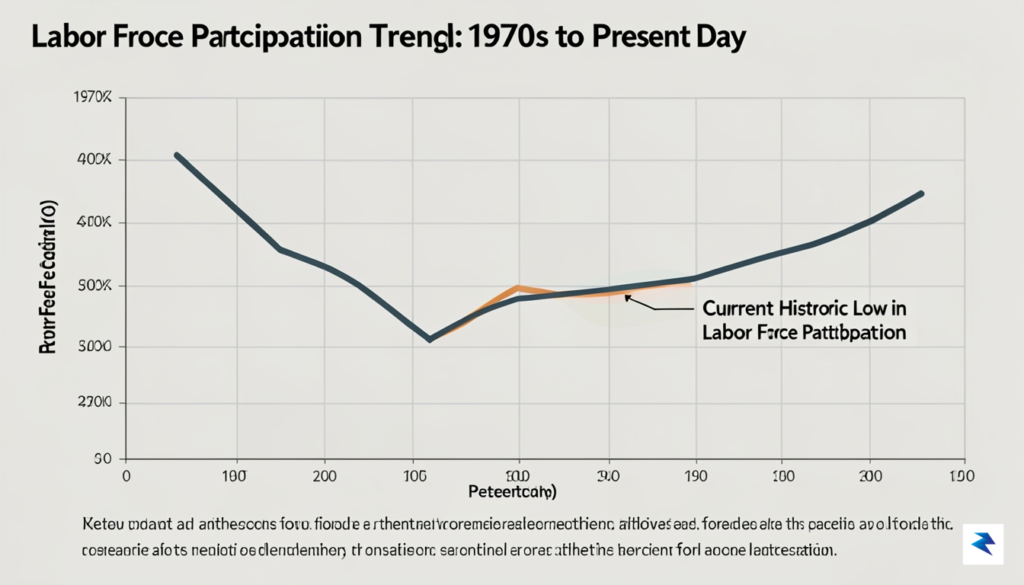
The decline in labor participation is not merely a cyclical fluctuation; it is a structural transformation that suggests the American labor market is becoming less accessible and less appealing to a significant portion of the population.
Comparing today’s data to the landscape of the 1970s reveals a sobering reality. During that decade, the workforce was expanding rapidly as demographic shifts, including the mass entry of women into the labor market, pushed participation rates toward historic highs. Today, the trend has reversed. We are facing a confluence of factors—ranging from an aging population reaching retirement age to a mismatch between the skills workers possess and the skills employers demand—that make this 50-year low a permanent feature of our economic landscape. Because these issues are deeply structural, they cannot be fixed by simple monetary policy adjustments or short-term stimulus efforts. Addressing this slump requires a comprehensive re-evaluation of how we prepare, support, and incentivize workers in an era where the traditional path of employment is increasingly viewed as untenable by a growing segment of the American public.

The decision to exit the labor market is rarely a single-event choice, but rather the culmination of systemic pressures and personal re-evaluations. At the heart of this trend is the rise of the “discouraged worker”—individuals who have ceased searching for employment not because they are unwilling to work, but because they have lost faith in the viability of the current job market. When wage growth fails to keep pace with the relentless climb of housing, healthcare, and childcare costs, the financial incentive for low-to-mid-wage employment evaporates. For many, the math simply no longer adds up; the cost of commuting, professional attire, and the time lost to rigid schedules outweighs the diminishing marginal gains of a paycheck that barely covers the necessities of life.
Beyond the raw economic calculations, the post-pandemic era triggered a profound psychological shift often described as the “great re-evaluation.” Millions of Americans spent years tethered to home environments, leading to a widespread interrogation of what work actually provides in terms of meaning and mental health. This period highlighted the unsustainable nature of burnout, prompting many to prioritize long-term wellness over short-term career advancement. Consequently, when people find that the modern job landscape demands extreme flexibility and constant connectivity without offering reciprocal stability or competitive compensation, they are increasingly choosing to step away entirely to protect their physical and emotional well-being.

The withdrawal from the workforce is not merely a sign of apathy, but a rational response to a labor market that has become increasingly misaligned with the human need for balance and financial security.
The burden of caregiving remains one of the most significant, yet often overlooked, drivers of this participation slump. As the costs of private childcare continue to skyrocket and public support systems remain fragmented, many workers—disproportionately women—are forced to choose between a career and their family responsibilities. This systemic failure creates a “leaky pipeline” where talented, capable individuals find themselves effectively barred from the workforce because the structure of the traditional 40-hour work week fails to accommodate the realities of modern domestic life. When combined with lingering health issues and a lack of workplace accommodations for those managing chronic conditions, the barriers to entry become insurmountable for a vast segment of the population.
Ultimately, the disconnect between individual capabilities and job requirements serves as a final barrier to entry. As industries rapidly digitize and demand high-level technical certifications for roles that previously required only on-the-job training, a skills gap has widened. This creates a cycle of frustration where job seekers are either overqualified for the roles available or underqualified for the positions that offer a living wage. When the labor market fails to provide a bridge for these workers, the logical outcome is a permanent withdrawal, further shrinking the pool of active participants in the national economy.

A significant portion of the current labor force decline is driven by an inevitable demographic reality: the massive cohort of Baby Boomers reaching retirement age. For decades, this generation served as the engine of the American economy, but as they hit their mid-sixties and seventies, we are witnessing the onset of what economists frequently call the “Silver Tsunami.” This transition is not merely a temporary fluctuation; it is a structural shift that is permanently altering the composition of the workforce. Every day, thousands of experienced workers exit the professional landscape, taking with them decades of institutional knowledge, specialized skills, and mentorship capabilities that cannot be instantly replaced.

The retirement landscape itself has become increasingly complex, defined by a stark contrast between voluntary departures and involuntary exits. While many Boomers have embraced early retirement, often accelerated by pandemic-era lifestyle changes or the desire to prioritize health, others have been pushed out of the labor market prematurely. Persistent ageism in corporate hiring practices—coupled with the physical tolls of certain industries—has forced a substantial number of older Americans into retirement before they were financially or mentally prepared. These individuals represent a “lost” segment of the workforce; they possess the capacity and willingness to work, yet they face systemic barriers that discourage their continued participation in the economy.
The departure of the Baby Boomer generation creates a structural vacuum that younger cohorts are currently unable to fill, not only due to sheer numbers but also because of the widening gap between available skills and employer requirements.
This demographic pressure creates a challenging void. As the workforce shrinks, the ratio of retirees to active workers continues to tilt, placing immense strain on social safety nets and corporate productivity. Younger generations, including Millennials and Gen Z, are entering the workforce in smaller numbers relative to the massive wave of retirees, leaving a vacuum that is difficult to bridge. Furthermore, there is a clear mismatch in expectations; many younger workers are prioritizing flexibility, mental health, and remote work arrangements, often clashing with the traditional, office-centric structures that were standard during the Boomer era. Consequently, businesses are struggling to bridge this gap, leading to a persistent shortfall in labor that appears likely to define the economic landscape for the foreseeable future.

The modern labor landscape is undergoing a tectonic shift, driven by a rapid transition toward high-tech sectors and increasingly specialized service roles. This transformation has birthed a persistent “skills mismatch,” where the requirements of available job openings no longer align with the capabilities of the available workforce. As industries integrate artificial intelligence and complex automation systems, the traditional entry-level roles that once served as the backbone of the economy—such as basic administrative processing, manual assembly, and routine data entry—are vanishing. For individuals who have spent decades developing specific, now-obsolete skill sets, this technological pivot creates a daunting barrier to entry that prevents them from re-entering the workforce, even when job vacancies remain high.
Compounding this alienation is the harsh reality of the retraining landscape. While proponents of the digital economy often suggest that displaced workers simply “upskill,” the actual process is fraught with systemic obstacles. Access to high-quality, affordable vocational training is often fragmented, leaving many job seekers to navigate a confusing array of private certifications and expensive degree programs that do not guarantee employment. Without a robust, accessible pathway for transition, the psychological toll of being left behind by technological progress becomes a significant deterrent to participation. When workers feel that the distance between their current abilities and the market’s requirements is insurmountable, they are far more likely to exit the labor market entirely rather than continue a cycle of unsuccessful applications.
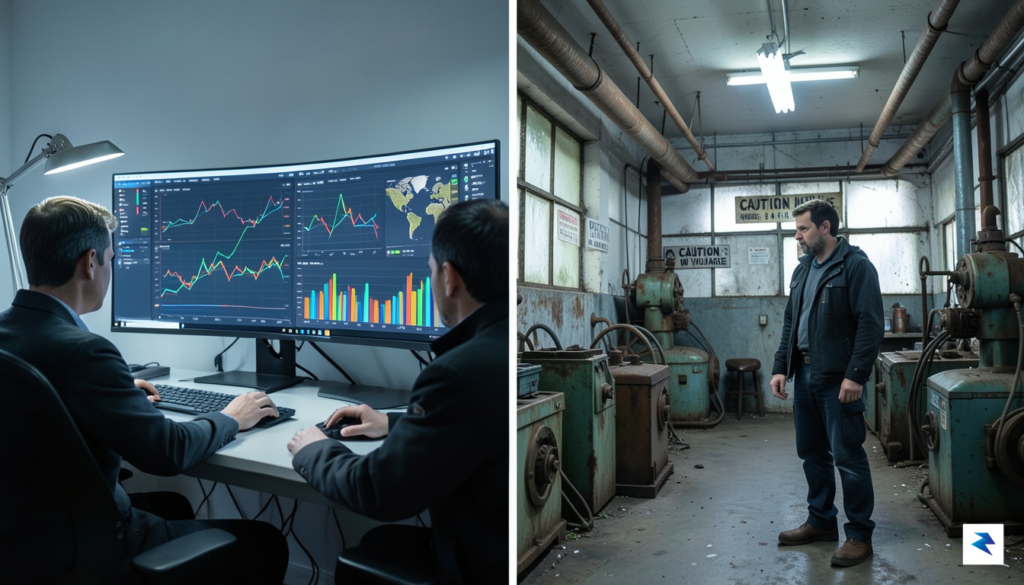
The challenge is not merely a lack of effort from the unemployed, but a widening chasm between the tools of yesterday and the demands of tomorrow. When the barrier to entry rises faster than the capacity for education, the labor force inevitably shrinks.
Ultimately, the decline in labor force participation is a symptom of a market that has outpaced its human capital. As firms demand higher levels of technical proficiency for roles that were previously accessible to a wider demographic, the “floor” for entry-level work has been raised to an unreachable height. To bridge this divide, the conversation must shift beyond simple economic metrics and address the structural lack of apprenticeship models and community-based vocational training. Unless there is a concerted effort to provide affordable, practical pathways that translate legacy skills into modern utility, a significant portion of the population will continue to find themselves sidelined, effectively excluded from a rapidly evolving economic future.

The persistent decline in labor force participation is far more than a statistical anomaly; it serves as a structural headwind that threatens the long-term trajectory of American gross domestic product (GDP). When a significant portion of the working-age population exits the labor market, the nation’s potential output inevitably shrinks, creating a compounding drag on economic growth. Beyond simple production metrics, this contraction places immense strain on the solvency of entitlement programs like Social Security and Medicare, which rely on a robust ratio of active contributors to beneficiaries. As the tax base narrows, the fiscal burden on the remaining workforce increases, potentially stifling innovation and capital investment due to rising public debt and reduced consumer spending capacity.
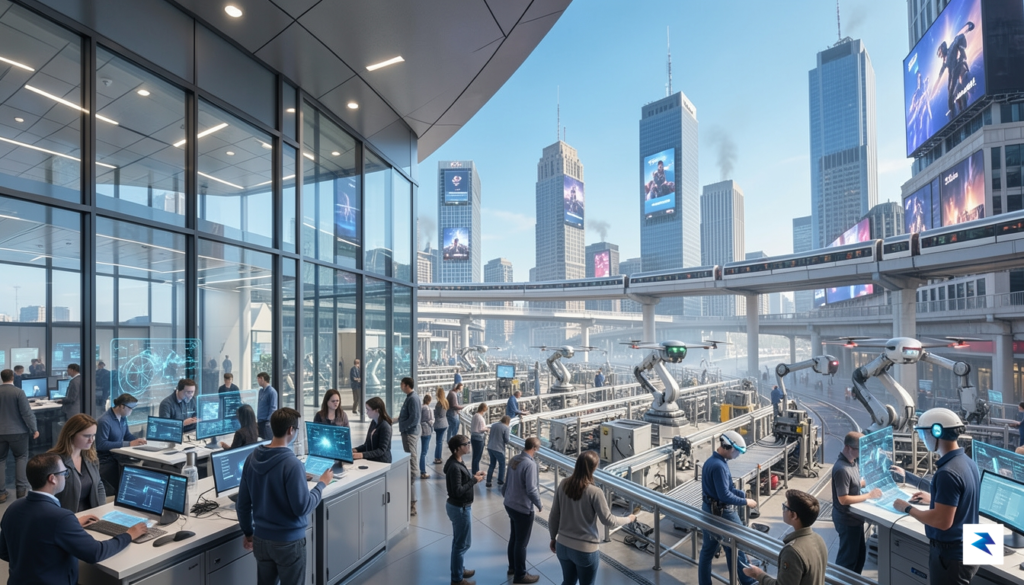
To reverse this downward trend, policymakers must move beyond traditional reactive measures and embrace a multi-faceted strategy aimed at expanding the talent pipeline. One of the most immediate levers available is comprehensive immigration reform, which could help replenish the workforce by attracting and retaining skilled talent and essential labor that the domestic population cannot currently supply. Simultaneously, the private and public sectors must collaborate on massive upskilling initiatives designed to bridge the widening skills gap. By aligning educational curriculums with the high-tech requirements of a modern economy, we can reintegrate discouraged workers who have been sidelined by the rapid pace of technological disruption.
The challenge of a shrinking workforce is not an inevitable decline, but a call to modernize how we define, support, and incentivize participation in the 21st-century economy.
Furthermore, we must rethink the incentives for older workers who are currently choosing early retirement. Creating flexible work arrangements, such as phased retirement programs or remote-first options, can encourage experienced professionals to remain active contributors for longer, thereby preserving institutional knowledge and maintaining productivity. Whether this era represents a permanent “new normal” remains a subject of intense debate among economists. However, if the current slump is viewed as a temporary adjustment period rather than a structural failure, the window of opportunity to implement these reforms remains open. Achieving a sustainable future requires a shift in perspective—treating labor participation not merely as an economic statistic, but as the essential fuel that powers the engine of American prosperity.
You must be logged in to post a comment.