Paramount-Warner Bros. Merger Faces Legal Challenge from 12 States
The Genesis of the Paramount-Warner Bros. Legal Battle The proposed marriage between Paramount Global and Warner Bros. Discovery has long been…
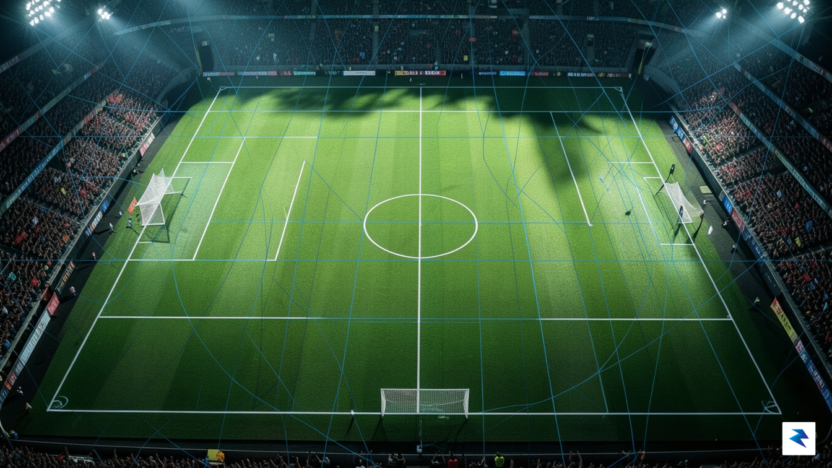

By the time the 2026 World Cup kicked off, the Video Assistant Referee (VAR) system had long shed its skin as a controversial experiment. Gone are the days of the 2018 tournament, where the technology felt like a jagged intrusion into the natural flow of play, characterized by long, agonizing pauses and confusing on-field signals. Today, the infrastructure is far more sophisticated, bolstered by high-speed camera arrays and, most notably, the integration of semi-automated offside technology (SAOT). This evolution has effectively turned the officiating process into a data-driven science, where limb-tracking cameras and connected match balls provide near-instantaneous feedback on the most granular infractions. On paper, the system has achieved the impossible: it has mathematically eliminated the human error inherent in judging a static frame against a moving target.
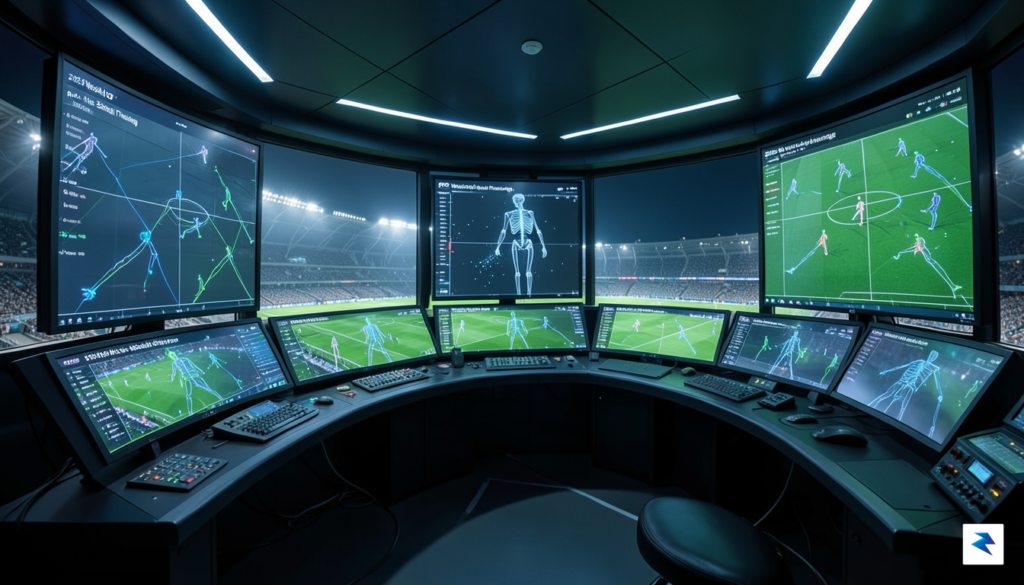
However, this technological leap forward has created a profound psychological friction within the sport. While the cameras and sensors have become exponentially more precise, the game itself remains an organic, emotional experience governed by human instinct and physical momentum. The tension now lies in the disconnect between the cold, binary reality provided by the technology and the nuanced, often chaotic nature of football. Fans and players alike have become trapped in a state of suspended animation, waiting for the “check complete” signal to validate a moment of genuine passion. Even as the system has become faster and more accurate, the reliance on these tools has fundamentally altered the pace of the game, forcing a collision between the relentless forward progress of digital innovation and the traditional, rhythmic cadence that defines the sport.
The core irony of the 2026 tournament is that while the technology has arguably never been more perfect, our collective dissatisfaction with the officiating has never been more vocal.
Ultimately, the current state of VAR is defined by this paradox of efficiency. We have achieved a level of technical transparency that was once considered the “holy grail” of refereeing, yet the friction persists because the technology is only as objective as the people who synthesize its findings. The transition from manual observation to algorithmic assistance was meant to settle debates once and for all; instead, it has simply moved the arena of conflict. We are no longer arguing about whether a player was offside by a toe, but rather about the philosophical role of the referee in an age where the machine sees everything, yet understands the spirit of the game very little.
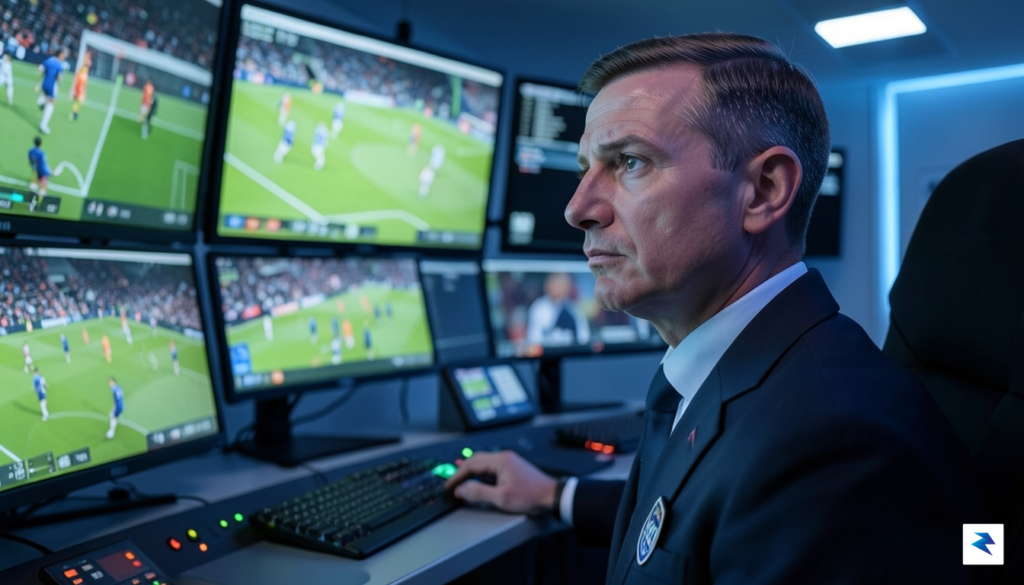
At its core, the Video Assistant Referee (VAR) system is often marketed as an objective arbiter of truth, yet this framing ignores the complex psychological reality of the individuals behind the monitors. While high-definition cameras and automated offside sensors capture every pixel of movement, the final decision remains tethered to human interpretation. These officials are tasked with distilling dynamic, chaotic sporting moments into static, rule-based binary outcomes under the crushing weight of global scrutiny. The cognitive load required to process multiple angles while simultaneously listening to communications from the pitch creates a high-pressure environment where mental fatigue can easily compromise judgment.
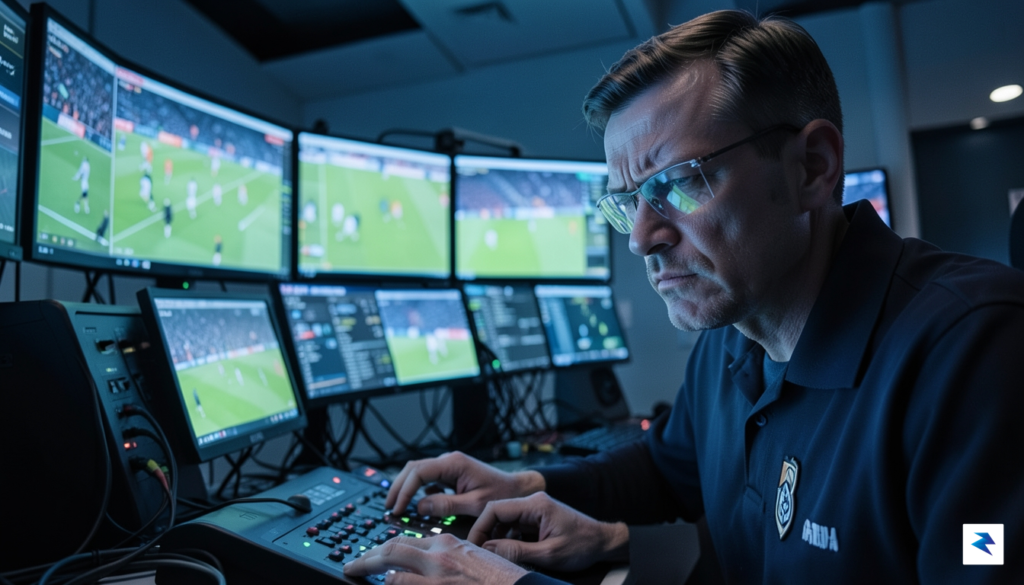
One of the most persistent hurdles in this process is the inherent existence of human bias, which technology cannot entirely eliminate. Even when presented with the same slow-motion footage, two different officials might interpret a sliding tackle or a handball incident through the lens of their own past experiences, ingrained perceptions, and subconscious leanings. This “observer bias” is exacerbated by the sheer speed of the game; when forced to analyze a contact in extreme slow motion, officials often fall victim to the “slow-motion fallacy,” where the lack of natural movement makes a mundane collision appear far more malicious or intentional than it actually was in real-time play. Consequently, the technology doesn’t just reveal the truth—it often distorts it by removing the vital context of momentum and human intent.
The reliance on technology has created a paradox: the more we use cameras to find precision, the more we expose the fallibility of the human mind tasked with interpreting that precision.
Furthermore, there is a growing concern regarding “referee reliance,” a psychological phenomenon where officials on the pitch increasingly defer their agency to the booth. This shift in the power dynamic can lead to a state of hesitation, where the match referee stops trusting their own eyes in favor of waiting for a signal from the VAR. When the pressure of a World Cup match reaches its peak, this dependency can paralyze the flow of the game, creating long, agonizing pauses that disrupt the natural rhythm of the sport. Ultimately, the 2026 World Cup will require more than just better software; it demands a radical reassessment of how we train these officials to balance their reliance on digital data with the instinctual, nuanced understanding of the game that only a human on the pitch can provide.
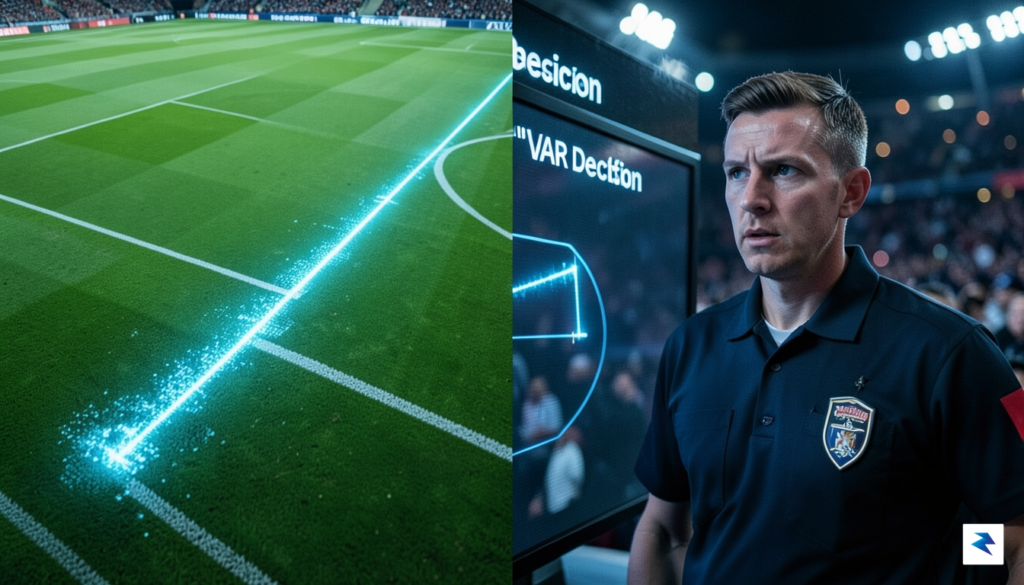
The core tension within modern officiating lies in the chasm between binary data and the inherent ambiguity of the Laws of the Game. When we look at technologies like semi-automated offside systems, we are dealing with objective fact-checking; a sensor detects the exact moment the ball leaves a boot, and a tracking system maps the position of a limb relative to a defender. These calls are binary by design: a player is either offside or they are not, leaving zero room for debate once the data is processed. However, this mathematical certainty creates a false sense of security that often crumbles the moment the referee is asked to adjudicate on more fluid, human elements of play.
The true struggle emerges when the technology is forced to intersect with subjective rule interpretation, particularly concerning fouls and handball offenses. Unlike the position of a foot on a pitch, concepts like “intent,” “unnatural silhouette,” or “controlling the body” are not measurable variables that a computer can calculate. A handball is rarely just a matter of ball-to-arm contact; it requires a referee to weigh whether the arm was in an “unnatural” position or if the player had time to react. When a VAR official freezes a frame of a chaotic, high-speed collision, they are essentially stripping away the context of the game’s flow. This process transforms a split-second, instinctive reaction into a cold, clinical analysis, often leading to conclusions that feel entirely detached from the reality of professional football.
This disconnect is compounded by the inconsistency of human interpretation across different officiating crews. Because the Laws of the Game contain layers of nuance, two different referees can watch the exact same replay and arrive at diametrically opposed conclusions regarding the severity of a challenge or the recklessness of a tackle. If one referee prioritizes the “letter of the law”—strictly interpreting the contact made—while another considers the “spirit of the game”—acknowledging the momentum and intent of the players—the result is an unpredictable tournament experience. Fans are left frustrated not because the technology failed, but because the interpretation of that technology remains tethered to the subjective biases and varying philosophies of the individuals sitting in the VAR booth.
The danger of over-relying on technology for subjective calls is that it provides an illusion of precision while masking the reality that football remains, at its heart, a game of human judgment.
Ultimately, the 2026 World Cup will likely showcase that while we can perfect the measurement of space and time, we cannot program a consensus on human behavior. Until there is a more standardized framework for how officials bridge the gap between high-definition evidence and the necessary nuance of match-day context, the controversy will persist. The goal should not be to remove the human element, but to acknowledge that technology is a diagnostic tool, not an arbiter of subjective intent, and until that distinction is clearly defined, the “correct” call will continue to be a moving target.
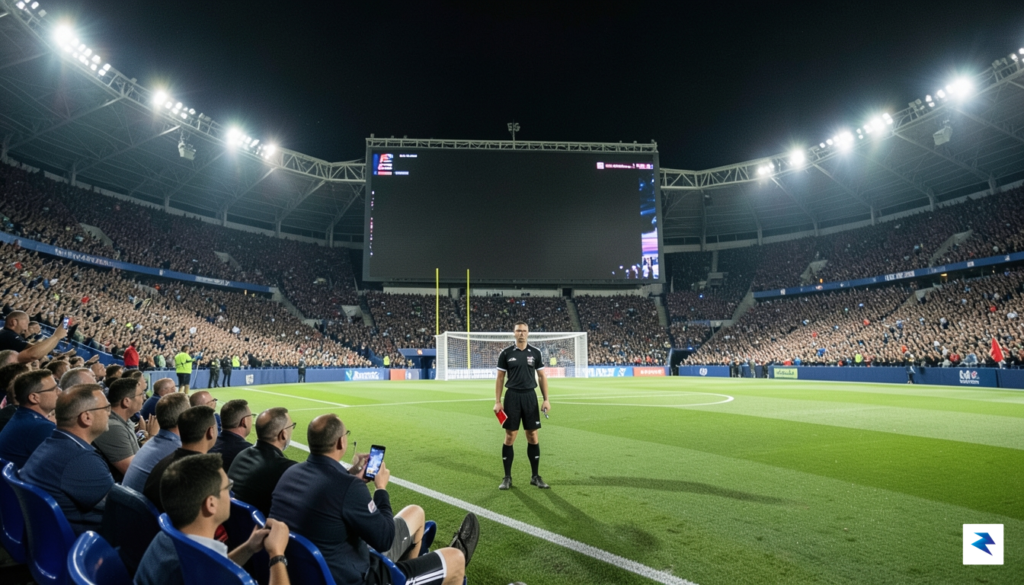
The fundamental disconnect between the high-speed drama on the pitch and the sterile, silent process of video review has created a vacuum where trust should reside. In sports like rugby or cricket, officials are required to verbalize their thought processes for the entire stadium to hear, turning a moment of controversy into an educational experience for the spectator. By contrast, the current implementation of VAR in football treats the audience like an outsider rather than a stakeholder, relegating the decision-making process to a secretive, closed-door dialogue between a referee and a booth operator. This omission is not merely a technical oversight; it is a psychological barrier that turns fan frustration into genuine cynicism regarding the integrity of the game.
When a crucial goal is rescinded or a penalty is overturned after minutes of silence, the lack of an explanation leaves supporters to fill the void with their own assumptions. Without hearing the specific criteria applied or the logic behind the intervention, fans inevitably suspect bias, incompetence, or a lack of consistency. This opacity is corrosive, as it forces the spectator to guess at the rules rather than understand them. If the officiating team were mandated to broadcast their audio—or at least provide a concise, real-time explanation via the stadium public address system—it would demystify the process and humanize the officials, rather than casting them as inscrutable figures operating behind a digital curtain.
True transparency in officiating does not require perfection; it requires accountability. When fans understand the “why” behind a decision, they are far more likely to accept an outcome, even when it goes against their team.
The resistance to open communication during reviews suggests an antiquated view of the sport, one that clings to the myth of the infallible, silent arbiter. By denying the audience access to the dialogue, football’s governing bodies are effectively widening the chasm between the elite professional level and the grassroots community. If the 2026 World Cup aims to be a global showcase, it must modernize its approach to communication. Adopting the standards set by other major global sports—where transparency is treated as a core component of the fan experience rather than an optional feature—is the only way to restore faith in a system that currently feels like it is operating in the shadows. Without this shift, the technology will continue to be viewed not as a tool for justice, but as an instrument of obfuscation.

To preserve the organic rhythm of the sport, the immediate priority for the 2026 World Cup must be a drastic reduction in intervention times. Currently, the spectacle of a match is frequently punctured by lengthy, agonizing pauses that drain the stadium’s energy and leave fans in a state of confused limbo. Implementing a strict “clock-based” threshold for reviews—where VAR officials are granted a maximum of 60 seconds to reach a verdict—would force a shift toward objective, clear-and-obvious decision-making. If a call cannot be validated within that window, the original on-field decision should stand, effectively ending the era of forensic, frame-by-frame dissection that ignores the spirit of the game. By imposing these constraints, FIFA would force officials to prioritize the blatant errors that actually threaten match integrity rather than obsessing over marginal adjustments that serve no one.
Beyond time management, there is an urgent need for the professionalization and standardization of the VAR officiating pool. Currently, the inconsistency between various continental leagues and FIFA-sanctioned events creates a disorienting experience for players and spectators alike. We need a dedicated class of “Video Match Officials” who undergo specific, rigorous training aimed at minimizing subjective interference. This philosophy must shift away from the “referee-as-judge” model and toward a “referee-as-facilitator” role, where the goal is to support the flow of play rather than overrule it. Furthermore, these officials should be required to undergo transparent performance reviews, where their interventions are publicly graded based on their necessity and accuracy, fostering a culture of accountability that currently feels absent from the process.
The goal of technology in sports should be to enhance the human experience, not to replace the human element with a sterile, algorithm-driven search for perfection.
Finally, FIFA must move toward a more collaborative relationship with match officials that encourages autonomy rather than fear. Many referees currently operate with the looming anxiety that a missed call will result in their removal from the tournament, leading to an over-reliance on the monitor as a safety net. If FIFA creates a framework that empowers on-field referees to trust their instincts and use VAR only as a last resort for catastrophic errors, the game will immediately regain its human-centric soul. This collaborative approach should also extend to the fans; providing real-time audio transparency, where the referee explains their final decision over the stadium PA system, would demystify the process. By blending technological precision with human accountability and transparent communication, the sport can ensure that the 2026 World Cup remains a contest between athletes, not a trial between officials and their screens.
You must be logged in to post a comment.