The Great Salt Lake Crisis: Why Data Is Our Best Hope for Survival
The Critical State of the Great Salt Lake For over a century, the Great Salt Lake has served as a silent, sprawling sentinel of the American…

Virginia has officially ushered in a new era of digital accountability, marking a significant evolution in the state’s approach to consumer privacy. By implementing rigorous restrictions that explicitly prohibit the sale of precise geolocation data, the Commonwealth is moving beyond the general privacy protections established by the original Virginia Consumer Data Protection Act (VCDPA). This legislative update addresses a growing concern among regulators and advocates alike: the unchecked commercialization of highly sensitive movement history. For years, the digital economy has relied on the seamless harvesting of location signals, often collected through seemingly innocuous smartphone applications. Now, Virginia lawmakers have drawn a clear line in the sand, effectively curbing the secondary data markets that have historically profited from tracking the daily routines and physical habits of residents.

To understand the depth of this change, one must first define what the law classifies as precise geolocation data. Under the new guidelines, the term refers to information derived from technology—such as Global Positioning System (GPS) coordinates or cellular triangulation—that identifies a consumer’s location with a high degree of specificity. Specifically, this covers data that can pinpoint a user within a radius of 1,750 feet. This threshold is intentionally narrow, designed to capture the kind of granular movement data that could reveal a person’s visits to medical clinics, places of worship, or private residences. By focusing on this level of accuracy, the law ensures that businesses cannot bypass the regulation by claiming the data is merely “broad regional information” when it is, in fact, capable of profiling an individual’s most intimate life patterns.
The core intent behind this legislation is to restore a sense of agency to the individual, ensuring that the intimate trail of where a person travels is not treated as a commodity to be bought and sold without their explicit knowledge or consent.
The transition from previous regulatory frameworks to this explicit ban reflects a broader, nationwide shift toward prioritizing individual autonomy over corporate data extraction. Previously, many companies operated in a gray area where privacy policies were often buried in lengthy, complex legal jargon, effectively neutralizing the average consumer’s ability to opt out of data tracking. Virginia’s move effectively forces a shift in business models, demanding greater transparency and stricter data governance. Instead of viewing movement history as an asset to be liquidated to third-party brokers, businesses are now incentivized to prioritize data minimization. This legislative pivot signifies that the privacy of a citizen’s physical movement is no longer secondary to the needs of the digital advertising ecosystem, setting a compelling precedent for other states currently weighing their own privacy legislation.

Geolocation data represents far more than a simple pin on a map; it is an intricately detailed behavioral roadmap of an individual’s life. By continuously tracking where people work, shop, relax, and spend their most private moments, data brokers can construct extraordinarily intimate profiles that delve far deeper than conventional demographic targeting. This granular understanding of daily habits, routines, and preferences makes geolocation data incredibly valuable for advertisers seeking to reach specific audiences with unparalleled precision, yet simultaneously creates profound privacy vulnerabilities that touch every aspect of our digital lives.
Modern geolocation tracking is remarkably sophisticated, aggregating signals from a multitude of sources. It’s not just the GPS in your smartphone; it also encompasses Wi-Fi triangulation, which can pinpoint your location even indoors, and Bluetooth beacons, often found in retail stores or public venues, capable of tracking your movement within a few feet. Data brokers continuously collect and consolidate these diverse signals from numerous apps and devices, compiling a persistent, real-time tapestry of an individual’s physical presence. This relentless stream of location pings forms a comprehensive narrative, detailing not just where you are, but where you’ve been, how long you stayed, and even who else might have been there.
The true power, and peril, of this data lies in what is known as the ‘mosaic effect.’ Even when individual data points are theoretically anonymized or aggregated, the sheer volume and continuity of location data make re-identification alarmingly simple. By cross-referencing repeated patterns, unique sequences of visited places, and specific timings, it becomes possible to de-anonymize individuals and reveal highly sensitive locations. This includes visits to medical clinics, religious institutions, political gatherings, adult entertainment venues, or even private homes, all of which can expose deeply personal information about an individual’s health, beliefs, affiliations, or relationships.

The commercial incentives driving the collection and sale of this data are immense. Advertisers leverage these rich profiles to deliver hyper-targeted ads, showing you promotions for a specific coffee shop after you’ve regularly passed it, or discounts on baby products if your routine suggests you’ve been visiting a pediatrician. However, the inherent dangers extend far beyond mere advertising. These comprehensive datasets, detailing sensitive movements and patterns, are a treasure trove for malicious actors, ranging from stalkers and harassers to foreign adversaries or even domestic surveillance operations. The precise knowledge of someone’s home address, workplace, or the specific times they are absent can be exploited for physical harm, theft, or coercion.
Furthermore, the unregulated sale of geolocation data opens doors to insidious forms of discrimination. Insurance companies could potentially use this data to deny coverage based on frequent visits to certain medical facilities or risky areas. Employers might scrutinize the data to assess employee loyalty or lifestyle choices. In the wrong hands, this highly intimate behavioral roadmap can be weaponized, leading to blackmail, reputational damage, or even physical endangerment. The profound privacy implications underscore why robust protections around the collection, retention, and sale of such uniquely revealing information are not just desirable, but absolutely essential for safeguarding individual liberties in the digital age.

The recent legislative action in Virginia concerning the sale of geolocation data ushers in a new era of digital responsibility, creating a fascinating dichotomy between corporate adaptation and individual empowerment. For businesses that have thrived on the granular insights derived from user location, this ban presents significant operational hurdles. Marketing firms, app developers, and data brokers, in particular, must now embark on a comprehensive audit of their data pipelines and collection practices, reassessing how they acquire, process, and utilize location information. This isn’t merely a legal formality; it necessitates fundamental changes to technological infrastructure, data governance policies, and even core business models that previously relied on the free flow of such sensitive user data.
The ripple effect across the digital economy will be profound. Companies accustomed to leveraging precise location data for targeted advertising, personalized services, or market research will need to innovate new, privacy-centric methods of engagement. This could involve a pivot towards contextual advertising, aggregate demographic analysis, or more explicit opt-in mechanisms that provide clear value exchange for consumers. The ban effectively shifts the burden of proof, moving away from an implied consent model—where users unknowingly agreed to data sharing through lengthy terms and conditions—to a far more rigorous standard. Organizations operating within Virginia or serving its residents must now ensure their data handling practices align with these stricter regulations, demanding a proactive approach to compliance and a re-evaluation of third-party data-sharing agreements.
Conversely, for the average consumer, this legislation is a significant stride towards reclaiming control over their digital footprint. For years, the app economy has normalized a certain level of ‘surveillance capitalism,’ where personal data, including highly sensitive location information, was routinely collected, analyzed, and often sold to the highest bidder without explicit, informed consent. This often led to intrusive location-based profiling, where advertisements followed users from store to store, or where personal habits could be inferred with disconcerting accuracy. The Virginia ban directly addresses this pervasive practice, empowering individuals with a stronger legal shield against the unauthorized monetization of their movements.
This newfound consumer control translates into a tangible reduction in the intrusive location-based profiling that has become a standard, if often opaque, feature of many digital services. While some level of personalization may diminish, the trade-off is a heightened sense of privacy and security. Users can now expect that their physical whereabouts will not be commodified or shared without their express permission, fostering greater trust in the digital platforms they use daily. This legislative move not only curtails the sale of data but also encourages a broader cultural shift towards more ethical data practices, potentially influencing other states and even federal policy to follow suit in prioritizing user privacy over unchecked data exploitation. It signifies a critical rebalancing of power between data collectors and data subjects, emphasizing fundamental rights in the digital age.

Adapting to Virginia’s stringent new regulations requires more than a simple policy update; it demands a fundamental shift in how organizations handle sensitive movement data. To navigate this evolving landscape effectively, businesses should initiate a comprehensive five-step compliance roadmap designed to mitigate risk while fostering long-term consumer trust. By moving away from unrestricted data collection and toward a culture of transparency, companies can turn these regulatory hurdles into a competitive advantage.
“True compliance in the modern era is not a static checkbox; it is a proactive commitment to minimizing the digital trail left by consumers, ensuring that location data becomes a liability to be reduced rather than an asset to be exploited.”

Ultimately, these steps are designed to move your organization toward a more ethical handling of sensitive information. By treating geolocation data as a highly restricted asset, you not only insulate your business from potential regulatory penalties but also build a stronger, more resilient relationship with your user base. As regulators continue to prioritize individual privacy rights, organizations that embrace these rigorous standards today will be significantly better positioned to lead in the privacy-conscious markets of tomorrow.
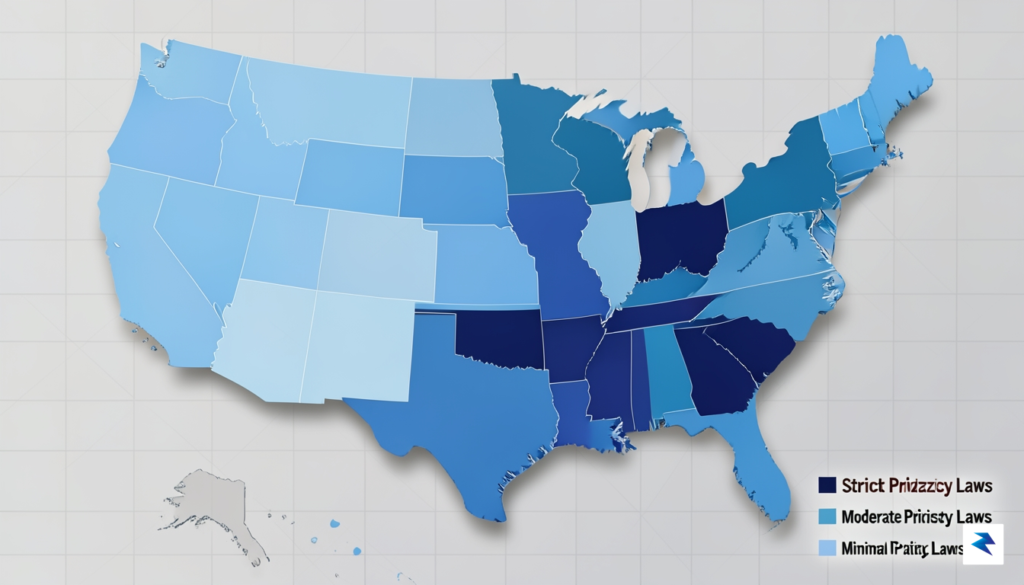
Virginia’s recent legislative action, which places specific restrictions on the sale of geolocation data, is far from an isolated incident in the rapidly evolving landscape of U.S. data privacy. Instead, it represents another significant stride in a broader, accelerating trend of state-level legislative activism. In the continuing absence of a comprehensive federal privacy law, states have increasingly taken the initiative to establish their own frameworks, reflecting a growing public demand for stronger data protections and a regulatory vacuum that individual states feel compelled to fill.
This evolving state-centric approach can be most clearly seen when comparing Virginia’s targeted regulation with the more comprehensive frameworks established elsewhere. California’s pioneering California Consumer Privacy Act (CCPA) and its successor, the California Privacy Rights Act (CPRA), set a high bar, granting consumers extensive rights over their personal information, including the right to know, access, delete, and opt-out of the sale or sharing of their data. Following California’s lead, states like Colorado, Utah, Connecticut, and Iowa have also enacted their own comprehensive privacy laws, each with unique definitions, thresholds, and consumer rights. While Virginia’s new law specifically zeroes in on the sensitive nature of geolocation data, its passage underscores a common thread: states are increasingly willing to define and protect specific categories of personal data, or indeed, personal data more broadly, according to their own legislative priorities.
However, this burgeoning enthusiasm for state-level regulation inevitably creates a complex “patchwork” problem for businesses operating across state lines. A company selling products or services nationwide must now navigate a labyrinth of potentially conflicting or overlapping rules regarding data collection, consent mechanisms, data retention, and consumer request fulfillment. What might be permissible in one state could lead to significant penalties in another. This fragmentation not only inflates compliance costs and operational complexities, especially for small and medium-sized enterprises lacking extensive legal resources, but also introduces a degree of legal uncertainty that can stifle innovation and hinder consistent consumer experiences across different jurisdictions.
Consequently, the proliferation of distinct state privacy laws is intensifying the national debate on the necessity of a unified federal privacy standard. Business groups, grappling with the administrative burden of multi-state compliance, are increasingly vocal in their calls for a single, overarching federal law that could streamline regulations and provide clear, consistent guidelines. Furthermore, privacy advocates argue that a federal standard would ensure a baseline level of protection for all U.S. consumers, regardless of where they reside, addressing the current disparity in rights. The increasing complexity at the state level is thus fueling a powerful argument that a federal solution is not merely desirable, but becoming an essential requirement to foster both a robust digital economy and robust consumer trust.
While the path to a federal privacy law remains fraught with political challenges and differing stakeholder interests, the continuous stream of state legislative actions, like Virginia’s ban on geolocation data sales, undeniably increases the pressure on Congress. Each new state law adds another piece to the complex regulatory puzzle, making the current situation less sustainable for businesses and highlighting the gaps in consumer protection. This persistent state-level momentum makes the introduction, and eventually, the passage of a comprehensive federal privacy bill appear more probable in the coming years, as both industry and consumers seek clarity and consistency in an increasingly data-driven world.
You must be logged in to post a comment.