The Evolution of Privacy-Centric AI

The rapid integration of generative AI into our daily digital workflows has fundamentally altered how we create, organize, and process information. While these tools offer unprecedented gains in productivity, they have simultaneously introduced a troubling trade-off: the surrender of personal data as the currency for convenience. Most mainstream AI models operate on a model of continuous data harvesting, where every prompt and interaction is logged, analyzed, and often used to further train the underlying systems. This creates a landscape where the user’s most sensitive inquiries and creative outputs become assets for corporations, leaving individuals exposed to evolving privacy risks and data breaches.
Proton’s latest update to its AI assistant, Lumo, arrives at this critical juncture to challenge the prevailing industry standard that equates sophistication with surveillance. By rooting its architecture in the company’s foundational philosophy of zero-access encryption, Lumo 2.0 demonstrates that high-performance machine learning does not require the sacrifice of user autonomy. Unlike platforms that treat privacy as a secondary feature or an adjustable setting, Proton treats the protection of user data as the core product itself. This shift represents a necessary maturation of the AI sector, moving away from a “collect everything” mentality toward a more sustainable, human-centric design.

In an era where data is routinely monetized, the true differentiator for any digital tool is its ability to deliver powerful outcomes while maintaining an impenetrable boundary between the service and the user’s private life.
The evolution of Lumo 2.0 is not merely a technical upgrade in processing speed or linguistic nuance; it is a strategic response to the growing public demand for digital sovereignty. By ensuring that interactions remain private and shielded from external exploitation, Proton is establishing a standard that forces a conversation about the ethics of AI development. Users no longer have to choose between cutting-edge technology and the security of their personal information. Instead, they are provided with an ecosystem where the power of artificial intelligence is harnessed strictly to serve the user, ensuring that the insights generated remain exactly where they belong: under the user’s sole control.
What’s New in Lumo 2.0: Key Feature Upgrades
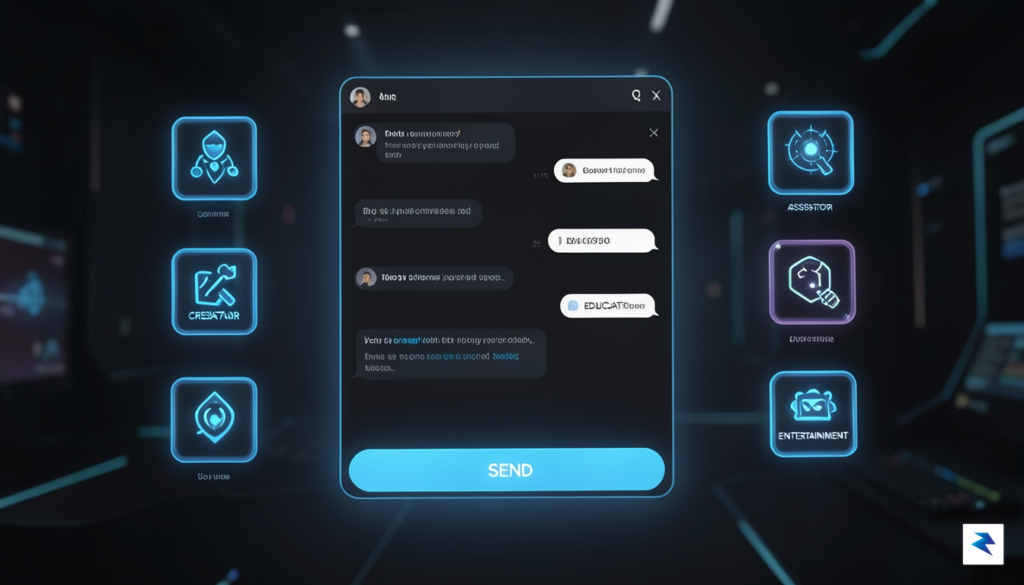
The transition to Lumo 2.0 marks a transformative shift in how users interact with artificial intelligence, moving beyond simple query-response patterns toward a more sophisticated, reasoning-based architecture. At the core of this upgrade is a significantly refined natural language processing engine that understands nuance, intent, and subtle context far better than its predecessor. By prioritizing local-first processing, Lumo 2.0 ensures that these advanced computational tasks are performed on the user’s device or within Proton’s secure, zero-knowledge environment, effectively eliminating the risk of sensitive data being harvested by third-party model trainers. This allows users to engage with the AI as a genuine partner for sensitive professional and personal projects without compromising their digital privacy.
One of the most notable improvements lies in the expanded context retention window, which allows the assistant to maintain a cohesive thread across much longer conversations. In previous versions, users might have found the AI losing track of specific instructions or document details after a few exchanges; however, Lumo 2.0 maintains a deep, persistent memory of ongoing tasks. This is particularly beneficial for complex workflows, such as synthesizing multiple research papers or managing multi-stage creative projects, where the assistant can now reference back to earlier requirements or stylistic preferences with high precision. By anchoring this memory securely, the system provides a seamless continuity that feels less like a chatbot and more like a dedicated digital aide.

Furthermore, the integration of multi-modal capabilities enables Lumo 2.0 to process a wider array of data inputs with increased efficiency. Whether a user needs to summarize a dense PDF, draft a structured project proposal, or analyze complex data sets, the upgraded engine handles these heavy-lifting tasks with remarkable speed and accuracy. The system’s creative drafting module has also been overhauled, allowing for tone adjustments and structural improvements that feel more natural and less like generic machine output. These functional leaps are not merely cosmetic; they represent a fundamental change in how Lumo handles logic and synthesis.
Lumo 2.0 effectively bridges the gap between high-level reasoning capabilities and stringent data sovereignty, proving that sophisticated AI does not require the sacrifice of user privacy.
Beyond these core enhancements, the platform now offers better cross-tool integration, allowing users to move fluidly between drafting text and organizing information without leaving the secure interface. By streamlining these workflows, Lumo 2.0 significantly reduces the time spent on repetitive tasks while ensuring that every interaction remains shielded by Proton’s robust encryption standards. This combination of heightened utility and unwavering privacy makes the 2.0 update a essential evolution for anyone looking to leverage AI as a tool for productivity rather than a privacy liability.
The Architecture of Trust: How Proton Protects Your Data

The robust foundation of any Proton offering lies in its meticulously crafted underlying architecture, and Lumo, Proton’s privacy-focused AI chatbot, exemplifies this commitment without exception. At its core, Lumo is engineered to uphold the highest standards of user privacy, primarily by ensuring that all AI processing occurs strictly within Proton’s fortified, encrypted environment. This strategic design means that, unlike many conventional AI services, your interactions and the data you share with Lumo are shielded from potential interception or unauthorized access, preserving the sanctity of your digital conversations and keeping them strictly private.
A cornerstone of Lumo’s privacy architecture is its implementation of **zero-access encryption**. This advanced cryptographic method ensures that even Proton, the service provider, cannot decrypt or access the content of your prompts and conversations. When you interact with Lumo, your queries are processed in a manner that allows the AI model to function effectively without revealing the plaintext of your data to anyone, including Proton’s engineers. This is a critical differentiator, as it fundamentally prevents any internal or external entity from viewing your private information, thereby eliminating the risk of data exploitation or compelled disclosure to third parties. This principle extends throughout the entire interaction lifecycle, from the moment you submit a prompt to the delivery of Lumo’s response, creating an impenetrable shield around your sensitive information.
Furthermore, Lumo represents a significant stride towards a **local-first processing** philosophy for privacy-centric AI. This approach prioritizes keeping data on the user’s device whenever feasible, and for elements that must interact with Proton’s servers, it focuses on minimizing the amount of data transferred and processed in the cloud. A key manifestation of this commitment is the deliberate removal of telemetry tracking, a common practice in many other AI chatbots that gathers extensive usage data, often without clear user consent or understanding. By eliminating telemetry, Lumo ensures that your usage patterns, the frequency of your interactions, or even the general topics you discuss are not collected, analyzed, or stored by Proton, thereby eliminating a significant privacy concern inherent in many modern digital services. This holistic approach to privacy, encompassing both strong encryption and minimal data collection, truly sets Lumo apart in the evolving landscape of AI.
Lumo vs. The Competition: A Privacy-First Comparison
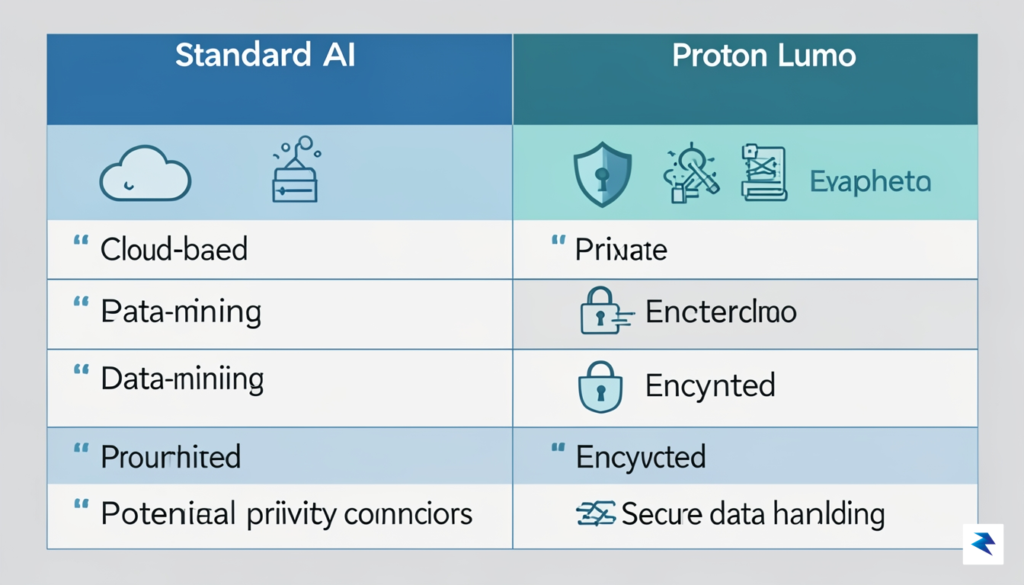
For most users, adopting an AI assistant has historically felt like a binary choice: you either accept the convenience of powerful language models, or you guard your digital privacy. Major industry players like OpenAI’s ChatGPT or Google’s Gemini have set the standard for performance, yet these platforms operate on a business model that relies heavily on data ingestion. By default, these mainstream tools often leverage user interactions to train future iterations of their models, turning your personal questions, creative drafts, and private research into proprietary training material. This dynamic effectively treats the user’s input as a raw resource, stripping away the confidentiality that most professionals and privacy-conscious individuals expect in their daily workflows.
Proton’s Lumo 2.0 fundamentally disrupts this extractive paradigm by prioritizing a “privacy-by-default” architecture. Unlike the “black box” approach favored by big tech, Lumo is built upon the foundational principle that your interactions should remain exclusively yours. By decoupling the utility of advanced artificial intelligence from the necessity of data harvesting, Proton provides a secure environment where sophisticated reasoning is available without the looming threat of data profiling. This shift is not merely a technical adjustment; it is a philosophical commitment to the idea that users should be the owners of their digital intelligence, not the products of it.

The true measure of an AI’s value is not just in how well it answers your questions, but in how it treats the data you entrust to it.
For those who rely on AI for sensitive tasks—such as drafting confidential business documents, summarizing personal medical information, or organizing private financial data—migrating to a platform like Lumo is a logical necessity. When you use mainstream models, you are often forced to manually opt-out of data collection features, and even then, the underlying infrastructure may still be designed to monitor usage patterns for backend improvements. Lumo eliminates this cognitive load, offering a streamlined, encrypted experience that removes the need for constant vigilance over your privacy settings. By choosing to transition your AI workflows to a privacy-focused ecosystem, you ensure that your intellectual property and personal reflections remain shielded from the widespread data harvesting that defines the current technological landscape.
Ultimately, the choice between Lumo and its competitors comes down to whether you view AI as a utility to be consumed or a tool that should respect your boundaries. As the reliance on large language models continues to grow across every sector of our professional and personal lives, the cost of sacrificing privacy will only increase. Lumo 2.0 demonstrates that you do not need to compromise on technical capability to maintain the integrity of your digital footprint. By providing a robust, intelligent alternative that respects the user, Proton is setting a new benchmark for what the next generation of artificial intelligence should look like: powerful, accessible, and above all, private.
Practical Use Cases for the Enhanced Lumo AI

Integrating Lumo 2.0 into your daily routine is less about changing how you work and more about elevating the security of your existing processes. For developers, the updated engine offers a sanctuary for debugging sensitive codebases. Instead of sending proprietary logic to generic AI models that might train on your inputs, you can leverage Lumo to perform complex refactoring or identify syntax errors within your private repositories. By keeping your intellectual property isolated within Proton’s encrypted ecosystem, you gain the benefit of advanced machine learning assistance while ensuring your competitive edge remains entirely under your control.
For writers and creative professionals, Lumo 2.0 serves as a secure brainstorming partner that treats your drafts with absolute confidentiality. Whether you are drafting a sensitive legal brief, outlining a confidential corporate strategy, or writing a memoir that isn’t ready for public eyes, Lumo allows you to explore ideas freely. Because the underlying architecture is built on Proton’s privacy-first foundation, you never have to worry about your creative concepts or unfinished manuscripts being harvested for data sets. You can paste lengthy documents into the chat interface for summarization or stylistic feedback, knowing that your proprietary content is never leaving your secure environment.

Beyond creative and technical tasks, Lumo 2.0 excels at handling sensitive financial or administrative data that would otherwise be risky to process through conventional cloud-based tools. You can use the engine to synthesize complex financial reports, organize personal tax documentation, or draft professional correspondence involving private contractual details. By providing the model with your data, you can ask for detailed summaries or actionable insights without the looming anxiety of a potential data breach. To get the best performance out of the 2.0 engine, consider the following best practices:
- Be Specific and Contextual: Provide the AI with clear constraints, such as defining the target audience or the specific tone you wish to achieve, to minimize the need for follow-up prompts.
- Iterative Refining: Use the chat interface to ask for multiple variations of a draft, allowing you to compare different approaches without losing the security of your private session history.
- Structure Your Data: When uploading financial or administrative information, use organized formats like tables or clear bullet points to help the model better interpret and synthesize your data accurately.
The true power of an AI tool lies not just in its intelligence, but in the trust it builds with its user; Lumo 2.0 represents the rare intersection where cutting-edge utility meets absolute digital sovereignty.
Ultimately, the goal of this upgrade is to empower you to work faster without sacrificing the privacy that Proton users demand. By shifting your high-stakes tasks into a secure, encrypted workflow, you are essentially insulating your productivity from the common vulnerabilities found in standard AI platforms. As you begin to weave Lumo 2.0 into your projects, you will likely find that the peace of mind afforded by its privacy architecture allows for deeper, more daring creative and technical exploration.
The Future of Sovereign AI and User Control

The introduction of Lumo 2.0 serves as a definitive signal that the digital landscape is undergoing a fundamental shift toward the era of sovereign AI. For years, the prevailing model of artificial intelligence has been defined by data extraction, where user interactions are harvested to feed massive, opaque corporate models. By prioritizing privacy as a core utility rather than an afterthought, Proton is challenging this status quo and demonstrating that advanced machine learning does not require the sacrifice of personal autonomy. This transition marks the beginning of a move toward tools that serve the individual first, ensuring that one’s digital footprint remains their own property rather than a commodity to be auctioned off to the highest bidder.
As we look toward the horizon, the success of privacy-centric platforms underscores a rapidly maturing market demand for ethical technology. Consumers are no longer willing to trade their personal security for the convenience of automation; instead, they are actively seeking ecosystems where transparency and encryption are baked into the architecture. This growing consciousness is forcing a broader industry reckoning, proving that AI developers who ignore the principles of data sovereignty will eventually find themselves obsolete. When users demand ethical standards, companies must adapt or lose the trust that is essential for long-term survival in an increasingly skeptical digital economy.
True innovation in the age of artificial intelligence will not be measured by the size of a model’s dataset, but by the level of agency it restores to the user.
Moving forward, the future of secure AI will likely rely on a decentralized approach where personal data remains localized and encrypted, shielded from the prying eyes of third-party servers. We can anticipate a world where AI assistants function like personal vaults, capable of processing complex queries while ensuring that sensitive information never leaves the user’s direct control. This evolution toward sovereign AI is essential for protecting the integrity of our personal communications, financial records, and intellectual property. By leveraging end-to-end encryption and strict data minimization policies, developers can bridge the gap between high-level utility and individual security, ultimately creating a more sustainable and trustworthy internet for everyone.
Ultimately, the path toward a more ethical digital future requires a collaborative effort between those who build the tools and those who use them. While companies like Proton provide the necessary infrastructure, it remains the responsibility of the user to champion privacy-centric alternatives and reject platforms that prioritize surveillance. As these tools become more sophisticated, the distinction between invasive, generalized AI and protective, sovereign AI will become even more pronounced. Choosing the latter is not merely a preference for privacy; it is a profound act of asserting control over one’s digital life in an age where that control is increasingly under siege.