The Rise of Event-Based Trading
The landscape of retail investing is undergoing a profound metamorphosis, shifting away from the patient, long-term horizon of traditional equity accumulation toward a more immediate, hyper-localized form of speculation. At the heart of this evolution is the emergence of event-based trading, a category of financial instruments designed to capture the volatility surrounding discrete, binary outcomes. Unlike conventional options, which require a trader to navigate complex variables like time decay, implied volatility, and delta-hedging, event-based contracts offer a simplified “yes or no” proposition. By distilling market movements into specific, tangible triggers—such as whether the S&P 500 will finish above a certain price by a specific hour—these instruments provide a streamlined mechanism for traders to capitalize on real-time news cycles and macroeconomic events.
To understand the appeal of this asset class, one must look at the fundamental difference between traditional derivatives and binary event contracts. Traditional options are sophisticated tools that often require a deep understanding of the “Greeks” and a nuanced view of price action over weeks or months. In contrast, event contracts function more like a specialized prediction market, where the outcome is binary: you are either right or wrong, and the profit potential is clearly defined from the moment the trade is executed. This binary nature removes much of the ambiguity inherent in standard equity trading, allowing retail participants to engage with market volatility without needing a finance degree or a complex mathematical model to calculate the potential risks.
The core allure of event-based trading lies in its ability to transform complex market analysis into a simplified, accessible framework where the outcome is as straightforward as a win or a loss.
The psychological appeal of this model cannot be overstated, as it aligns perfectly with the fast-paced, information-heavy habits of modern retail investors. Many participants find the prospect of “betting” on specific, short-term index movements far more engaging than performing tedious macro-market analysis that may take years to bear fruit. This shift reflects a broader cultural trend toward gamification and instant gratification, where the thrill of correctly predicting a specific market catalyst—such as an interest rate announcement or a major economic report—becomes the primary driver of participation. By focusing on these granular, high-frequency events, retail traders feel a greater sense of agency, believing that their ability to monitor news flows in real-time gives them a competitive edge in an increasingly unpredictable market.
Ultimately, the rise of these instruments signals a structural change in how individual investors interact with the financial system. As brokerage platforms continue to integrate these tools, the barrier to entry for speculative trading is dropping significantly. This democratization of event-based speculation allows the average person to participate in the same volatility that was once the exclusive domain of institutional desks, provided they are willing to embrace the inherent risks of short-term, outcome-oriented trading. As these products gain traction, they are likely to redefine the retail trading experience, transforming the stock market from a long-term wealth engine into a dynamic arena of real-time prediction and tactical execution.
Understanding Schwab’s Strategic Move into Prediction Markets

For decades, Charles Schwab has stood as a pillar of traditional wealth management, built on the steady, long-term philosophy of index funds and disciplined retirement planning. However, the decision to venture into event-based options tied to the S&P 500 represents a profound evolution in how legacy brokerages view market participation. This shift is not merely about adding a new product to a menu; it is a calculated response to a changing demographic landscape. As younger investors, specifically Gen-Z and millennials, increasingly prioritize interactive, high-velocity trading experiences, established firms are recognizing that they must modernize or risk losing relevance in an era where digital engagement is the primary currency of the financial services industry.
The rise of crypto-native platforms and specialized prediction markets has fundamentally altered the expectations of the modern retail trader. These newer entrants have successfully gamified finance, turning macroeconomic shifts and political developments into binary, high-stakes outcomes that appeal to users who crave instant gratification and constant market activity. By integrating event-based trading directly into a trusted, regulated ecosystem, Schwab is effectively attempting to bridge the gap between speculative excitement and institutional security. This move signals that event-based trading has officially moved from the fringes of experimental decentralized finance into the heart of traditional finance, forcing legacy players to adapt to a demand for more aggressive, high-frequency user experiences.

Furthermore, the competitive pressure from agile fintech startups cannot be overstated. These challengers have captured significant market share by offering intuitive, mobile-first interfaces that make complex derivatives feel accessible and immediate. To maintain its competitive edge, Schwab must demonstrate that it can offer the same level of excitement without sacrificing the robust compliance and risk management protocols that its brand is built upon. This strategic pivot highlights a broader industry trend where the line between traditional investing and predictive betting is becoming increasingly blurred.
The integration of event-based options is a bold acknowledgement that the next generation of investors values the ability to take a stance on real-world events as much as they value traditional asset appreciation.
Ultimately, by moving into this space, Schwab is betting that its scale and reputation will provide the necessary “safe harbor” for investors who might otherwise flock to unregulated or less transparent platforms. If they succeed, this initiative could redefine the standard for retail brokerage offerings, proving that even the most established institutional giants can learn to speak the language of the modern, hyper-engaged digital consumer. The race to capture this market is only just beginning, and for Schwab, the goal is clear: to ensure that the future of speculative trading happens on their terms, within their walls, and under the watchful eye of the industry’s most rigorous oversight.
How S&P 500 Event Contracts Work
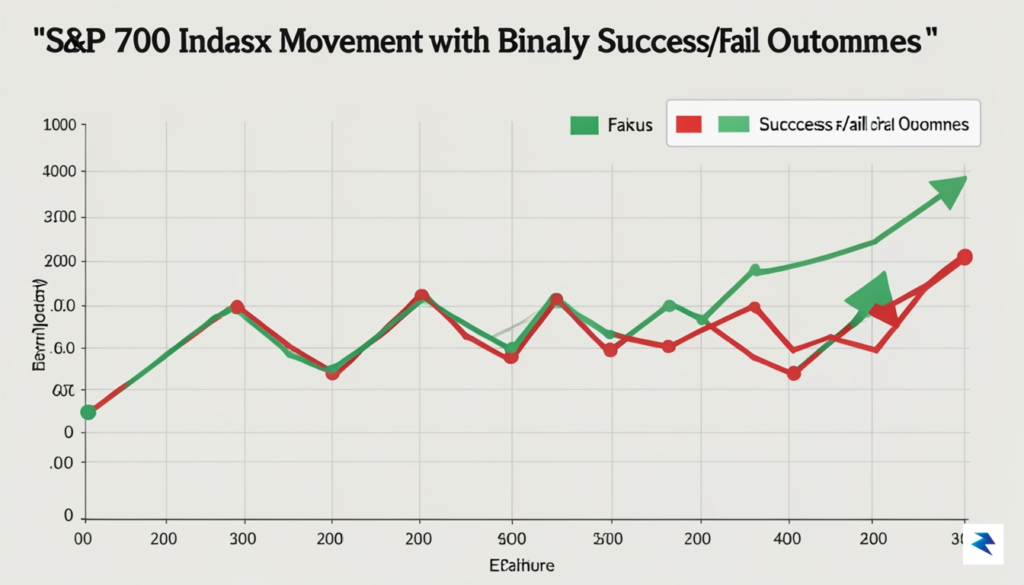
At their most fundamental level, event-based contracts transform the often-intimidating world of derivative trading into a straightforward, binary proposition. Instead of navigating complex “Greeks”—such as delta, theta, or vega—that govern the pricing of traditional options, investors simply decide if the S&P 500 will close above or below a specific price point by a predetermined expiration time. If the index settles on the correct side of that threshold, the contract pays out a fixed amount; if it does not, the contract expires worthless. This “all-or-nothing” structure eliminates the ambiguity of fluctuating premium values, allowing traders to focus entirely on the directional movement of the broader market rather than the intricacies of time decay or volatility expansion.
The time horizon for these instruments is intentionally compressed, often focusing on daily or near-term intraday windows. Unlike traditional long-term options that might span months or years, these contracts are designed for rapid execution and tactical positioning. Because they are tied to specific closing prices, the mystery of the contract’s outcome is resolved in short order, providing a high-frequency feedback loop for retail participants. This limited duration creates a streamlined experience where the investor is not managing a portfolio over weeks, but rather making a decisive call on the immediate momentum of the market.
One of the most compelling aspects of these event contracts is the relatively low capital requirement compared to traditional S&P 500 futures or standard options. Standard futures contracts often require significant margin and carry the risk of substantial losses that can exceed the initial investment, whereas event contracts are typically capped at the purchase price. By design, the maximum loss is known upfront, which serves as a powerful natural guardrail for retail traders. This democratization of access allows individuals to participate in sophisticated market speculation without needing the large account sizes or the complex margin agreements typically reserved for institutional-grade derivative accounts.
The core appeal of event-based trading lies in its simplicity: by stripping away the complex mathematical variables of conventional derivatives, it allows investors to express a clear opinion on market direction with defined risk and a transparent payout structure.
However, this low-barrier entry brings a unique set of challenges regarding retail risk management. Because these contracts are easy to understand and quick to resolve, there is a psychological temptation to over-trade or treat the market like a speculative game rather than a financial instrument. While the capped-risk nature prevents a trader from losing more than they put in, the high-frequency, binary nature of the contracts can lead to rapid capital depletion if a trader consistently misjudges the market’s direction. Consequently, while these tools are accessible and intuitive, they demand a disciplined approach to position sizing and a clear understanding that the binary nature of the payout does not inherently reduce the underlying volatility of the S&P 500 itself.
The Competitive Landscape: Schwab vs. Crypto-Native Platforms
The emergence of event-based contracts on a major platform like Charles Schwab fundamentally alters the retail trading environment, setting the stage for a high-stakes clash between traditional financial institutions and nimble, crypto-native pioneers. For years, crypto-focused prediction markets—such as Polymarket or even the derivative offerings found on Coinbase—have captured the imagination of retail investors by offering rapid, decentralized access to speculative outcomes. However, these platforms often operate in a regulatory gray area or require a steep learning curve regarding digital wallets and blockchain volatility. By contrast, Schwab brings the “trust factor” of a decades-old brokerage house, providing a regulated, SIPC-protected environment that appeals to the risk-averse investor who wants to speculate on S&P 500 movements without leaving their familiar dashboard.
From a user experience perspective, the choice between these platforms boils down to a trade-off between technological novelty and institutional reliability. Crypto-native platforms often pride themselves on 24/7 liquidity and the ability to bet on hyper-niche cultural or geopolitical events, yet they frequently struggle with the cumbersome KYC (Know Your Customer) processes and the inherent security risks of digital assets. Schwab, conversely, leverages its massive existing customer base and deep liquidity pools to offer a seamless integration into the financial ecosystem. When an investor trades an event-based contract within their Schwab account, they are not merely participating in a niche market; they are utilizing the same sophisticated infrastructure that governs their retirement savings, which provides a layer of regulatory oversight that crypto-native platforms are still striving to replicate.
The core differentiator in this competitive race is the transition from “speculative experimentation” to “integrated wealth management.” Schwab is positioning event-based trading not as a standalone venture, but as a feature of a comprehensive financial toolkit.
Furthermore, the fee structures and accessibility hurdles create a distinct divide in the market. While crypto exchanges might advertise lower barriers to entry, they often hide costs within volatile spread pricing and network gas fees that can eat away at small retail positions. Schwab’s entry suggests a more transparent, predictable pricing model, which is likely to attract institutional-grade retail traders who value consistency over the “gamified” volatility of decentralized apps. As legacy firms continue to adopt these modern trading mechanisms, the crypto-native platforms will face increasing pressure to formalize their operations, potentially leading to a market where the lines between traditional brokerage and digital-first innovation begin to blur entirely. Ultimately, Schwab’s competitive advantage lies in its ability to make the complex world of prediction markets feel like just another standard order in a well-managed portfolio.
Regulatory and Risk Considerations for Investors
While the entry of a major brokerage into the event-based options space brings a level of institutional legitimacy to the market, it is vital that retail participants distinguish these instruments from traditional long-term investment vehicles. Unlike index funds or diversified portfolios designed to capture the broader growth of the economy over decades, event contracts function as binary propositions. They are essentially “all-or-nothing” wagers on whether a specific market outcome will occur within a set timeframe. Because of this structural difference, these products should be viewed strictly as speculative tools rather than foundational components of a retirement strategy or a wealth-building plan.

From a regulatory perspective, these products operate under strict oversight from the Commodity Futures Trading Commission (CFTC), which ensures transparency and fair execution. However, this regulatory framework is designed to govern the *fairness* of the exchange, not to mitigate the *inherent risks* of the underlying trade. Investors must recognize that event trading is fundamentally a zero-sum game; for every participant who profits from a correct prediction, there is typically another participant on the losing side of the trade. This stands in stark contrast to the stock market, where companies can grow and create value, potentially allowing multiple stakeholders to benefit simultaneously. When participating in event-based S&P 500 options, you are not investing in the growth of American industry, but rather betting on the volatility of a specific price threshold.
The allure of simplified market exposure can often mask the reality of rapid capital erosion. Traders should only allocate funds they are prepared to lose entirely, as the binary nature of these contracts means a single incorrect market prediction can result in a 100% loss of the invested principal.
Furthermore, the danger of over-leveraging is a significant concern for those new to the prediction market space. Because these contracts often require a smaller upfront capital commitment compared to traditional options or equities, it is easy for novice traders to take on outsized positions. This can lead to a false sense of security or a desire to “chase” losses, which is a common behavioral trap that leads to account depletion. Before engaging with these products, investors should conduct a rigorous self-assessment regarding their risk tolerance and liquidity needs. It is advisable to cap your exposure to event-based products at a small, peripheral percentage of your total investable assets, ensuring that your primary financial goals remain insulated from the heightened volatility of speculative trading.
The Future of Mainstream Prediction Markets

The introduction of event-based options for indices like the S&P 500 represents a profound evolution in how retail investors interact with financial markets. This isn’t just another product; it’s a fundamental shift, moving beyond traditional long-term investment or even short-term directional trading into a realm where specific, discrete outcomes become the focal point. Instead of predicting a stock’s overall trajectory, participants can now wager on whether the S&P 500 will close above or below a certain threshold on a particular day. This granular approach to market volatility could fundamentally alter trading strategies, encouraging a more event-driven, tactical engagement rather than a broad market outlook. It empowers individuals to capitalize on their immediate insights into news events, economic reports, or even geopolitical developments, translating real-world occurrences directly into market predictions.
Such precise instruments could lead to a more dynamic and arguably more volatile market environment, as large numbers of retail participants react instantaneously to breaking news. This provides a new avenue for hedging existing portfolios against short-term shocks, allowing investors to protect against specific downturns without liquidating their holdings. Conversely, it opens up opportunities for speculative plays based on anticipated events, creating entirely new arbitrage possibilities and influencing price discovery in ways we’re only beginning to understand. The traditional investment landscape, often characterized by patience and fundamental analysis, will now share space with a rapid-fire, prediction-oriented ecosystem, where timing and a keen eye for catalysts become paramount.
The expansion of event contracts is unlikely to stop at major indices. It’s highly probable that we’ll see this model applied to a much broader spectrum of assets in the near future. Imagine event contracts tied to the price of crude oil closing above $80 by week’s end, or Bitcoin hitting a new all-time high within a specific month. Individual equities could also become targets, allowing predictions on whether a company’s stock will surpass its earnings estimate or a new product launch will push shares above a certain level. Beyond traditional finance, the potential is vast; think about event contracts on election outcomes, box office performance of a highly anticipated movie, or even the success rate of a new drug trial. This framework has the flexibility to encompass virtually any measurable future event, transforming how we engage with predictions across diverse fields.

This burgeoning trend inevitably sparks a critical debate: does this move democratize finance, or does it merely gamify it, turning serious investment into a form of high-stakes entertainment? On the one hand, the accessibility and simplicity of event contracts can be seen as a powerful democratizing force. They offer lower entry barriers than traditional options, requiring less capital and often simpler yes/no propositions. This allows a wider swath of the population to directly participate in and express their views on market movements, potentially fostering greater financial literacy and engagement. It removes some of the complexity of traditional derivatives, making specific market bets more understandable and direct for the average person.
However, the counter-argument is equally compelling. Critics contend that by simplifying market engagement to event-based predictions