
Strait of Hormuz Blockade: Rising Oil Prices and the Global Energy Crisis
The Strategic Chokepoint: Understanding the Strait of Hormuz At its narrowest point, the Strait of Hormuz spans a mere 21 miles, yet this…


The modern digital landscape has undergone a profound shift, moving away from the foundational principle of explicit consent toward a pervasive model of assumed participation. Where users once expected to be asked before their data was processed, we are now greeted by a constant stream of “AI-enhanced” features that are toggled on by default. This transition relies on the assumption that silence or inaction equates to an enthusiastic endorsement of new, often intrusive, technologies. By burying these features deep within software ecosystems, companies have effectively shifted the burden of privacy maintenance onto the individual, transforming the user experience from one of intentional tool-usage into a relentless gauntlet of administrative management.
This systematic reliance on opt-out mechanisms is rarely a neutral design choice; it is often bolstered by the strategic use of dark patterns. These are interface designs specifically engineered to nudge users toward choices that benefit the corporation rather than the individual. Whether through the use of confusingly phrased toggle switches, intentionally complex navigation paths, or the psychological framing of “missing out” on features, companies create a friction-filled environment that discourages opting out. When the path of least resistance is to leave AI data harvesting active, most users—burdened by the complexity of modern technology—simply succumb to the status quo, effectively granting permission by default.

The true measure of user agency is not found in the ability to disable a feature after the fact, but in the power to choose whether or not to engage with it from the very beginning.
The cumulative effect of this constant digital maintenance is a profound sense of psychological fatigue. Users are forced to navigate endless settings menus, sub-menus, and policy updates just to maintain a baseline level of privacy that should have been the starting point. This ongoing requirement to “police” one’s own data results in a erosion of trust and a feeling of powerlessness. When we are forced to treat the software we rely on as a potential adversary that must be managed, we lose the sense of partnership that should define our relationship with technology. Ultimately, the opt-out culture transforms the digital experience into a chore, where the price of convenience is the perpetual, exhausting labor of reclaiming one’s own boundaries in an environment designed to ignore them.

The ubiquity of “default-on” AI integration represents a fundamental shift in the relationship between software providers and their users. When companies automatically enroll personal data into the training pipelines for Large Language Models (LLMs), they transform a user’s private communications, creative drafts, and historical search patterns into raw material for corporate model improvement. This process relies on a massive ingestion of data where the user is rarely a conscious participant. By defaulting these features to “on,” developers essentially bypass the mechanism of informed consent, turning everyday digital activity into uncompensated labor that powers proprietary technology. The sheer scale of this data harvesting is staggering, yet it often occurs in the background, shielded by dense terms of service that few people have the time or legal expertise to interpret fully.
Furthermore, the technical reality of model training renders the common “opt-out” button largely performative. Once a user’s data has been ingested into a training set and processed through the neural networks that define an LLM, it becomes nearly impossible to surgically remove that specific information. Unlike a database entry that can be deleted with a simple query, information absorbed by an AI model is baked into the probabilistic weights of the system itself. Consequently, even if a user manages to navigate a complex settings menu to toggle off data sharing, their historical data often remains a permanent part of the model’s “knowledge.” This creates a scenario where the damage to privacy is irreversible the moment the ingestion occurs, rendering the concept of an opt-out retroactive and functionally ineffective.

The illusion of control provided by an opt-out toggle ignores the technical reality that once private data has been used to train a model, it cannot be “unlearned” by the system.
Transparency—or the distinct lack thereof—compounds these ethical concerns. Most companies fail to disclose exactly how long the ingested data is retained or how it influences the future iterations of their products. By burying these integrations in default settings, businesses prioritize the rapid scaling of their models over the autonomy of their user base. This creates a long-term data retention problem where personal history is stored in opaque, proprietary formats, potentially accessible to future updates or third-party integrations that the user never authorized. When AI features are not explicitly opt-in, the burden of protecting one’s own data is unfairly shifted onto the individual, creating a digital environment where privacy must be actively defended rather than inherently respected.
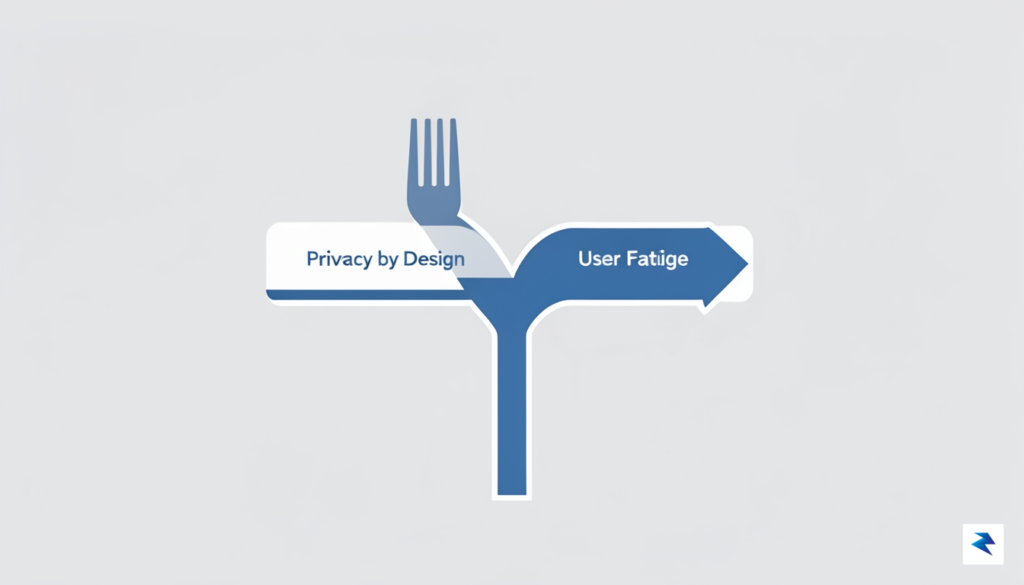
The concept of Privacy by Design was once heralded as the gold standard for responsible technology, rooted in the foundational belief that data protection should be the default state of any system. Under this framework—which gained significant legislative teeth through the General Data Protection Regulation (GDPR)—companies were expected to integrate privacy safeguards directly into the architecture of their products. Ideally, this means that if a piece of software collects personal data, it should only do so when a user explicitly chooses to share it. However, the current landscape of artificial intelligence deployment has inverted this ethical mandate, shifting the burden of protection onto the consumer through a strategy best described as “Privacy by Fatigue.”

Instead of building systems that protect users by default, tech giants are increasingly relying on aggressive “opt-out” models that force users to navigate labyrinthine sub-menus just to maintain their existing level of privacy. This approach intentionally exploits human behavior; by burying data-sharing toggles deep within settings, companies rely on the fact that the vast majority of people will never bother to change them. It is a calculated gamble on user exhaustion. When a feature is enabled by default, the path of least resistance is to accept the status quo, effectively turning every user into an unpaid data contributor without their informed, proactive consent.
True privacy is not a checkbox hidden at the bottom of a terms-of-service agreement; it is the fundamental assumption that a user’s data belongs to them until they explicitly decide otherwise.
This systemic shift disproportionately impacts vulnerable populations and those with lower levels of technical literacy, who may not even realize that their personal interactions are being used to train large-scale machine learning models. For many, the “opt-out” mechanism is effectively a mirage; if you do not know where to look, or if the language used to describe the setting is purposefully obfuscated by legal jargon, you are effectively consenting by default. This is the antithesis of the user-centric model that digital ethics advocates have pushed for over the last decade. By prioritizing speed-to-market and aggressive feature deployment over the autonomy of the individual, the industry is creating a digital environment where privacy is treated as a luxury good—something you only receive if you have the time, energy, and expertise to demand it.
The core issue here is that “Privacy by Fatigue” is not an accidental byproduct of rapid innovation; it is a feature of the modern business model. When companies view user data as the primary fuel for their AI engines, they are structurally disincentivized to make opting out easy. To move back toward a more ethical standard, the industry must stop viewing privacy as an obstacle to be overcome and start viewing it as a primary design requirement. Until legislation catches up to mandate “opt-in” defaults for all AI processing, we remain trapped in a cycle where our silence is interpreted as permission.

The current landscape of software development is dominated by a “capture-first” mentality, where artificial intelligence features are integrated silently and enabled by default, effectively turning every user into an involuntary data source. By shifting to a mandatory opt-in protocol, we can fundamentally restore the balance of power between technology providers and the individuals they serve. Instead of treating consent as a bureaucratic hurdle to be bypassed through buried settings and dark patterns, companies should be required to demonstrate the tangible value of their tools before they are activated. This paradigm shift would force developers to move away from aggressive, blanket deployment strategies and toward a model where features are only introduced when they genuinely solve a user’s problem, rather than merely serving the company’s objective to harvest engagement metrics.

When users are asked to consciously enable AI features, the quality of human-machine interaction improves significantly. When someone affirmatively clicks “enable,” they are entering into a proactive partnership with the technology rather than being subjected to a passive experience they might not even realize is occurring. This choice-based framework encourages companies to be more transparent about what their AI models actually do, how they process personal inputs, and what benefits the user can realistically expect. Furthermore, explicit consent acts as a market filter: if a feature is not valuable enough for a user to take two seconds to toggle it on, it is likely not valuable enough to justify the privacy risks and computational overhead associated with its deployment.
True innovation is not measured by how many users you can force into a system, but by how many users choose to stay because the system respects their agency.
Adopting an “Ethical AI Deployment” framework requires a fundamental rethink of product design incentives. Under this proposed standard, companies would compete on the merits of their transparency and the efficacy of their tools rather than their ability to smuggle new functionality into an existing ecosystem. This creates a competitive advantage for organizations that prioritize user sovereignty, as they will naturally build higher levels of trust and long-term brand loyalty. By implementing a standardized “consent-first” architecture, the industry can move toward a more sustainable and integrity-driven future where the inclusion of AI is a deliberate, informed decision made by the user, not a hidden condition of service that we are forced to spend our precious time undoing.

While waiting for global regulatory frameworks to catch up with the rapid pace of artificial intelligence deployment, the responsibility of digital autonomy currently rests heavily on the individual user. You do not have to be a passive participant in the training of large language models. The first line of defense is a proactive audit of your digital footprint. Start by navigating to the security and privacy centers of your most frequently used platforms—social media, cloud storage, and productivity suites—and search specifically for “data sharing,” “model training,” or “AI features.” These settings are frequently buried under layers of sub-menus, designed to discourage you from finding the toggle that prevents your personal data from being ingested into a proprietary algorithm.
To systematically protect your privacy, follow this checklist to secure your accounts against unauthorized data harvesting:
True digital sovereignty requires us to treat our personal data as a valuable asset rather than a byproduct of our online presence; if a service refuses to respect your privacy, the most powerful tool at your disposal is your departure.

Beyond manual configuration, we must leverage the collective power of user feedback to shift the industry standard. Corporations are acutely sensitive to churn rates and public sentiment. When you encounter a mandatory AI feature that offers no opt-out mechanism, do not simply accept it. Send a formal complaint to the company’s privacy office, leave feedback in the app store, and express your concerns on public forums. When thousands of users explicitly state that they are limiting their usage—or canceling subscriptions entirely—due to invasive data practices, the financial incentive for companies to pivot toward “privacy-by-design” becomes undeniable. Your voice is a critical component in demanding that these technologies transition from being forced upon us to being features we can opt into at our own discretion.
You must be logged in to post a comment.