
Is Your Period Tracker Spying on You? What the Latest Privacy Research Reveals
The Hidden Reality of Period Tracker Privacy In our increasingly digitized lives, period tracking applications have become indispensable tools…


For years, the collective known as Scattered Spider has operated as a persistent shadow over the global digital landscape, systematically dismantling the security perimeters of high-profile corporations and critical infrastructure. Unlike traditional, state-sponsored entities that often favor long-term espionage, this group specialized in high-stakes social engineering and aggressive credential theft. By weaponizing tactics like SIM swapping and sophisticated phishing campaigns, they managed to bypass even the most robust multi-factor authentication protocols. Their notoriety grew from a series of brazen attacks that disrupted everything from massive telecommunications providers to global gaming giants, leaving behind a trail of operational paralysis and millions of dollars in stolen assets.

The recent arrests of Owen Flowers and Thalha Jubair represent more than just a routine police action; they serve as a critical turning point in the ongoing battle against decentralized cybercrime syndicates. Historically, groups like Scattered Spider thrived on the anonymity provided by loose, international structures that made traditional jurisdictional enforcement incredibly difficult. Because these hackers often functioned as a loose network of individuals rather than a single, centralized organization, they were notoriously hard to pin down. However, the coordinated efforts of UK law enforcement, working in tandem with international intelligence partners, have demonstrated that even the most elusive digital actors are not beyond the reach of the law.
The apprehension of key operatives like Flowers and Jubair signifies a shift in investigative methodology, moving away from purely reactive measures toward proactive, intelligence-led disruption of the hacker ecosystem.
This tactical victory highlights a fundamental shift in how cybercrime units now approach the investigation of complex, distributed groups. By meticulously tracking the digital fingerprints left behind during these high-profile intrusions, authorities were able to penetrate the veil of anonymity that previously protected these individuals. These arrests suggest that the era of complete impunity for such collectives is rapidly waning. As law enforcement agencies continue to refine their ability to correlate disparate pieces of evidence across borders, the operational costs for groups like Scattered Spider are rising significantly. This disruption not only cripples their immediate ability to execute further attacks but also serves as a potent deterrent to others who might seek to emulate their destructive methodology in the future.

The cyberattack that crippled parts of London’s metropolitan transit system was far more than a mere nuisance; it served as a stark, unsettling demonstration of how perilously vulnerable critical public utilities remain to determined, malicious intent. This wasn’t a random act of vandalism, but a calculated intrusion designed to disrupt and expose systemic weaknesses within an essential urban infrastructure. The incident highlighted the sophisticated tactics employed by today’s cybercriminals, moving beyond simple denial-of-service attacks to deep penetration that threatened the very operational integrity of the city’s transport network. It underscored a chilling reality: even the most robust systems can be breached, with significant consequences for millions of daily commuters and the city’s overall functioning.
Investigators determined the initial breach was orchestrated through a highly sophisticated social engineering campaign targeting specific employees within the transit authority’s IT department. Rather than brute-forcing firewalls or exploiting zero-day vulnerabilities, the attackers meticulously crafted phishing emails, masquerading as urgent internal communications related to system updates. These emails contained cleverly disguised links that, when clicked, deployed a custom-built malware strain onto the victim’s workstation. This malware was designed not for immediate disruption, but for stealthily harvesting credentials and establishing a persistent backdoor, effectively opening the gates from within the network’s perimeter.
Once a foothold was established, the perpetrators wasted no time in exploiting internal vulnerabilities. They leveraged weak multi-factor authentication protocols on an outdated internal server, and subsequently exploited an unpatched software vulnerability in a legacy scheduling application. This allowed them to perform lateral movement across various segments of the network, progressively gaining access to more sensitive systems. Their objective was clear: to map the network, identify critical operational technology (OT) systems, and elevate their privileges to a level that could impact real-world operations. This meticulous reconnaissance ensured their subsequent actions would have maximum disruptive effect.
The culmination of their deep penetration manifested as widespread operational disruption across several key transit lines. Attackers gained access to systems controlling real-time passenger information displays, causing erroneous data to be shown at stations and on digital signage, leading to confusion and delays. More critically, they tampered with the automated signaling systems on specific routes, forcing manual overrides and significantly reducing train speeds for safety protocols. This directly resulted in extensive delays, cancellations, and overcrowded platforms during peak hours, creating a logistical nightmare for transit operators and plunging thousands of commuters into chaos. The financial implications of lost productivity, coupled with the immense reputational damage, underscored the severe impact of this digital siege.
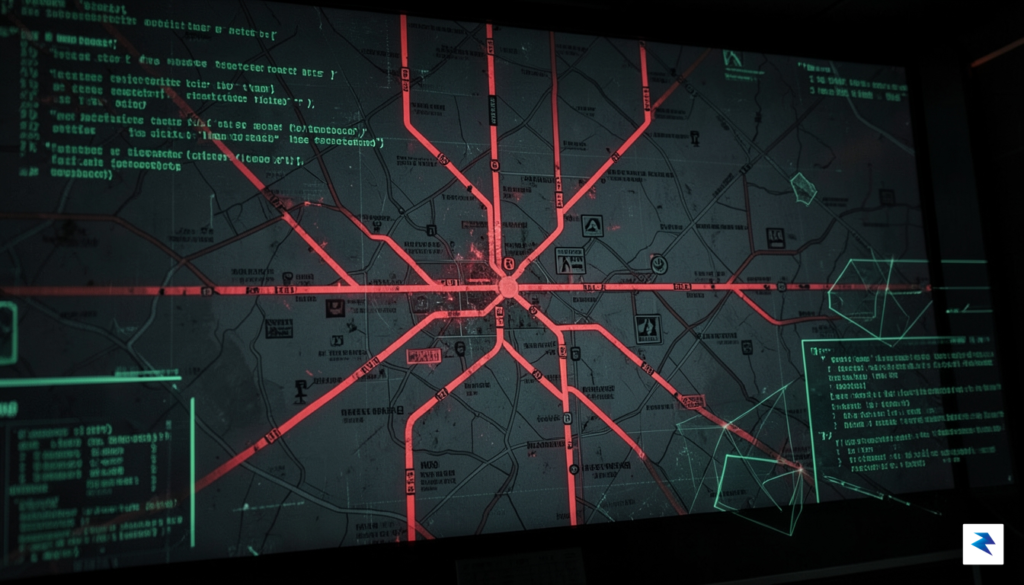
The London transit system attack served as a stark reminder that cyber threats extend far beyond data theft; they can directly impair physical infrastructure and daily life. It exposed critical gaps in the cybersecurity posture of public utilities, particularly concerning the segregation of IT and OT networks, and the need for continuous, rigorous employee training against social engineering tactics. Furthermore, it highlighted the importance of rapid incident response plans, as the speed and efficacy of containment directly influence the scale of disruption. This incident cemented the understanding that protecting public services requires a multi-layered defense strategy, acknowledging that the human element

While enterprise-grade firewalls and complex encryption protocols form the bedrock of modern cybersecurity, these systems remain inherently vulnerable to the most unpredictable variable in the equation: the human element. The recent disruption of the Scattered Spider collective serves as a stark reminder that even the most robust digital fortifications can be rendered useless if an employee is coerced or tricked into opening the front door. Rather than relying solely on brute-force technical exploits, these attackers mastered the art of psychological manipulation, turning an organization’s own workforce into unwitting accomplices in their data breaches.
At the heart of their strategy was a highly sophisticated form of phishing that moved far beyond the generic, poorly spelled emails of the past. Instead of cast-netting for victims, these hackers engaged in meticulous reconnaissance, gathering intelligence on specific employees through professional networking sites and public records. By tailoring their communications to appear as urgent requests from legitimate IT departments or trusted vendors, they lowered the natural skepticism of their targets. Once a user clicked a malicious link, they were often redirected to a deceptive, pixel-perfect replica of a corporate login portal designed specifically to capture sensitive credentials in real time.

Beyond traditional credential harvesting, these actors frequently utilized “MFA fatigue” to bypass multi-factor authentication, one of the primary defenses touted by security experts. By bombarding a target with repeated authentication requests at unusual hours, the attackers forced the victim to eventually approve the login—either out of frustration or a desire to make the persistent notifications stop. This technique effectively weaponized the convenience of modern security tools against the user, turning a protective measure into a source of annoyance that ultimately led to a full system compromise.
The most dangerous vulnerability in any network is not a missing software patch, but the misplaced trust of a human being who believes they are following standard operating procedures.
The success of these methods highlights a critical shift in the threat landscape where social engineering has become the path of least resistance. Because it is often easier to trick a human into revealing a password than it is to break an encrypted database, cybercriminal groups like Scattered Spider prioritized reconnaissance and psychological pressure over raw coding talent. This reality forces organizations to rethink their security posture, moving away from a reliance on technical barriers alone and toward a culture of skepticism, continuous verification, and rigorous training that empowers employees to identify even the most convincing digital imposters.

The recent sentencing of two young individuals to five years and six months in prison marks a pivotal moment in the fight against cybercrime within the UK. This substantial term unequivocally signals that the judiciary is taking a firm stance, demonstrating that digital transgressions are not abstract offences but carry tangible, severe real-world consequences for those involved. It’s a clear declaration that the perceived anonymity of the internet offers no sanctuary from justice, particularly when organized criminal activity is at play and victims suffer real harm.
Both Toby Flowers, aged 20, and Joe Jubair, aged 19, faced the full weight of the law, ultimately entering guilty pleas for their involvement with the notorious Scattered Spider hacking group. Their admissions of guilt streamlined the legal process, but did not diminish the gravity of their actions, which included conspiracy to commit fraud and blackmail, among other serious charges. These pleas underscored the irrefutable evidence gathered by law enforcement, culminating in a conviction that aims to deter others contemplating similar illicit activities and protect potential victims.
The five-year, six-month custodial sentence is particularly significant, especially considering the relatively young age of the offenders, highlighting the severity with which the courts view their participation in sophisticated cyber-operations. It reflects the court’s understanding of the widespread damage and financial disruption that sophisticated cyberattacks, like those orchestrated by Scattered Spider, inflict upon businesses and individuals globally. By imposing such a robust penalty, the UK courts are setting a powerful precedent, making it abundantly clear that youth does not equate to immunity when participating in highly organized and damaging cybercriminal enterprises.
This landmark judgment serves as a stark warning to aspiring or current young cybercriminals who might believe their actions are merely ‘games’ or untraceable exploits. It highlights the increasingly sophisticated methods employed by law enforcement agencies to identify, track, and apprehend individuals operating within these complex digital criminal networks, often spanning international borders. The message is unequivocal: engage in organized hacking, and you will face severe repercussions, potentially derailing your future with a significant prison term and a criminal record that impacts every aspect of your life.
Ultimately, this sentencing underscores a growing societal recognition that digital crimes are not victimless and demand the same rigorous accountability as their physical counterparts. It reinforces the principle that skill and access to technology, when misused for illicit gain or malicious disruption, will be met with decisive legal action. The courts have indeed sent a resonant message: the digital realm is not a lawless frontier, and those who breach its laws will be held responsible, their actions echoing far beyond the confines of a computer screen.


The recent apprehension of key figures linked to the Scattered Spider collective marks a significant victory for international law enforcement, yet it serves as a sobering reminder that the current landscape of cyber warfare is fundamentally shifting. While neutralizing a specific group of threat actors provides a temporary reprieve, it does not address the underlying systemic vulnerabilities that allow decentralized, loosely affiliated hacking networks to thrive. For governments and global corporations, the takeaway is clear: reactive security measures—which wait for an intrusion to occur before mounting a defense—are no longer sufficient in an era where digital agility is the primary weapon of the adversary.
International cooperation has reached a new, critical threshold, demonstrating that borders offer no sanctuary for those orchestrating attacks from behind a keyboard. This success underscores the necessity for a more integrated, cross-border intelligence-sharing framework that can track digital signatures and financial trails in real time. Governments must now prioritize the harmonization of cyber-crime legislation to ensure that decentralized groups cannot exploit jurisdictional gaps. Without a unified global policy that streamlines extradition and digital evidence collection, sophisticated threat actors will continue to pivot their operations across geographic lines to evade local authorities.
The disruption of a high-profile hacking group is not a permanent solution, but rather a strategic opening to reassess how we harden the infrastructure of our digital economy against increasingly human-centric social engineering tactics.

For private enterprises, the lesson is equally profound: the most robust firewall is useless if the front door is left unlocked by a compromised credential. Scattered Spider’s success was largely built on social engineering and the abuse of identity management systems rather than brute-force software exploits. Consequently, corporations must transition toward a strict “Zero Trust” architecture. This involves implementing multi-factor authentication that goes beyond simple SMS codes—such as physical security keys or biometric verification—and continuously monitoring user behavior for anomalies that suggest a hijacked session.
Ultimately, the threat from decentralized groups is a permanent fixture of the modern business environment. Organizations that move away from static, perimeter-based security toward a proactive, identity-centric model will be the best positioned to weather the next wave of sophisticated cyber threats. By treating identity as the new security perimeter, companies can mitigate the damage from individual human errors, ensuring that even if one employee is compromised, the integrity of the entire network remains secure. The path forward requires constant vigilance, rapid adaptation, and the recognition that cybersecurity is not a project to be completed, but a continuous operational requirement.
You must be logged in to post a comment.