
Sugar in the Stars: Why the Discovery of Erythrulose Changes Everything
The Sweet Discovery: Erythrulose in the Cosmos In a profound expansion of our understanding of the universe, astronomers have successfully…


In our increasingly digitized lives, period tracking applications have become indispensable tools for millions, offering a convenient way to monitor reproductive cycles, manage symptoms, and plan for the future. We entrust these platforms with the most intimate details of our biology, often assuming that the information we input—ranging from cycle regularity to mood fluctuations and sexual activity—is handled with the utmost discretion. However, a jarring reality is beginning to emerge: the very applications designed to empower our health journeys are frequently operating within a business model that treats our most sensitive biometric data as a commodity to be traded, analyzed, and shared.

The vulnerability inherent in reproductive health data cannot be overstated. Unlike a movie preference or a location history, information about our menstrual cycles, fertility status, and hormonal health constitutes some of the most personal data an individual can possess. When this information leaves the secure confines of your device and enters the hands of third-party analytics firms, the risks multiply exponentially. These companies often operate in the shadows, far removed from the direct user experience, meaning that even if you have meticulously read a developer’s privacy policy, the ultimate destination of your health profile remains disturbingly opaque.
The trust gap between users and developers is widening as the commodification of private health metrics becomes the industry standard rather than the exception.
This hidden data sharing creates a profound trust gap that threatens the integrity of digital health. Many users download these apps under the assumption that their information is strictly used to improve the software’s predictive accuracy or to provide personalized health insights. Instead, they may unknowingly be feeding a massive ecosystem of data brokers who leverage this information for targeted advertising or, in more concerning scenarios, to build comprehensive consumer profiles that could impact everything from insurance eligibility to employment opportunities. The convenience of modern health technology should not require us to forfeit our right to privacy, yet the current landscape suggests that without radical transparency, we are effectively paying for these “free” apps with the most private aspects of our physiological existence.
Ultimately, we must move toward a standard where health apps are held to a higher level of accountability. It is not enough for developers to provide a user-friendly interface; they must also provide a clear, undeniable guarantee that reproductive data is siloed, protected, and never monetized. As we continue to integrate these trackers into our daily routines, the burden of vigilance falls on both the regulatory bodies that govern consumer protection and the users who must demand better practices. Understanding the hidden mechanics of how these apps function is the first step in reclaiming the privacy that should have been an inherent feature of our health tools from the very start.

Mozilla’s dedicated ‘Privacy Not Included’ research team embarked on a comprehensive investigation into the privacy practices of various menstrual health applications, aiming to offer consumers clear, actionable insights into how their most intimate health data is handled. Unlike mere reviews of lengthy and often opaque privacy policies, their methodology involved a deep dive into the actual network traffic and back-end connectivity of these apps. This rigorous technical examination allowed researchers to observe in real-time which data points were being transmitted, where they were going, and who had access to them, providing an unprecedented look beyond stated policies to actual practice.
During this meticulous scrutiny, the team made a significant discovery concerning the period tracker app, Stardust. Despite the sensitive nature of the data it collects—including detailed menstrual cycle information, logged symptoms, mood fluctuations, and even predicted fertility windows—Stardust was found to be actively transmitting this highly personal health data to third-party analytics firms. This finding was particularly stark when contrasted with several other apps in the same category that demonstrated a clear commitment to data minimization, restricting data sharing and processing to what was strictly necessary for the app’s core functionality. The revelation highlighted a significant divergence between Stardust’s operational data handling and the privacy expectations consumers typically hold for such intimate health tools.
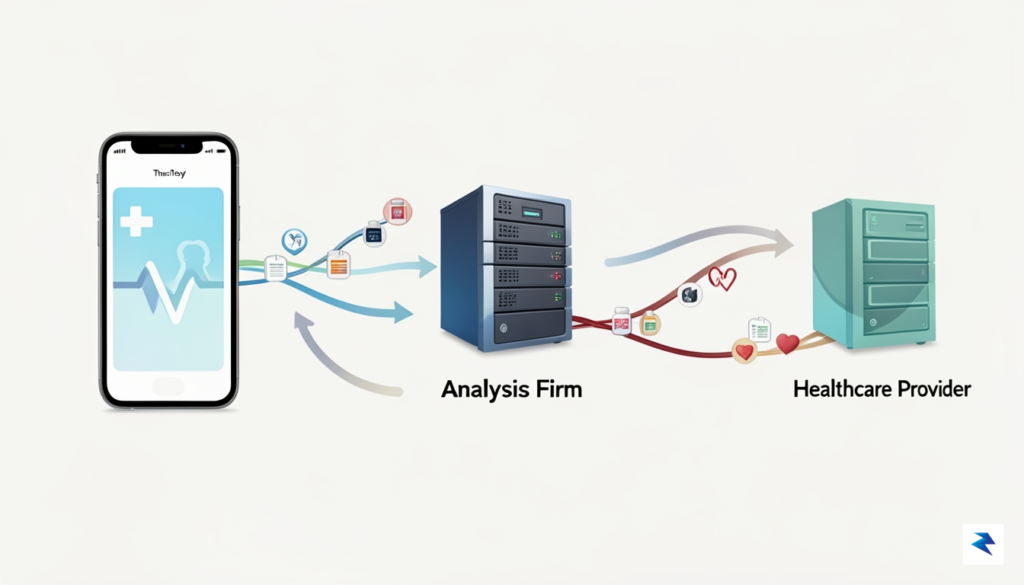
The method of uncovering these practices involved sophisticated network analysis tools, effectively allowing the Mozilla team to “listen in” on the digital conversations occurring between the Stardust app on a user’s device and various servers across the internet. By monitoring these data packets, they could pinpoint the exact nature of the information being sent—whether it was anonymized identifiers, specific health entries, or general usage patterns—and identify the recipients, which in this case included a known analytics provider. This technical observation provided irrefutable evidence of data transmission that would otherwise remain hidden from the average user, underscoring the critical importance of independent security research in holding app developers accountable.
The implications of this third-party data access are profound, extending far beyond simple privacy concerns. When sensitive health data, even if initially stripped of direct identifiers, is shared with analytics firms, it enters an ecosystem where it can be aggregated, analyzed, and potentially used for profiling. This raises serious questions about the potential for re-identification, where seemingly anonymous data points can be combined with other available information to pinpoint individuals. Such practices can lead to unwanted targeted advertising, discriminatory practices, or even the subtle manipulation of user behavior, all without explicit, informed consent. Ultimately, the sharing of such personal health metrics erodes user trust and undermines the fundamental expectation of privacy associated with tools designed to manage one’s most intimate well-being.

The digital health market is currently defined by a stark, binary divide: those apps that treat your intimate biological data as a liability to be protected, and those that treat it as a commodity to be exploited. On one end of the spectrum, there are privacy-focused developers who design their software with local-first encryption, ensuring that sensitive information about your cycle, symptoms, and reproductive health never leaves the secure confines of your smartphone. These services typically operate on transparent subscription models, where the user is the customer rather than the product, and the business incentive is aligned with providing a high-quality, secure user experience rather than harvesting behavioral insights.
Conversely, the industry is saturated with “free” apps that rely on aggressive data-driven advertising and third-party tracking. For these companies, your health history is simply a collection of data points that can be aggregated, anonymized—often poorly—and sold to analytics firms or digital advertisers looking to build hyper-targeted profiles. This creates a dangerous landscape where the more information you input about your life, the more valuable you become to data brokers. Because these apps often obscure their data-sharing practices within lengthy, impenetrable legal agreements, the average user is left without a clear way to audit how their information is flowing through the digital ecosystem.
The core of the issue lies in a fundamental regulatory gap: health data generated in a private app is rarely afforded the same legal protections as clinical information held in a doctor’s office or a hospital’s electronic health record system.

This lack of standardized regulation means that users are essentially navigating a “wild west” of digital health tracking. Without strict federal requirements governing how apps must handle reproductive data, the responsibility currently falls entirely on the user to vet an app’s privacy policy—a task that is often functionally impossible for non-experts. Even when a company claims to anonymize data, researchers have repeatedly shown that re-identification is disturbingly easy when health data is combined with other publicly available datasets. As a result, the divide between “squeaky clean” apps and predatory trackers continues to widen, leaving users to choose between the convenience of digital tracking and the fundamental right to keep their most intimate personal history private.
Ultimately, the disparity in this industry serves as a crucial reminder that privacy is not a monolith. When choosing a tool to track your health, it is essential to consider the business model behind the interface. If an app costs nothing to download and offers premium features for free, it is almost certain that your data is the hidden currency. Understanding this difference is the first step toward reclaiming your digital agency in an era where your biological information is becoming one of the most sought-after assets in the advertising world.

Your reproductive health data represents far more than a simple collection of dates and symptoms; it is an intimate, granular record of your lifestyle, biological cycles, and long-term health trajectory. For data brokers and analytics firms, this information is considered high-value currency because it offers a predictive window into your future needs and behaviors. By aggregating data on fertility, mood, and physical health, companies can build highly accurate profiles that are sold to advertisers, insurance providers, and other third parties. This creates a digital footprint that is often sold and resold across the vast, opaque data broker ecosystem, meaning that once your information is harvested, you lose all practical control over where it travels or how it is eventually utilized.
The risks associated with this data leakage extend well beyond the annoyance of unwanted targeted advertising. Unlike a credit card number, which can be canceled if compromised, your biological data is permanent and immutable. If this sensitive information were to fall into the wrong hands—or be legally subpoenaed—it could be weaponized in ways that fundamentally alter your life. For instance, in an increasingly complex legal landscape, reproductive data could potentially be used to identify, monitor, or even discriminate against individuals based on their health choices or fertility status. The transition from a private health record to a public data point creates a profound vulnerability, transforming your personal wellness journey into a tool for corporate or state-level surveillance.

Furthermore, the economic incentive to monetize this data creates an inherent conflict of interest between app developers and their users. While many users download these applications to gain agency over their own bodies and health, they are often unknowingly participating in a massive behavioral modeling experiment. Insurance companies, for example, might be interested in this data to adjust premiums or deny coverage based on perceived health risks derived from your cycle tracking. This creates a scenario where the very tools designed to empower you are actively undermining your privacy and financial security.
The permanence of digital data means that reproductive information shared today could have unforeseen consequences for your employment, insurance eligibility, or legal standing years or even decades into the future.
Ultimately, the lack of transparency in how these apps handle user data is a systemic issue that requires a shift in how we perceive digital privacy. We must stop viewing health apps as neutral utilities and start recognizing them as data-gathering engines. When we treat reproductive health data as a commodity that can be traded, we lose our ability to protect the most intimate details of our lives from those who would use that information against us. Protecting your privacy in the age of algorithmic tracking requires a proactive approach: being highly selective about which apps you trust and demanding that developers prioritize user anonymity over profit-driven data mining.

Maintaining your health journey does not have to come at the expense of your digital privacy. You can effectively reclaim control over your most sensitive biological data by adopting a proactive, defensive mindset toward the applications you install on your smartphone. The first step is to conduct a thorough audit of your current app suite; start by navigating to your device’s settings to review the specific permissions granted to each health tracker. If an app requests access to your location, contacts, or cross-app tracking capabilities, consider whether those permissions are truly necessary for the app to function. In many cases, these intrusive requests serve data brokers rather than the user, and disabling them can significantly reduce your digital footprint without hindering your ability to log your cycle.

Beyond checking permissions, it is vital to scrutinize the privacy policy of any tool you use to manage your personal health information. While these documents are often intentionally dense, look specifically for clauses that discuss the sharing of “anonymized” or “aggregated” data with third-party analytics firms or marketing partners. If the language is ambiguous or suggests that your data can be sold to third parties, it is time to seek a more transparent alternative. When evaluating a platform, prioritize those that offer clear, accessible explanations of their data retention policies and those that provide a straightforward mechanism for deleting your entire account history permanently.
True digital sovereignty in health tracking means choosing tools where your data remains under your exclusive control, not stored as a commodity in a corporate cloud.
To further protect yourself, consider transitioning to “privacy-first” alternatives that prioritize local storage or robust encryption standards. Many modern, open-source health trackers are designed to keep your information entirely on your device, ensuring that no sensitive data is ever transmitted to a remote server or analytics firm. Because these tools often lack the monetization models that drive data-harvesting apps, they are inherently less incentivized to track your habits. By opting for offline-only tools, you eliminate the risk of a data breach at the company level and ensure that your health history remains private, accessible only to you whenever you need to reference it.

The recent revelations surrounding Stardust and its data-sharing practices serve as a stark reminder that the digital health ecosystem is often far more invasive than its polished interfaces suggest. When we input our most intimate biological data into an application, we are often operating under the assumption that this information stays between us and the developer. However, as Mozilla’s research highlights, the reality is frequently a complex web of third-party analytics firms and data brokers. While it is unfair to place the entire burden of digital surveillance on the shoulders of the consumer, the current regulatory landscape leaves us with little choice but to adopt a posture of proactive skepticism. Until ironclad privacy laws are enacted to hold tech companies truly accountable, your best defense is to treat your personal health data with the same level of protection you would afford your medical records at a doctor’s office.

Moving forward, we must demand a higher standard of transparency from the developers who build the tools we rely on daily. A privacy-first approach begins with interrogating the apps we use: Does this service actually need my location to track my cycle? Who exactly are they sharing my data with, and what is the business model behind their “free” service? If an app’s privacy policy is buried in legal jargon or intentionally vague about third-party sharing, it is a significant red flag. By choosing to support platforms that prioritize data minimization—collecting only what is strictly necessary and refusing to monetize user habits—we send a powerful market signal that user trust is not a commodity to be traded away for advertising revenue.
True digital health autonomy means reclaiming ownership of your personal information, rather than settling for the convenience of free services that treat your biology as raw data for sale.
Ultimately, we must shift our perspective to recognize that digital privacy is not merely a technical preference, but a fundamental human right. Our health information is deeply personal, and its misuse can have far-reaching consequences that extend well beyond targeted advertising. As we navigate the future of health technology, keep in mind that the most secure data is the data that is never shared in the first place. You have the power to curate your digital footprint by opting for offline trackers, open-source alternatives, or apps with strict, verifiable privacy pledges. By staying informed and refusing to accept invasive tracking as the “new normal,” you are not just protecting yourself; you are participating in a larger movement to hold the technology industry to a more ethical, human-centric standard.
You must be logged in to post a comment.