
Why SpaceX Aborted the Starship V3 Launch: A Technical Breakdown
Understanding the Starship V3 Abort: What Actually Happened The recent decision to halt the launch of the Starship V3 iteration was not a sign…


Since its inception, Bitcoin has been defined by a fundamental tension between its role as a borderless, censorship-resistant currency and the physical constraints of its decentralized ledger. In the early years, the network was primarily utilized for simple peer-to-peer value transfers, where the scarcity of block space was viewed as a feature rather than a hurdle. However, as the ecosystem matured, developers and miners began to grapple with the reality that a transparent, immutable public ledger is an incredibly attractive canvas for data storage. This realization sparked a multi-year debate regarding the network’s purpose: should Bitcoin remain a lean, purpose-built financial rail, or should it evolve into a more generalized, data-rich infrastructure capable of hosting complex digital assets?
The emergence of inscriptions—a method of embedding arbitrary data directly into the witness section of Bitcoin transactions—fundamentally shifted this discourse. By leveraging past soft forks like Segregated Witness (SegWit) and Taproot, users discovered they could bypass traditional size limitations to store images, text, and even entire software programs on the blockchain. While proponents celebrate this as a “killer app” that brings unprecedented utility and fee revenue to miners, a significant contingent of the developer community views this data as bloat. To these critics, the influx of non-financial data is indistinguishable from spam, as it threatens to increase the cost of running a full node and undermines the network’s efficiency for its primary objective: the settlement of monetary value.

The ongoing debate over data usage is not merely a technical disagreement; it is a profound philosophical conflict regarding the intended definition of Bitcoin’s utility in a decentralized landscape.
Historical precedents for these disputes are deeply rooted in Bitcoin’s upgrade cycle, particularly through the mechanism of soft forks. These upgrades were originally designed to fix bugs or optimize performance, yet they often inadvertently created new “attack surfaces” or expanded the network’s expressive capabilities in ways their architects never anticipated. By allowing for more complex transaction types, the protocol effectively lowered the cost of storing data, creating a paradox where Bitcoin’s increased functionality directly challenged its scalability. As the network transitions into this new era, the community is forced to re-evaluate whether the protocol should remain passive or if it requires active intervention to define what constitutes “legitimate” usage of its finite block space.
Ultimately, the current friction between traditionalists and proponents of data-rich transactions mirrors the earlier block-size wars, albeit with a more nuanced technical focus. The challenge lies in creating a future where Bitcoin remains accessible to those running hardware in their homes while still allowing for the permissionless innovation that has defined its growth. Whether through protocol-level restrictions or the adoption of alternative client configurations, the network is clearly entering a period of critical refinement. As users seek to balance the demand for expressive transactions with the necessity of preserving the chain’s long-term integrity, the decisions made today will undoubtedly shape the architecture of Bitcoin for decades to come.

At its core, BIP-110 operates on the philosophy that the Bitcoin blockchain should remain a dedicated ledger for financial transactions, rather than a general-purpose data storage platform. Technically, this proposal seeks to introduce a formal consensus rule that filters out specific types of non-financial data—often referred to as “spam” or “inscriptions”—that proponents argue unnecessarily bloat the blockchain. By embedding these rules directly into the Bitcoin protocol, BIP-110 would effectively mandate that miners reject blocks containing data structures deemed non-compliant. This creates a rigid, programmatic barrier, ensuring that the network’s limited block space is reserved exclusively for native transfer-of-value transactions.
Implementing such a change is far from a simple software update; it requires a coordinated shift in the network’s consensus layer. Because Bitcoin is a decentralized system, any protocol-level change requires overwhelming support from the mining community and node operators to ensure the chain remains unified. If miners fail to reach a consensus on these new rules, the network risks a “hard fork,” where the community splits into two incompatible versions of the chain. Consequently, BIP-110 represents a high-stakes legislative approach to network health, relying on the collective agreement of thousands of independent actors to enforce a new definition of what constitutes a “valid” transaction.

However, this approach faces immense political friction that transcends mere technical implementation. Many members of the Bitcoin community view the blockchain as a permissionless, censorship-resistant platform that should remain agnostic to the nature of the data being stored. Critics of BIP-110 argue that attempting to define “bad” data is a slippery slope that compromises Bitcoin’s core value proposition of neutrality. They contend that if the protocol begins filtering content based on social or aesthetic preferences, it undermines the very trustless nature that gives Bitcoin its strength. This ideological divide has created a significant stalemate, as the community remains deeply split over whether the network should prioritize absolute censorship resistance or optimize for specific, traditional use cases.
The debate surrounding BIP-110 is less about the data itself and more about the fundamental governance of Bitcoin: should the protocol evolve to dictate usage, or remain a neutral, unopinionated foundation for all global value exchange?
Ultimately, the challenge for BIP-110 is not just one of code, but of cultural consensus. While the technical mechanism for filtering data is straightforward to implement, the social contract required to activate such a change is incredibly elusive. Without a clear majority of stakeholders agreeing on the “proper” use of the blockchain, BIP-110 remains a contentious proposal that highlights the ongoing tension between preserving Bitcoin’s original vision and adapting to the evolving demands of a growing digital ecosystem.
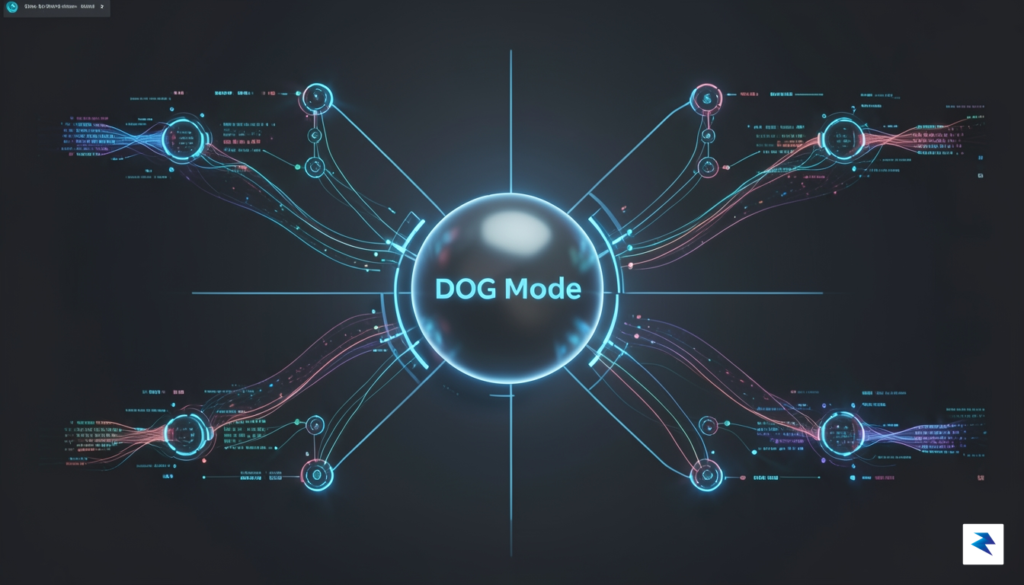
The emergence of “DOG Mode” represents a radical departure from the traditional, consensus-dependent methods of managing Bitcoin’s data footprint. While proposals like BIP-110 seek to impose rigid, network-wide rules on how data is structured and stored, DOG Mode shifts the power dynamic entirely to the individual node operator. By utilizing client-side filtering, this software allows users to define their own data acceptance criteria locally, effectively creating a personalized view of the blockchain. Instead of waiting for miners or developers to reach a difficult, often contentious consensus on what constitutes “acceptable” data, DOG Mode empowers the user to ignore or prioritize specific transaction types based on their own node’s resources and preferences.

This architecture fundamentally separates the client from the base consensus layer, meaning that a user’s decision to filter data does not require a network-wide soft fork or hard fork. Because the filtering occurs at the application level—after the data has been downloaded but before it is indexed or stored—the integrity of the underlying ledger remains untouched. The network continues to operate as a singular, immutable chain of blocks, but the node running DOG Mode acts as a sophisticated, autonomous gatekeeper. This independence is crucial; it ensures that the node operator is never at the mercy of miner voting cycles or the slow, bureaucratic pace of protocol upgrades, which have historically hampered the community’s ability to respond to shifting data demands.
“The ultimate expression of Bitcoin’s decentralization is not found in a unified protocol rule, but in the freedom of each participant to define their own digital reality.”
At its core, this approach signifies a shift toward the “sovereignty of the node” over the “sovereignty of the protocol.” For years, the Bitcoin community has been locked in a debate over who holds the authority to decide the contents of the blockchain. BIP-110 and similar proposals view this through the lens of protocol-level enforcement, treating the network as a singular, uniform entity that must move in lockstep. DOG Mode, conversely, recognizes that a truly decentralized system should accommodate diverse requirements. By prioritizing individual autonomy, the client-side approach prevents the “tyranny of the majority” from dictating how resources are allocated, allowing for a more flexible, resilient, and user-centric future for Bitcoin data management.
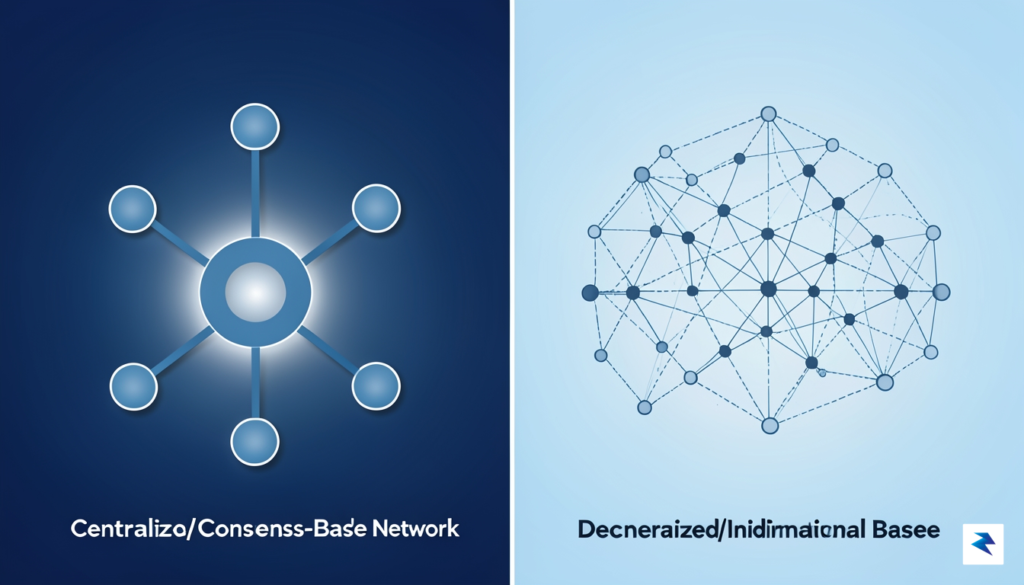
At its core, the tension between BIP-110 and DOG Mode represents a fundamental philosophical split regarding the future of Bitcoin’s architecture. BIP-110 functions as a traditional consensus-based upgrade, requiring the collective coordination of the network to modify the protocol’s rulebook. By seeking to standardize how data is handled across all nodes, it aims to maintain a singular, verifiable truth shared by every participant. In contrast, DOG Mode shifts the paradigm from global consensus to individual sovereignty, enabling the local node operator to define their own reality through client-side filtering. This approach does not ask the network for permission; instead, it empowers the software to discard specific data packets before they ever interact with the node’s local storage or memory, effectively creating a personalized version of the ledger.

This divergence creates significant implications for how data propagates across the peer-to-peer network. When a network relies strictly on consensus-based upgrades, propagation is predictable but rigid; every node acts as an identical mirror of the whole, ensuring that the network remains synchronized at the cost of flexibility. DOG Mode, however, introduces a form of elective network fragmentation. While the node still adheres to the core consensus rules of Bitcoin—meaning it remains part of the same blockchain—it effectively chooses to “blind” itself to specific types of metadata or non-core transactions. This local pruning raises complex questions about the future of node behavior: if enough operators adopt filtering mechanisms, the network could theoretically evolve into a mosaic of nodes with varying levels of visibility, potentially complicating the propagation of secondary protocols built atop the base layer.
The move toward client-side filtering marks a transition from a “one-size-fits-all” network to an “opt-in” experience, where the node operator’s preference dictates the utility of their local infrastructure.
The primary risk of this fragmentation is the potential for a disjointed network experience, where different nodes perceive the “health” or “capacity” of the chain differently based on what they choose to filter. Critics argue that such autonomy might degrade the network’s function as a unified ledger, potentially leading to scenarios where transaction relay becomes inconsistent. Conversely, proponents argue that this individual freedom is the ultimate realization of Bitcoin’s ethos. By allowing operators to define their own data boundaries, the network becomes more resilient to spam-driven congestion and bloat. This debate isn’t merely about technical efficiency; it is a profound exploration of whether Bitcoin should remain a monolithic entity governed by collective agreement or evolve into a decentralized ecosystem where individual nodes possess the agency to customize their local environment.

The emergence of tools like DOG Mode and the push for protocol-level standardization through BIP-110 represent more than just a technical dispute over data; they signal a profound shift in how the Bitcoin network might govern its own evolution. At the heart of this tension lies the fundamental question of censorship resistance: does a decentralized network remain strongest when it enforces a single, immutable consensus on what constitutes valid data, or does it thrive by empowering individual participants to decide what they are willing to store and relay? By providing users with the agency to bypass restrictive data policies, these tools essentially transform the Bitcoin client from a passive piece of infrastructure into an active, subjective filter. This transition suggests that the future of Bitcoin may rely less on top-down protocol mandates and more on a modular ecosystem where the definition of valid activity is increasingly determined at the network’s edges.

From a long-term perspective, this trend toward individualized control could complicate the path for future soft forks. Historically, Bitcoin soft forks have required a high degree of coordination and broad miner consensus to remain effective. However, if a significant portion of the network adopts flexible clients that allow for the selective exclusion of specific data types, the traditional mechanism of achieving “network-wide” consensus becomes fragmented. While this fragmentation might initially appear as a threat to the network’s unified state, it simultaneously acts as an ultimate insurance policy against censorship. If a central authority or a majority of miners were to attempt to suppress specific, non-harmful transactions, the existence of a modular, flexible client ecosystem ensures that the minority can effectively opt out of that censorship without needing to fork the entire chain.
The true resilience of Bitcoin is found not in the rigidity of its rules, but in the ability of its participants to negotiate their own participation in a decentralized, permissionless landscape.
Ultimately, the ongoing debate serves as a stress test for Bitcoin’s capacity to handle internal disagreement without fracturing. Maintaining an open, modular ecosystem is essential because it allows the community to experiment with different philosophies of data management without forcing a binary choice upon the entire user base. As developers continue to build tools that prioritize user autonomy, the protocol itself becomes more robust, effectively turning Bitcoin into a living organism that evolves through constant, localized refinement. By embracing these diverse approaches, the network reaffirms its commitment to its core value proposition: providing a platform that is not merely difficult to censor, but functionally impossible to control by any singular entity, regardless of the data structures that happen to be passing through it at any given moment.
You must be logged in to post a comment.