
DOG Mode vs. BIP-110: The New Battle for Bitcoin’s Data Future
The Evolution of Bitcoin Data Restrictions Since its inception, Bitcoin has been defined by a fundamental tension between its role as a…
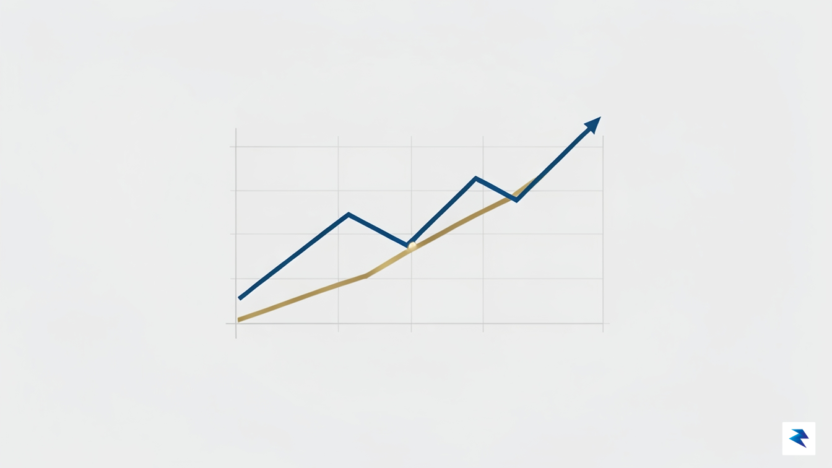

The recent wave of volatility across the digital asset space has served as a sobering reminder that crypto markets remain inherently cyclical. While seasoned investors often anticipate these periodic drawdowns, the intensity of the latest shift—particularly the disproportionate decline in Ether compared to Bitcoin—has prompted a broader re-evaluation of portfolio risk. When markets experience sudden, sharp corrections, it is easy to succumb to the emotional pressure of the moment; however, viewing these dips through the lens of historical market behavior reveals a more nuanced reality. Corrections are not merely signs of weakness but are often the mechanism through which markets purge excessive leverage and reset valuations to more sustainable levels.
Currently, the market is grappling with a pronounced unwinding of speculative positions, specifically within the high-growth technology and semiconductor sectors that have long served as a proxy for risk-on sentiment. As global liquidity conditions tighten and macroeconomic pressures mount, investors are increasingly pivoting toward capital preservation. This “de-risking” phase inevitably hits altcoins and secondary network tokens harder than Bitcoin, which has increasingly assumed the role of a digital reserve asset. Because Ether occupies a unique space as both a store of value and a foundational layer for decentralized applications, it is often more sensitive to fluctuations in developer activity and network demand, explaining why it frequently exhibits higher beta relative to the broader market index.

Market volatility is not a bug in the system; it is a fundamental feature of an asset class that is still transitioning from a speculative frontier into a mature pillar of global finance.
Understanding these fluctuations requires looking beyond simple price action to the macro-economic forces at play. We are witnessing a realignment where interest rate expectations and institutional risk appetites are driving a flight to quality. When the “chip trade”—the bullish fervor surrounding AI-integrated hardware and tech stocks—begins to unwind, the ripples are felt immediately across the crypto ecosystem. Since many investors treat digital assets as high-growth tech plays, a retreat in the NASDAQ or related sectors frequently acts as a leading indicator for a cooling period in crypto. Consequently, the current drawdown should be viewed as a standard, albeit uncomfortable, phase of market maturation rather than a fundamental failure of the underlying technology.
To navigate this environment effectively, participants must maintain a long-term perspective that acknowledges these inevitable bouts of turbulence. By focusing on the strength of network fundamentals and the ongoing evolution of blockchain utility, investors can better distinguish between temporary price noise and lasting shifts in the ecosystem. While the pain of a double-digit drop in assets like HYPE or Ether is undeniable, these corrections play a vital role in curbing irrational exuberance, ultimately paving the way for a more resilient and disciplined market cycle in the future.

The modern financial landscape operates as a tightly woven tapestry, where a tremor in a major index like Japan’s Nikkei 225 can trigger a seismic shift across global asset classes. When the Nikkei experiences its sharpest decline in decades, it serves as a wake-up call for institutional investors who have long relied on the carry trade—a strategy involving borrowing in low-interest-rate environments like Japan to fund higher-yielding investments elsewhere. As this unwind accelerates, the sudden demand for liquidity forces massive sell-offs across borders. This phenomenon highlights how interconnected global markets have become, as capital is pulled back from speculative corners of the internet and redirected toward stabilizing balance sheets or covering margin calls in traditional equity markets.

For risk-on assets like cryptocurrency, this global liquidity contraction is particularly punishing. Crypto assets, often viewed by institutional players as speculative “high-beta” plays, are typically the first to be liquidated when investors seek to de-risk. This “flight to safety” is not necessarily a move into gold or government bonds alone; rather, it is a desperate scramble to secure cash to satisfy creditors. When liquidity dries up globally, the appetite for holding volatile digital assets wanes significantly, leading to the rapid price corrections we have seen recently. Because Ethereum often carries a higher risk premium than Bitcoin due to its complex smart-contract ecosystem and sensitivity to decentralized finance (DeFi) yields, it frequently faces more aggressive selling pressure during these periods of market-wide turbulence.
The psychology of the market during a liquidity crunch is driven by a singular mandate: survival. When the cost of capital rises, the speculative premium assigned to high-growth tech stocks and digital assets is the first thing to be discarded by institutional risk managers.
Furthermore, the unwind of the chip trade—often tethered to the growth expectations of AI-driven technology companies—acts as a secondary catalyst. Since many crypto projects are conceptually linked to the broader tech sector, a decline in semiconductor stocks creates a psychological spillover that weighs heavily on investor sentiment. Investors who once diversified into crypto as a hedge against traditional market stagnation are now finding themselves forced to liquidate those same holdings to cover losses in their equity portfolios. Consequently, the correlation between traditional tech stocks and digital assets tightens during these downturns, creating a feedback loop where volatility in Tokyo or Silicon Valley manifests immediately as a sharp correction in the price of Ether and other speculative tokens.
When market turbulence strikes, the divergence between Bitcoin and Ether becomes starkly visible, highlighting their fundamentally different roles in the eyes of investors. While both assets are considered the primary pillars of the digital asset ecosystem, their price actions during a downturn reveal a significant volatility gap. Historically, Ether acts as a high-beta asset relative to Bitcoin, meaning that for every percentage point Bitcoin drops, Ether often amplifies that move to the downside. This dynamic is not merely a coincidence; it is a reflection of how market participants perceive risk and utility across the two distinct asset classes.
Bitcoin’s standing as “digital gold” offers it a unique defensive posture that Ether currently lacks. During periods of extreme fear and uncertainty, capital tends to rotate out of speculative assets and into the most liquid, recognized store of value available. Because Bitcoin is widely regarded as the primary hedge against traditional monetary instability, it often serves as a “flight to quality” destination. This institutional-grade narrative provides a natural buffer for Bitcoin, preventing the kind of capitulation often seen in the broader altcoin market, where investors are quicker to exit positions in favor of cash or stablecoins.

The severity of Ether’s recent declines is also intrinsically linked to the role of leverage within the altcoin ecosystem. Ether is frequently utilized as collateral in decentralized finance (DeFi) protocols and is subject to aggressive speculative trading strategies that rely on borrowed capital. When the market begins to unwind, these leveraged positions become highly vulnerable to liquidation cascades. As prices slip, automated margin calls force the sale of Ether, creating a feedback loop that accelerates downward pressure. In contrast, Bitcoin’s market structure is often dominated by long-term holders and institutional entities who are less likely to be forced out of their positions by short-term volatility.
The widening volatility gap underscores a critical market truth: Bitcoin is treated as a foundational asset for preservation, while Ether remains tethered to the growth-oriented risks of the broader decentralized economy.
Ultimately, the deeper drawdowns seen in Ether are a direct consequence of its position further out on the risk curve. While Ether maintains robust utility through its role as the backbone of smart contract platforms and decentralized applications, this utility is often overshadowed during market panics by its high-beta status. Investors must recognize that while Ether may offer greater potential for upside during bull markets, that same sensitivity leaves it inherently more exposed when the tide turns. Understanding this relationship is essential for anyone looking to navigate the often turbulent waters of cryptocurrency trading, as it clarifies why a diversified portfolio might still experience significant swings even when the largest assets appear to be holding their ground.

The recent turbulence in the semiconductor sector serves as a powerful diagnostic tool for the broader appetite for risk across global financial markets. When high-growth assets like those in the chip industry—often represented by specialized indices or thematic portfolios—experience a sudden 10% pullback, it is rarely an isolated event. Instead, this correction signals a significant unwinding of the “chip trade,” a strategy that has dominated investor sentiment for months as capital poured into AI-infrastructure companies. Because the cohort of investors backing semiconductor manufacturing and advanced computing often overlaps heavily with those active in the digital asset space, this cooling period creates a ripple effect that extends far beyond traditional equity exchanges.
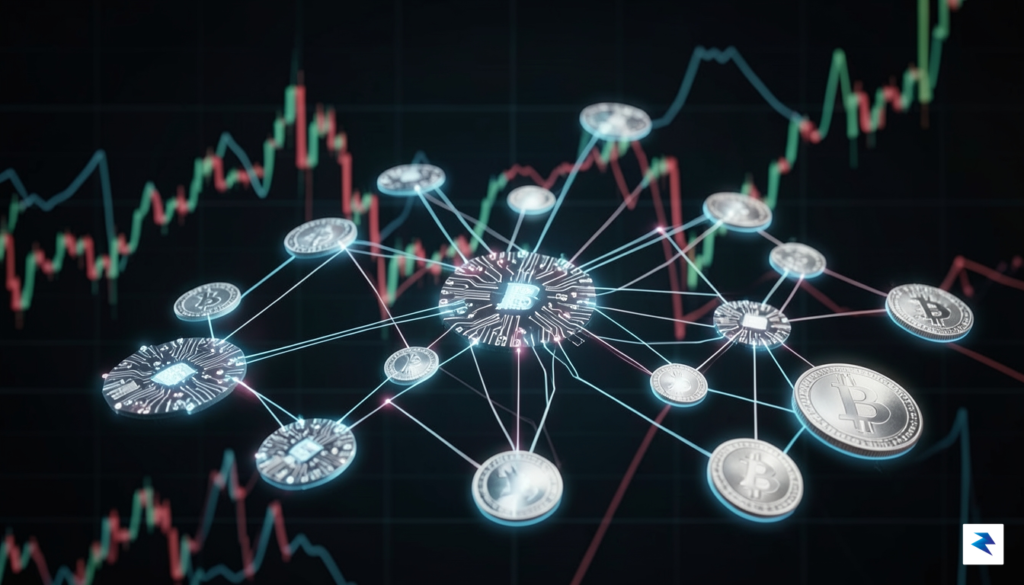
This unwinding process is essentially a shift in liquidity and risk tolerance. Throughout the recent boom, leveraged positions in tech were fueled by the assumption that demand for processing power would remain insatiable, creating a self-reinforcing cycle of optimism. However, as reality sets in and institutional capital begins to de-risk, those same traders are forced to liquidate speculative positions elsewhere to cover margins or reallocate into defensive assets. Since crypto assets, particularly Ether, are often treated as high-beta tech plays, they frequently find themselves on the chopping block during these deleveraging events. The result is a synchronized sell-off where speculative digital assets suffer more acutely than established, “digital gold” counterparts like Bitcoin.
The correlation between chip stocks and crypto highlights a shared dependence on loose liquidity; when the tide of cheap capital recedes from high-tech hardware, speculative digital assets are often the first to experience the shock.
Understanding this dynamic is crucial for anyone looking to navigate the current market volatility. The health of the semiconductor industry has effectively become a bellwether for the “risk-on” environment that crypto traders crave. When the AI narrative hits a speed bump, it dampens the collective confidence of traders who view innovation-driven assets as a monolithic category. If the current trend of unwinding continues, investors should expect further volatility in Ethereum, as it remains tethered to the growth-at-all-costs mentality that currently defines the tech sector’s retreat. Ultimately, the slide in chip-related equities acts as a warning sign that the era of easy, broad-based gains in speculative tech may be entering a more selective and cautious phase.

When the broader crypto market experiences a sharp correction, the tendency for many retail investors is to panic-sell or abandon their positions entirely. However, experienced participants understand that volatility is not a signal to discard your underlying investment thesis, but rather a necessary prompt to refine your strategy. Instead of reacting to daily price swings, consider implementing dollar-cost averaging (DCA). By committing to fixed, periodic investments regardless of the current price, you effectively smooth out your entry point over time, reducing the psychological burden of trying to “time the bottom.” This disciplined approach allows you to accumulate assets during market dips, turning temporary downward pressure into an opportunity for long-term growth.

Beyond entry strategies, the importance of rigorous risk management and disciplined position sizing cannot be overstated. Investors should never allocate more capital to a single volatile asset than they are willing to see fluctuate significantly in the short term. By keeping your exposure balanced and ensuring your portfolio is not overly concentrated in high-beta assets—those that tend to move more aggressively than the broader market—you protect yourself from total capital erosion during downturns. It is essential to remember that even the most promising digital assets are subject to cyclical shifts; maintaining a diversified structure acts as a vital buffer against the specific headwinds currently impacting sectors like decentralized finance or chip-related speculative tokens.
The most successful investors do not fear volatility; they prepare for it by maintaining a margin of safety and refusing to let short-term price action dictate their long-term objectives.
Emotional detachment is perhaps the most challenging, yet vital, skill to cultivate in a volatile market. When you see assets like Ether or speculative tech-adjacent tokens drop significantly, the fear of further loss often triggers impulsive decision-making. To combat this, focus on fundamental analysis rather than headline-driven sentiment. Ask yourself if the original reasons you invested—such as network utility, adoption metrics, or technological innovation—have fundamentally changed, or if the current price action is merely a symptom of macro-economic deleveraging. If the fundamentals remain intact, temporary price drops are often best viewed as noise.
Ultimately, the resilience of the digital asset market has been proven time and again through its ability to recover from severe drawdowns. By maintaining a long-term outlook, you can look past the current turbulence and focus on the maturation of the ecosystem. Markets operate in cycles, and while periods of correction can be uncomfortable, they are an inherent part of the value discovery process. By adhering to a pre-defined strategy, managing your risk appetite, and keeping your emotions in check, you position yourself not just to survive these choppy waters, but to emerge with a more robust and resilient portfolio.
You must be logged in to post a comment.