
Why Ether Faces Steeper Declines Than Bitcoin: Market Trends Explained
Understanding the Crypto Market Correction The recent wave of volatility across the digital asset space has served as a sobering reminder that…
For years, many homeowners trusted their TP-Link Kasa smart cameras, like the EC71 model, to provide peace of mind and security, vigilantly monitoring their homes with impressive convenience. Unbeknownst to them, however, these very devices were simultaneously broadcasting highly sensitive information: their exact home GPS coordinates. This significant privacy lapse, which reportedly persisted for a remarkable six years, has only recently come to light, forcing a critical re-evaluation of how much trust we place in our connected devices and the security practices behind them. It underscores a chilling reality that the very technology designed to protect us can inadvertently expose our deepest vulnerabilities.
The discovery of this startling flaw can be attributed to the diligent work of a security researcher known as BadChemical. Through meticulous network analysis and packet sniffing, they observed their Kasa EC71 camera emitting unsolicited data packets onto their local network. What began as a routine investigation into unexpected network traffic quickly uncovered a much more profound issue, revealing that the device was not only communicating internally but was actively, and persistently, sharing precise geographical coordinates. This proactive investigation by an independent researcher highlights the invaluable role such individuals play in uncovering vulnerabilities that might otherwise remain hidden for indefinite periods, silently compromising user privacy.
At the heart of this privacy concern was the camera’s use of unauthenticated User Datagram Protocol (UDP) packets. UDP is a connectionless communication protocol often favored for its speed in transmitting real-time data, but crucially, “unauthenticated” in this context means these packets could be intercepted and read by any device connected to the same local network without requiring any form of login or authorization. The data embedded within these easily accessible packets included highly accurate GPS coordinates, effectively pinpointing the camera’s, and thus the homeowner’s, precise physical location. This constant, open broadcasting of such personal and sensitive information without explicit user consent or even knowledge represents a fundamental breach of privacy by design.
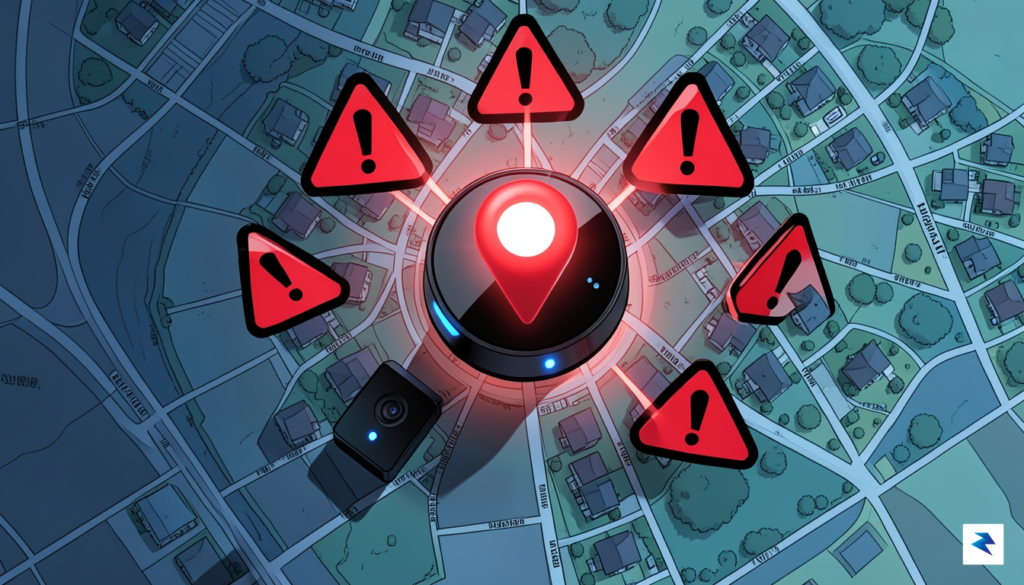
For the average homeowner, the implications of such a vulnerability are deeply unsettling and potentially dangerous. Imagine a device you installed specifically for security purposes quietly broadcasting your exact home address to anyone on your network, potentially including malicious actors or even just nosy individuals with basic technical knowledge. This readily available location data could be exploited for various nefarious purposes, ranging from targeted burglaries and stalking to simply mapping out an individual’s daily routines or vacation patterns, making homes more vulnerable. The trust placed in a brand like TP-Link Kasa, which markets itself on providing enhanced home security, is severely eroded when such fundamental privacy safeguards are overlooked for such an extended period.
This incident serves as a stark reminder of the urgent need for enhanced security awareness and rigorous testing within the burgeoning Internet of Things (IoT) ecosystem. As our homes become increasingly saturated with smart
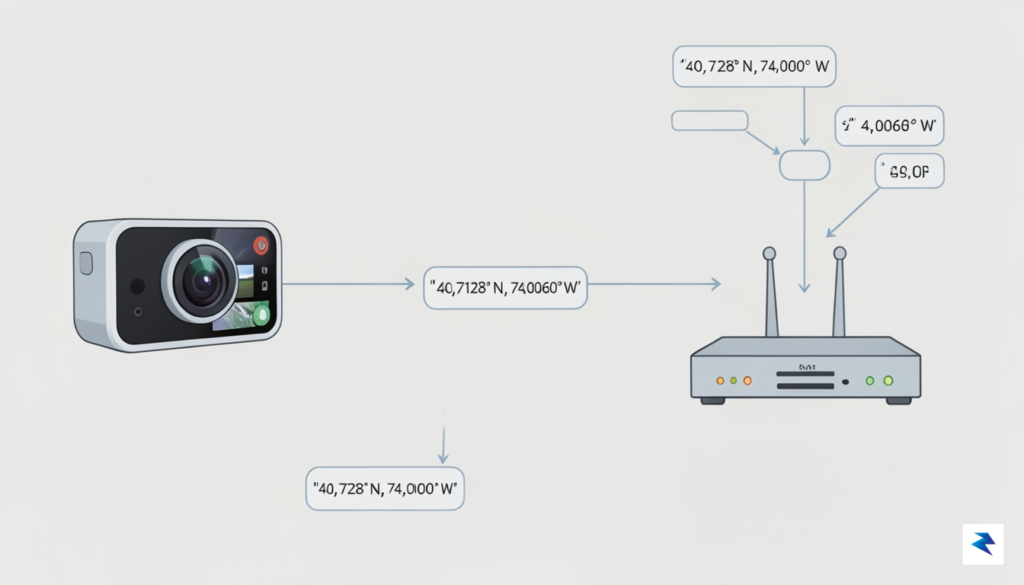
At the heart of this security oversight is a communication protocol known as User Datagram Protocol, or UDP. In the world of smart home devices, UDP is frequently used for “device discovery”—a process that allows your smartphone app to quickly find and connect to your cameras or plugs without you having to manually input their IP addresses. Because UDP is designed for speed and low overhead rather than complex handshakes, it broadcasts information across the local network like a megaphone. While this is efficient for setting up a smart home, it assumes that everyone on your Wi-Fi network is a trusted user, which is a dangerous assumption in modern digital environments.
The core of the problem lies in the fact that the camera’s firmware was broadcasting these discovery packets without any form of authentication or encryption. Because there was no “digital lock” on this information, anyone connected to the same network—or even a malicious actor who managed to compromise a single device on that network—could listen in on the broadcast. The firmware was essentially shouting the camera’s vital statistics to anyone within earshot, treating the local network as a perfectly secure, private room rather than a potential gateway for intruders.

Perhaps the most baffling aspect of this vulnerability was the inclusion of precise GPS coordinates within these discovery packets. Typically, device discovery data should only contain basic technical details, such as the device’s model name, its current status, or its internal network identifier. However, the firmware developers included geolocation data—intended perhaps for internal diagnostics or region-specific settings—directly into the broadcast stream. This meant that the camera was not just identifying itself; it was effectively broadcasting the physical location of the residence to any device capable of intercepting local network traffic.
The presence of sensitive geolocation data in an unauthenticated broadcast represents a fundamental failure in the principle of data minimization, as this information served no functional purpose for the end user during the device discovery process.
This oversight remained unaddressed for six years, highlighting the risks of “set it and forget it” firmware design. By failing to scrub sensitive PII (Personally Identifiable Information) from these discovery packets and omitting basic authentication, the manufacturer inadvertently created a passive surveillance vulnerability. This serves as a stark reminder that even seemingly benign background processes, like simple device discovery, can become major security liabilities when they handle sensitive data without the proper safeguards in place.

The discovery that a major consumer electronics brand leaked precise GPS coordinates for half a decade serves as a sobering reminder of the structural fragility inherent in the Internet of Things (IoT) ecosystem. When a vulnerability persists for six years, it is rarely the result of a single oversight; rather, it highlights a systemic failure in how connected hardware is developed, audited, and maintained. Unlike traditional software platforms that receive frequent, automated security patches, IoT devices often suffer from a “set and forget” culture. Consumers install these cameras, connect them to their home networks, and expect them to function indefinitely, while manufacturers frequently prioritize rapid deployment and cost-efficiency over the rigorous, ongoing security lifecycle management required to protect against evolving threats.
One of the primary barriers to identifying these flaws is the sheer complexity of proprietary firmware. Modern IoT devices operate on closed-source, custom-tailored operating systems that are notoriously difficult for independent security researchers to audit. To uncover a vulnerability like the one found in these Kasa cameras, a researcher must engage in exhaustive reverse-engineering, often navigating obfuscated code and undocumented communication protocols without the benefit of manufacturer transparency. This creates a significant “security gap” where bugs remain hidden in plain sight, not because they are sophisticated, but because the ecosystem is intentionally opaque, making it nearly impossible for the broader community to verify the privacy and security claims made by the product’s marketing materials.

The longevity of a security flaw is a direct consequence of the lack of industry-standard security practices for edge devices, where the burden of protection is often unfairly shifted onto the end-user rather than the manufacturer.
Furthermore, the industry lacks the standardized security mandates that would compel companies to perform regular, comprehensive penetration testing throughout the entire product lifecycle. Currently, there is little incentive for manufacturers to invest in deep-level firmware audits once a device has reached the consumer market. Without clear regulatory frameworks or industry-wide accountability, these devices become “silent observers” that may be leaking sensitive telemetry data long after they are installed. Moving forward, the industry must shift toward a model of persistent transparency, where security is treated as a continuous service rather than a static feature. If we are to secure the future of the smart home, we need more than just better encryption; we need a fundamental redesign of the relationship between IoT manufacturers and the security research community, ensuring that vulnerabilities are identified and remediated in months, not years.

At first glance, the revelation that TP-Link Kasa cameras broadcasted precise GPS coordinates via unauthenticated UDP packets might seem like a niche technical oversight. However, when we break down the threat model, the implications for the average homeowner become alarmingly clear. Because this data was transmitted over the local network, any device connected to the same Wi-Fi—be it a guest’s smartphone, a compromised smart lightbulb, or a malicious app installed on a family member’s tablet—could intercept these coordinates without needing administrative credentials. This creates a scenario where the very devices intended to provide security and peace of mind inadvertently become tools for surveillance, potentially enabling unauthorized actors to pinpoint a home’s exact geographical location with surgical precision.
The risks associated with this level of location leakage extend far beyond abstract privacy concerns. In the wrong hands, a home’s precise GPS data serves as a roadmap for physical security threats, ranging from targeted burglaries to more insidious forms of digital stalking. For individuals with high privacy requirements, such as victims of domestic abuse or those in sensitive public-facing roles, the exposure of their exact home coordinates is not merely a technical bug; it is a fundamental safety failure. When smart home hardware broadcasts location data in an unencrypted and unauthenticated format, it assumes a level of network hygiene that rarely exists in modern, multi-device households where IoT security is often an afterthought.

The erosion of trust in the smart home ecosystem is perhaps the most lasting consequence of this six-year oversight. When consumers purchase cameras for security, they enter into an implicit contract with the manufacturer: the expectation that the device will protect their private life, not broadcast its location to any listener on the local network.
This incident highlights a widening chasm between the consumer’s expectation of “set-it-and-forget-it” security and the reality of insecure smart hardware. Many users operate under the assumption that if a device does not have a public-facing cloud interface, it is inherently private. However, this flaw proves that even “local” traffic can be a liability if it is not properly secured. Moving forward, this serves as a sobering reminder that we must move beyond the naive belief that smart home devices are closed, secure systems. Instead, users must begin to treat their IoT ecosystem with the same skepticism applied to any other networked computer, keeping devices isolated on guest networks and demanding greater transparency from manufacturers regarding what data is being broadcast, to whom, and for what purpose.
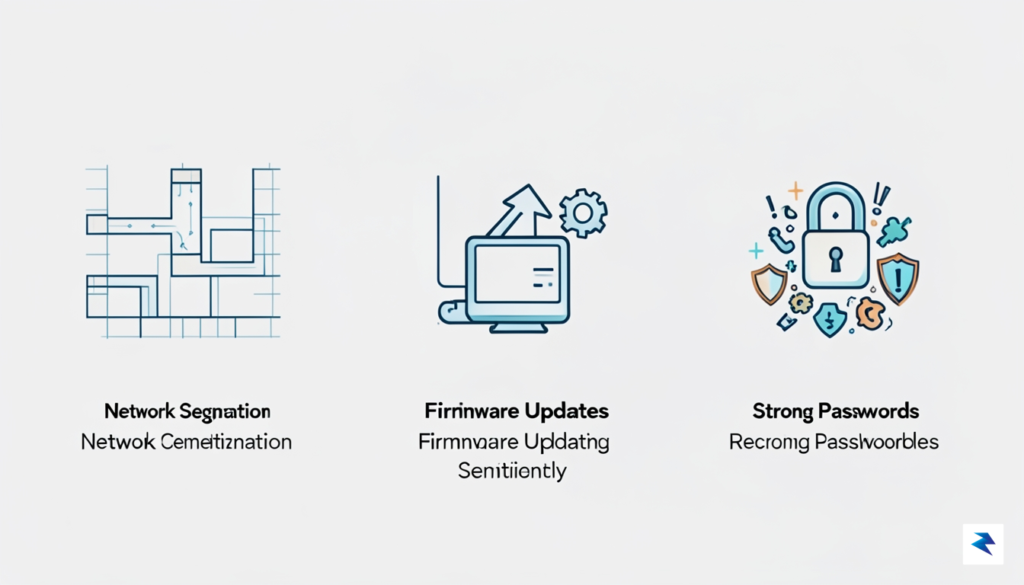
Securing your smart home environment requires a shift from a “set it and forget it” mentality to one of proactive, layered defense. Because IoT devices often act as quiet gateways to your private data, treating them with the same level of scrutiny as your primary workstation is essential. By implementing a few strategic configurations, you can significantly shrink your digital footprint and mitigate the risks posed by vulnerabilities like unauthenticated data broadcasting.
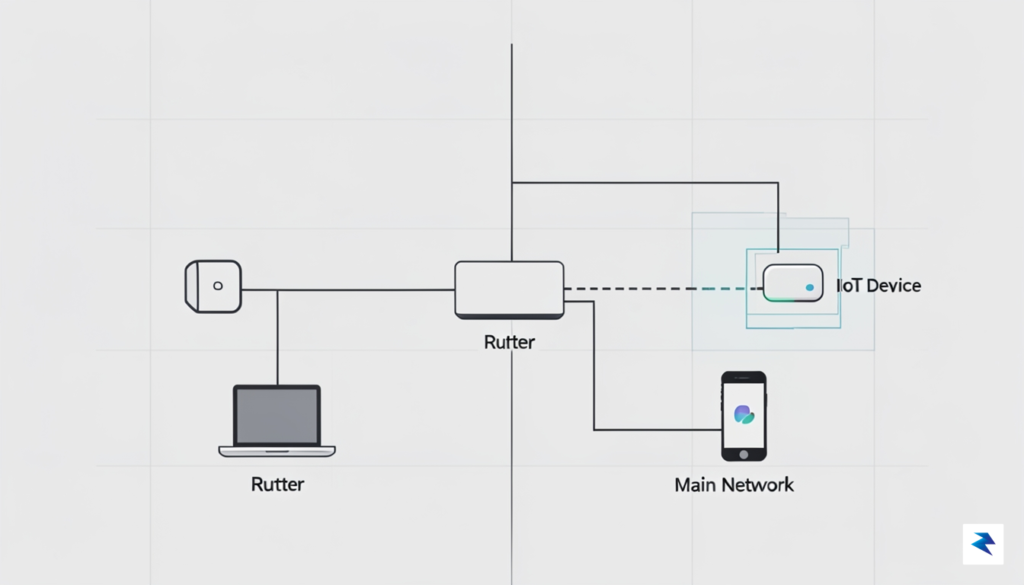
The most effective defense against compromised IoT hardware is network isolation. By configuring your router to place smart cameras, plugs, and sensors on a dedicated “Guest” network or a separate VLAN (Virtual Local Area Network), you effectively wall off these devices from your sensitive personal computers and network-attached storage. If a device is compromised or begins broadcasting unauthorized information, this segmentation ensures that the attacker remains trapped within the isolated network, unable to pivot toward your private servers or personal files. Most modern consumer routers now offer an easy toggle to enable guest traffic isolation, which is a vital first step for any smart home enthusiast.
Beyond network architecture, you must adopt a rigorous maintenance schedule for every connected device. Regularly checking for firmware updates is non-negotiable, as manufacturers frequently release patches that fix critical security holes and close backdoors. Furthermore, it is wise to audit your devices for unnecessary features; if your smart camera does not require external discovery protocols or cloud-based synchronization to function for your specific needs, disable those services immediately. Many devices ship with “convenience” features enabled by default that can inadvertently expose your location or network metadata to anyone listening on the local broadcast domain.
Pro-tip: Always prioritize manufacturers that provide a transparent security disclosure policy. A company that acknowledges vulnerabilities and patches them quickly is far more reliable than one that hides its flaws behind silence.
If you possess the technical aptitude, monitoring your outbound network traffic can reveal anomalies that would otherwise go unnoticed. Tools like Pi-hole or basic router-level traffic logs can alert you if a device is suddenly attempting to communicate with an unknown IP address or broadcasting data over an unusual UDP port. Even without advanced monitoring software, simply being mindful of which devices require internet access versus those that should only operate locally can prevent a minor privacy leak from escalating into a full-scale security breach. By cultivating these habits, you move from being a passive consumer to an active guardian of your digital home.
You must be logged in to post a comment.