The Bose Ambition: Beyond Hardware
For decades, Bose has occupied a singular, ironclad position in the consumer consciousness: it is the gold standard for acoustic engineering, noise cancellation, and the quiet comfort of a premium pair of headphones. Yet, the brand is currently orchestrating a profound identity shift, moving away from being a mere provider of the delivery mechanism—the hardware—to becoming a curator and creator of the content itself. This pivot into the media landscape via Bose Studios marks a departure from the company’s traditional reliance on physical product cycles. Instead of just manufacturing the tools that allow listeners to engage with audio, Bose is now positioning itself as a central architect of the entertainment experience, hoping to capture the audience’s attention long before they ever put on a pair of QuietComfort headphones.
The compulsion for hardware giants to venture into the media space is a well-documented trend, born from the realization that devices are increasingly becoming commodities. As the technical gap between audio equipment manufacturers narrows, companies like Bose are seeking to build deeper emotional moats around their brand through exclusive content. By establishing Bose Studios, the company is attempting to bridge the divide between the technical precision of their engineering and the visceral, artistic world of music and documentary production. This strategy is not merely about brand expansion; it is about creating a proprietary ecosystem where the hardware and the media are designed to complement one another, theoretically offering a more “complete” experience for the consumer.
“The shift toward content production represents a strategic evolution, transforming Bose from a passive conduit of sound into an active participant in the creative process.”
Initial forays into this space demonstrate a clear ambition to blend storytelling with sonic excellence. Bose Studios has begun dipping its toes into the production of documentary features and music-centric content, focusing on narratives that highlight the intersection of sound, history, and human emotion. By backing projects that resonate with the brand’s core identity—innovation and clarity—Bose is effectively turning its marketing budget into a portfolio of cultural assets. Whether this pivot will successfully redefine the public’s perception of the company remains an open question, but the move signals that Bose no longer wishes to be a peripheral player in the media landscape. Instead, they are positioning themselves to own the entire journey of sound, from the moment of creative inception in a recording booth to the final playback in a listener’s living room.
The Graveyard of Corporate Labels
The annals of corporate history are filled with the hollow echoes of hardware manufacturers attempting to pivot into the role of content mogul. From the ill-fated Sony Pictures acquisition of the 1980s to the desperate attempts by smartphone manufacturers to launch proprietary streaming services, the pattern remains remarkably consistent: hardware companies often view content not as a creative endeavor, but as a utility—a way to move more units or justify a premium price tag. By treating art as a mere marketing asset, these firms ignore the volatile, human-centric nature of creative work, consistently failing to replicate the organic success of legacy studios and record labels.

The primary friction point in these ventures is almost always a fundamental clash of cultures. Engineering firms thrive on predictability, iterative improvement, and the strict optimization of variables; they operate in a world where a problem has a definitive, measurable solution. In contrast, the creative industries operate on a model of high-risk, high-reward exploration where the “best” outcome is often subjective and impossible to quantify via a spreadsheet. When a hardware giant steps into the director’s chair or the recording booth, they frequently attempt to apply manufacturing rigor to artistic expression. This results in a stifling environment where creative autonomy is sacrificed at the altar of brand alignment, leading to uninspired content that feels more like a commercial than a cultural contribution.
The fatal flaw of the corporate-led media experiment is the belief that if you build the delivery mechanism, the soul of the content will simply follow.
Ultimately, the “marketing-first” trap creates a cycle of institutional distrust. Artists who partner with these corporate entities often find themselves restricted by narrow briefs designed to highlight specific technical features—such as spatial audio fidelity or noise cancellation—rather than allowing the narrative or musical vision to lead. When the primary goal of a creative project is to serve as a high-definition advertisement for a piece of hardware, the audience senses that lack of authenticity almost immediately. Consumers are rarely interested in consuming “content” that exists solely to justify their purchase of a speaker or a pair of headphones. History suggests that while hardware companies can certainly fund beautiful projects, they rarely possess the cultural intuition to foster the kind of authentic storytelling that turns a piece of media into a lasting legacy.
Can Bose Replicate the Red Bull Model?

To understand the ambition behind Bose’s pivot, one must first look at the blueprint laid out by Red Bull. The energy drink company successfully detached itself from the retail shelf by positioning its brand as a synonym for extreme sports, high-octane spectacle, and boundary-pushing human achievement. Red Bull Media House did not just sell beverages; it manufactured a culture that people wanted to inhabit. By producing world-class documentaries, live event broadcasts, and digital storytelling, they transformed a utilitarian product into a lifestyle necessity. However, replicating this model requires more than just a healthy production budget—it requires a brand identity that naturally lends itself to the medium of narrative entertainment.
The primary challenge for Bose lies in the fundamental disconnect between its current market position and the ethos of an entertainment powerhouse. Red Bull thrives on adrenaline, chaos, and raw kinetic energy, all of which are inherently cinematic. In contrast, Bose has spent decades cultivating an identity centered on precision, noise cancellation, and isolation. Their brand prestige is built on the promise of creating a personal, uninterrupted bubble for the listener. While this is the gold standard for high-fidelity audio, it is a difficult platform upon which to build a communal, engagement-driven media presence. Transforming “silence” and “isolation” into “entertainment prestige” is a branding paradox that requires a radical departure from their legacy as a hardware manufacturer.
The fundamental difference between the two models is that Red Bull sells a feeling of shared adrenaline, while Bose sells a product of solitary perfection.
For Bose to succeed, they must bridge the gap between their technical prowess and the emotional resonance of the stories they choose to tell. They cannot simply act as a sponsor for existing content; they must become an arbiter of taste and a curator of sonic experiences. This might involve investing in immersive audio storytelling, documentary-style investigations into the science of sound, or partnerships with experimental musicians who push the boundaries of acoustic engineering. If Bose can prove that their hardware is not just a tool for listening, but an essential component in the creation and appreciation of high-level art, they may carve out a unique niche. Ultimately, the transition requires them to stop being a company that makes devices for consumers and start being a company that invites audiences into a curated sonic universe.
Whether this strategy is viable remains to be seen, as the history of hardware companies attempting to pivot into media is littered with failed experiments. Hardware is a finite cycle of innovation and replacement, whereas media is a perpetual cycle of attention and retention. By shifting their focus toward original content, Bose is effectively betting that their brand carries enough cultural weight to influence how we consume stories, not just how we hear them. If they fail to translate that prestige into meaningful entertainment, they risk alienating their core demographic while struggling to gain a foothold in the crowded, fiercely competitive world of digital media.
The Strategic Risks of Content Creation
The pivot toward content production represents a profound shift in capital allocation for a company historically defined by its rigorous commitment to acoustic engineering. Every dollar diverted from research and development into the creation of podcasts, films, or editorial series is a dollar that is not being spent on noise-cancellation breakthroughs or next-generation driver technology. For a brand like Bose, which has spent decades cultivating a reputation for technical precision, the opportunity cost is immense. If the company’s product pipeline begins to stagnate or if competitors gain an edge in audio fidelity while Bose is busy producing documentaries, the core audiophile base—the very people who built the company’s legacy—may begin to feel abandoned. This strategic gamble risks transforming the brand from an essential toolmaker into a lifestyle conglomerate, a transition that has historically signaled the beginning of the end for many hardware-focused firms.
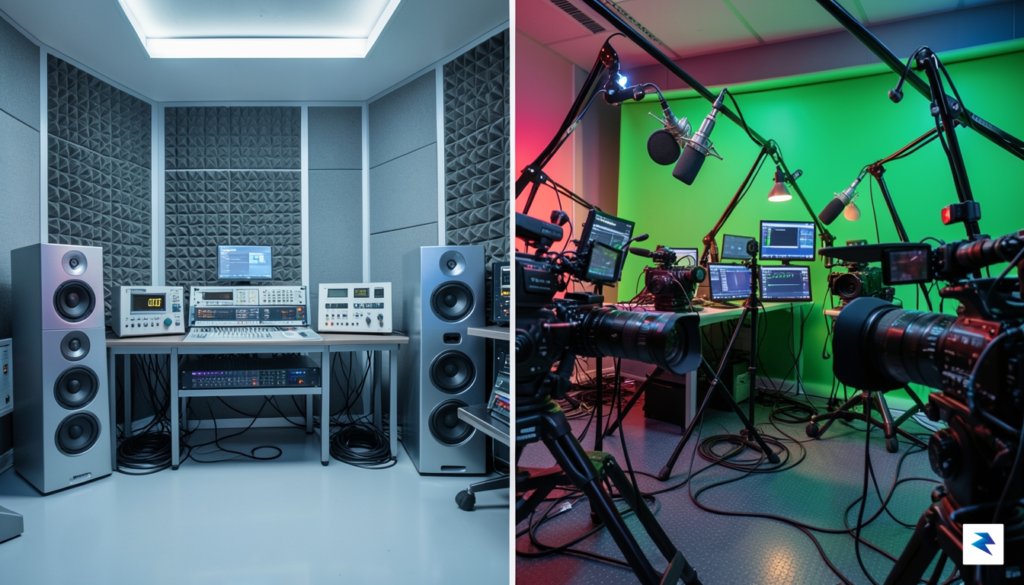
Beyond the financial trade-offs, there is the lingering danger of brand dilution through the perception of “corporate fluff.” Modern consumers are remarkably adept at identifying inauthentic marketing masquerading as entertainment. When a hardware giant attempts to manufacture cultural relevance through content, the result often feels forced, transactional, or hollow to a skeptical audience. If the media produced by Bose is perceived as a thinly veiled advertisement for its own headphones rather than a genuine contribution to the cultural conversation, the company could suffer a significant decline in its perceived authority. Authenticity is the primary currency of the digital media landscape, and it cannot be purchased with a high production budget; it must be earned through consistent, value-driven storytelling that respects the audience’s intelligence.
To succeed in the media space, a brand must provide value that exists independently of its product catalog. If the content serves only as a vessel for brand awareness, it will inevitably struggle to build a loyal, recurring audience.
Ultimately, the challenge lies in the fundamental difference between building a speaker and building a narrative. Hardware engineering relies on immutable laws of physics, whereas media production relies on the unpredictable and subjective nature of human engagement. By entering this arena, Bose is stepping into a realm where they no longer have the competitive advantage of proprietary patents or patented noise-canceling algorithms. Instead, they are competing against established media houses, independent creators, and streaming giants who have mastered the art of audience retention. If Bose cannot bridge the gap between its technical heritage and the emotional resonance required for modern media, they risk becoming a cautionary tale of a company that lost its way by trying to be everything to everyone.
What This Means for the Future of Audio Brands
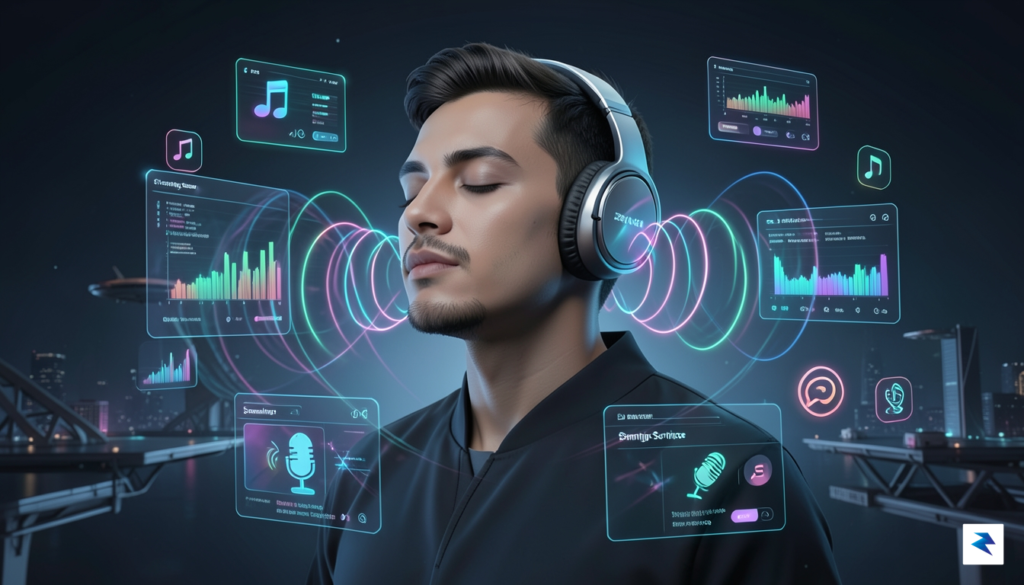
The traditional boundaries of consumer electronics are dissolving, marking the end of the siloed company era where hardware manufacturers simply shipped products and hoped for the best. For decades, firms like Bose focused exclusively on the physics of sound—refining drivers, noise-canceling algorithms, and acoustic chambers. However, the current landscape suggests that hardware is no longer enough to secure long-term loyalty or recurring revenue. As tech giants move toward vertical integration, we are witnessing a fundamental shift where the most successful brands will be those that simultaneously own the consumption device and the content being consumed. By moving into production, Bose is attempting to bridge the gap between the listener and the studio, suggesting that the future of high-fidelity audio lies in a seamless, curated ecosystem.
This strategy opens up a compelling frontier for technical synergy, particularly as spatial audio and personalized soundscapes become the new industry standard. When a company controls both the hardware sensors and the soundstage mixing process, they can optimize audio delivery in ways that third-party developers cannot. Imagine a proprietary content format designed specifically to leverage the unique, high-frequency response of a high-end headphone, or immersive soundscapes that automatically calibrate themselves to the user’s specific acoustic environment. This convergence of hardware features and proprietary content creates a “walled garden” that is increasingly difficult for competitors to penetrate, effectively turning a simple pair of headphones into a portal for an exclusive, highly engineered audio experience.
The ultimate victory for an audio brand is no longer just selling the best speakers; it is selling the best version of the experience that those speakers were built to deliver.
Whether Bose can successfully pivot to become a media player remains a significant gamble. Transforming a hardware company into a creative studio requires a fundamental shift in corporate culture, talent acquisition, and risk management that few have mastered. While their engineering pedigree is beyond reproach, the content business is notoriously fickle and driven by creative intuition rather than engineering specifications. If they fail to produce high-quality, compelling media, their hardware will remain just another piece of consumer tech in an overcrowded market. However, if they succeed, they will have established a new blueprint for the audio industry—one where the device and the art form exist in a symbiotic loop, changing the rules of the game for every hardware manufacturer that follows in their footsteps.