
Gas Prices Dip Below $4: How the U.S.-Iran Agreement Changed the Market
Understanding the Strait of Hormuz: Why It Matters Often referred to as the world’s most vital maritime artery, the Strait of Hormuz is a…
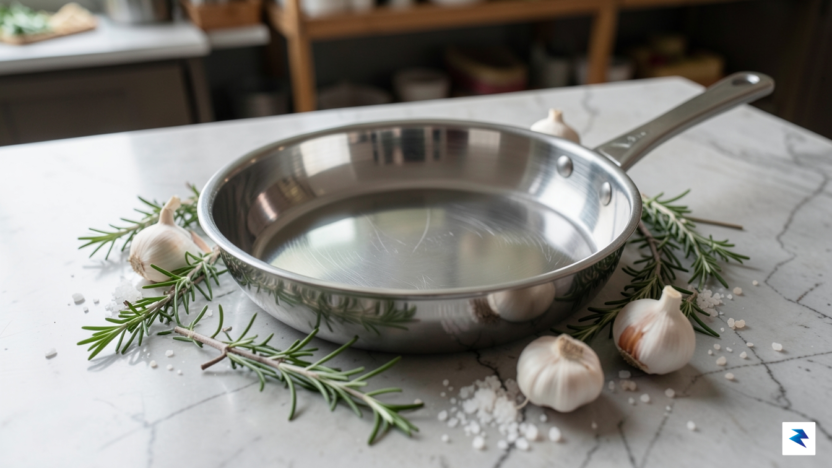
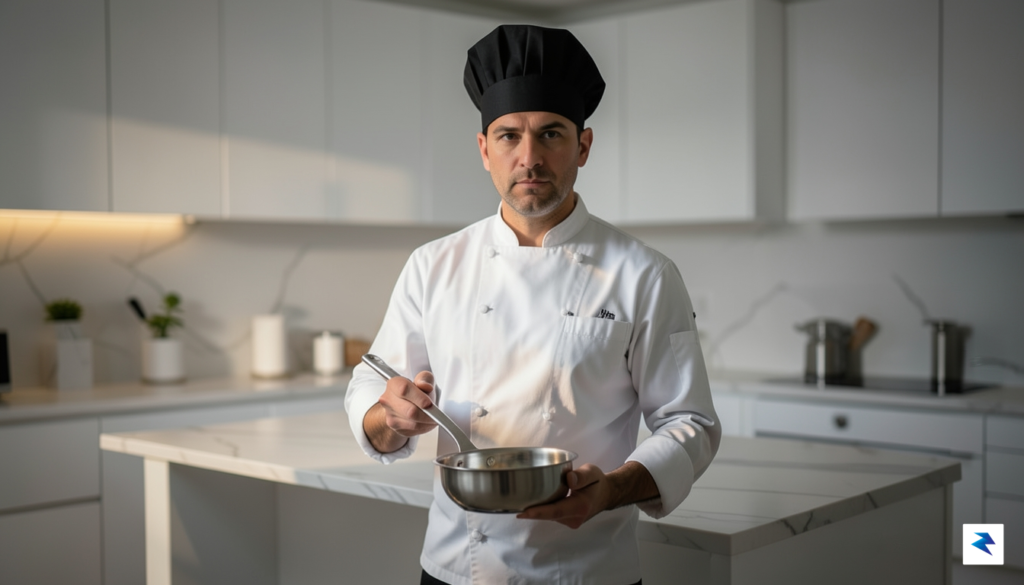
Walk into any professional kitchen, from a Michelin-starred restaurant to a bustling neighborhood bistro, and you’ll immediately notice a distinct preference for a particular type of cookware: stainless steel. While the shelves of most big-box stores are overflowing with disposable nonstick options promising effortless cleanup, serious cooks and culinary artists have, for decades, steadfastly relied on the unwavering performance and robust construction of stainless steel skillets. This isn’t merely a matter of tradition or stubborn adherence to old ways; rather, it’s a testament to a material that genuinely stands the test of time and consistently delivers the precision and control demanded by intricate culinary tasks.
The allure of stainless steel cookware lies significantly in its unparalleled durability, embodying the true spirit of a ‘buy it for life’ investment. Unlike their nonstick counterparts, which often come with a built-in obsolescence as their delicate coatings inevitably scratch, chip, or degrade over just a few years of regular use, a high-quality stainless steel skillet is crafted to endure. These heavy-gauge pans resist warping even under intense heat, maintaining their flat cooking surface for consistent results year after year, transforming from a mere kitchen tool into a cherished heirloom that can be passed down through generations. This long-term value proposition fundamentally alters the consumer mindset from one of repeated replacement to one of lasting stewardship.
Beyond its sheer resilience, the functional dominance of stainless steel in the culinary world is irrefutable. Its ability to withstand and distribute high heat evenly is crucial for achieving that perfect sear on a steak or developing complex flavors through proper caramelization, tasks where nonstick pans simply fall short due to their lower heat tolerance and risk of coating degradation. Furthermore, stainless steel provides a reactive, yet forgiving, canvas that allows for critical culinary techniques such as deglazing – where flavorful fond (the browned bits left on the pan after cooking) is lifted with liquid to create rich sauces and gravies. This versatility transforms the cooking experience from a simple act of heating food into an opportunity for true culinary skill-building, encouraging home chefs to explore a wider range of techniques and elevate their dishes beyond basic preparation.
This functional advantage fosters a profound psychological shift in the home kitchen. Many beginner cooks are initially drawn to nonstick for its perceived ease and convenience, a shortcut to avoid food sticking. However, as culinary confidence grows and aspirations extend beyond simple frying, the limitations of nonstick become apparent. Embracing stainless steel signifies a deliberate step towards mastering fundamental cooking principles – understanding heat management, developing proper browning, and building flavors from the ground up. It’s a transition from convenience-focused cooking to skill-focused artistry, where the pan becomes an extension of the chef’s will, facilitating the creation of dishes that are not just cooked, but truly crafted. This journey of culinary exploration is precisely why stainless steel remains the steadfast choice for those serious about their cooking.
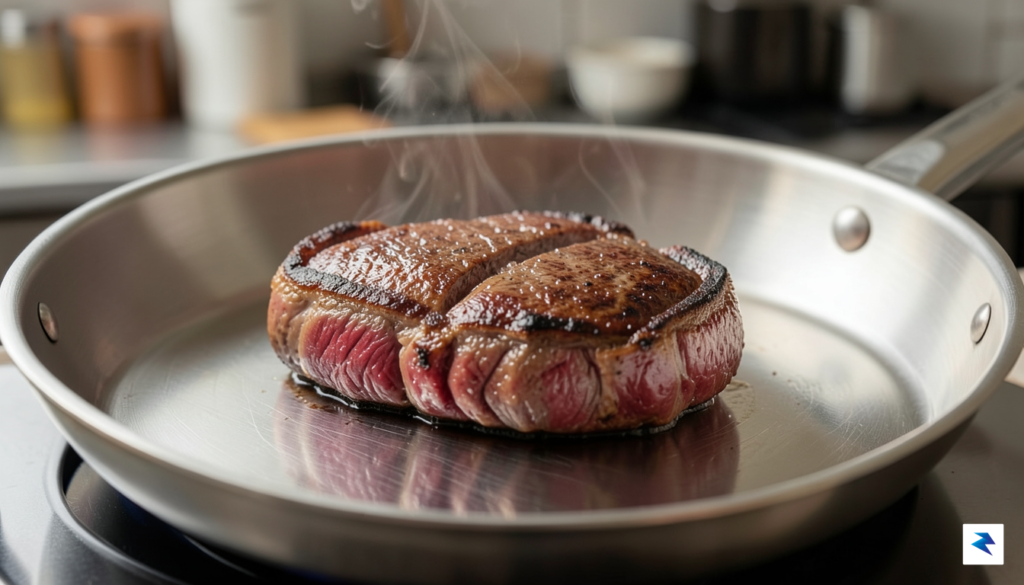
At the heart of every truly exceptional culinary experience lies the Maillard reaction—a sophisticated chemical dance between amino acids and reducing sugars that occurs when food is subjected to high, dry heat. This reaction is responsible for the transformation of pale, raw ingredients into a deeply browned, aromatic masterpiece. When you sear a steak or caramelize onions in a stainless steel skillet, you are not merely cooking; you are unlocking hundreds of unique flavor compounds that simply cannot be replicated through lower-temperature methods. Because stainless steel is a remarkably durable and heat-tolerant material, it provides the ideal stage for this reaction to flourish, allowing the surface of your protein to reach the precise temperature required for that signature mahogany crust.
In contrast, nonstick pans are fundamentally engineered to repel rather than engage with the ingredients they cook. Most nonstick coatings are composed of polymers that degrade rapidly when exposed to the high temperatures necessary for a professional-grade sear. Consequently, if you push a nonstick pan to the heat levels required for proper browning, you risk damaging the pan’s surface and potentially releasing harmful fumes. Because of these temperature limitations, food in a nonstick pan often ends up “steaming” in its own juices rather than developing a crust. This creates a lackluster, greyish exterior that lacks the complex, savory depth found in dishes prepared in high-performance stainless steel.
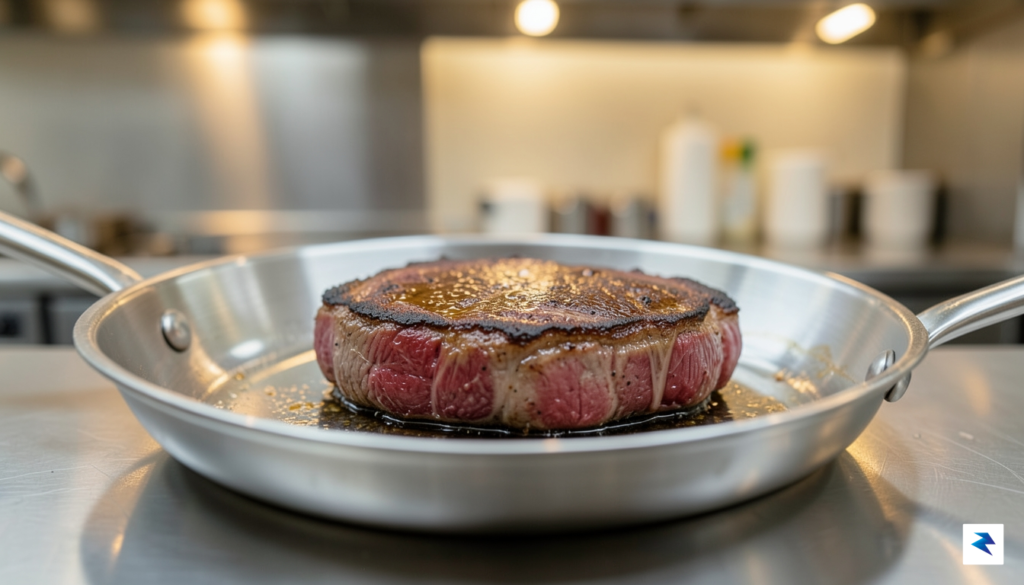
Furthermore, the physical structure of a quality stainless steel pan plays a vital role in flavor development. Unlike lightweight nonstick surfaces that can fluctuate in temperature the moment a cold piece of meat hits the pan, a multi-clad stainless steel skillet offers superior heat retention and distribution. This thermal stability ensures that the pan remains hot enough to evaporate surface moisture instantaneously. Moisture is the enemy of the Maillard reaction; if a pan cools down too quickly upon adding food, the ingredients will stew in their own liquid, effectively preventing the development of a flavorful crust. By choosing stainless steel, you are investing in a tool that maintains the consistent, aggressive heat necessary to bridge the gap between home cooking and restaurant-quality results.
The secret to a complex flavor profile is not just the ingredients, but the ability of your equipment to maintain the intense, consistent heat required to trigger the Maillard reaction without compromising the integrity of the cooking surface.
Ultimately, the difference in texture and taste is undeniable. When you prioritize the science of the sear, you move beyond mere sustenance and into the realm of true culinary craft. Stainless steel acts as a reliable partner in this process, demanding nothing but heat and a bit of technique in return for a superior, restaurant-style finish that nonstick pans simply cannot provide.
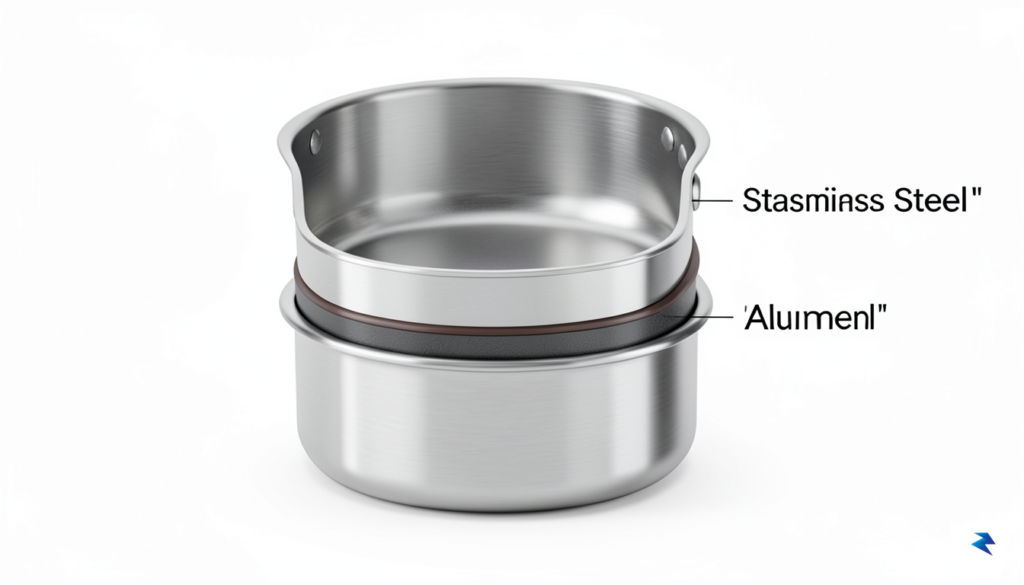
When you begin your search for a high-quality stainless steel skillet, you will quickly discover that the material is only half the story; the true secret to performance lies in the architecture of the metal. Because stainless steel is an notoriously poor conductor of heat on its own, manufacturers must layer it with more reactive metals like aluminum or copper to ensure your food cooks evenly. This necessity creates two distinct categories of construction: fully-clad (multi-ply) and disc-bottom (capsule) designs. Understanding these differences is the key to distinguishing between a pan that will last for decades and one that will leave you with scorched hotspots and warped surfaces.
Fully-clad construction involves bonding layers of stainless steel around a core of aluminum or copper that extends from the base all the way up the sides of the pan. This “sandwich” approach ensures that heat is distributed uniformly across the entire cooking surface, including the sidewalls, which is essential for tasks like reducing sauces or sautéing vegetables. Conversely, disc-bottom or “capsule” pans feature a thick plate of conductive metal bonded only to the base. While these pans are often more affordable, they tend to heat unevenly because the sides of the skillet remain uninsulated, often leading to a stark temperature gradient between the bottom of the pan and the rim.
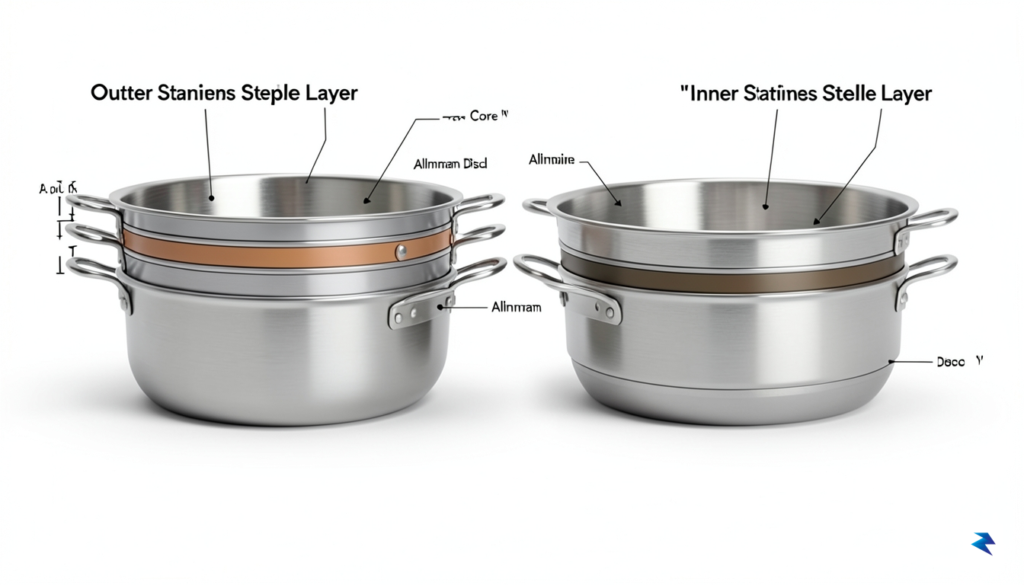
When evaluating which investment is right for your kitchen, keep a few critical physical indicators in mind. First, consider the gauge or thickness of the metal; a heavier pan generally offers superior heat retention and is far less likely to warp under high temperatures. You should also inspect the handle construction, as rivets are the industry standard for durability. While welded handles can look sleek and are easier to clean, they are more prone to mechanical failure over time. Finally, check the edge finish of the skillet. A sealed edge, where the aluminum core is fully enclosed by the stainless steel, prevents the reactive core from being exposed to water or acidic ingredients, which significantly increases the lifespan of the tool.
The hallmark of a professional-grade skillet is its ability to maintain consistent heat across the entire cooking surface, not just at the base. Prioritizing fully-clad construction ensures that your pan performs as an extension of your stove’s burner, rather than a barrier to it.
Ultimately, the choice between these two designs often comes down to your primary cooking style and budget. If you are a casual cook who primarily boils pasta or makes simple stews, a high-quality disc-bottom pan may serve you perfectly well. However, for those who regularly sear proteins, sauté delicate aromatics, or experiment with complex pan sauces, the responsive nature of fully-clad cookware is an unmatched asset. By choosing a pan with a substantial core and high-quality edge sealing, you are essentially investing in a piece of equipment that will reliably handle the demands of your kitchen for a lifetime.
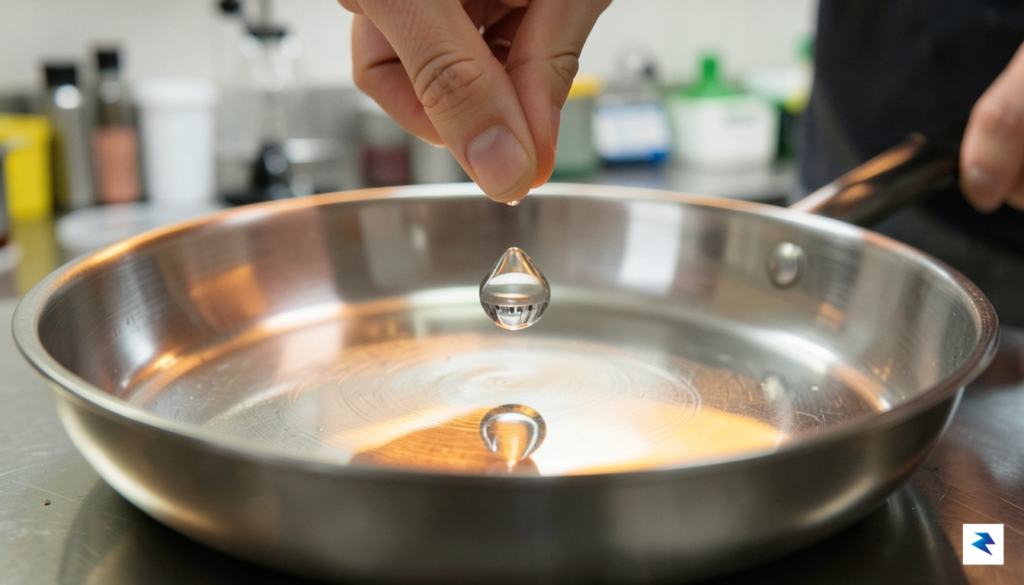
The primary reason most home cooks struggle with stainless steel is a simple misunderstanding of physics. When food sticks to a stainless steel pan, it is rarely a defect of the cookware; instead, it is usually a sign that the pan has not reached the optimal thermal state required for a natural nonstick effect. This phenomenon is known as the Leidenfrost effect. When your pan is heated to the correct temperature, moisture on the surface of your food instantly turns into a microscopic layer of vapor, creating a protective cushion that prevents the protein from bonding directly to the metal. You can easily test for this by dropping a small bead of water into your preheated pan; if the water droplet beads up and dances across the surface like a marble, your pan is ready for cooking.
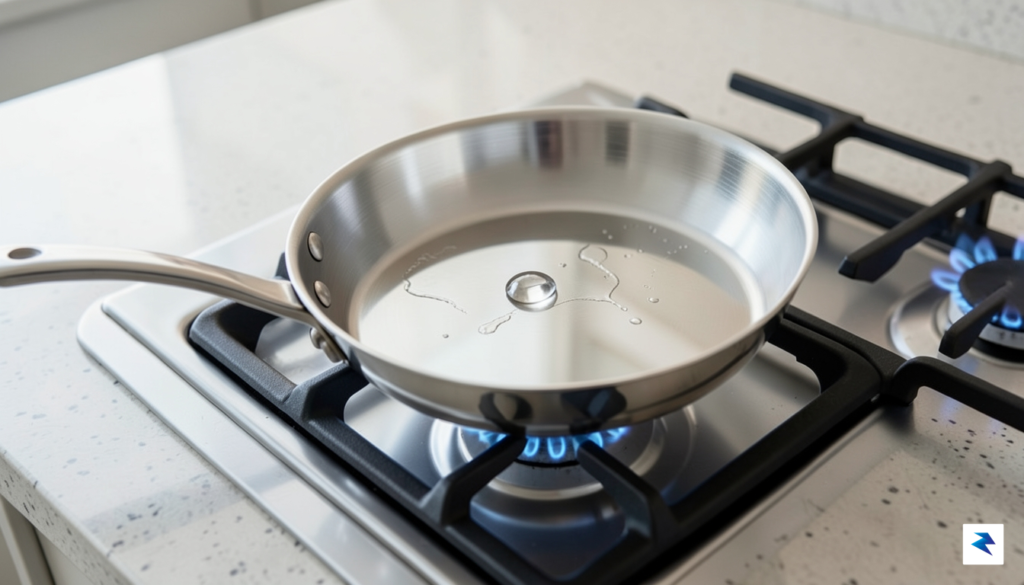
Beyond the temperature of the pan, the temperature of your ingredients plays a critical role in success. If you take a cold steak or a refrigerated egg and drop it onto a hot surface, the sudden thermal shock causes the metal to contract slightly and the food to seize, which almost guarantees sticking. To achieve professional results, allow your proteins to sit on the counter for 15 to 20 minutes before cooking. By bringing your food closer to room temperature, you reduce the immediate temperature drop when the item hits the pan, allowing for a more consistent sear and a much cleaner release from the cooking surface.
Proper fat management is the final component in creating a seamless cooking experience. While stainless steel doesn’t require the thick layers of butter or oil used in cast iron seasoning, a light coating is still essential to fill the microscopic pores of the metal. Always wait until the pan is fully preheated before adding your oil. Once the oil is in the pan, give it a moment to shimmer—this indicates it has reached the ideal viscosity to coat the surface evenly. If you add food before the oil has warmed up, the ingredients will soak up the cold oil like a sponge, leading to uneven browning and unwanted adhesion.
To ensure your food releases effortlessly, follow the rule of patience: let the pan preheat properly, wait for the oil to shimmer, and never force a flip. If your food is sticking, it is simply telling you it isn’t ready to release yet; wait another thirty seconds, and it will likely lift away cleanly.
By mastering these three variables—temperature testing, ingredient tempering, and oil application—you will transform stainless steel from a daunting challenge into your most reliable kitchen companion. Once you stop fighting the metal and start working with the laws of thermodynamics, you will find that stainless steel provides a superior sear and depth of flavor that coated nonstick pans simply cannot replicate.
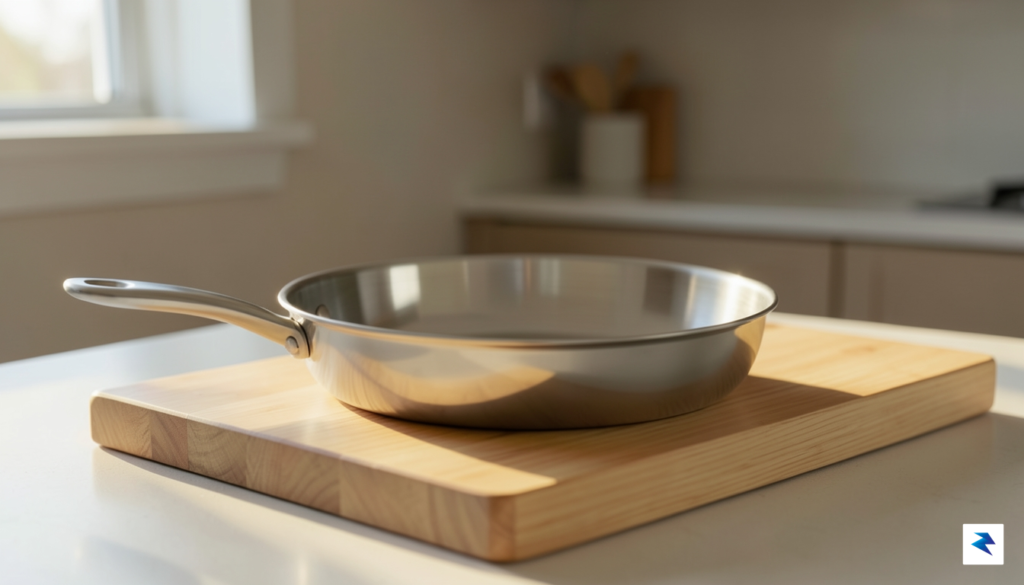
Many home cooks mistakenly believe that stainless steel requires a delicate touch, but the reality is quite the opposite; these pans are built to withstand the rigors of a busy kitchen. Unlike nonstick surfaces that demand soft silicone utensils and gentle hand-washing to prevent coating degradation, stainless steel is remarkably resilient. You can use metal spatulas, steel wool, and even abrasive scouring pads without fear of stripping away a functional layer. Because the material is non-reactive and durable, it can handle the occasional trip through the dishwasher, though a quick hand wash with warm, soapy water is usually sufficient for daily maintenance.
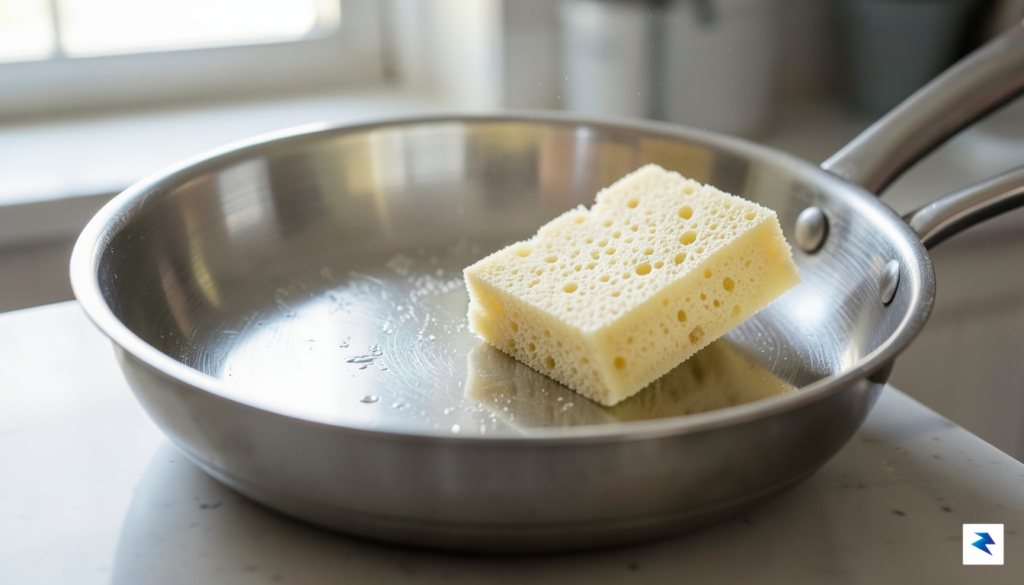
When you encounter stubborn, burnt-on food or the mysterious “rainbow” discoloration—often caused by mineral deposits or high-heat oxidation—do not panic. These aesthetic changes are entirely superficial and do not indicate a ruined pan. To restore that mirror-like shine, reach for a mild abrasive cleaner like Bar Keepers Friend. Simply sprinkle a small amount of the powder onto the dampened surface, create a paste, and scrub in circular motions. The oxalic acid in the cleaner works wonders to break down carbonized food residue and lift heat stains, revealing the pristine metal underneath.
Routine maintenance is the secret to longevity; treating your pan with a dedicated stainless steel cleaner once a month will ensure it stays as beautiful as the day you unboxed it.
If you prefer a more natural approach, a simple vinegar-based solution is an excellent alternative for routine deep cleaning. If your pan has developed stubborn stuck-on bits, fill it with a mixture of water and white vinegar, bring it to a gentle simmer, and let it sit for a few minutes. The acidity helps to loosen baked-on proteins, making them much easier to lift away with a wooden spoon or a non-scratch scrub brush. After the debris is removed, rinse the pan thoroughly and immediately dry it with a soft cloth to prevent water spots.
Ultimately, stainless steel is one of the most forgiving materials in your culinary arsenal precisely because it invites a “restorative” approach to cleaning. You are never stuck with a pan that has lost its utility; instead, you are equipped with a tool that can be polished, scoured, and refreshed indefinitely. By embracing these straightforward cleaning habits, you move past the fear of damaging your equipment and instead focus on the joy of cooking, knowing that your skillet is designed to last for decades of service.
You must be logged in to post a comment.