The Cultural Phenomenon of GTA VI

The wait for the next chapter in the Grand Theft Auto saga has transcended the typical hype cycle associated with blockbuster entertainment, evolving into a genuine cultural event that few pieces of media ever achieve. For over a decade, Grand Theft Auto V has maintained an iron grip on the gaming industry, consistently ranking among the best-selling titles year after year. This unprecedented longevity has created a unique psychological landscape for players; the game has served as a digital playground for multiple generations, setting a standard for open-world freedom that remains largely unmatched. Consequently, the transition to a new entry feels less like a routine sequel release and more like the end of an era, forcing fans to reckon with a decade of nostalgia while simultaneously hungering for the next technological leap.

The sheer intensity of this anticipation is a testament to Rockstar Games’ ability to craft living, breathing worlds that mirror our own societal complexities. When a studio holds the public’s attention for twelve years without a mainline successor, the development cycle itself becomes a character in the narrative, heightening expectations to a fever pitch. Every rumor, trailer leak, and official announcement is dissected by millions, not just because they want a new game, but because they are looking for a benchmark that defines where gaming technology currently stands. GTA VI is widely viewed as the definitive “next-gen” test, a project that is expected to push the boundaries of physics, artificial intelligence, and narrative scope to heights that will likely dictate the direction of the industry for the next decade.
“The cultural weight of Grand Theft Auto VI lies in its rare ability to unify a fragmented gaming audience under a single, shared experience that promises to redefine the possibilities of virtual open worlds.”
Ultimately, this game matters because it represents the pinnacle of interactive storytelling in a way that few other franchises can claim. While other titles come and go, the Grand Theft Auto series has historically acted as a mirror to modern culture, satirizing the absurdity of the human condition while providing unparalleled agency to the player. As we stand on the precipice of this release, it is clear that we are not merely waiting for a product; we are waiting for a transformation. Whether it succeeds in shifting the paradigm or simply refines the existing formula, the mere arrival of the game will mark a definitive pivot point in the history of interactive entertainment, cementing its status as an unavoidable cultural milestone that will be analyzed, played, and discussed long after the initial excitement fades.
Evolution of Open-World Design

For over a decade, Rockstar Games has functioned as the industry’s gold standard for environmental immersion, consistently pushing the boundaries of what players expect from a virtual sandbox. While past titles like Grand Theft Auto V and Red Dead Redemption 2 were lauded for their sheer physical scale, the upcoming installment is poised to shift the focus from mere square mileage to the quality of interaction. We are moving away from the era of static, passive open worlds—where the environment serves primarily as a backdrop for missions—toward a reactive, living ecosystem. In this new paradigm, the world does not just wait for the player to initiate an event; it breathes, evolves, and responds to the player’s presence with a level of granular detail that was previously computationally impossible.
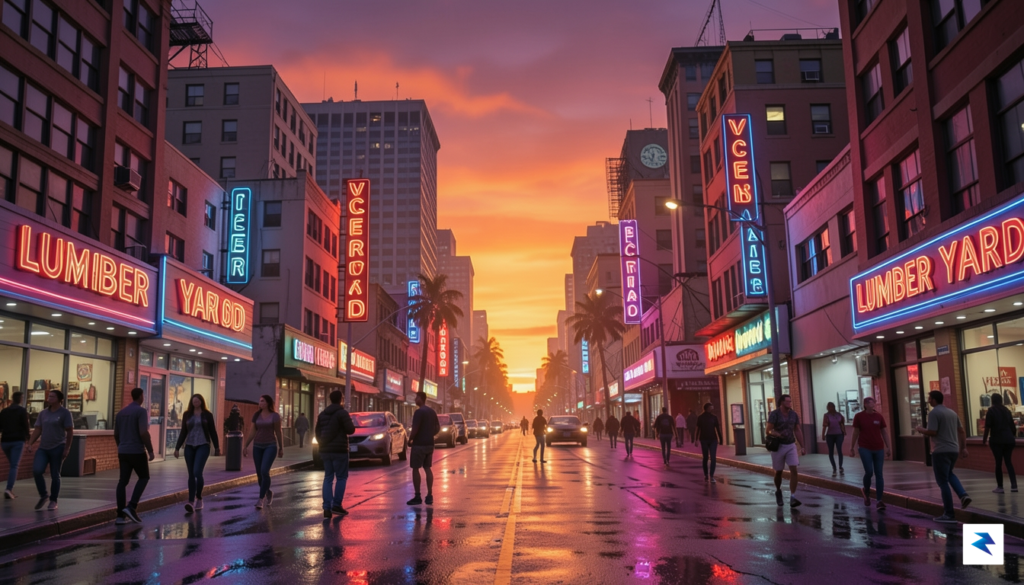
The core of this evolution lies in the density and complexity of NPC artificial intelligence. In previous iterations, non-player characters often functioned as filler, existing merely to populate the sidewalks or react to immediate player aggression. However, the next generation of open-world design suggests that NPCs will possess more complex routines, social hierarchies, and individualized behaviors that remain consistent even when the player is not actively watching. By elevating the internal logic of these characters, Rockstar aims to create a sense of persistent reality. When you walk through the streets of a reimagined Vice City, the goal is for the environment to feel like a self-sustaining organism where the inhabitants have lives, grievances, and goals that exist entirely independent of your arrival.
The true mark of a next-generation open world isn’t how far you can travel, but how much the world travels with you, reacting to every choice in a meaningful, persistent way.
Environmental storytelling is also receiving a significant overhaul to ensure that the setting itself acts as a narrator. Rather than relying solely on cutscenes to deliver exposition, the world is expected to be littered with subtle, emergent details that encourage exploration and curiosity. This means that the architecture, the clutter of a storefront, or the graffiti on a back alley wall will serve as evidence of the world’s history and current socio-economic status. By layering these visual cues with a dynamic weather system and a more responsive police or faction AI, the game creates a feedback loop that rewards players for being observant. Ultimately, this iteration of the open-world formula transforms the map from a simple playground into a complex, narrative-rich stage where every corner offers a unique opportunity for discovery.
Technological Leaps and Rockstar’s Ambition
The transition to current-generation hardware marks a seismic shift in how Rockstar Games approaches open-world architecture. By abandoning the limitations of legacy consoles, the developers are finally able to leverage the raw power of custom SSDs, effectively eliminating the traditional “loading screen” bottleneck that has plagued the genre for years. This leap in data streaming technology allows the game engine to populate the sprawling landscape of Leonida with unprecedented density; foliage, traffic, and high-fidelity textures can now be streamed in real-time without the pop-in artifacts that characterized previous titles. Beyond simple speed, this architecture enables a level of persistence that makes the world feel truly alive, as the game can manage complex background simulations without compromising the player’s immediate visual experience.
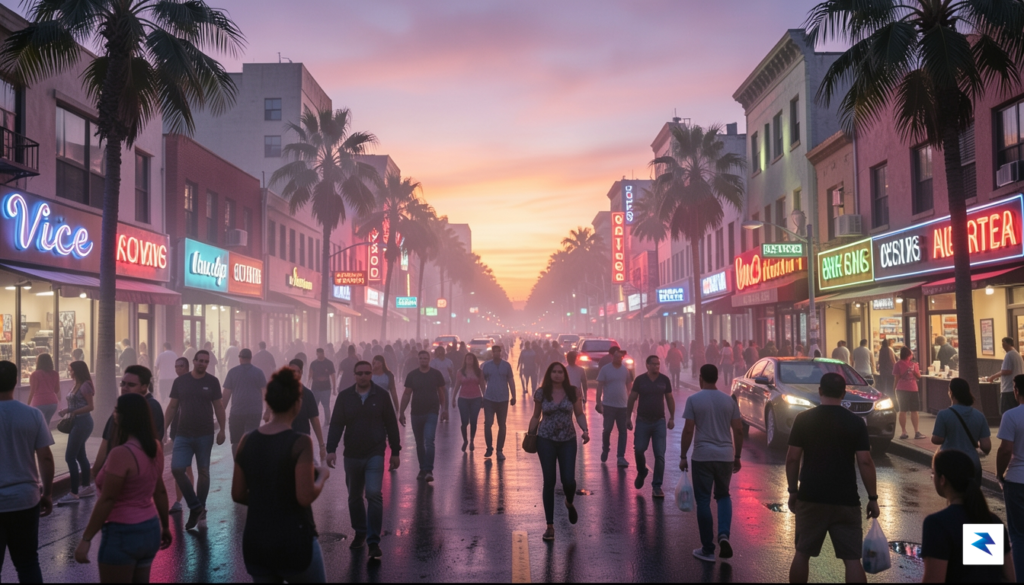
Central to this visual evolution is the sophisticated implementation of hardware-accelerated ray tracing. Unlike previous iterations that relied on pre-baked lighting solutions, the engine is poised to handle real-time global illumination and ray-traced reflections on a massive scale. This means that every surface, from the shimmering water of the coastline to the polished windows of downtown skyscrapers, will react dynamically to changing light conditions and weather patterns. Such attention to detail extends into the physics engine, which is expected to move beyond scripted animations toward more fluid, simulation-based interactions. Whether it is the way foliage reacts to a speeding vehicle or the nuanced behavior of water displacement during a storm, the physics implementation aims to ground the player in a reality that feels consistently responsive and tactile.
The true ambition of the next chapter in the franchise lies not just in the size of the map, but in the density of its interactive systems, pushing the boundaries of what current hardware can simulate simultaneously.
Balancing these technical milestones requires a delicate dance between aesthetic ambition and rigorous optimization. Rockstar has historically prioritized a cohesive, stable experience, and this latest endeavor is no exception; the team is utilizing sophisticated techniques to ensure that the increased graphical fidelity does not sacrifice frame rate stability. By employing advanced upscaling technologies and intelligent asset management, the engine ensures that the most taxing elements—such as complex lighting and dense pedestrian AI—are rendered with high efficiency. Ultimately, the synergy between high-speed hardware and a refined, modern engine suggests that this release will set a new industry benchmark, forcing us to redefine our expectations for how expansive and immersive a digital world can actually be.
Managing Expectations in the Hype Cycle

After more than a decade of anticipation, the very idea of Grand Theft Auto VI has swelled into a phenomenon far exceeding that of a typical video game launch. This immense build-up, fueled by the staggering success of its predecessor and a prolonged silence from Rockstar Games, has naturally cultivated an almost mythical status for the upcoming title. However, with such an extended period of waiting comes the inevitable danger of over-inflated expectations, where individual players subconsciously craft their own perfect version of the game in their minds. No matter how groundbreaking the final product truly is, it’s a near certainty that it cannot perfectly align with every single one of these bespoke fantasies, a reality that often leads to an unfair sense of disappointment for some.
The hype cycle, while a powerful marketing tool, often creates a chasm between the idealized vision and the tangible reality. Developers release stunning trailers, carefully curated screenshots, and tantalizing tidbits of information, all designed to ignite excitement and paint a picture of an expansive, revolutionary experience. Fans then take these official glimpses and extrapolate, adding their own desires, theories, and wish-list features, amplifying the game’s perceived potential far beyond what any single development team could realistically deliver. This isn’t a criticism of marketing; it’s simply the nature of how anticipation builds in an era of constant information flow. The challenge for players lies in discerning the difference between the marketing spectacle and the immense craft involved in creating a cohesive, playable world.
Rockstar Games, in particular, has a unique relationship with this hype cycle. Historically, they maintain an almost impenetrable veil of secrecy around their projects, a strategy that paradoxically fuels more speculation and excitement. Official reveals, like the debut trailer for GTA VI, are meticulously produced, offering a controlled narrative and setting specific expectations. Yet, this tight control is constantly challenged by the digital age’s propensity for leaks. The significant 2022 data breach, for instance, offered an unfiltered, raw look at an unfinished development build. While fascinating for many, such leaks can paradoxically harm expectations, presenting an incomplete picture that doesn’t reflect the polished, intended experience. It’s crucial to remember that what we see in early, unofficial footage is a far cry from the final, carefully optimized product, designed to be seen through a specific lens.

Looking back at the history of massive game releases, it becomes clear that even the most critically acclaimed and commercially successful titles have faced a segment of players who felt let down because their personal, often unrealistic, expectations weren’t met. Whether it’s the sheer scope of an open world, the complexity of its systems, or the depth of its narrative, every design choice involves compromises and focuses. GTA VI will undoubtedly be a colossal achievement in game design, pushing technological and narrative boundaries. However, it will still be a product of human creation, with its own specific vision and limitations, rather than an infinitely customizable fantasy generator tailored to every individual whim.
Therefore, as we inch closer to its eventual release, the most constructive approach is to cultivate a balanced perspective. Appreciate the marketing for the excitement it generates, but ground your expectations in the reality of what a video game, even one of this magnitude, can offer. Focus on the trailers and official information as indicators of the game’s intended direction, rather than extrapolating them into a perfect, personal vision. When Grand Theft Auto VI finally arrives, allowing yourself to experience it for what it truly is – a monumental work of art and engineering – will undoubtedly lead to a more profound and satisfying engagement than trying to measure it against an impossible, decade-long dream. It promises to be an extraordinary journey, and approaching it with an open mind will ensure you get the most out of the actual experience.
The Future of the Grand Theft Auto Franchise

Beyond the immediate hype surrounding its release, GTA VI represents a fundamental pivot in Rockstar Games’ business architecture. For over a decade, GTA Online acted as a revenue powerhouse that sustained the studio, but the next iteration is poised to move beyond a standalone expansion. Instead, we are looking at a living, breathing digital platform designed to evolve alongside its player base. By integrating modular narrative updates and persistent world-building, Rockstar is likely positioning this title to serve as the bedrock for the next ten years of gaming, effectively blending the line between a traditional blockbuster release and a service-oriented ecosystem that adapts to modern industry demands.
This evolution also signals a significant maturation in Rockstar’s storytelling philosophy. While 2013’s GTA V leaned heavily into satirical cynicism and the chaotic, high-octane tropes of the action-movie genre, the trailers for the new entry suggest a more grounded, character-driven approach. By focusing on a duo whose motivations appear more complex and intertwined than previous protagonists, Rockstar is signaling that the open-world genre can sustain sophisticated narrative arcs without sacrificing the freedom of a sandbox environment. This shift suggests that the studio is no longer just chasing technical milestones, but is instead aiming to raise the bar for how deep, cinematic storytelling can function within a massive, multiplayer-integrated environment.

Ultimately, the long-term impact of this release will be felt across the entire gaming medium. As Rockstar experiments with new monetization models that prioritize player retention through consistent, meaningful content drops, other developers will undoubtedly observe and adapt these strategies. We are entering an era where the lifespan of a single game is being stretched to encompass entire console generations, and GTA VI is set to define the gold standard for that longevity. Whether through its potential for hyper-realistic simulation or its seamless transition between solo play and social experiences, the game will likely force competitors to rethink how they package content in a world that increasingly demands perpetual engagement.
The true success of this title won’t be measured by its opening weekend sales, but by its ability to remain culturally and technologically relevant as the gaming industry transitions into the next decade.
In conclusion, the significance of this launch cannot be overstated. It marks the transition of the Grand Theft Auto brand from a series of discrete sequels into an omnipresent digital infrastructure. By prioritizing a blend of high-end cinematic craftsmanship and an infinitely expandable online structure, Rockstar is ensuring that the series remains the undisputed benchmark for open-world design for years to come.