
The State of MCP Security: Assessing Risks in 2026
Understanding the Model Context Protocol (MCP) The Model Context Protocol, or MCP, has rapidly emerged as a pivotal, open-source standard…


For too long, our interactions with artificial intelligence assistants have been marked by a peculiar paradox: moments of breathtaking brilliance followed by an immediate, frustrating amnesia. Imagine conversing with a digital colleague who, despite offering profound insights and executing complex tasks, forgets every detail of your discussion the moment the chat window closes. This has been the inherent limitation of many traditional AI models, particularly large language models (LLMs), which are fundamentally “stateless.” Each new prompt, each fresh interaction, has effectively been a blank slate, requiring users to constantly re-establish context, preferences, and past conversations, severely hindering the development of a truly collaborative relationship.
This persistent “amnesia” has created significant friction in our daily engagement with AI. Users find themselves repeatedly re-explaining project backgrounds, reiterating personal preferences, or reminding the assistant about previous tasks and their outcomes. Such repetitive effort not only diminishes the efficiency gains AI promises but also erodes the sense of continuity and partnership we naturally seek in an assistant. Instead of evolving into a sophisticated digital collaborator that understands our working style and project nuances over time, the AI has remained a powerful but fleeting tool, requiring constant hand-holding and context-setting, making deeper, more meaningful long-term projects nearly impossible to maintain seamlessly.
However, a significant paradigm shift is now underway with the introduction of persistent memory for AI assistants. This groundbreaking development directly addresses the long-standing limitation of AI amnesia, ushering in an era where AI can truly learn and remember. Instead of operating on a session-by-session basis, assistants equipped with persistent memory can retain context, preferences, and accumulated knowledge not just for the duration of a single conversation, but across days, weeks, and even months. This transforms the AI from a momentary genius into a reliable, evolving partner, capable of building a cumulative understanding of your needs and history.
The core of this transformation lies in establishing a persistent data layer that acts as the AI’s long-term memory. Unlike the transient “context window” which provides a limited, short-term buffer for immediate conversational recall, persistent memory structures enable the semantic storage and retrieval of information over extended periods. This means that important details, past decisions, learning experiences, and even nuanced conversational styles are not discarded after a session ends. Instead, they are stored, indexed, and made accessible for future interactions, allowing the AI to tap into a rich reservoir of historical data to inform its responses and actions, leading to far more coherent and personalized interactions.
This capability fundamentally changes the nature of our relationship with AI. Imagine an assistant that remembers your architectural project specifications from last month, recalls your preferred coding language for a specific task, or even anticipates your next question based on a history of similar interactions. This deep, cumulative understanding enables AI assistants to provide more relevant, proactive, and genuinely helpful support, significantly reducing the cognitive load on the user. By moving beyond the limitations of ephemeral memory, persistent memory empowers AI to finally fulfill its promise as a true digital collaborator, evolving and growing alongside us through every project and conversation.
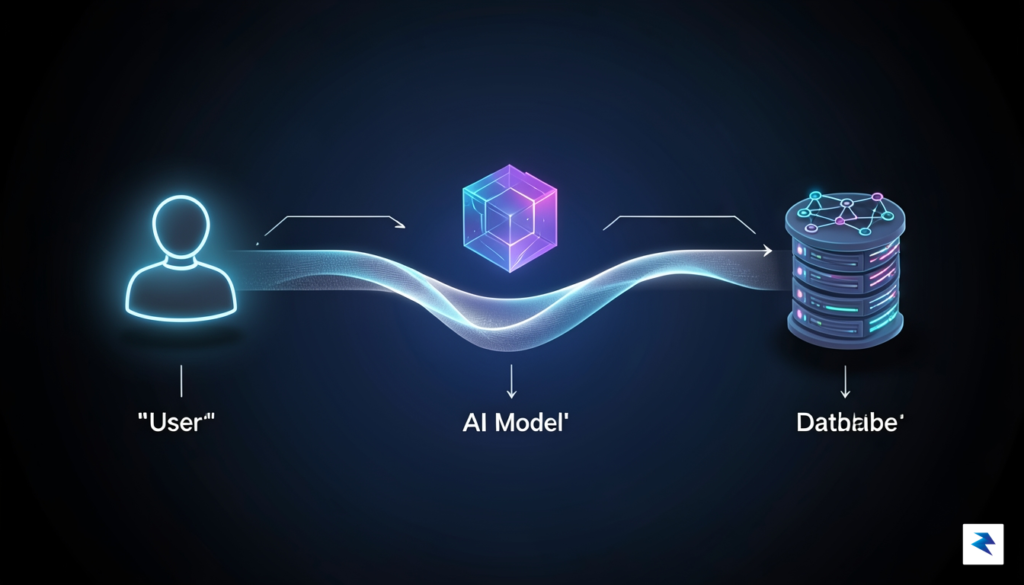
The quest to make AI assistants truly intelligent and personalized often hits a significant hurdle: their inherent inability to ‘remember’ beyond the immediate conversation. Large Language Models (LLMs) are stateless by nature, meaning each interaction is a fresh start unless the entire conversation history is continually fed back in, which quickly becomes inefficient and costly. This is where the MCP, or Model Context Protocol, emerges as a pivotal piece of infrastructure. It acts as a universal translator and secure gateway, enabling AI models to transcend their ephemeral nature and interact seamlessly with external, persistent memory systems, fundamentally transforming how assistants can maintain context and personality over time.
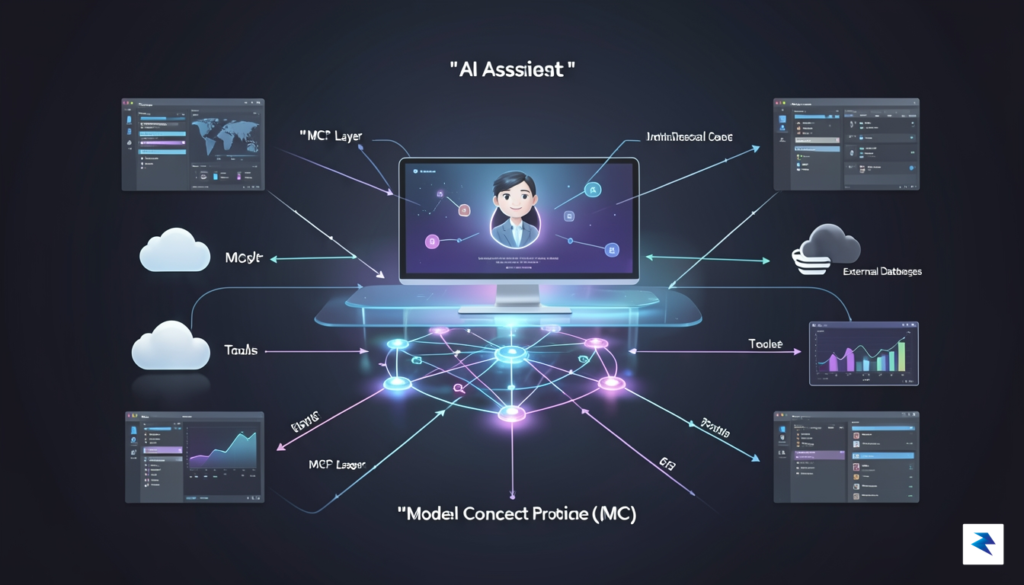
At its core, MCP is a standardized communication language designed specifically for AI models to safely and efficiently interact with external tools and databases. Think of it as the internet protocol for AI contexts, allowing different software components to understand each other without needing bespoke integrations for every new tool or data source. This standardization is a profound technical advantage over the traditional, proprietary silos that often characterize software development. Instead of building custom APIs for every database or external service an AI might need to access, MCP provides a common framework. This not only dramatically reduces development complexity and time but also fosters a more open and interoperable ecosystem where AI models can readily plug into a vast array of information sources and tools, from user preference databases to internal company knowledge bases.
Adaptive Recall leverages MCP precisely to bridge this critical gap between an AI model’s impressive reasoning capabilities and the need for a durable storage backend. When an AI assistant powered by Adaptive Recall needs to recall a user’s previously stated preferences—perhaps their favorite coffee order, their preferred project management style, or even a nuanced understanding of their ongoing work—it doesn’t rely on information hard-coded into its model weights. Instead, Adaptive Recall uses MCP to formulate a query to an external memory store. This query, crafted according to the MCP standard, retrieves relevant pieces of information, such as past interactions, user profiles, or specific data points. Conversely, when the AI learns something new about a user or an ongoing task, Adaptive Recall employs MCP to securely store this fresh context back into the persistent memory, ensuring that future interactions benefit from this accumulated knowledge.
This implementation of MCP by Adaptive Recall introduces a powerful modularity to AI assistant architecture. Because the memory layer is external and communicates via a standardized protocol, it is not inextricably linked to the core AI model itself. This means developers can easily swap out different storage solutions, integrate new types of data, or even update the underlying AI model without disrupting the continuous memory function. For instance, an organization could start with a simple database for memory and later upgrade to a sophisticated knowledge graph, all while Adaptive Recall continues to communicate through the consistent MCP interface. This modularity ensures scalability, flexibility, and robust maintainability, paving the way for AI assistants that are not only smarter but also more adaptable and resilient in diverse operational environments.

Ensuring an AI assistant remembers your past conversations and preferences isn’t merely about archiving text; it’s about crafting a sophisticated, intelligent recall system that mirrors the fluidity of human memory. Adaptive Recall achieves this continuity by employing a multi-stage pipeline designed to store, index, and retrieve information with a keen sense of relevance, ensuring the assistant doesn’t just possess a vast amount of data, but intuitively knows exactly what pieces of information are pertinent to your current interaction. This mechanism allows the AI to feel incredibly natural, picking up threads of conversation and context seamlessly, just as a human would.
The journey of information within Adaptive Recall begins with an ingestion phase, where every interaction, every piece of context, and every stated preference is meticulously processed. Instead of simply saving raw text, the system first breaks down this incoming data into what are called “semantic chunks.” These aren’t arbitrary divisions based on word count, but carefully segmented units of meaning, ensuring that each chunk encapsulates a coherent idea or piece of information. For instance, a long conversation might be broken into chunks representing different topics discussed, specific decisions made, or individual tasks initiated, preserving the contextual integrity of each memory fragment.
Once chunked, these semantic units are transformed into high-dimensional numerical representations known as embeddings. Think of embeddings as unique digital fingerprints for each piece of memory, where chunks with similar meanings or contexts are positioned closer together in a vast, multi-dimensional space. This sophisticated transformation allows the system to understand the underlying semantic relationships between different pieces of information, even if the exact words used are varied. These embeddings are then stored in a specialized, highly efficient index, optimized for rapid similarity searches, forming a rich, interconnected web of the AI’s accumulated knowledge.
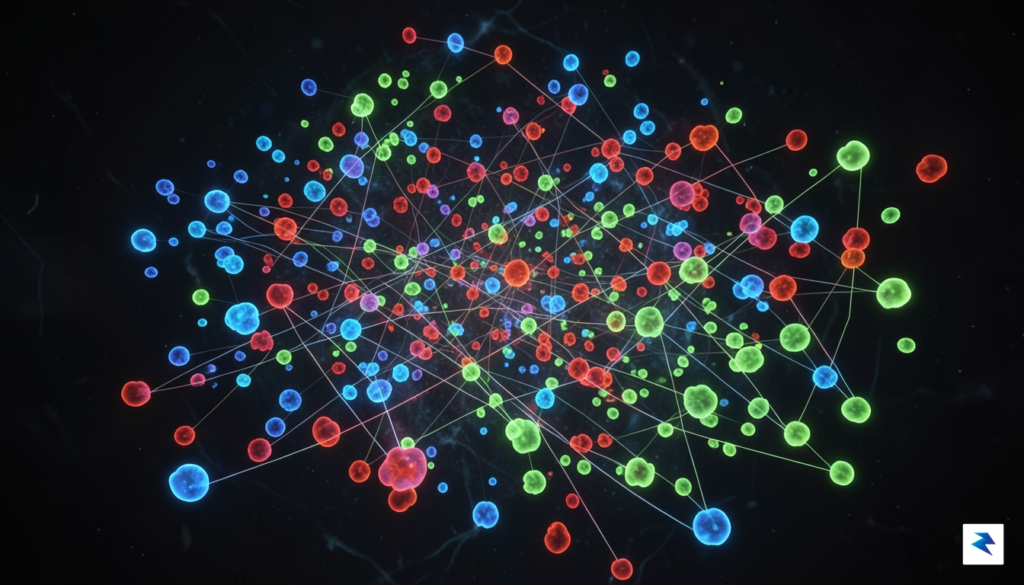
When you interact with your AI assistant, your current query or statement is also instantly converted into its own embedding. This “current context” embedding is then used to query the vast index of historical memories. The system doesn’t just pull up everything; it intelligently searches for historical embeddings that are semantically closest to your current context. This is where the crucial relevance filtering comes into play: Adaptive Recall employs advanced algorithms to weigh the similarity, recency, and importance of potential memories, ensuring only the most pertinent information is surfaced. This precise filtering prevents the AI from overwhelming itself—or you—with irrelevant details, allowing it to focus on what truly matters for the task at hand.
The true genius of Adaptive Recall lies in its delicate balance between immediate context and the vast reservoir of historical recall. While the system naturally prioritizes and weighs heavily on the most recent interactions, it simultaneously has the capacity to delve deep into its long-term memory to retrieve older, yet highly relevant, information when needed. This mirrors how humans operate: we primarily engage with our immediate surroundings and recent memories, but can effortlessly recall a distant fact or a long-past conversation when a specific trigger or context arises. This dynamic interplay ensures the AI assistant maintains a cohesive and continuously evolving understanding of your ongoing needs and past interactions.
Furthermore, the “Adaptive” aspect of the system means its understanding of relevance is not static; it continually refines itself. As the AI interacts more, it learns which retrieved memories prove most useful for successful task completion or satisfactory responses. This feedback loop, whether explicit or implicit, allows the system to continuously improve its indexing and retrieval algorithms, making its memory increasingly accurate and efficient over time. This ongoing self-optimization means Adaptive Recall doesn’t just remember; it learns how to remember better, evolving into an ever more intuitive and invaluable partner in your digital life.

Moving beyond the transient nature of typical chat interactions, AI assistants equipped with persistent memory fundamentally transform from mere search tools into indispensable partners. Imagine an assistant that not only understands your immediate query but also recalls your specific coding style, the project constraints you meticulously defined three months ago, or your precise preferences for how documentation should be structured. This profound ability to retain context and learn over time drastically reduces the cognitive overhead associated with complex task management and significantly deepens the quality of creative and analytical output across various fields.
For software engineers, the benefits of a long-term AI assistant are particularly transformative. No longer will you need to repeatedly explain your team’s architectural patterns, preferred design philosophies, or even the nuances of a legacy codebase. An AI with persistent memory can keep track of intricate internal documentation, remember specific API usage patterns your team favors, and even flag potential inconsistencies with past decisions. This dramatically streamlines onboarding for new team members, as the AI can serve as a living, breathing institutional memory, guiding them through existing code and project conventions with unprecedented accuracy and speed, fostering a more cohesive and efficient development environment.
Furthermore, this enduring contextual awareness extends to the very act of coding and code review. The assistant can learn your personal debugging strategies, suggest refactoring opportunities based on patterns it has observed in your work over months, and even help generate new features by understanding the existing codebase’s philosophy. It can assist in maintaining design consistency across large projects, ensuring that new modules align with previously established paradigms. This adaptive support not only saves countless hours but also elevates the overall quality and maintainability of the software being developed, turning complex challenges into manageable steps with an intelligent partner at your side.
Knowledge workers and researchers grappling with long-term projects stand to gain immensely from AI assistants that remember. Picture an assistant capable of summarizing years of research, recalling the subtle justifications behind decisions made in early project phases, or identifying emerging themes across disparate data sets compiled over months. This persistent memory allows the AI to act as a sophisticated research assistant, maintaining a comprehensive understanding of your ongoing investigations, highlighting critical information you might have overlooked, and even drafting preliminary reports or presentations with a deep, historical context of your work. The need to repeatedly re-familiarize the AI with your project scope or past findings is eliminated, enabling truly continuous and iterative work.
The concept of an AI assistant truly understanding and adapting to you moves far beyond the limitations of current “custom instructions” or static preference settings. While useful, these predefined rules are rigid; they don’t evolve with your working style, project needs, or even your personal growth. An AI with persistent memory, conversely, learns dynamically. It observes your interactions, deduces your preferences for information presentation, understands your common pitfalls, and even anticipates your next steps based on months of shared history. This adaptive learning creates a truly personalized experience, where the assistant anticipates needs rather than just responding to explicit commands, fostering a symbiotic relationship that deepens with every interaction.
Key Takeaway: Persistent memory transforms AI assistants from reactive tools into proactive, adaptive partners, profoundly enhancing efficiency and innovation by remembering context and learning over time.


The very idea of an AI assistant remembering your every interaction, preference, and past conversation naturally raises significant questions about privacy and data security. At Adaptive Recall, we recognize that with the immense power of persistent memory comes an even greater responsibility for data stewardship. Our foundational principle is to ensure that users retain absolute control over their digital memories, transforming potential concerns into an assurance of sovereignty over their personal and proprietary information. We believe that empowering users is the only way forward for truly intelligent and trustworthy AI systems.
To address these concerns head-on, Adaptive Recall offers flexible options for where your AI’s persistent memory resides. Users can opt for robust local storage, keeping their personalized AI memory entirely on their own device, thereby minimizing exposure and maximizing personal data control. This ensures that sensitive information never leaves your personal environment. Alternatively, for those who prioritize accessibility across multiple devices and the convenience of cloud backups, secure cloud storage is available, engineered with industry-leading safeguards to protect your information at every turn. This dual approach empowers you to choose the deployment model that best aligns with your personal privacy comfort level and operational needs, providing peace of mind regardless of your choice.
Beyond storage location, granular user control is at the heart of Adaptive Recall’s privacy architecture. We believe you should dictate precisely what your AI remembers and for how long. This means providing comprehensive tools for memory pruning, allowing you to selectively delete specific interactions, clear entire topics, or even reset your AI’s memory altogether with a few clicks. Furthermore, you can manage how these memories are indexed and categorized, ensuring that even the organization of your personal data remains under your direct supervision. This capability makes it easy to review and modify stored information whenever necessary, solidifying your command over your digital footprint within the AI.
Underpinning these user-facing controls are formidable technical safeguards, most notably encryption at rest. Every piece of information stored within Adaptive Recall’s persistent memory system, whether residing locally on your device or in the cloud, is encrypted using state-of-the-art, industry-standard protocols. This cryptographic protection ensures that your personal and proprietary data remains unreadable and inaccessible to unauthorized parties, even in the highly unlikely event of a breach of the storage infrastructure itself. Your memories are not just stored; they are securely locked away, accessible only with proper authentication and your explicit consent.
Our commitment to responsible AI memory management is not static; it’s a continuous journey reflected in our ongoing development roadmap. We are constantly researching and implementing new privacy-enhancing technologies, regularly auditing our systems, and evolving our architectural choices to stay ahead of emerging threats and best practices. This proactive approach includes future enhancements like advanced anonymization techniques, differential privacy considerations for aggregated insights, and even more sophisticated consent frameworks, all designed to reinforce user trust and data integrity. Transparency in these efforts is paramount, and we aim to provide clear insights into how your data is managed and protected at every stage.
Ultimately, the decision to leverage persistent recall with your AI assistant is entirely yours. Adaptive Recall operates on an explicit opt-in model, meaning your AI will only begin to build a persistent memory once you’ve consciously enabled the feature. This fundamental choice ensures that the power of a remembering AI is always a tool you intentionally wield, rather than a default setting you must actively disable. By making persistent memory an active choice, we empower users to decide if, when, and how their AI assistant remembers, putting data sovereignty firmly back into your hands where it belongs.
You must be logged in to post a comment.