
Solo Across the Pacific: Inside the Historic California-to-Hawaii Rowing Journey
The Anatomy of a Pacific Crossing Rowing over 2,000 miles across the open Pacific is not merely an act of athletic endurance; it is a complex…
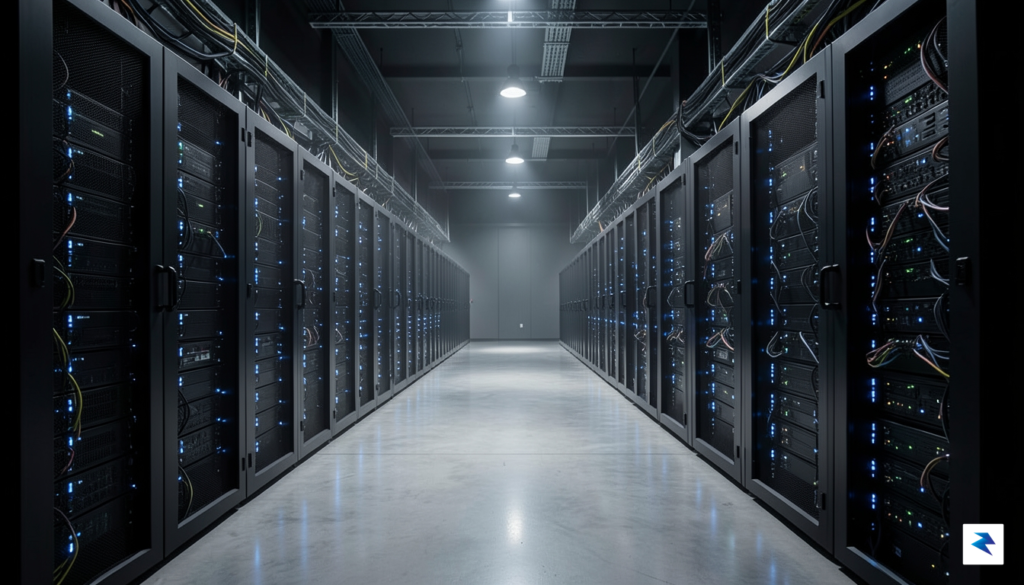
The transformation of the modern computing landscape has shifted fundamentally from CPU-centric architectures to a GPU-dominated paradigm. For decades, the central processing unit served as the brain of the computer, handling sequential tasks with general-purpose efficiency. However, the rise of large language models (LLMs) and generative AI has rendered this traditional approach obsolete. These massive models require the ability to perform billions of simultaneous, low-precision mathematical operations—a task for which Nvidia’s H100 and Blackwell chips are uniquely optimized. Consequently, GPUs have moved from the peripheral realm of gaming and graphics rendering to become the most critical strategic asset in the global technology economy.
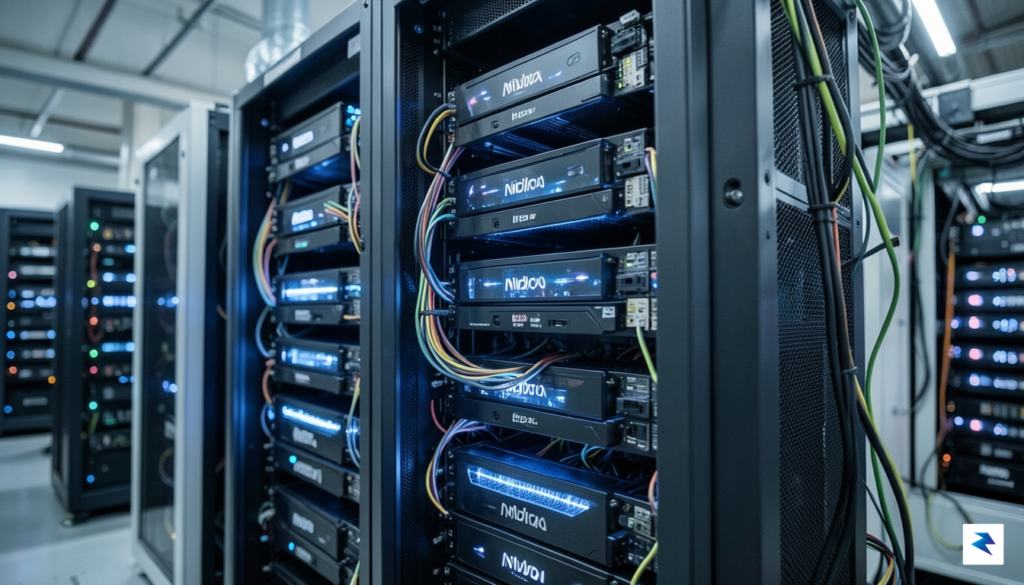
This transition has created an unprecedented supply-demand imbalance that shows no signs of abating. Because these chips are not mere commodities but essential engines for training the next generation of artificial intelligence, Nvidia has secured a position of singular dominance in the market. Every major cloud service provider, from industry giants like Microsoft and Amazon to specialized startups, is currently engaged in a desperate race to hoard as much compute power as possible. The scarcity of these chips has turned every silicon wafer into a bottleneck, forcing companies to commit billions of dollars to secure supply chains long before their actual deployment.
In the current AI landscape, capital expenditure is no longer just a line item; it is the primary barrier to entry. Companies that cannot afford to build massive GPU clusters are effectively excluded from the frontier of model development.
The capital-intensive nature of this build-out cannot be overstated. Constructing a hyperscale AI data center requires not only the acquisition of thousands of high-end GPUs but also the massive infrastructure needed to power and cool them. These facilities demand specialized electrical grids, high-speed fiber interconnects, and sophisticated thermal management systems, all of which contribute to a total project cost that regularly exceeds the billion-dollar mark. This cycle creates a high-stakes environment where cloud providers and AI companies must constantly secure massive tranches of financing to keep their hardware fleets updated. Because the technology evolves so rapidly, the risk of obsolescence is high, yet the cost of sitting on the sidelines is viewed as a far greater threat to corporate survival. As a result, the industry has birthed complex financial arrangements to ensure that the flow of capital into hardware remains uninterrupted, effectively turning the GPU into the new currency of the digital age.

The exponential demand for Artificial Intelligence (AI) has ignited a fervent pursuit of powerful computing infrastructure, and at the core of this GPU boom lies an intricate financial mechanism known as circular financing. This concept describes a self-reinforcing flow of capital within an ecosystem, where funds are strategically recycled among key players to accelerate growth and secure essential resources. In the context of cutting-edge data infrastructure, this means money from major tech companies seeking AI compute doesn’t just flow to infrastructure providers; it often originates from these same tech giants, enabling those providers to then purchase the very hardware that fuels their services. This creates a powerful, interconnected loop, ensuring that the wheels of innovation turn ever faster, driving unprecedented expansion in compute capacity.
This sophisticated financial structure is best understood by examining the symbiotic relationships between its main constituents: chip manufacturers like Nvidia, rapidly expanding venture-backed infrastructure providers such as CoreWeave and Nebius, and the deep-pocketed tech giants and AI startups that constitute the ultimate end-users. Tech behemoths, recognizing the critical need for vast GPU clusters to train and deploy their AI models, are not merely customers; they frequently become strategic investors or provide substantial pre-payments for future compute capacity. This capital injection empowers infrastructure providers to rapidly scale their operations, acquiring the latest and most powerful GPUs, building state-of-the-art data centers, and subsequently offering these crucial compute resources back to the market, often to the very entities that provided the initial funding.
Consequently, this cyclical flow creates a robust and almost guaranteed demand signal for high-performance hardware. For a company like Nvidia, this model translates into a continuous, high-volume order book, effectively de-risking their sales pipeline and maintaining aggressive growth targets. When a major cloud provider or an AI startup invests in or prepays an infrastructure provider, that capital almost immediately translates into orders for thousands of Nvidia’s advanced H100 or GH200 GPUs. This mechanism bypasses traditional, slower procurement cycles, injecting immediate liquidity into the hardware supply chain and directly fueling Nvidia’s ability to maintain its market dominance and invest further in research and development. It’s a powerful engine for rapid expansion, locking in future revenue and accelerating the pace of AI development across the industry.
However, while incredibly effective at stimulating growth, this concentrated capital cycle also introduces inherent risks. The reliance on a relatively small number of major tech players for both demand and initial capital can create a highly interdependent and potentially fragile ecosystem. Should there be a sudden shift in AI development trends, a significant slowdown in demand for compute, or if a major funding entity decides to pivot its strategy and build its own infrastructure in-house, the entire cycle could experience considerable disruption. Furthermore, the aggressive valuations seen in many of these venture-backed infrastructure providers are predicated on sustained, exponential growth, making them vulnerable to any perceived deceleration or market correction in the broader AI market.
Ultimately, the phenomenon of circular financing in the GPU boom represents a double-edged sword. On one hand, it’s an ingenious strategy that has supercharged the development of AI infrastructure, enabling unprecedented scale and speed in hardware deployment. It efficiently funnels capital to where it’s most needed, accelerating the entire ecosystem. On the other hand, it concentrates financial power and risk within a tightly knit group of entities, making the entire ecosystem susceptible to systemic shocks if the intricate balance of supply, demand, and capital flow is disturbed. Understanding this dynamic is crucial for appreciating not only the incredible pace of innovation currently unfolding but also the underlying vulnerabilities that could emerge as the AI landscape continues to evolve.
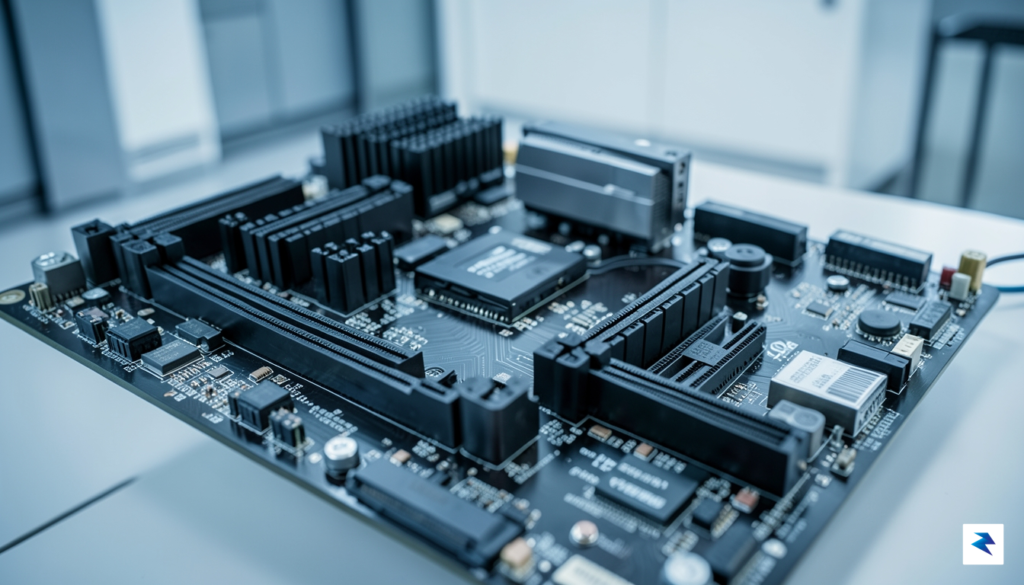
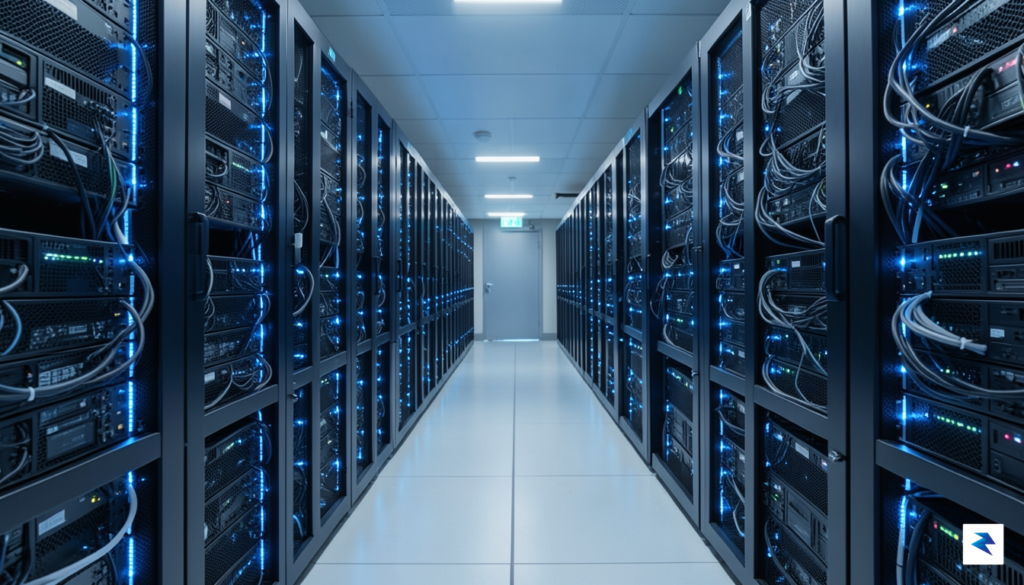
The rise of specialized GPU cloud providers like CoreWeave and Nebius represents a fundamental shift in how artificial intelligence infrastructure is deployed. Unlike traditional hyperscalers, which balance a vast array of services ranging from document storage to consumer retail, these firms have built their entire business models around the singular, high-performance needs of AI training and inference. CoreWeave, which famously pivoted from its origins as an Ethereum mining operation, leveraged its deep expertise in large-scale cluster orchestration to become a preferred partner for GPU-hungry enterprises. By stripping away the bureaucratic latency of legacy cloud giants, they offer a streamlined, “bare-metal” experience that allows AI researchers to access thousands of H100 GPUs almost immediately, a capability that has proven essential during the current hardware shortage.
Nebius has adopted a similarly aggressive strategy, positioning itself as a global player that bridges the gap between hardware availability and software accessibility. By focusing exclusively on the “AI-ready” stack, Nebius creates environments optimized for low-latency networking and massive parallel processing, which are the primary bottlenecks for modern Large Language Models (LLMs). While traditional cloud providers often prioritize broad compatibility and legacy support, these specialized firms act as boutique engine builders; they don’t just rent out hardware, they curate the physical and logical environments necessary for the fastest possible compute times.
By prioritizing specialized hardware access over general-purpose cloud services, these firms have effectively bypassed the inventory bottlenecks that have constrained many legacy providers, transforming raw silicon into a highly fluid, tradeable commodity.
Managing these massive clusters requires a level of physical engineering that goes far beyond standard server maintenance. Because high-end AI chips generate immense heat and require consistent, high-voltage power, CoreWeave and Nebius have had to become experts in logistics and energy infrastructure. This involves sourcing specialized data center space that can handle extreme power densities, often requiring custom liquid cooling solutions that are far more advanced than traditional air-cooled setups. By securing direct lines of inventory from manufacturers and building their own specialized facilities, they have effectively created a closed-loop system where hardware is allocated precisely where it can provide the highest compute-per-dollar ratio, insulating them—and their clients—from the chaotic volatility of the broader hardware market.

The current architecture of the AI infrastructure boom relies on a sophisticated web of capital circularity, where funding flows from investors to startups, then to specialized cloud providers, and ultimately into the coffers of hardware giants like Nvidia. While this cycle has fueled an unprecedented expansion of compute capacity, its long-term viability hinges on whether the end-user demand for AI-driven revenue can eventually outpace the staggering cost of capital. History suggests that such capital-intensive cycles are rarely linear; as interest rates remain elevated, the cost of servicing the massive debt required to purchase thousands of H100 or Blackwell GPUs becomes a significant drag on profitability. If AI companies fail to demonstrate clear, scalable returns on their models, the appetite for the debt-fueled expansion that currently sustains players like CoreWeave and Nebius may evaporate, potentially triggering a sharp contraction in infrastructure spending.

Furthermore, the industry is approaching a critical juncture regarding the law of diminishing returns in model training. We are rapidly moving toward a reality where simply adding more silicon does not yield proportional gains in model intelligence or capability. Should the performance delta between successive generations of AI models begin to plateau, the justification for continuous, multi-billion dollar hardware refreshes will face intense scrutiny from venture capitalists and public market investors alike. A potential supply glut looms on the horizon; if the market reaches a saturation point where excess compute capacity outstrips the actual deployment of production-grade AI applications, the secondary market value of these specialized GPUs could plummet, leaving heavily leveraged providers exposed to significant asset impairment.
The true test of the GPU gold rush will not be the capacity to build, but the ability to monetize the compute at a scale that justifies the underlying debt.
Despite these risks, there is a strong argument that we are witnessing the construction of a new, essential utility layer for the global economy. Much like the fiber-optic build-out of the late 1990s, the current infrastructure boom may experience a painful correction before settling into a mature, profitable phase. Nvidia’s ecosystem remains deeply entrenched not just because of its hardware, but because of the vast software moat created by its CUDA platform, which ensures that even in a cooling market, developers remain tethered to their architecture. The long-term outlook, therefore, suggests a transition from a “growth-at-all-costs” phase to a period of consolidation, where only those providers with the most efficient power usage, the best geographic positioning, and the most stable capital structures will survive the inevitable shift toward AI infrastructure as a commodity.
You must be logged in to post a comment.