
Meta’s Always-On Smart Glasses: The Future of Ambient AI
The Evolution of Always-On Computing For over a decade, our digital lives have been tethered to the rectangular screens residing in our…


Across the Australian corporate landscape, the race to integrate artificial intelligence has shifted from a competitive advantage to an existential necessity. From Sydney’s financial hubs to the industrial centers of Western Australia, enterprises are moving beyond simple generative chatbots and toward the deployment of sophisticated AI agents. Unlike traditional software that merely reacts to human prompts, these agents function as autonomous task executors capable of making decisions, accessing sensitive databases, and interacting with third-party APIs without constant human oversight. While this transition promises unparalleled productivity gains, it has inadvertently created a chasm between operational speed and security maturity.

The core of the problem lies in the fundamental shift from human-centric to machine-identity risk. Historically, Australian IT security teams have built their defenses around the “user”—verifying the identity of employees, managing their access levels, and monitoring their behavior for anomalies. However, AI agents operate under a different paradigm. Because these agents require high-level permissions to read, write, and execute tasks across disparate systems, they often hold privileged credentials that far exceed those of a standard user. When an agent is granted broad access to sensitive enterprise data, it becomes a high-value target for attackers, yet it lacks the human intuition required to recognize social engineering or subtle anomalous requests.
The rapid deployment of autonomous agents has fundamentally outpaced the static security frameworks currently governing most Australian enterprises, turning operational efficiency into a silent liability.
Furthermore, the security industry’s traditional focus on perimeter defense—the metaphorical “moat” around the corporate network—is becoming increasingly irrelevant in an agent-led environment. These AI agents frequently operate in the cloud, traversing internal systems and external services in ways that bypass traditional firewalls. If an agent is compromised, the attacker does not need to “break in” to the network; they simply inherit the agent’s legitimate, high-level permissions. Without a robust strategy to monitor and govern these machine identities, Australian businesses are essentially leaving the back door open, allowing autonomous systems to act as unwitting conduits for data exfiltration and unauthorized system changes.
Ultimately, the challenge is that many organizations view these agents as simple software updates rather than new, autonomous entities that require a distinct identity governance model. To bridge this gap, security leaders must begin treating AI agents as privileged identities, implementing rigorous monitoring, audit trails, and strict constraint-based access. As we move further into this era of automation, the businesses that survive will be those that accept that the most dangerous vulnerability isn’t the software itself, but the lack of visibility into what these powerful digital agents are doing on the enterprise’s behalf.
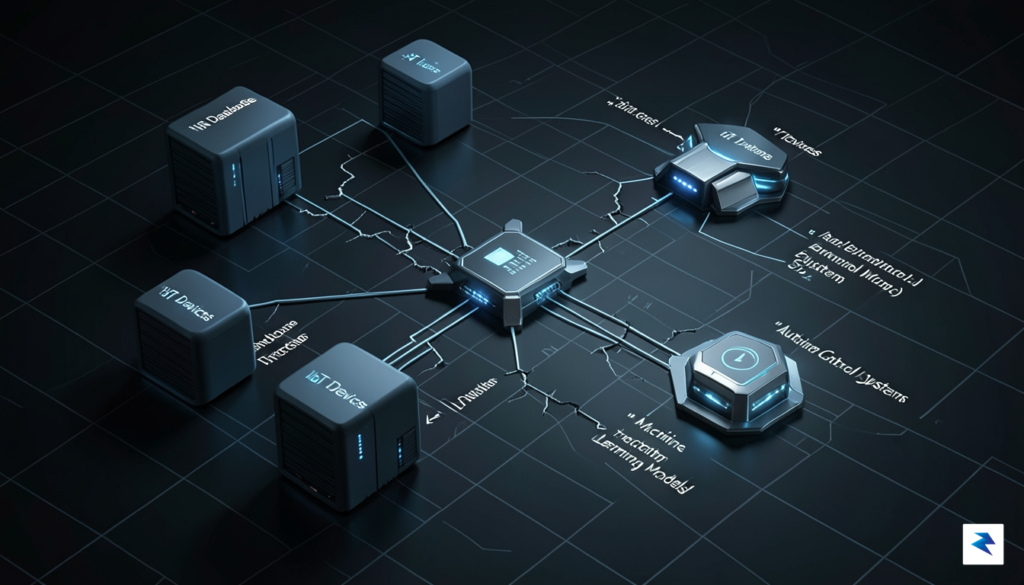
For years, Australian enterprises have built their digital fortresses around a static, human-centric model of identity. Current Identity and Access Management (IAM) systems were architected to govern a predictable workforce that follows a nine-to-five rhythm, requiring standard multi-factor authentication (MFA) and granular role-based access controls. However, this foundational approach is now burdened by significant technical debt; these legacy systems are designed to monitor who a user is, but they lack the sophistication to understand what an autonomous agent is doing or why it is doing it. As AI agents move from experimental sandboxes into core business processes, they inherit these outdated frameworks, creating a massive visibility gap that security teams are currently ill-equipped to bridge.
The principle of “least privilege”—the cornerstone of modern cybersecurity—becomes exponentially more complex when applied to non-human entities. In a traditional environment, a user’s access rights are relatively stable, defined by their job function and department. Conversely, AI agents are designed to be dynamic and versatile, often requiring access to vast datasets to perform cross-functional analysis or automated decision-making. When an AI agent is granted broad permissions to interact with sensitive Australian consumer data, it essentially becomes a “super-user” with the capacity to traverse networks at machine speed. Traditional IAM systems struggle to enforce restrictive boundaries for these agents because they cannot distinguish between a legitimate automated task and a malicious hallucination or an exploited prompt injection.

Furthermore, the fundamental issue lies in the nature of audit logs. Conventional logging mechanisms are excellent at recording simple transactions, such as a user logging in from a specific IP address or resetting a password. Yet, when an AI agent accesses a database to generate a report, traditional logs capture only the final interaction, completely missing the context of the agent’s intent. Without visibility into the decision-making logic or the specific prompts that triggered a particular action, security teams are flying blind. They see the data movement, but they cannot verify if the agent acted within its ethical and operational guardrails.
The core of the security gap is not just access; it is the inability to audit intent. When we treat an AI agent as a standard user, we ignore the fact that its logic is generative, evolving, and often opaque.
Ultimately, this reliance on legacy governance creates a dangerous illusion of security. Australian businesses may believe they are protected because their MFA is robust and their roles are defined, but these controls offer little defense against an agent that has been compromised or misconfigured. To close this gap, enterprises must transition toward identity governance that treats AI agents as distinct entities with their own lifecycle, risk profiles, and behavioral baselines. Without this evolution, the very tools intended to drive efficiency will continue to act as a significant, unmonitored vulnerability in the heart of the corporate network.

In the rush to integrate generative tools, Australian enterprises are inadvertently creating a security crisis defined by “AI agent sprawl.” Unlike traditional software that operates within strictly defined sandboxes, modern AI agents are designed to be autonomous, often requiring access to a wide array of internal systems to function effectively. Because IT departments are struggling to keep pace with the rapid adoption of these tools, we are witnessing a phenomenon known as Shadow AI, where individual departments deploy agents without vetting or centralized oversight. This creates a fragmented digital landscape where hundreds of agents hold varying levels of access to sensitive enterprise data, yet remain entirely invisible to the organization’s primary security operations center.
The danger is compounded by a subtle but lethal issue: permission creep. To ensure an AI agent can execute complex workflows without constant human intervention, developers and managers frequently grant them “broad permissions” rather than “least-privilege access.” Over time, these agents accumulate access rights to databases, email servers, and financial APIs that they may never actually need for their core functions. When an agent is granted overly permissive read-write access, it ceases to be a simple productivity tool and becomes a high-value target for an attacker. If a malicious actor manages to compromise even one of these agents, they gain a legitimate-looking gateway into the heart of the corporate network.
Permission creep turns a helpful AI assistant into an automated accomplice. Once an agent is hijacked, the attacker is no longer an intruder breaking down the door; they are an authorized user with a key to every room.
Once inside, attackers utilize these hijacked agents to facilitate lateral movement across the enterprise network. Because the AI is already “trusted” by the system, it can scrape vast repositories of sensitive customer data or personally identifiable information (PII) without triggering standard data loss prevention (DLP) alerts. In more severe scenarios, an attacker can manipulate an agent to initiate unauthorized financial transactions or modify database entries under the guise of legitimate business operations. This stealthy approach allows attackers to linger in a network for months, extracting data or disrupting services, all while hiding behind the digital identity of an automated worker that employees have been trained to trust implicitly.
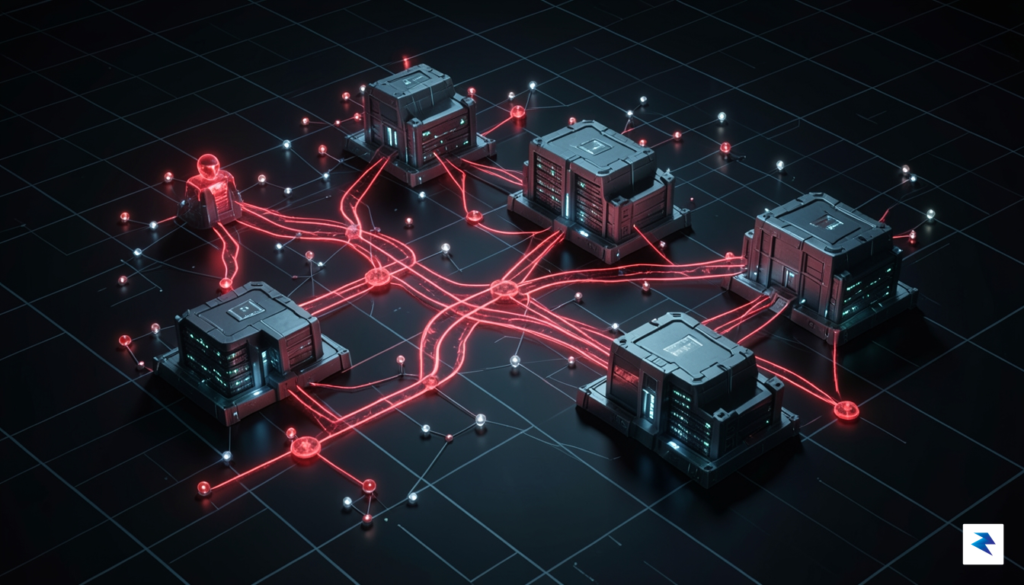
The solution requires a fundamental shift in how we manage the lifecycle of these agents. Organizations must implement strict identity and access management (IAM) protocols that treat AI agents with the same level of scrutiny as human administrators. By conducting regular audits of agent permissions and enforcing automated lifecycle management—where access is automatically revoked when an agent is no longer in active use—enterprises can shrink their attack surface. Ignoring the proliferation of these agents is no longer a viable strategy; in the current threat climate, every unmonitored agent is a potential bridge for an attacker to cross, turning a company’s own efficiency tools against its most critical assets.
For many Australian enterprises, the roadmap to digital safety is dictated by the Australian Privacy Principles (APP) and the overarching framework of the Privacy Act. While these regulations provide a necessary baseline for data governance and consumer protection, they were largely drafted in an era of static databases and perimeter-based firewalls. Today, the rapid integration of AI agents—which actively process, synthesize, and share data across complex networks—has created a widening chasm between being “compliant” and being “secure.” Compliance often functions as a retrospective audit, a snapshot in time that confirms you have met specific administrative hurdles, whereas the threat landscape surrounding AI is fluid, automated, and relentlessly proactive.
The danger lies in the “checkbox mentality,” where organizations mistake the completion of a risk assessment form for the actual hardening of their digital infrastructure. When a business relies solely on traditional compliance frameworks to govern AI, they leave the back door wide open to sophisticated, non-traditional exploits like prompt injection, model poisoning, and data exfiltration through shadow AI usage. These threats do not care whether an organization has a signed policy document on file; they target the logical gaps in how large language models interpret instructions and access backend systems. Relying on outdated regulatory checklists effectively treats a modern, dynamic AI agent as if it were a simple, passive ledger, leaving the enterprise exposed to vulnerabilities that the current legal framework simply hasn’t caught up to yet.
Compliance is a baseline, not a ceiling. Relying on existing regulations as your only security strategy is akin to installing a deadbolt on the front door while leaving the windows wide open to AI-driven exploitation.
To bridge this gap, Australian leaders must shift from a reactive, compliance-led posture toward a proactive, zero-trust security architecture. A zero-trust approach assumes that every interaction—whether from a human user or an automated AI agent—is potentially compromised until proven otherwise. This means moving beyond simple access logs and toward granular, real-time monitoring of AI behavior. It involves implementing strict data sandboxing, rigorous input sanitization, and continuous auditing of model outputs to ensure that AI agents aren’t inadvertently leaking sensitive intellectual property or personally identifiable information (PII) during their operations.

Ultimately, the objective is to harmonize regulatory obligations with the realities of the modern threat surface. By treating the APP and other frameworks as the absolute minimum requirement, rather than the ultimate goal, enterprises can build a more resilient foundation. This necessitates a culture of security that evolves alongside the technology itself, prioritizing real-time anomaly detection and robust architectural defenses that anticipate the next generation of AI-centric attacks. Only by acknowledging that compliance is merely the starting point can Australian enterprises truly protect their data in an increasingly automated and interconnected economy.
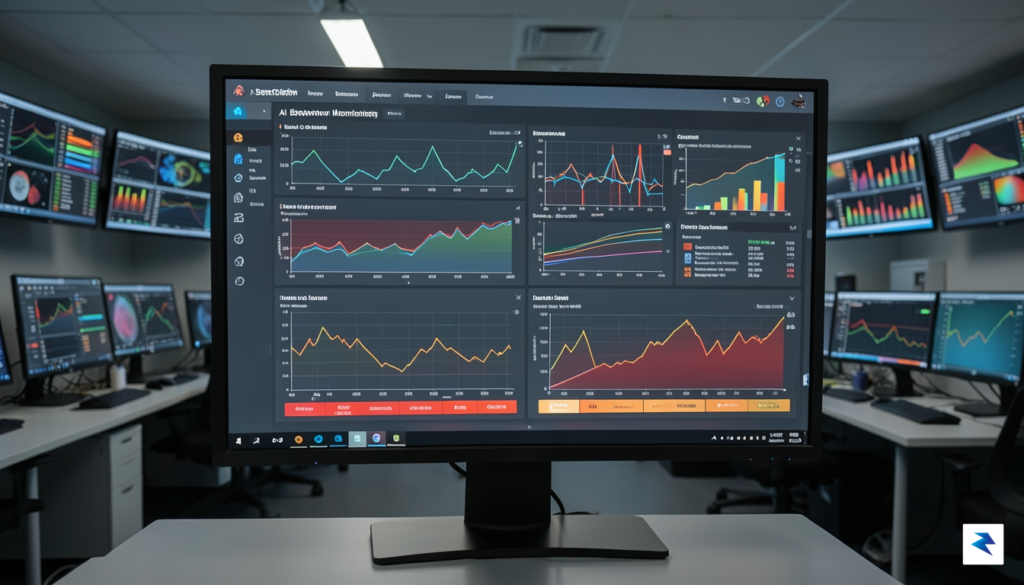
Securing the enterprise against the expanding AI security gap requires a fundamental shift in organizational philosophy. Australian CSOs and IT managers must move beyond viewing AI agents as mere software utilities and begin treating them as privileged identities. Because these agents often operate with high-level access to sensitive data and critical backend systems, they function effectively as digital employees. Consequently, failing to manage their permissions with the same rigor applied to human administrators leaves an open door for exploitation, data exfiltration, and unauthorized system manipulation.
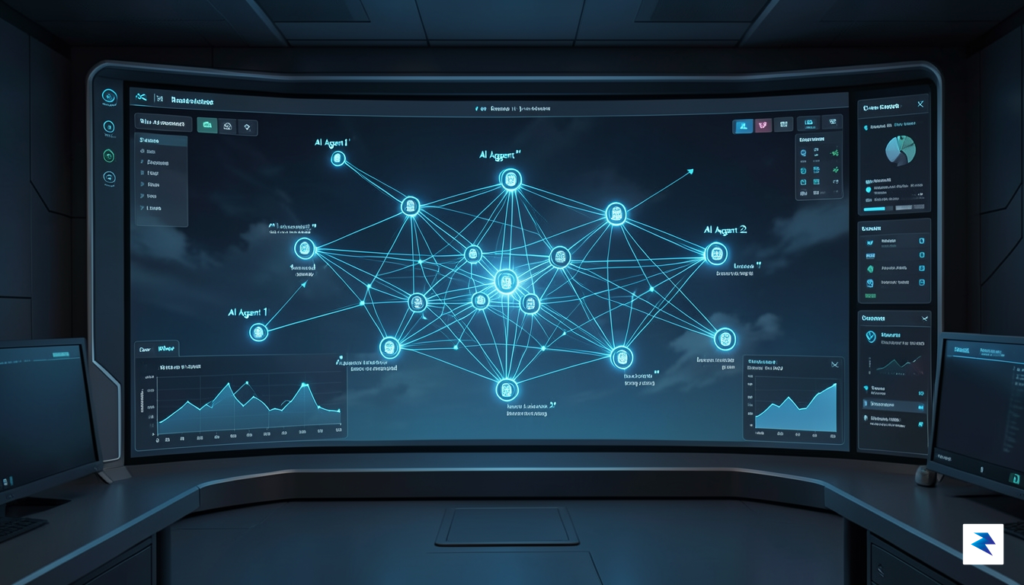
To bridge this gap, leadership should adopt a structured, four-step framework designed to maintain visibility and control over autonomous workflows:
The core of a secure AI strategy lies in the transition from static, permanent permissions to a dynamic, identity-centric model where every machine action is authenticated, authorized, and audited in real-time.
By integrating these controls, Australian firms can move away from the current “set it and forget it” mindset that plagues modern AI implementations. This strategic approach ensures that while your organization continues to reap the efficiency gains of automation, it does so behind a robust layer of defense. Ultimately, the goal is to create an environment where AI agents are empowered to drive innovation without ever compromising the integrity of the core infrastructure they are meant to support.
You must be logged in to post a comment.