
The Hidden Vulnerability: Why Australian AI Agents Need Better Security
The Invisible Threat: AI Agents in the Australian Enterprise Across the Australian corporate landscape, the race to integrate artificial…


As the decentralized finance (DeFi) ecosystem continues its rapid expansion and maturation, the inherent limitations of general-purpose blockchain architectures have become increasingly apparent. Early Layer-1 networks, designed to be broadly applicable, often grapple with the fundamental “blockchain trilemma,” striving to balance decentralization, security, and scalability simultaneously. While these foundational chains have successfully proven the viability of decentralized applications, their inherent design compromises often lead to bottlenecks, particularly when confronted with the sophisticated, high-demand requirements of modern financial applications and emerging technologies like AI-driven autonomous agents.
Indeed, the constraints of traditional Layer-1s become glaringly obvious when considering the requirements for high-frequency trading (HFT). This specialized segment of finance demands ultra-low latency, massive transaction throughput, predictable execution, and minimal slippage—metrics that general-purpose blockchains typically struggle to deliver. With transaction processing often measured in tens or hundreds of transactions per second (TPS), variable block times, and the complexities of probabilistic finality, these networks simply cannot compete with the sub-millisecond execution environments of traditional financial markets. Furthermore, the unpredictable and often high gas fees, coupled with the potential for miner extractable value (MEV) exacerbating price volatility, render competitive and efficient high-frequency strategies virtually impossible on such architectures.
Consequently, the “one-size-fits-all” approach that characterized the early days of blockchain development is no longer sufficient for an increasingly diverse and specialized landscape. Just as the internet evolved from general-purpose connections to dedicated fiber optics for critical infrastructure, certain blockchain applications now necessitate purpose-built foundations. This shift acknowledges that not every decentralized application requires the exact same balance of the trilemma, and some, particularly those involving high-stakes, time-sensitive financial operations or complex AI agent interactions, demand an infrastructure specifically optimized for speed, efficiency, and deterministic performance.
This understanding underpins the strategic shift being undertaken by BNB Chain, which is now developing a specialized Layer-1 solution meticulously engineered for the extreme demands of high-frequency trading and AI agents. This new architecture moves beyond the compromises of general-purpose chains, focusing intently on delivering exceptional throughput and ultra-low latency, aiming for capacities that could reach 100,000 transactions per second (TPS) and beyond. By designing a network from the ground up with these specific use cases in mind, the developers can make architectural choices in consensus mechanisms, execution environments, and data availability layers that prioritize speed, predictability, and cost-efficiency, ensuring a robust and reliable foundation for the next generation of decentralized financial innovation and intelligent autonomous systems.
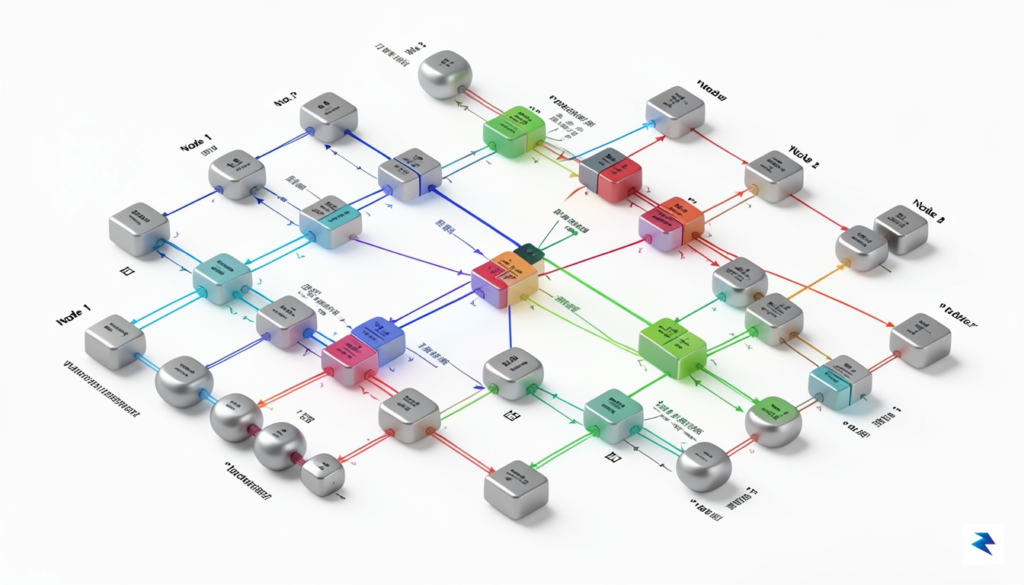
Achieving a massive throughput of 100,000 transactions per second (TPS) demands more than just incremental improvements; it necessitates a fundamental rethinking of how a blockchain network processes, validates, and propagates state changes. This ambitious target is met through a meticulously engineered architecture that optimizes every layer, transforming the traditional blockchain into a high-speed, low-latency environment tailored for the demands of high-frequency trading, AI agents, and other performance-sensitive decentralized applications. The core innovation lies in a synergistic blend of advanced consensus protocols, parallel execution capabilities, and intelligent state synchronization mechanisms designed to eliminate bottlenecks and maximize concurrent operations.
At the heart of this high-performance network is a novel consensus protocol, purpose-built for speed and finality. Unlike traditional Proof-of-Stake or BFT variants that can introduce latency due to sequential validation or extensive communication overhead, this architecture employs an optimized, pipelined BFT-style consensus. This system allows validators to process and agree on transaction batches much faster by overlapping various stages of the block production process, such as proposal, pre-voting, and committing. Crucially, it integrates mechanisms for rapid leader rotation and dynamic validator set adjustments, ensuring that network health and decentralization are maintained even under extreme loads, while drastically reducing the time to finality for each transaction.
Beyond consensus, a critical component enabling 100k TPS is the integration of sophisticated parallel execution engines. Traditional blockchains often process transactions sequentially, creating a significant bottleneck as each transaction must wait for the preceding one to complete. This new architecture shatters that limitation by allowing multiple independent transactions, or even parts of complex smart contract operations, to be executed concurrently across different computational cores within a node. By intelligently identifying non-conflicting transactions, the system can process thousands of operations in parallel within a single block, significantly boosting the overall throughput and reducing latency, which is paramount for time-sensitive applications like algorithmic trading bots and real-time data feeds.
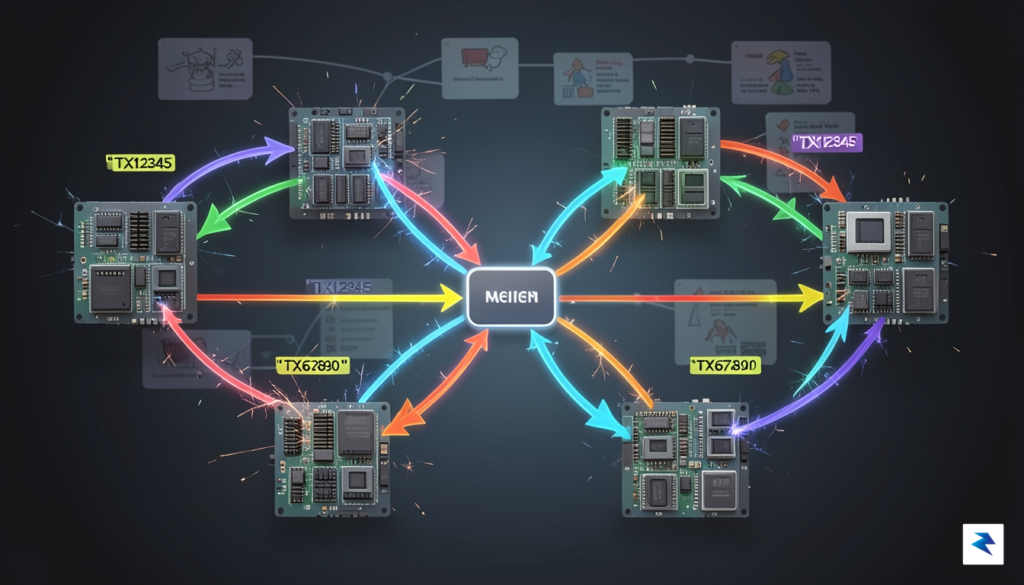
Equally vital for maintaining a coherent and high-performance network at extreme speeds is an innovative approach to state synchronization and data propagation. When transactions are processed at 100,000 TPS, ensuring all nodes quickly and accurately reflect the latest global state becomes a monumental challenge. This architecture tackles this by employing advanced techniques such as optimistic state merging and lightweight state proofs. Instead of full re-execution or broad state dissemination for every block, nodes can verify state transitions using cryptographic proofs, like Merkle proofs, allowing them to quickly update their local state without needing to re-process entire transaction histories. Furthermore, highly optimized peer-to-peer data propagation protocols ensure that new blocks and state changes are broadcast and validated across the network with minimal delay, maintaining network integrity and consistency despite the blistering pace of transactions.
The synergy of these innovations – a high-velocity consensus mechanism, parallel transaction execution, and intelligent state management – culminates in a blockchain network that not only promises but delivers unprecedented performance. This foundational technical architecture provides the robust, low-latency infrastructure necessary to power the next generation of decentralized applications, especially those requiring instantaneous execution and high transactional volume, effectively creating a dedicated high-speed lane for the future of digital finance and AI-driven economies.

The evolution of decentralized finance is rapidly shifting from manual, human-driven interaction toward a landscape dominated by autonomous AI agents. These agents, powered by sophisticated Large Language Models (LLMs) and specialized reasoning engines, are moving far beyond their initial roles as simple data analysis tools or sentiment trackers. Today, they are evolving into active market participants capable of executing complex financial strategies, managing liquidity across fragmented protocols, and identifying arbitrage opportunities in real-time. By integrating these agentic workflows directly into the blockchain stack, we are witnessing the birth of a new financial paradigm where decision-making is decoupled from human latency and emotional bias.
However, the transition from analytical AI to execution-heavy AI requires a fundamental rethink of blockchain infrastructure. Most legacy chains suffer from significant bottlenecks, such as high latency and probabilistic finality, which render them unsuitable for the “rapid-fire” demands of autonomous trading agents. For an AI to effectively manage a liquidity pool or pivot between decentralized exchanges, it needs a sandbox that provides near-instant transaction finality. If an agent must wait seconds for a block to be confirmed, it risks being front-run by faster, more efficient competition. This is precisely why the development of a specialized layer-1, optimized for massive throughput and ultra-low latency, serves as a critical prerequisite for the mass adoption of agentic DeFi.
The synergy between high-speed infrastructure and agentic intelligence creates a feedback loop: faster execution allows agents to capture smaller, more frequent inefficiencies, which in turn deepens market liquidity and price discovery.
BNB Chain’s latest infrastructure initiative is explicitly designed to bridge this gap, positioning itself as the native home for these autonomous financial entities. By targeting 100,000 transactions per second (TPS), this new layer-1 provides the necessary “headroom” for thousands of AI agents to operate simultaneously without clogging the network or driving up gas fees. This high-performance environment allows agents to execute complex, multi-step transactions—such as cross-protocol rebalancing—within a single atomic operation. Consequently, this not only enhances the profitability of individual agents but also stabilizes the broader ecosystem by ensuring that market corrections happen instantly rather than lagging behind volatile asset shifts.

Furthermore, the integration of these agents into a high-throughput blockchain enables a more sophisticated level of automated risk management. Because the infrastructure can handle high-frequency data ingestion, agents can monitor on-chain metrics and adjust collateralization ratios or hedge positions in milliseconds. This granular level of control is essentially impossible on traditional, slower networks where AI would be hindered by network congestion. By providing the compute-heavy, low-latency foundation required for this next generation of DeFi, BNB Chain is not just hosting protocols; it is building the foundational operating system for the future of autonomous, machine-driven markets.

For years, the public mempool has stood as a significant bottleneck and a source of considerable frustration for participants in the decentralized finance (DeFi) ecosystem, especially those involved in high-frequency trading and sophisticated algorithmic strategies. Essentially a waiting room for pending transactions, the mempool is a publicly visible ledger where transactions reside before being selected and confirmed by validators. This inherent transparency, while foundational to blockchain’s open nature, ironically creates fertile ground for predatory practices. Malicious actors can observe pending trades, analyze their potential impact, and then strategically insert their own transactions with higher gas fees to front-run legitimate orders, effectively buying or selling an asset before the original transaction can execute and profit from the price movement. This leads to unpredictable latency spikes, increased transaction costs, and a fundamental erosion of trust, making it exceptionally challenging for AI agents and HFT firms to execute their complex strategies with the precision and predictability they demand.
Recognizing these critical limitations, BNB Chain’s new Layer-1 architecture introduces a revolutionary approach: direct streaming transactions. Instead of funneling all transactions through a congested, publicly visible mempool, this innovative mechanism allows transactions to bypass this traditional waiting area entirely. Transactions are streamed directly into the processing flow, establishing a dedicated and optimized pathway from the user or agent to the network’s processing units. This direct pipeline dramatically reduces the journey a transaction must undertake, eliminating the unpredictable delays and potential reordering that characterize conventional blockchain systems. By creating a cleaner, more direct route, BNB Chain ensures that complex trade strategies and AI agent instructions can be executed with unprecedented speed and a far greater degree of predictability, fundamentally changing the execution landscape.
The implications of direct streaming for Maximal Extractable Value (MEV) and overall market fairness are profound. MEV, broadly defined, refers to the profit that can be extracted by block producers (or other network participants) through their ability to reorder, censor, or insert transactions within a block. In traditional mempool-based systems, the public visibility of pending transactions provides ample opportunity for MEV extraction through front-running, sandwich attacks, and other manipulative tactics. By eliminating the public mempool and streaming transactions directly, BNB Chain significantly curtails these opportunities. This architectural shift creates a far more equitable trading environment where transaction ordering is primarily determined by arrival time and network processing rather than by gas fee bidding wars or predatory observation. Consequently, it levels the playing field for all participants, ensuring that AI trading agents and high-frequency strategies can operate in a more predictable, transparent, and fair market, fostering greater confidence and enabling more sophisticated and efficient capital allocation.

For high-frequency trading (HFT) and the burgeoning field of AI agents operating on blockchain, speed is undoubtedly a critical factor, yet it becomes utterly meaningless without an equally robust foundation of security. The inherent risks in rapid-fire financial transactions—such as front-running, market manipulation, or network-level attacks like 51% reorgs—are amplified when throughput volumes scale to extreme levels. Recognizing this imperative, the new Layer-1 architecture is meticulously engineered not just for unprecedented transaction speeds but also for impregnable security, ensuring that every millisecond of execution is underpinned by verifiable integrity and resilience against sophisticated threats.
Maintaining this integrity during rapid execution is achieved through a multi-faceted approach to verification and consensus. The architecture incorporates advanced, highly optimized verification protocols designed to process and validate transactions in parallel without compromising their authenticity or finality. This includes innovative consensus mechanisms that reach agreement swiftly, combined with fraud proofs and deterministic finality, which collectively ensure that once a transaction is confirmed, it cannot be reversed or altered. Consequently, even as the network handles hundreds of thousands of transactions per second, it remains fortified against attempts at double-spending, malicious reordering, or any form of data manipulation, providing a trustworthy environment for time-sensitive trading strategies.
Crucially, the development team has thoughtfully navigated the intricate trade-offs between decentralization and high-speed validation. While extreme decentralization can sometimes introduce latency due to widespread node communication, the new Layer-1 employs a refined approach that prioritizes a sufficient level of decentralization to prevent single points of failure, without sacrificing the blistering speed required for HFT. This balance is often achieved through a combination of specialized, highly efficient validators, optimized network topologies, and carefully designed incentive mechanisms that reward honest participation. The result is a network that distributes trust adequately among a diverse set of participants, mitigating centralization risks while still enabling near-instantaneous transaction processing and validation, striking an optimal equilibrium for performance-critical applications.
Furthermore, the commitment to security extends beyond the initial architectural design, embracing a proactive and continuous auditing strategy. The entire protocol undergoes rigorous third-party security audits by leading blockchain security firms, meticulously scrutinizing every line of code for potential vulnerabilities, backdoors, or logic flaws. These comprehensive audits are complemented by ongoing bug bounty programs, inviting a global community of ethical hackers to identify and report any weaknesses, ensuring that the protocol is constantly battle-tested against evolving threat vectors. This iterative approach to security, combining expert review with community engagement, underscores a foundational promise: to provide a consistently secure and reliable platform where AI agents and high-frequency traders can operate with confidence, knowing their assets and strategies are protected at every level.


The transition toward high-frequency trading (HFT) capabilities within the BNB Chain ecosystem represents a pivotal maturation point for decentralized finance. For years, institutional players have been sidelined by the latency issues and slippage inherent in many decentralized networks, which prevented them from deploying the complex, algorithmic strategies common in traditional markets. By architecting a new layer-1 specifically optimized for extreme throughput and sub-millisecond execution, BNB Chain is effectively bridging the gap between legacy financial infrastructure and the modular agility of blockchain technology. This shift suggests that the next wave of DeFi adoption will be driven not just by retail participation, but by the integration of institutional-grade trading desks that demand the reliability and speed of centralized exchanges without sacrificing the transparency of a decentralized ledger.

Furthermore, the emergence of this high-performance infrastructure paves the way for a new generation of financial products that were previously deemed impossible on-chain. Decentralized derivatives, complex automated market makers, and real-time cross-chain arbitrage bots can now operate with the same efficiency as their centralized counterparts. As AI agents increasingly take the helm of autonomous portfolio management, the demand for a network that can handle thousands of transactions per second—without spiking gas costs—becomes non-negotiable. This isn’t merely an incremental upgrade; it is a fundamental transformation of the network’s utility, turning the chain into a robust backbone for autonomous, machine-driven economies.
The integration of AI-driven trading agents into a high-throughput blockchain environment essentially creates a “self-healing” financial ecosystem, where liquidity is dynamically rebalanced and risk is managed at machine speed, far surpassing human reaction times.
Looking toward the future, the roadmap for BNB Chain signals a clear intent to dominate the intersection of AI and high-frequency finance. By setting a new industry standard for what a scalable layer-1 must provide, the network is forcing competitors to accelerate their own development cycles, which will ultimately benefit the entire crypto ecosystem. As this infrastructure goes live, we should expect a surge in institutional interest, as the technical barriers to entry are dismantled one by one. Ultimately, the successful deployment of this technology will mark the transition of crypto from a speculative asset class into a functional, high-velocity engine that powers the global digital economy of tomorrow.
You must be logged in to post a comment.