
SpaceX and Reflection AI Sign Massive $5.4B Compute Infrastructure Deal
The Strategic Nexus of SpaceX and Reflection AI The recent landmark compute infrastructure agreement between SpaceX and the open-source AI lab…


For nearly a decade, interacting with Alexa felt like navigating a rigid, albeit helpful, digital filing system. The technology relied heavily on pre-programmed intent-slot models, a structure that required users to speak in specific, predictable patterns to trigger a desired outcome. If you asked the right question in the right syntax, Alexa would set a timer, play a song, or report the weather with reliable precision. However, this legacy architecture was fundamentally limited; it struggled with context, nuance, and the messy, non-linear way humans actually communicate. Whenever a request veered slightly off-script, the assistant would inevitably default to a robotic apology, unable to bridge the gap between human intent and machine logic.
The landscape of artificial intelligence is currently undergoing a seismic shift, moving away from these brittle, rule-based systems toward the fluid capabilities of Large Language Models (LLMs). By integrating generative AI, platforms like Alexa are evolving from simple command-executors into sophisticated conversational agents capable of reasoning, creative synthesis, and contextual awareness. This transition means that the assistant no longer just “listens” for a keyword; it now processes the underlying meaning of a request, understands the history of a conversation, and can maintain a consistent persona throughout an interaction. Amazon’s recent testing of Alexa+ represents a pivotal moment in this evolution, signaling that the future of home automation is not about executing discrete tasks, but about fostering genuine, multi-turn dialogue.

This technological leap fundamentally resets user expectations. We are moving toward an era where the assistant functions as a collaborator rather than a glorified remote control. Where users once had to remember specific phrasing to operate their smart home devices, they can now engage in complex, multi-layered conversations. Imagine asking Alexa to suggest a dinner recipe based on the items currently in your fridge, asking for dietary adjustments, and then having it walk you through the preparation step-by-step—all while asking follow-up questions about cooking techniques. This is the promise of LLM-powered interaction: a fluid, intuitive experience that feels less like programming a machine and more like talking to an informed, helpful companion.
The integration of generative AI turns the voice assistant from a utility that completes tasks into a conversational partner that understands the context of our daily lives.
As Amazon tests these capabilities in diverse linguistic environments like India, the focus shifts toward localized, high-context intelligence. By supporting Hindi with this new conversational engine, the company is demonstrating that the next generation of voice AI must be as culturally and linguistically versatile as it is computationally powerful. This evolution is not merely an incremental update to an existing product; it is a complete reimagining of the user experience, paving the way for a future where our devices don’t just wait for orders, but actively participate in the flow of our everyday lives.

At its core, Alexa+ represents a monumental shift from a transactional command-and-control interface to a sophisticated, context-aware conversational agent. While the standard version of Alexa has long been proficient at executing discrete tasks—such as setting timers, toggling smart lights, or providing brief weather updates—it has historically struggled to grasp the deeper intent behind a user’s phrasing. Alexa+ bridges this gap by leveraging advanced Large Language Models (LLMs) that allow the system to process natural language with a level of fluidity that feels more like a human dialogue than a robotic sequence of inputs. By moving beyond rigid keyword recognition, this new architecture can parse complex inquiries that contain multiple layers of meaning, effectively “thinking” through the request before formulating a response.
One of the most transformative features of this iteration is its unprecedented ability to maintain context over the duration of an extended conversation. In previous versions, each request acted as a standalone event, forcing users to repeat themselves or provide redundant information if they wanted to drill deeper into a subject. Conversely, Alexa+ remembers the history of your current session, allowing for follow-up questions that feel logical and intuitive. For instance, if you ask about the history of a specific festival in India, you can immediately pivot to asking for related recipes or travel suggestions without restating the original topic. This capability transforms the assistant from a simple tool into a genuine digital companion capable of sustained, multi-turn interactions.

Furthermore, Amazon has poured significant effort into upgrading the “personality” and reasoning capabilities of the assistant to better align with user expectations. Rather than relying on pre-written, static scripts, Alexa+ utilizes generative AI to synthesize answers that are uniquely tailored to the user’s specific context and tone. This means the assistant can adapt its demeanor, provide nuanced explanations for complicated topics, and even offer creative problem-solving assistance. By combining this internal reasoning engine with robust support for regional languages like Hindi, the system becomes far more relatable and helpful to the Indian demographic, effectively breaking down the linguistic barriers that previously hindered the depth of voice-based interactions.
The leap from transactional AI to conversational intelligence is defined by the system’s ability to not just hear the user, but to understand the underlying intent and sustain that understanding throughout a long-form interaction.
Ultimately, these architectural enhancements signify that Amazon is prioritizing depth and utility over mere functionality. The integration of advanced reasoning allows Alexa+ to act as a more capable partner for everyday life, whether it is helping a student draft an essay, assisting a professional with complex project coordination, or simply providing a more natural way to interact with smart home ecosystems. As this technology continues to evolve, the distinction between “smart speaker” and “intelligent assistant” will continue to blur, placing the user at the center of an increasingly sophisticated and adaptive digital environment.

Amazon’s decision to pilot Alexa+ in India is far from a random selection; it is a calculated move that treats the country as the ultimate “stress test” for conversational artificial intelligence. With a population that is increasingly digital-native and a rapidly expanding smart device footprint, India offers a unique combination of scale and complexity that few other markets can replicate. While many AI models are trained on standardized English datasets, the Indian consumer base presents a vastly different reality. By deploying advanced conversational features here, Amazon is betting that if an AI can navigate the nuances of the Indian user, it can effectively handle any linguistic environment on the planet.

The primary challenge—and the primary opportunity—lies in the country’s incredible linguistic diversity. India is not just a market of many languages; it is a market of frequent “code-switching,” where users seamlessly blend Hindi, English, and regional dialects within a single sentence. For an AI, this requires more than just a translator; it demands a deep, contextual understanding of intent that transcends literal word-for-word interpretation. By testing Alexa+ with integrated Hindi support, Amazon is gathering crucial data on how voice assistants can better parse these multi-lingual inputs, which is a significant leap forward in making AI feel more human and less robotic.
The ability to interpret code-switching is the “holy grail” of conversational AI, as it represents the most authentic way humans communicate in a globalized, multilingual society.
Furthermore, localized testing in India acts as a strategic laboratory for global product success. Because India’s smart device market is characterized by price sensitivity and high expectations for value, the AI must prove its utility in practical, everyday tasks—from managing household reminders to complex multi-step queries. If the model can prove its reliability and accuracy under these demanding conditions, the underlying technology can be scaled to other emerging markets with similar linguistic hurdles. Ultimately, by refining Alexa+ in India, Amazon is not just improving a single device; it is perfecting a global blueprint for how conversational AI will interact with the rest of the world.

Integrating Hindi into a sophisticated generative AI framework is far more complex than simply mapping words from one language to another. At its core, Hindi is a language defined by profound levels of formality and social nuance, where the choice of verbs and pronouns depends entirely on the relative social standing or age of the person being addressed. An AI system must move beyond literal translations to understand these intricate honorifics; failing to do so could result in an assistant that sounds either offensively casual or unnaturally rigid. To master this, Amazon’s engineers are tasked with training models that don’t just recognize vocabulary, but grasp the underlying social dynamics that govern everyday Indian communication.
Furthermore, the linguistic landscape of India is incredibly diverse, characterized by a vast spectrum of regional dialects and “Hinglish”—a fluid, ubiquitous fusion of Hindi and English that defines modern urban discourse. A truly effective Alexa+ must be able to process code-switching, where a user might start a sentence in Hindi and finish it in English, seamlessly blending grammatical structures from both languages. This requires the model to have a deep understanding of transliteration, as many users interact with digital platforms by typing or speaking Hindi using the Latin script. Training an LLM to navigate these script variations, while simultaneously maintaining grammatical consistency across diverse regional accents, represents a significant hurdle in natural language processing.
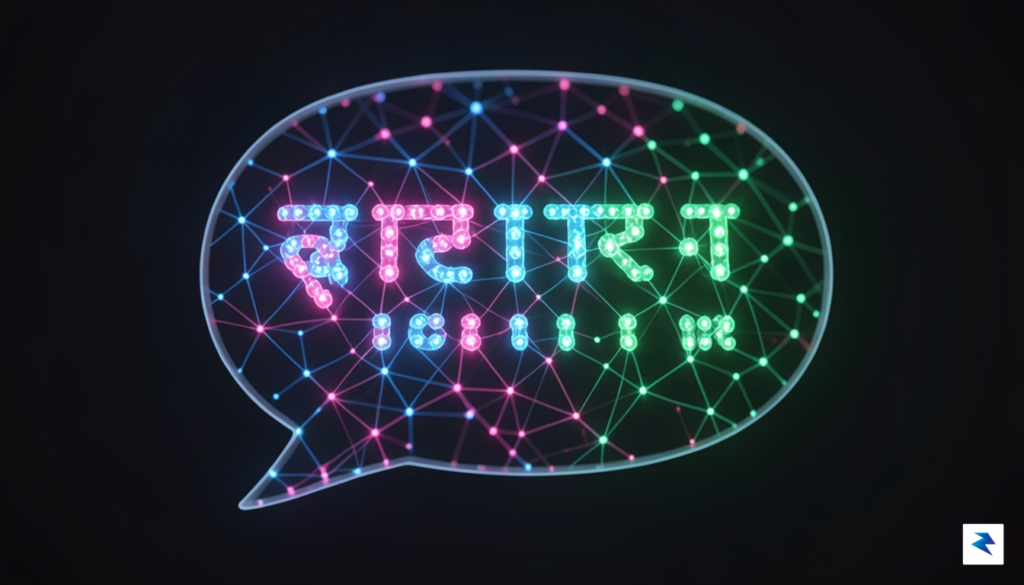
The success of a conversational AI in India hinges on its ability to transition from being a rigid translator to becoming a culturally fluent participant in a conversation.
To overcome these obstacles, Amazon is heavily reliant on iterative user feedback loops that act as the primary engine for refinement. Because language is living and constantly evolving, static datasets are insufficient; the system must learn from the way people actually speak in their homes, accounting for local slang, idiomatic expressions, and cultural references that aren’t found in standard textbooks. By analyzing these real-world interactions, developers can identify where the model struggles—whether it is misinterpreting a specific regional dialect or failing to grasp the intent behind a colloquial phrasing—and then calibrate the system accordingly. This relentless focus on feedback ensures that the AI becomes not just more accurate, but more genuinely resonant with the diverse population it is designed to serve.

The transition from reactive voice commands to the proactive, conversational intelligence promised by Alexa+ marks a fundamental shift in how we interact with our living spaces. As this technology matures, we can expect smart home hardware to evolve from mere peripheral devices into intuitive participants in our daily routines. Instead of requiring rigid, syntax-heavy instructions to turn off lights or adjust thermostats, future smart homes will likely utilize contextual awareness to anticipate needs. For example, a home equipped with Alexa+ might recognize your late-night arrival through subtle environmental cues or historical patterns, automatically adjusting lighting and security settings without a single spoken command. This shift transforms the smart home from a collection of “connected gadgets” into a cohesive, anticipatory environment that truly understands the rhythm of its inhabitants.

However, this heightened level of integration inevitably raises significant questions regarding privacy and data sovereignty. When devices move from “listening” for a wake word to actively understanding complex, ongoing conversations, the threshold for what constitutes personal data increases exponentially. Users will need granular control over how much context the AI retains and how it parses personal habits to provide its predictive services. Manufacturers will face the challenge of balancing this deep, personalized utility with robust, transparent security measures that ensure the home remains a private sanctuary rather than a data collection hub. Establishing trust in this new era will be just as important as the technological advancement itself; companies that prioritize user-controlled privacy will likely lead the market.
The true measure of the next generation of voice AI will not be found in its ability to answer questions, but in its capacity to understand the intent behind our silence and the needs implicit in our daily routines.
Ultimately, the deployment of Alexa+ in key markets like India will inevitably force other industry giants to accelerate their own AI roadmaps. Competitors who have relied on traditional, command-response models for voice assistants will find themselves at a distinct disadvantage as consumer expectations shift toward more fluid, human-like interactions. This competitive pressure will likely spark a wave of innovation across the entire ecosystem, pushing advancements in edge computing—where AI processing happens locally on the device rather than the cloud—to ensure speed and security. As these companies race to match the conversational depth of Alexa+, we are approaching a tipping point where the “smart” in smart home will finally match the sophistication of the artificial intelligence powering it, forever changing our domestic landscape.
You must be logged in to post a comment.