
The 1X Neo Robot: Why Soft Hands Are the Future of Home Robotics
The Evolution of Human-Centric Robotics For decades, the field of robotics was defined by the cold, heavy machinery of the industrial age.…


For the past two years, the generative AI landscape has been defined by a simple, predictable promise: for roughly $20 a month, a user could access the most powerful intelligence available. This flat-rate subscription model—pioneered by companies like OpenAI and quickly adopted by Anthropic—felt like a golden age of utility. It encouraged experimentation, allowing power users to treat AI as an infinite resource for coding, creative writing, and data analysis without ever worrying about a meter running in the background. However, this era of “all-you-can-eat” access was always subsidized by significant venture capital, masking the true, staggering cost of the underlying compute power required to run these sophisticated models.
The economic reality of running frontier-grade AI is far grimmer than the average subscriber might realize. Every prompt sent to a model like Claude 3.5 Sonnet consumes vast amounts of electricity and requires expensive, high-end GPU cycles. As models grow larger and more capable, the “inference cost”—the price of generating a single response—has become a major bottleneck for AI companies attempting to achieve sustainable profitability. When a user relies on an AI as a round-the-clock research assistant, they might be costing the provider significantly more in electricity and hardware wear than the monthly subscription fee actually covers. Consequently, the industry is now facing an unavoidable reckoning as the honeymoon phase of subsidized AI comes to a close.

In response to these mounting overheads, we are witnessing a fundamental pivot toward usage-based billing, a model where consumers pay directly for the computational work they request. Anthropic’s latest pricing maneuvers represent the vanguard of this shift, moving away from the “one-size-fits-all” monthly bucket toward a granular, token-based economy. By charging per unit of input and output, labs can better align their revenue with the actual operational costs of their servers. While this transition may feel like a financial blow to heavy users, it is a necessary evolution for the AI industry to transition from experimental tech demos into stable, long-term infrastructure. For the end user, this means the future of AI will likely be defined by a more conscious, calculated approach to consumption rather than the unbridled, unlimited exploration we have grown accustomed to.
The move toward usage-based models effectively turns AI from a flat-rate utility into a precision tool, where the cost to the user finally reflects the actual computational complexity of the task at hand.
Ultimately, this shift signals that the industry is maturing beyond the “growth-at-all-costs” phase. Companies are no longer just looking to capture market share through low prices; they are now focused on building business models that can survive the immense capital requirements of the AI arms race. As we move forward, users should expect to see more tiered systems, where “unlimited” plans become a relic of the past, replaced by sophisticated systems that reward efficiency and penalize excessive, low-value queries. Whether this will stifle innovation or simply professionalize the way we interact with AI remains to be seen, but one thing is certain: the era of free-flowing, unlimited compute for a flat fee is rapidly fading into history.
Claude Fable 5 is poised to redefine user expectations for consumer-facing artificial intelligence, representing Anthropic’s most sophisticated model released to date. This iteration builds upon the robust foundation of its predecessors, offering significantly enhanced reasoning capabilities, a much deeper contextual understanding, and a remarkable reduction in the frequency of undesirable or “hallucinated” outputs. Users can anticipate a more nuanced and reliable conversational partner, capable of tackling complex analytical tasks, generating creative content with greater coherence, and maintaining longer, more intricate discussions without losing track of the core topic. These advancements position Fable 5 not just as an incremental upgrade, but as a substantial leap forward in the practical utility and intelligence of AI.
However, accessing this powerhouse of AI will mark a significant departure from the traditional flat-rate subscription models prevalent across many digital services. Instead of an all-inclusive monthly fee, users will engage with Claude Fable 5 under a usage-based pricing structure, meaning they will pay specifically for what they consume. This model typically involves charging per “token” (a unit of text, roughly equivalent to a few characters or part of a word) for both input prompts and generated responses, or per computational cycle expended during a query. Consequently, a user who engages in extensive, complex conversations will incur higher costs than someone who only uses the model for occasional, shorter queries, directly linking expenditure to actual interaction volume.
This shift from predictable subscriptions to a pay-for-what-you-use model introduces both flexibility and a new layer of financial consideration for users. On one hand, it can be more equitable for light users, who might find their costs significantly lower than a fixed monthly fee that includes usage they don’t fully utilize. Conversely, heavy users or those who engage in particularly resource-intensive tasks, such as processing large documents or generating extensive creative works, might see their monthly expenditures fluctuate dramatically. It necessitates a more mindful approach to interacting with the AI, encouraging users to optimize their prompts and manage their usage to avoid unexpected or higher-than-anticipated bills.
To help users navigate this new landscape, Anthropic is expected to implement various mechanisms, potentially including tiered access or a credit-based system. For instance, users might be able to purchase bundles of credits upfront, which are then consumed as they interact with Fable 5, offering a predictable cap on spending. Alternatively, different tiers could exist, perhaps offering varying rates per token or access to specialized features at a premium. Furthermore, the introduction of usage monitoring tools and real-time cost estimations within the interface would be crucial, empowering users to track their consumption and make informed decisions about their interactions, thereby preventing bill shock and fostering a sustainable usage pattern.
Ultimately, this strategic move towards usage-based pricing reflects the immense computational resources required to operate cutting-edge AI models like Claude Fable 5 at scale. As AI capabilities grow in complexity and performance, the underlying infrastructure costs become increasingly significant. By aligning pricing directly with consumption, Anthropic aims to ensure the long-term sustainability of its advanced AI development, while also offering a flexible access model that can cater to a diverse range of user needs, from casual inquiry to intensive professional application. This new approach signals a maturing market where the value of advanced AI is directly tied to its actual utility and the resources it commands.

The transition away from flat-rate, “all-you-can-eat” subscription models is not merely a corporate cash grab; it is a direct response to the staggering economic reality of modern artificial intelligence. Every time a user submits a prompt to a sophisticated model, they trigger a complex chain of events behind the digital curtain. This process, known as inference, requires significant computational muscle. Unlike traditional software, which runs locally on a user’s device, large language models demand high-end GPU clusters—often powered by scarce, expensive hardware like NVIDIA’s H100s—to process tokens in real-time. When you factor in the massive energy consumption required to keep these data centers running and the cooling systems necessary to prevent hardware failure, the cost of a single complex query begins to look less like a trivial overhead and more like a significant line item.
For AI companies, the “power user” phenomenon has created a precarious financial imbalance. In a flat-fee model, the average user might utilize a reasonable amount of computing power, but a small percentage of power users—those running thousands of automated queries, complex data analyses, or intensive coding tasks—can consume resources at a rate that far exceeds their monthly subscription cost. These users essentially operate at “negative margins,” where the expense of providing the service surpasses the revenue generated by the user. As models grow larger and more intelligent, these margins become increasingly difficult to sustain, forcing companies to reconsider pricing structures that align more closely with actual consumption rather than flat-rate access.

The shift toward usage-based pricing is an attempt to align the cost of intelligence with the value it provides, ensuring that the heavy lifting performed by large models is economically viable over the long term.
Beyond the immediate costs of inference, there is the long-term necessity of funding the next generation of research. AI development is an incredibly capital-intensive endeavor, requiring billions of dollars in R&D to improve model reasoning, decrease latency, and enhance safety protocols. If companies continue to lose money on their most active users, the capital required to push the boundaries of what these models can achieve will quickly evaporate. By moving toward usage-based or tiered pricing, organizations like Anthropic are attempting to build a sustainable financial foundation. This strategy does not just protect their bottom line; it safeguards the ongoing innovation cycle that allows AI to evolve from a novelty into a foundational utility for global industry and creative work.

The shift toward usage-based pricing models signals a definitive end to the “set it and forget it” era of AI subscriptions. For power users and businesses, this transition demands a move from passive consumption to active operational management. Rather than treating an AI subscription as a flat-rate utility, organizations must now audit their workflows to determine which tasks truly require high-capacity models and which can be offloaded to more cost-effective alternatives. Conducting a thorough audit of your current token consumption is the first step; by analyzing past chat logs and API requests, you can identify “token sinks”—those repetitive tasks or verbose prompts that inflate costs without providing proportional value.
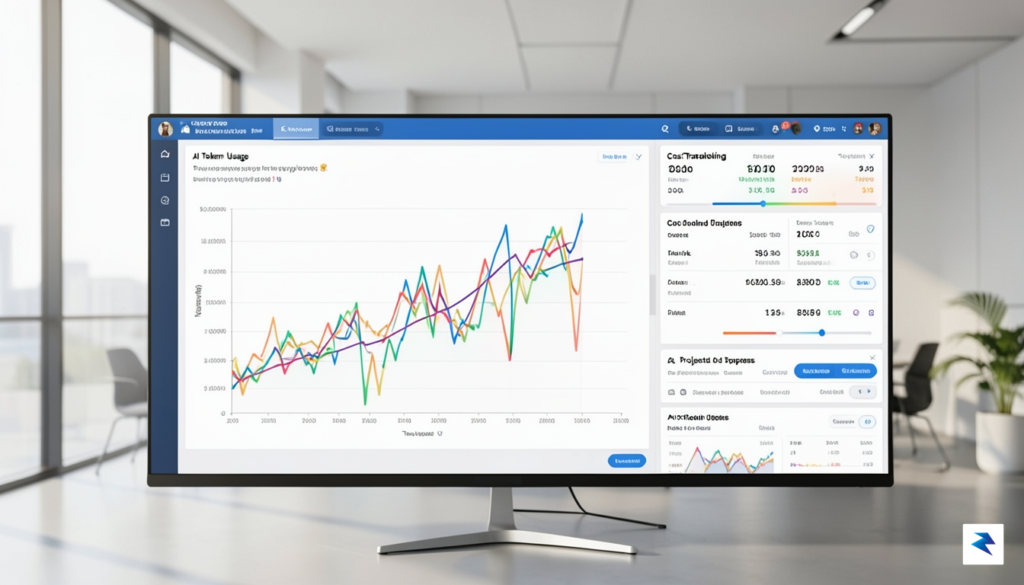
To mitigate the impact of these changes, prompt engineering must evolve from an art form into an efficiency discipline. Optimizing your interactions is no longer just about getting better answers; it is about minimizing the computational footprint of every query. You should strive to provide clear, concise instructions that avoid unnecessary conversational filler, as every token processed adds to your bottom line. Utilizing techniques like “few-shot” prompting sparingly, creating reusable system prompts that define persona and output constraints, and breaking complex projects into smaller, focused tasks can significantly reduce the amount of data the model needs to digest per interaction. By refining these inputs, you shift your workflow from “trial and error” to a surgical, high-precision approach that respects your budget.
Efficiency in the age of usage-based pricing is not just about speed; it is about the deliberate allocation of computational resources toward high-impact outcomes.
For enterprise teams, the implications for long-term budgeting are profound. Financial planners can no longer rely on predictable, fixed monthly expenses when AI usage is tied to variable output. Instead, businesses should implement internal monitoring tools to track AI spending by department or project, ensuring that costs remain within established guardrails. This requires a cultural shift where AI is treated as a premium resource rather than a free-flowing commodity. Teams should consider developing internal governance policies that categorize tasks based on complexity, directing simple automated queries to lighter, cheaper models while reserving the most advanced, high-cost iterations for high-stakes strategic analysis and creative production. By integrating these controls into the procurement and operational lifecycle, organizations can continue to leverage state-of-the-art AI while maintaining fiscal stability and operational transparency.

The honeymoon phase of artificial intelligence, characterized by widespread free or heavily subsidized access to powerful models, appears to be drawing to a close. As the AI industry rapidly matures and the operational costs associated with training, running, and maintaining these incredibly complex systems continue to escalate, a more utility-focused market is inevitably emerging. This transition is not merely a strategic decision by individual companies but a natural evolution for any burgeoning technology that moves from experimental novelty to indispensable infrastructure. Just as cloud computing or high-speed internet evolved from niche services to tiered offerings, AI is now entering a phase where its true value and the resources required to deliver it are being accurately reflected in its pricing structure.

While this shift undoubtedly means that consumers and businesses will increasingly need to pay for premium AI services, it also heralds an era of greater efficiency and targeted innovation. The expectation of payment inherently incentivizes providers to optimize their models, reduce computational overhead, and deliver tangible value that justifies the cost. Instead of an indiscriminate “all-you-can-eat” buffet, the market will likely pivot towards specialized menus, where specific features, higher reliability, and enhanced performance are priced accordingly. This ensures that resources are allocated more judiciously, pushing developers to create more efficient algorithms and robust software that genuinely meets user needs rather than just offering unlimited, undifferentiated access.
Despite the rising costs for advanced models, the competitive landscape among AI giants like Anthropic, OpenAI, and Google will likely act as a crucial check on unchecked price hikes. These major players are locked in an intense race for market share, talent, and technological superiority, which compels them to balance profitability with attractive pricing strategies. Enterprises, in particular, will shop around for the best combination of performance, cost, and security, fostering an environment where innovation in efficiency can become a significant differentiator. Consequently, while the days of truly free, top-tier AI may fade, the underlying competition should prevent an oligopoly from dictating exorbitant prices, ensuring that a range of options remains available across different price points and capabilities.
Ultimately, the future of AI costs will be defined by a renewed focus on value proposition. Consumers and businesses will become more discerning, evaluating whether the increased cost of a high-tier model translates into a genuinely superior experience, greater accuracy, expanded context windows, or specialized applications that directly impact productivity or innovation. The era of free exploration may give way to one of deliberate investment, where premium AI is viewed not as a luxury but as a powerful, specialized tool for specific, high-impact tasks. This evolution promises a more sustainable and robust AI ecosystem, where the benefits of advanced intelligence are aligned with the economic realities of its development and deployment, driving the technology towards more impactful and economically viable applications.
You must be logged in to post a comment.