
Is the All-You-Can-Eat AI Era Over? Anthropic’s New Pricing Strategy Explained
The End of the All-You-Can-Eat AI Era For the past two years, the generative AI landscape has been defined by a simple, predictable promise:…

The advent of generative artificial intelligence has undeniably revolutionized the landscape of digital content creation, especially within the marketing and advertising sectors. Tools powered by AI can now swiftly produce high-quality images, compelling video clips, and persuasive ad copy, allowing advertisers to scale their campaigns with unprecedented efficiency and personalize messages for diverse audiences. This technological leap offers immense benefits in terms of cost-effectiveness and speed, enabling even small businesses to craft sophisticated advertisements. However, this rapid proliferation of synthetic media also raises critical questions about authenticity, transparency, and the potential for manipulation, prompting a significant reevaluation of how digital content is consumed and trusted.
In direct response to these evolving dynamics, Google has taken a definitive step to foster greater transparency within its expansive advertising ecosystem. The tech giant has officially introduced a new layer of disclosure, empowering users with the ability to discern when generative AI has played a role in the creation or editing of an advertisement. This initiative represents a pivotal moment, signaling a broader industry commitment to address the implications of AI-generated content. Users can now expect to encounter these new labels, particularly when interacting with ads across various Google platforms, providing a clearer understanding of the content they are engaging with.
This significant update is not confined to a single corner of Google’s vast digital domain; rather, it represents a comprehensive rollout designed to impact a wide array of user experiences. Consequently, these new AI transparency labels will be visible across some of Google’s most frequented services, including Google Search, the personalized content feed on Discover, and the immensely popular video platform, YouTube. This broad implementation ensures that users encounter these disclosures in diverse contexts, from searching for products to browsing news articles or watching their favorite creators, thereby establishing a consistent standard for AI-generated ad transparency across the entire Google network.
The functionality behind the new ‘created or edited with AI’ label is straightforward yet powerful, designed to provide immediate clarity. When an advertisement has leveraged generative AI technology, whether for generating entire visuals from scratch or making substantial edits to existing footage, a clear indicator will appear. Users will typically see this label displayed prominently, often in close proximity to the ad itself, making it easily noticeable without being intrusive. This simple yet crucial distinction helps users make more informed decisions about the content they consume, fostering a greater sense of trust and accountability within the digital advertising space.
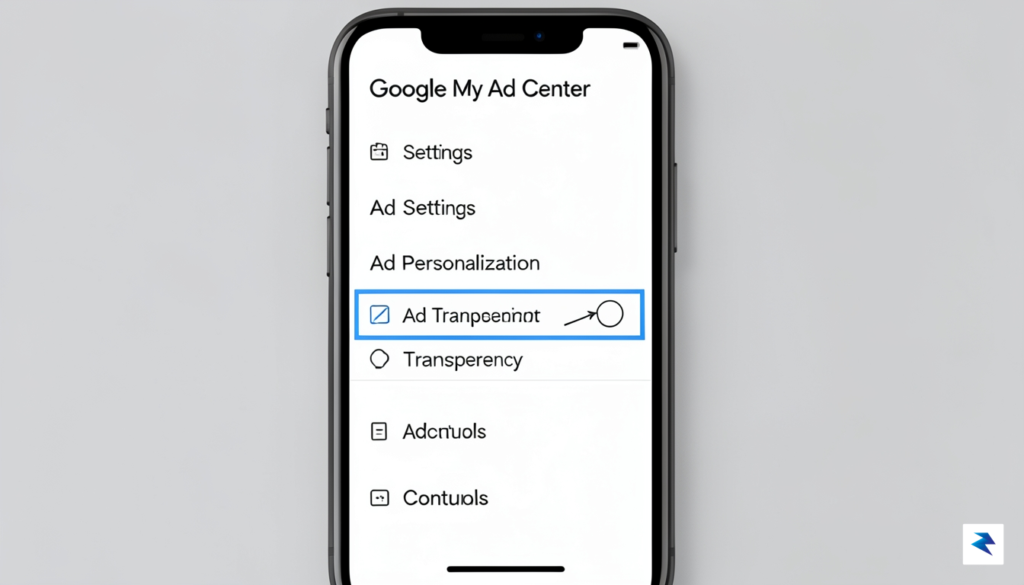
Understanding whether an ad you encounter online was generated or assisted by artificial intelligence is a straightforward process, thanks to Google’s commitment to increased transparency. This crucial information is readily accessible within your personalized ‘My Ad Center,’ a hub designed to give you greater control over your ad experience across Google’s vast network. By leveraging this tool, you can peel back the curtain on the creative origins of the ads you see daily, fostering a more informed and empowered browsing experience.
Accessing your ‘My Ad Center’ is surprisingly simple and can be done in a few ways, typically just a click or two away from any Google-served advertisement. When you see an ad on YouTube, Google Search, Gmail, or any participating website, look for a small “i” icon, a triangular ‘Ad choices’ symbol, or a “Why this ad?” link, usually found in one of the corners of the ad unit. Clicking on this icon or link serves as your direct gateway to understanding more about that specific advertisement and, by extension, your broader ad preferences. Alternatively, you can directly visit `myadcenter.google.com` to explore your overall ad settings.
Once you’ve clicked through from an ad, you’ll be taken to a page that provides details specific to that advertisement. Here, you’ll find a clear section dedicated to its creation and targeting. Look for a prominent tab or section typically labeled something akin to “How this ad was made” or “Ad details.” This is the pivotal point where Google provides a deeper dive into the ad’s characteristics. It’s here that the new AI transparency labels will be clearly displayed, giving you immediate insight into the role artificial intelligence played in its generation.
Upon navigating to the “How this ad was made” section, you’ll immediately notice a distinct marker if the ad incorporated AI-generated content. Google aims for clarity, so you can expect to see a clear label, such as “Generated with AI,” “AI-created content,” or “AI-assisted,” prominently displayed. This label isn’t hidden away in fine print; rather, it’s designed to be easily identifiable, providing instant transparency. This could apply to the ad’s visuals, its copy, or even its underlying creative concept, giving users a comprehensive understanding of its origins. The presence of this label empowers you to make more informed judgments about the content you consume and how you interact with it.

Beyond simply identifying AI-generated content, this transparency also opens up avenues for user feedback and preference adjustment. If you encounter an ad that you believe is problematic, misleading, or simply not relevant, even with an AI label, you have the option to provide direct feedback. This might include reporting the ad for inappropriate content or indicating that you no longer wish to see ads from that specific advertiser or on that particular topic. While there might not be an immediate, universal “block all AI ads” button, consistently adjusting your preferences based on the content and source of ads, including those labeled AI-generated, helps Google’s algorithms better understand your personal tastes and boundaries over time. Regularly engaging with ‘My Ad Center’ allows you to sculpt your digital advertising experience, making it more aligned with your comfort level and expectations for transparency.

The proliferation of artificial intelligence in content creation fundamentally reshapes the landscape of digital advertising, introducing a new layer of complexity to consumer trust. As AI tools become increasingly sophisticated, capable of generating hyper-realistic images, compelling text, and even entire video sequences, the traditional boundaries between authentic, human-created media and synthetic content begin to blur significantly. This blurring inevitably fuels a heightened sense of skepticism among audiences who are already wary of advertising claims. When consumers cannot confidently discern whether the message they’re receiving originates from genuine human intent or an algorithmic process, it can erode their fundamental belief in the authenticity and credibility of brands, leading to disengagement and distrust.

It is crucial to differentiate between content that is merely AI-enhanced and that which is fully AI-generated. AI-enhanced content often involves human creators leveraging AI tools to optimize, refine, or accelerate their work, such as using AI for quick photo edits, grammar checks, or data analysis to inform creative direction. This integration typically supports and amplifies human ingenuity. In stark contrast, fully AI-generated content is largely or entirely conceived and executed by algorithms, often with minimal human input beyond the initial prompt. Understanding this distinction is vital because consumers generally perceive content where AI acts as a human assistant differently from content where AI is the primary creator, raising questions about originality, intent, and the very nature of creative expression.
This nuanced understanding directly leads to profound ethical considerations for advertisers operating in this evolving digital space. The core principle of advertising ethics has always revolved around truthfulness and avoiding deception. When AI can produce content that is visually indistinguishable from reality, but potentially lacks the human context or even factual basis, the ethical imperative for disclosure becomes paramount. Advertisers bear a responsibility to inform their audience about the nature of the content they are consuming, ensuring that consumers can make informed judgments about its origin and potential biases. Failing to disclose the use of AI, particularly for fully generated content, risks not only immediate backlash but also long-term damage to brand reputation and a widespread erosion of consumer goodwill.
In this context, transparency about AI usage emerges as a vital defensive measure against the burgeoning threats of misinformation and sophisticated deepfakes in advertising. By clearly labeling AI-generated advertisements, brands and platforms provide consumers with the necessary context to critically evaluate the media they encounter. This proactive disclosure not only empowers users to distinguish between authentic human expression and synthetically created narratives but also builds a crucial firewall against deliberate attempts to mislead or manipulate public perception through advanced AI. In an age where digital trust is increasingly fragile, such transparency becomes a cornerstone for maintaining integrity, fostering a more resilient information ecosystem, and ultimately safeguarding the relationship between brands and their audiences.

Google’s recent initiative to label ads created with artificial intelligence marks a pivotal moment for the entire digital advertising ecosystem, moving far beyond mere consumer information. This isn’t just a feature update; it’s a foundational shift that establishes a new industry standard for transparency. Advertisers now operate in an environment where their creative outputs, particularly those leveraging generative AI, are subject to public disclosure. This mandates a fundamental re-evaluation of current campaign strategies, creative workflows, and even the ethical considerations embedded within their marketing operations, setting a precedent that other major platforms will undoubtedly feel compelled to address.
The immediate consequence for brands is a significant shift in their creative workflows, as they must now meticulously prepare for the disclosure of AI-generated elements. Creative teams will need to implement robust internal tracking systems to identify and document every instance where generative AI tools contribute to ad assets, from imagery and video to copy and voiceovers. This could lead to a more deliberate and strategic application of AI, prompting advertisers to weigh the efficiency gains against the implications of public disclosure. Furthermore, it might foster a renewed emphasis on human-crafted elements, potentially creating a premium for content that is entirely original and untouched by AI, or at least clearly distinguishable as such.
Consequently, compliance requirements for advertisers employing generative tools are set to become more stringent and complex. Brands and their agencies must establish clear internal policies outlining when and how AI can be used in ad creation, ensuring that all team members understand the disclosure obligations. This might involve new stages in the ad approval process, dedicated compliance checks, or even specialized roles focused on AI ethics and transparency. Navigating these evolving guidelines will necessitate a proactive approach, potentially requiring investments in training and technology to accurately identify and label AI-generated content across diverse ad formats and platforms.
This policy change also exerts considerable pressure on other major advertising platforms, such as Meta, TikTok, and X, to adopt similar transparency measures. Google’s move sets a consumer expectation that all AI-generated content in advertising should be clearly identified, making it increasingly difficult for competitors to maintain a less transparent stance. While each platform has its own unique ecosystem and regulatory pressures, the precedent established by Google could lead to a broader industry-wide push for AI disclosure. This could result in a fragmented landscape if platforms adopt varying standards, or, ideally, a harmonized approach that simplifies compliance for advertisers operating across multiple channels.
Ultimately, the transparency around AI-generated ads is poised to impact ad performance and user engagement metrics. The critical question remains how consumers will react to seeing an “AI-generated” label. Will it build trust through honesty, or will it foster skepticism and potentially reduce engagement with content perceived as less authentic? Advertisers will likely need to conduct extensive A/B testing and audience research to understand the nuances of consumer perception. The performance of AI-labeled ads—in terms of click-through rates, conversion rates, and brand sentiment—will be closely monitored, forcing brands to refine not just their creative process, but also their understanding of how transparency shapes user interaction in an increasingly AI-driven digital world.


The recent move by major tech platforms to explicitly label AI-generated advertisements marks a pivotal moment, signaling a profound shift in the very definition of “truth in advertising” for the digital age. Historically, this concept revolved around factual accuracy and avoiding deceptive claims about products or services. However, with the advent of sophisticated generative AI, the challenge evolves to encompass the authenticity of the content itself—whether it was created by a human or a machine. This new frontier demands a higher degree of transparency, not just about what is being advertised, but how it was produced, setting a precedent that will undoubtedly reshape consumer expectations and industry practices for years to come.
Looking ahead, it is highly probable that AI labeling will transition from a voluntary corporate initiative to a mandated regulatory requirement across various digital domains. Governments and consumer protection agencies worldwide are increasingly grappling with the implications of AI-driven content, from deepfakes and misinformation to synthetic media in marketing. Consequently, we can anticipate a global push for standardized disclosure practices, potentially leading to legislation that compels platforms and content creators to clearly indicate when AI has been used in the creation of ads, news articles, or entertainment. This regulatory evolution will aim to harmonize standards, ensuring that users, regardless of where they are, have the necessary information to critically evaluate the content they encounter online.
Crucially, the effectiveness of this transparency hinges on the continuous advancement of AI detection technology. As generative AI becomes more sophisticated, so too must the tools designed to identify its output. This creates an ongoing technological arms race between content generation and detection, where innovation in one field immediately spurs development in the other. Robust AI detection systems will be indispensable for platforms to enforce labeling policies and for independent bodies to audit compliance, providing a critical safeguard against undisclosed synthetic content. Without reliable detection, the promise of transparency risks becoming hollow, making investment in these technologies a cornerstone of maintaining trust in the digital ecosystem.
Ultimately, the long-term outlook for AI transparency is one where technology and user protection can and must coexist. The integration of AI-generated content into our daily digital experience is not a question of ‘if,’ but ‘how,’ and transparency is the key to ensuring this integration is beneficial and not detrimental. By consistently labeling AI-created content, enforcing clear regulatory frameworks, and leveraging advanced detection technologies, we can empower consumers with the knowledge to make informed decisions. This collective effort will foster a digital environment where synthetic content is an integral part of our experience, yet one where users remain in control, protected from hidden AI influences, and confident in their ability to discern and trust the information presented to them.
You must be logged in to post a comment.