Google Now Labels AI-Generated Ads: What You Need to Know
Understanding the New AI Labeling Initiative The advent of generative artificial intelligence has undeniably revolutionized the landscape of…


OpenAI is officially sunsetting Atlas, its ambitious experimental AI-powered browser, less than a year after its initial foray into testing. This decision marks a significant strategic pivot for the AI research powerhouse, moving away from standalone application development in favor of a more integrated, platform-agnostic approach to deploying its advanced AI agents. The Atlas project, while innovative in its conception, ultimately proved to be a stepping stone in OpenAI’s evolving understanding of how best to embed artificial intelligence into our daily digital lives.
Launched quietly as an invite-only experiment, Atlas was envisioned as a browser fundamentally redesigned around AI capabilities. It aimed to transform the way users interacted with the internet, offering features like intelligent summarization of web pages, AI-powered research assistance, and agentic actions directly within the browser environment. The idea was to create a dedicated space where OpenAI’s models could seamlessly navigate, understand, and act upon web content, offering a glimpse into a future where AI wasn’t just a tool but an active participant in online exploration. However, the lifespan of this dedicated browser proved to be fleeting, highlighting the rapid pace of strategic shifts within the AI landscape.
The core reasons for Atlas’s closure appear rooted in a broader strategic re-evaluation by OpenAI. Developing and maintaining a full-fledged browser is a monumental undertaking, requiring substantial resources and continuous development cycles. By discontinuing Atlas, OpenAI signals a clear intent to streamline its focus and reallocate resources towards its primary objective: making its AI technology ubiquitous. The company likely recognized that tying its powerful AI agents to a single, custom browser could inadvertently limit their reach and adoption. Instead of a niche application, OpenAI’s ambition is for its AI to be accessible and functional across the vast ecosystem of existing browsers, operating systems, and applications that users already employ daily.
This pivot underscores a deeper understanding of the AI agent paradigm. Rather than forcing users into a new environment to experience AI capabilities, OpenAI is now seemingly prioritizing the integration of its models directly into the infrastructure where work and browsing already happen. This means focusing on APIs, extensions, and partnerships that allow AI agents to operate seamlessly within Chrome, Firefox, Safari, or even directly within operating systems, without the friction of adopting an entirely new browser. The vision is shifting from “an AI browser” to “AI enhancing every browser and every digital interaction,” making the technology a pervasive layer rather than a distinct application.
The sunsetting of Atlas is less an abandonment of AI web agents and more a refinement of strategy: shifting from a proprietary container to a ubiquitous, platform-agnostic presence for AI.
What this means for the future of AI web agents is a renewed emphasis on interoperability and integration. While Atlas showcased the potential of AI operating within a browser, its discontinuation suggests that OpenAI sees a more effective path through embedding its agentic capabilities directly into the existing web fabric. This strategic evolution isn’t just about resource optimization; it’s about maximizing impact. By making its AI technology available across all platforms, OpenAI aims to ensure its innovations can reach the broadest possible audience, transforming web interaction in a truly pervasive and integrated manner, rather than confining it to a single, experimental application.
The path for any new browser attempting to carve out significant market share is fraught with immense difficulty, a reality starkly illustrated by the recent struggles of several AI-centric ventures. Users, by and large, exhibit a profound reluctance to deviate from their established web browsing habits. This isn’t merely about feature sets or performance metrics; it’s deeply rooted in comfort, familiarity, and the sheer inertia of daily digital routines. Convincing someone to abandon a tool they use for hours every day requires an almost revolutionary offering, not just an incremental improvement.
This phenomenon is often termed ‘browser lock-in,’ and it represents a formidable barrier to entry for any challenger. Over years of use, individuals develop an intricate relationship with their chosen browser, embedding it deeply into their digital workflow. From muscle memory for keyboard shortcuts and navigation patterns to the specific visual layout of tabs and windows, every element contributes to a sense of personalized efficiency. The thought of disrupting this ingrained rhythm, even for potentially superior features, often feels like a significant chore rather than an exciting upgrade.
Beyond mere habit, the practical hurdles of migrating digital life from one browser to another are substantial. Consider the vast ecosystem of saved bookmarks and browsing history, often accumulated over a decade or more, which represents a personal archive of valuable information and frequently visited sites. Then there are the extensions – productivity tools, ad blockers, password managers – that users painstakingly select and configure to optimize their online experience. Replicating this customized environment in a new browser is rarely a seamless process, often involving manual transfers, re-logins, and re-installations, all of which present significant friction.
Furthermore, the perceived value proposition of dedicated AI browsers often misses a critical point in user psychology. While innovative AI features like intelligent summarization, contextual search, or automated task completion are undoubtedly appealing, many users view these as enhancements to their existing browsing experience, not as core reasons to completely replace their foundational internet gateway. They expect these capabilities to be integrated into their current browser of choice, or at least offered as easily installable extensions, rather than necessitating a wholesale platform switch. The browser itself is seen as an infrastructure layer, and new features are expected to build upon it, not demand a rebuild.
Consequently, incumbent platforms like Google Chrome, Microsoft Edge, and Apple Safari possess an almost insurmountable advantage. They are often pre-installed, deeply integrated with operating systems, and benefit from massive user bases that reinforce network effects, developer support for extensions, and continuous refinement. For new entrants, even those backed by significant names, the battle is not just about having a better product; it’s about overcoming years of ingrained user behavior, established digital ecosystems, and the simple, powerful truth that users are exceptionally loyal to the tools that reliably facilitate their daily online lives. The cost of switching, both perceived and actual, simply outweighs the benefits for most.
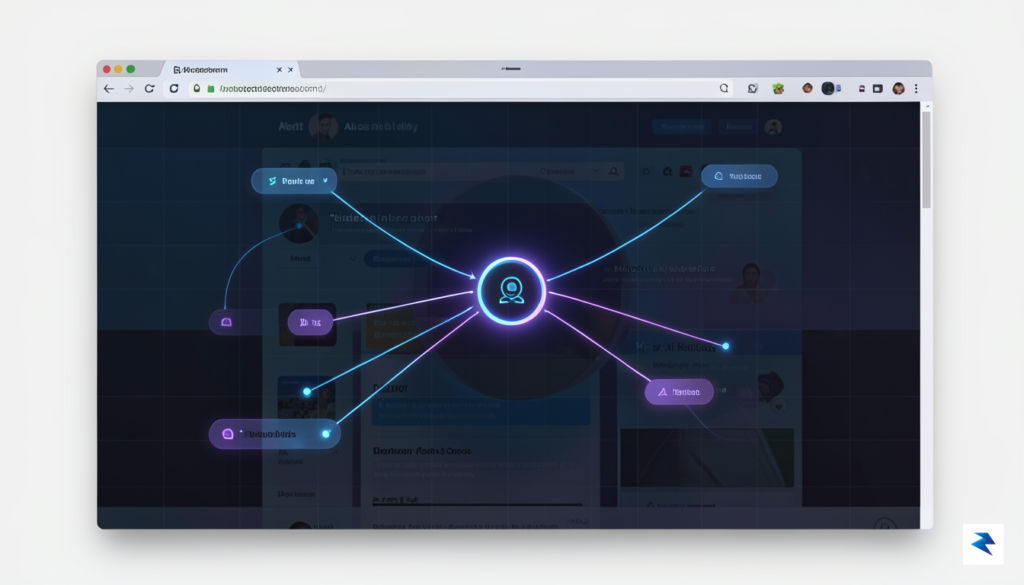
While OpenAI has decided to sunset its ambitious Atlas browser, this move doesn’t signal an abandonment of its vision for deeply intelligent web automation. On the contrary, the company is strategically reorienting its research and development into a more accessible and ubiquitous model, pivoting from a dedicated browser to a ‘distributed intelligence’ approach. This evolution acknowledges that users often prefer their existing digital environments, and rather than compelling a full migration, OpenAI is now focusing on embedding its advanced agentic capabilities directly into the tools people use every day: their desktop applications and preferred web browsers.
The core technologies and profound insights gained from the Atlas project are now being repurposed and refined for broader integration. This includes the development of a standalone OpenAI desktop application, designed to act as a system-wide AI companion. This application is envisioned to provide intelligent assistance that extends beyond the browser, orchestrating tasks and offering insights across various desktop programs and file systems. It aims to make AI an ever-present, yet unobtrusive, layer of intelligence that can help users manage information, automate routine tasks, and streamline workflows without ever having to open a separate, specialized browser.
Perhaps even more impactful for web interaction is the new Chrome extension, which serves as the direct conduit for OpenAI’s ‘agentic browsing’ capabilities. This extension allows the AI to perform complex, multi-step tasks directly within the user’s preferred browser, whether it’s navigating through multiple web pages, extracting specific data points from dynamic sites, filling out intricate forms, or summarizing lengthy articles and research papers. Instead of forcing users into a new browsing environment, this tool seamlessly integrates intelligent automation into their existing web habits, making powerful AI assistance immediately available at the click of a button or through natural language commands within the browser itself.
This strategic pivot to embedding agentic features into both desktop applications and browser extensions represents a pragmatic and user-centric approach. It significantly lowers the barrier to entry for users to leverage sophisticated AI, as there’s no need to learn a new interface or migrate their browsing history and preferences. By meeting users exactly where they already work and interact with information, OpenAI is ensuring that its advancements in understanding and automating web-based tasks become practical tools for a much wider audience, integrating advanced AI assistance as an ambient, intelligent layer across the digital ecosystem rather than a distinct, separate platform.

The decision to discontinue Atlas, far from signaling a retreat from web-centric AI, signifies a strategic refinement in the pursuit of truly intelligent online interaction. This move underscores a pivotal shift in how we envision AI augmenting our digital lives: away from purpose-built browsers and towards a more pervasive, underlying layer of “agentic interaction.” Rather than merely providing a novel interface, the future of web navigation is increasingly about enabling AI to handle the intricate mechanics of browsing, thereby liberating users to focus on high-level outcomes and intentions.
We are witnessing an evolution from mere “chatbots” to sophisticated “action-takers.” While chatbots excel at understanding natural language and generating informative responses, their utility often remains confined to conversational boundaries. Agentic AI, by contrast, is designed to transcend these limits, translating user intent directly into executable actions across the vast landscape of the internet. This means an AI system won’t just tell you *how* to book a flight; it will actively navigate airline websites, compare prices, fill out passenger details, and potentially even complete the booking process on your behalf, all based on your high-level instructions.
The true power of this next phase lies in its cross-platform compatibility and inherent independence from specific browser ecosystems or operating systems. For AI agents to genuinely fulfill user intent, they cannot be tethered to a single application or environment. Instead, they must be capable of understanding and interacting with the web’s underlying structure and semantics, regardless of whether a user prefers Chrome, Firefox, Safari, or operates on Windows, macOS, or Linux. This universal adaptability ensures that an agent can seamlessly move between different web services, extract information, input data, and perform complex multi-step tasks that traditionally require manual navigation across various sites and applications.
Imagine a world where your AI assistant isn’t just a search bar or a voice command prompt, but a diligent digital proxy. This proxy would independently navigate complex web interfaces, deciphering layouts, identifying relevant fields, and clicking buttons as if it were a human user. Such an agent could research a vacation, consolidate information from disparate sources, manage your online subscriptions, or even troubleshoot common web-based issues, all without requiring you to open a single browser tab. The user’s role transforms from hands-on navigator to high-level director, delegating tedious digital busywork to an intelligent, autonomous entity.
This profound shift from interface-centric browsing to agent-driven task execution promises to fundamentally redefine our relationship with the internet. By offloading the granular details of web navigation and interaction, users gain invaluable time and mental bandwidth, allowing them to concentrate on creative problem-solving, strategic decision-making, and personal pursuits. The sunsetting of a dedicated AI browser, therefore, is not an endpoint, but a clear signal that the ambition for AI-driven web interaction has grown far beyond a custom interface; it’s about embedding intelligence directly into the fabric of our online experience, making the web an extension of our will rather than a labyrinth to navigate.


This evolving landscape fundamentally redefines how both developers and everyday users will interact with and build upon artificial intelligence. Rather than consolidating AI capabilities into a single, all-encompassing application, the industry is clearly pivoting towards a more distributed, modular approach. This strategic shift moves away from monolithic AI browsers or standalone tools and instead favors deeply integrated AI features that enhance existing platforms and workflows. Understanding this transition is not just about keeping up with trends; it’s about strategically positioning oneself to leverage the next generation of productivity and innovation.
For developers, this marks a significant shift from the ambition of creating entire AI-powered applications from scratch to a focus on building intelligent extensions, plugins, and API integrations. The emphasis is now on infusing AI into the tools people already use daily, whether it’s a web browser, an operating system, or a specific productivity suite. This approach liberates developers from the immense overhead of designing and maintaining a complete user interface and underlying infrastructure for a new platform. Instead, they can concentrate their efforts on crafting sophisticated AI models and functionalities, leveraging the established ecosystems and user bases of existing software.
This paradigm also opens up vast opportunities for niche innovations. Developers can create highly specialized AI agents that perform specific tasks with exceptional precision, integrating seamlessly into a user’s chosen environment. Imagine an AI agent that specializes in summarizing academic papers within a research tool, or another that optimizes code directly within an IDE. The key skill for developers in this new era will be mastering API utilization, understanding various integration points, and developing robust, efficient micro-services that can be deployed across diverse platforms. The ability to connect different services and inject AI intelligence precisely where it’s needed will be paramount, fostering a more interconnected and intelligent software ecosystem.
For end-users, this shift translates into a more natural and less disruptive experience with AI. Instead of needing to open a separate “AI browser” or specialized AI application, intelligence will increasingly become an embedded feature within their familiar desktop and web environments. This means the rise of “desktop-based AI agents” that operate in the background, anticipating needs and offering assistance without requiring constant manual prompts or context switching. These agents will be designed to streamline current browsing habits and workflows by integrating directly into the tools users already depend on.
Consider the practical implications: an AI agent might automatically summarize lengthy email threads within your mail client, draft contextual replies based on previous conversations, or even intelligently organize your downloaded files. Within your web browser, such an agent could summarize articles on the fly, extract key information from multiple tabs to answer a complex query, or automate repetitive form-filling tasks across various websites. This move promises to make AI assistance more ambient and intuitive, quietly enhancing productivity and reducing cognitive load. Users should actively seek out software and services that are embedding these modular AI capabilities, as these will be the true accelerators of efficiency in the coming years, transforming daily digital interactions into more fluid and intelligent experiences.
You must be logged in to post a comment.