Tesla’s Q2 2026 Comeback: Production Surges 25 Percent
Analyzing Tesla’s Q2 2026 Production Recovery The latest quarterly report from Tesla has provided a much-needed shot of adrenaline for…
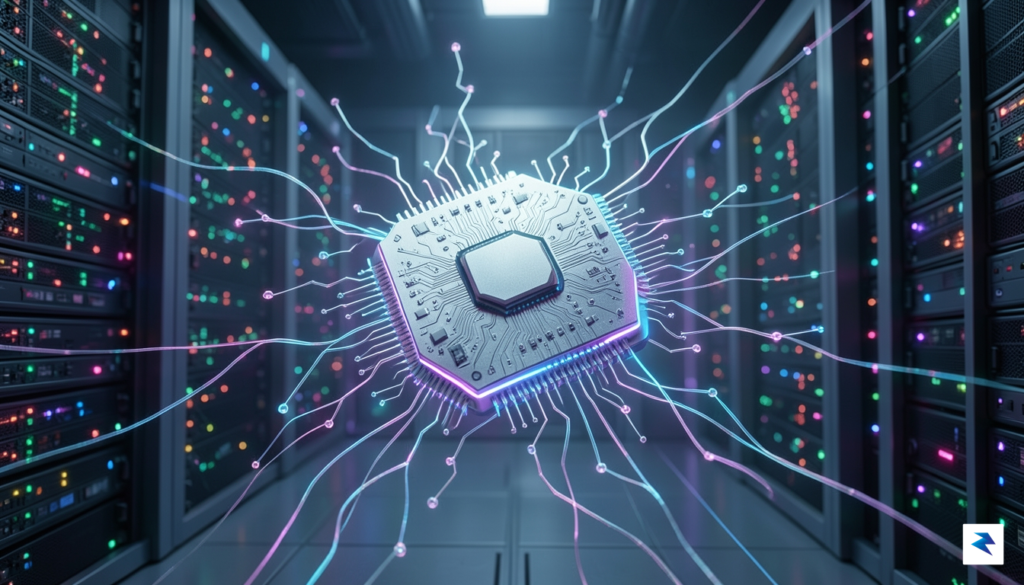
The rapid evolution of artificial intelligence has hit a paradoxical wall: while models are becoming exponentially more capable, the hardware required to run them is struggling to keep pace with demand. For years, the industry relied almost exclusively on merchant silicon—specifically high-performance GPUs designed for general graphical processing—to handle the massive parallel computations inherent in training large language models. However, as companies like Anthropic, OpenAI, and Google push the boundaries of frontier intelligence, they are encountering a severe “compute bottleneck.” General-purpose GPUs, while versatile, carry a significant amount of overhead circuitry designed for tasks that AI simply does not need. This inefficiency leads to astronomical energy consumption and heat dissipation challenges, forcing labs to look beyond off-the-shelf solutions.
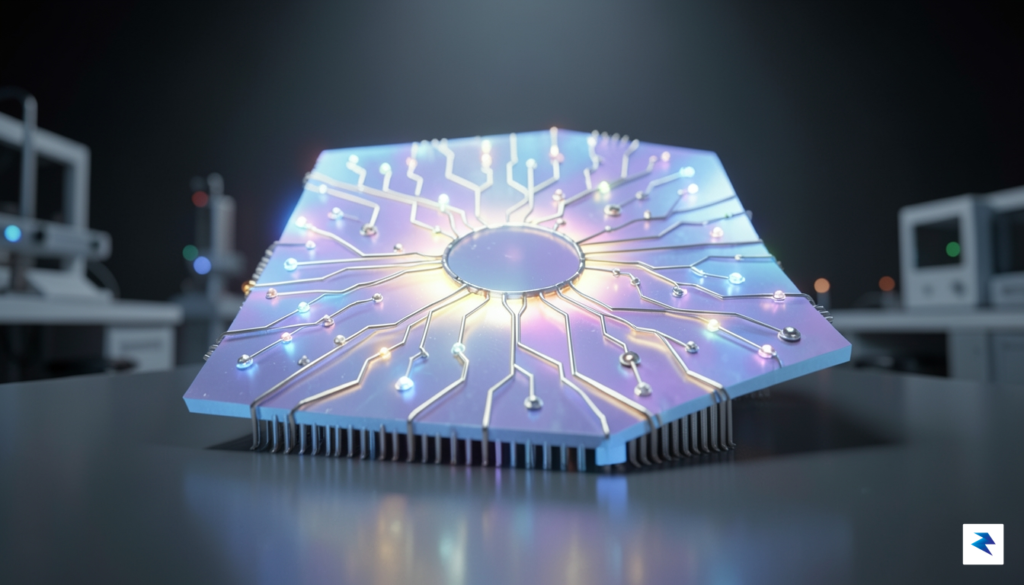
By pivoting toward bespoke AI accelerators, these organizations are mirroring the path taken by tech giants like Apple, which long ago realized that controlling the full stack—from the instruction set architecture to the silicon itself—is the only way to achieve true performance breakthroughs. Custom silicon allows engineers to bake the specific mathematical operations required for Transformer architectures directly into the chip’s physical layout. Instead of forcing a general-purpose processor to mimic these operations through complex software layers, a custom chip can execute them natively. This shift toward vertical integration isn’t just about speed; it is about precision. By stripping away redundant features, these labs can achieve significantly higher power efficiency and lower latency, which are critical metrics when scaling models that must respond to millions of users in real-time.
The move toward custom silicon represents a strategic transition from renting capability to owning the infrastructure that defines the limits of what a model can actually accomplish.
Furthermore, this move provides a vital buffer against the volatile supply chains of the global semiconductor market. By partnering with sophisticated fabrication foundries like Samsung, AI labs can tailor their hardware to the unique memory bandwidth and interconnect requirements of their specific software stacks. This level of customization enables a tighter symbiosis between the algorithm and the hardware, effectively squeezing more performance out of every watt of energy. As the industry matures, the ability to iterate on hardware design with the same agility as software updates will likely become the primary differentiator between the companies that lead the next generation of AI and those that remain tethered to the constraints of standardized, general-purpose hardware.
For an AI research company like Anthropic, the relentless demand for compute power is not merely a technical challenge; it is a fundamental business constraint. As the models driving the Claude ecosystem grow in complexity and reasoning capability, the limitations of general-purpose hardware become increasingly apparent. By exploring the development of custom silicon in partnership with industry leaders like Samsung, Anthropic is executing a strategic pivot designed to insulate its operations from the volatility of the global GPU supply chain. Relying heavily on third-party cloud infrastructure creates both a financial burden and a dependency on external providers, which can inflate costs and limit the flexibility of large-scale model deployment. Moving toward proprietary hardware allows the company to transition from a renter of compute capacity to an owner of its own computational destiny.

Beyond the obvious economic incentives, there is a profound technical necessity for hardware that is tailored specifically to the unique architecture of high-reasoning AI models. Standard graphics processing units, while powerful, are built for a broad range of applications, whereas Claude-specific hardware can be optimized for the massive memory bandwidth and ultra-high-speed interconnects required for modern, large-context window models. These models require constant, rapid access to vast amounts of data to maintain coherence over long conversations or complex document analysis. Custom chips can be architected to minimize data bottlenecks, ensuring that the model’s reasoning capabilities are not throttled by the underlying hardware’s inability to move information quickly enough between memory and processing units.
The marriage of software and hardware is the next frontier of AI efficiency; by co-designing the silicon alongside the model architecture, Anthropic can strip away the overhead that plagues traditional general-purpose clusters.
This hardware-software co-design approach offers a distinct competitive advantage, enabling faster training cycles and significantly more cost-effective deployment at scale. When the chip’s microarchitecture is aligned with the specific mathematical operations favored by Anthropic’s research teams, the energy efficiency and computational throughput reach levels unattainable by off-the-shelf alternatives. This vertical integration allows for a tighter feedback loop, where software engineers can optimize algorithms to leverage specific chip features, while hardware designers can adapt future iterations based on the real-world performance of current models. Ultimately, this move represents a long-term investment in sustainability, ensuring that as Anthropic pushes the boundaries of AI safety and intelligence, its infrastructure remains a robust foundation rather than a bottleneck.
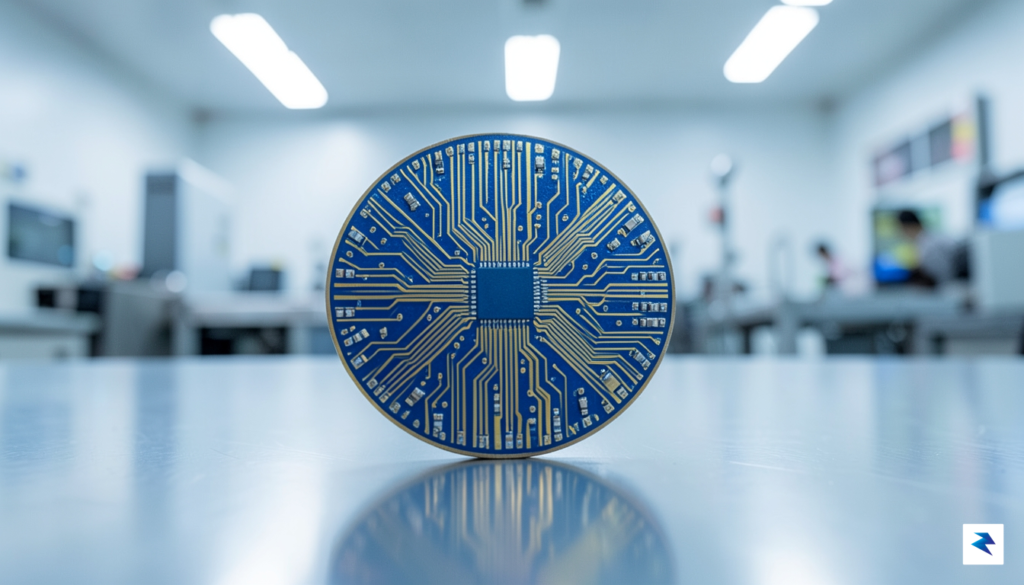
For a company like Anthropic, the quest to build custom silicon is not merely about scaling production; it is about architectural sovereignty. While TSMC remains the industry gold standard for logic fabrication, Samsung offers a unique, vertically integrated proposition that is increasingly attractive for AI-centric hardware. By controlling both the logic foundry and the memory manufacturing process, Samsung sits in a rare position to offer a “one-stop shop” for high-performance computing. This integration is essential because, in the world of modern AI, the bottleneck is rarely the raw processing power of the chip itself, but rather the speed at which data can be shuttled from memory to those processing cores.
High Bandwidth Memory, or HBM, has effectively become the lifeblood of the modern artificial intelligence stack. As large language models grow in parameter count and complexity, the ability to store and retrieve massive datasets in real-time determines the efficiency of the entire system. Samsung’s expertise in HBM is arguably its most potent leverage point in these negotiations. By developing custom chips in-house alongside the memory manufacturer, Anthropic can theoretically optimize the physical layout of their hardware to minimize the distance between the logic gates and the memory stacks. This physical proximity is vital for reducing latency and improving power efficiency, as shorter pathways require less electrical energy to traverse and generate significantly less heat during high-intensity workloads.
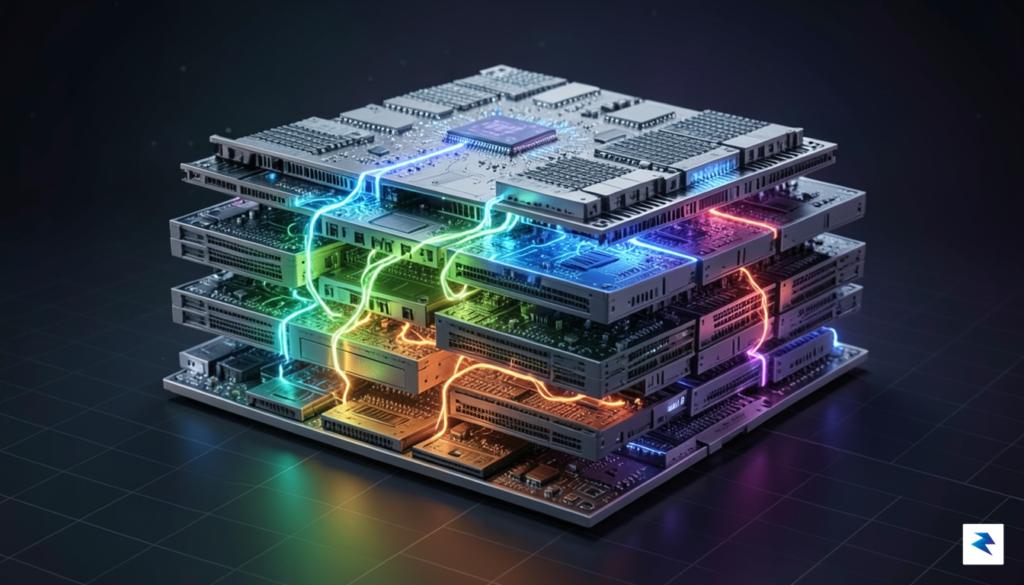
The thermal advantages of this integrated approach cannot be overstated. In traditional setups, sourcing memory and logic from disparate suppliers often forces engineers to compromise on the physical design to accommodate standardized components. By working with Samsung, Anthropic can move toward a co-optimized architecture where the memory controller and the logic processor are engineered as a singular, cohesive unit. This level of synergy allows for sophisticated thermal management strategies that can sustain higher clock speeds without triggering the thermal throttling that plagues less efficient designs. For Anthropic, which relies on consistent, reliable performance to run its frontier models, this architectural stability could translate into a distinct competitive edge in both training times and inference costs.
The true power of this partnership lies not in the capacity to build, but in the capacity to integrate; by collapsing the supply chain, Anthropic gains the ability to treat memory and logic as a single, unified system rather than a collection of parts.
Ultimately, this partnership represents a strategic shift toward hardware-software co-design. As Anthropic continues to refine its models, the ability to tweak the hardware architecture to better suit its specific mathematical operations becomes a massive differentiator. Samsung provides the structural foundation—both in advanced fabrication nodes and in cutting-edge memory technology—to turn those theoretical optimizations into physical reality. By bypassing the limitations of off-the-shelf hardware, Anthropic is positioning itself to lead in an era where the most successful AI companies will be those that exert the most control over their underlying physical infrastructure.
The race for AI dominance has officially moved beyond software algorithms and into the physical realm of silicon wafers, signaling a profound shift in the industry’s power structure. As Anthropic enters discussions with Samsung to develop custom AI chips, it joins a growing cohort of elite labs—including OpenAI, which has reportedly been exploring a similar path with Broadcom—that are no longer content to act as mere tenants in someone else’s data center. By moving toward a vertically integrated model, these companies are mirroring the long-standing strategies of hyperscalers like Google and Amazon, effectively transitioning from customers of third-party hardware to architects of their own compute destiny.

This pivot toward custom silicon represents a strategic hedge against the current hardware bottleneck that has defined the post-ChatGPT era. While NVIDIA remains the undisputed king of the AI hardware market, its dominance has created a single point of failure for the entire industry. By designing bespoke chips, AI labs can tailor their hardware specifically to their own model architectures, optimizing for the precise memory bandwidth and computational patterns required for training massive large language models. This move from a ‘fabless’ model—where companies rely on general-purpose GPUs—to specialized, in-house hardware, is essentially an attempt to recapture margins that would otherwise be funneled into the coffers of incumbent chip manufacturers.
The transition toward custom silicon marks the end of the ‘off-the-shelf’ era for AI labs, as the complexity of next-generation models demands hardware that is as customized as the software it runs.
However, the transition to hardware development is fraught with immense capital risk and logistical complexity. Developing a cutting-edge chip requires not only billions of dollars in R&D but also a level of supply chain orchestration that is notoriously difficult to master. While companies like Broadcom offer a bridge for labs looking to design chips without building a full-scale manufacturing infrastructure, the underlying challenge remains: can an AI software company successfully pivot to compete with firms that have spent decades refining the art of silicon production? The market impact here is significant; as these labs bring more of their compute requirements in-house, they place long-term pressure on NVIDIA to evolve its offerings beyond standard GPUs, potentially forcing a shift toward more specialized, semi-custom hardware solutions to retain their most valuable clients.
Ultimately, this trend signals that compute supremacy is now the primary metric of AI capability. As Anthropic, OpenAI, and their peers double down on custom silicon, we are witnessing the maturation of the AI sector into a capital-intensive industry that mimics the high-stakes world of semiconductor manufacturing. Whether this trend will diminish NVIDIA’s market grip remains to be seen, but one thing is certain: the era of relying solely on generic hardware to achieve state-of-the-art results is rapidly coming to an end. The labs that succeed in balancing their software innovation with this newfound hardware verticality will likely emerge as the dominant forces in the next decade of artificial intelligence.

The current scramble for specialized AI chips, exemplified by leading AI developers engaging chip manufacturers for custom silicon, marks a profound pivot in the race for artificial intelligence supremacy. This isn’t merely about acquiring more computational power; it signifies a strategic shift from a reliance on commoditized, general-purpose GPUs to a focus on highly efficient, purpose-built hardware-software integration. The core challenge for advancing AI models, particularly as they grow exponentially in complexity and scale, is no longer solely about who can afford the largest farm of off-the-shelf accelerators. Instead, the new frontier demands intricate co-design, where the very architecture of the silicon is optimized hand-in-glove with the algorithms it will execute, unlocking unprecedented levels of performance and energy efficiency.
Consequently, the long-term outlook for the AI sector suggests a deepening divide, where competitive advantage will increasingly hinge on proprietary hardware infrastructure. Companies with the foresight and resources to invest in custom chip development are effectively building their own intellectual property moats, making their AI models not only faster and cheaper to run but also inherently more difficult for competitors to replicate. This vertical integration allows for a level of innovation and optimization that generic hardware simply cannot provide, from custom memory hierarchies to specialized processing units designed for specific neural network operations. It transforms the barrier to entry from a capital expenditure challenge into a deep engineering and architectural one, demanding expertise across the entire stack.
This shift also portends a potential era of “AI hardware fragmentation.” Rather than a universal chip architecture dominating all AI workloads, we may see a proliferation of specialized silicon, each meticulously engineered to excel at particular types of AI models or tasks. One chip might be optimized for the vast parameters of large language models, another for real-time inference in edge devices, and yet another for the complex calculations of scientific simulations or sparse models. This diversity could lead to an ecosystem where developers must strategically choose or even combine different hardware platforms based on their specific AI application, fostering a competitive landscape where architectural innovation becomes as critical as algorithmic breakthroughs.
Ultimately, this drive for custom silicon underscores the paramount importance of hardware sovereignty in the pursuit of advanced artificial intelligence, including Artificial General Intelligence (AGI). By controlling the entire technology stack, from the fundamental transistors to the highest levels of software, AI developers gain unparalleled autonomy over their innovation roadmap. This independence mitigates reliance on external supply chains, protects proprietary architectural secrets, and ensures that hardware capabilities can evolve precisely in lockstep with the ever-advancing demands of their AI models. It’s a strategic imperative that grants companies the agility, efficiency, and control necessary to push the boundaries of intelligence and maintain a decisive competitive edge in what is undoubtedly the most transformative technological race of our time.
You must be logged in to post a comment.