The Best STEM Toys for 2026: Hands-On Learning That Actually Works
Why STEM Toys Are More Than Just Playtime In a world increasingly dominated by passive digital consumption, where children often act as mere…
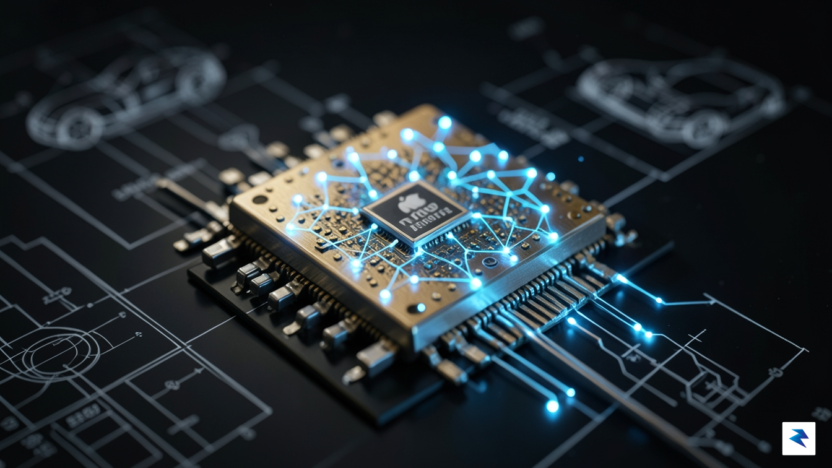
When news broke that Apple had finally, definitively shelved its long-rumored self-driving car initiative, codenamed ‘Project Titan,’ the tech world largely framed it as a monumental failure. For years, speculation had swirled around Apple’s automotive ambitions, with visions of sleek, revolutionary vehicles dominating headlines. The cancellation felt like the end of an era, a rare public concession from a company known for its relentless pursuit of groundbreaking innovation. Yet, amidst the post-mortems and the collective sigh of disappointment, a crucial detail was often overlooked: the profound technological legacy the project would leave behind, quietly transforming Apple’s core products and setting the stage for its current dominance in on-device artificial intelligence.
The genesis of Apple’s advanced AI hardware can be traced directly back to the extreme demands of building an autonomous vehicle. A self-driving car isn’t merely a complex machine; it’s a mobile data center requiring instantaneous, fail-safe processing of vast amounts of sensor data—from cameras, lidar, radar, and ultrasonics—all while making critical real-time decisions. This level of autonomy necessitates an onboard computer system capable of unprecedented neural network inference and machine learning computations, right at the edge, without relying on constant cloud connectivity. The sheer computational horsepower, combined with stringent power efficiency and thermal management requirements for an embedded system, pushed Apple’s silicon engineering teams to embark on a moonshot within a moonshot: designing custom chips unlike anything seen before in consumer electronics.
Consequently, the engineers working on Project Titan were tasked with inventing entirely new computing architectures. They weren’t just optimizing existing mobile processors; they were conceptualizing and building dedicated neural engines and specialized AI accelerators from the ground up. These designs focused on parallel processing for machine learning models, highly efficient memory subsystems to feed data to these engines, and sophisticated instruction sets tailored for AI workloads. The stakes were incredibly high, with human lives potentially depending on the reliability and speed of these chips. This intense pressure cooker environment fostered breakthroughs in power-performance efficiency for AI tasks that would have been unimaginable in the typical product development cycle for an iPhone or iPad.
Therefore, when Project Titan eventually veered off course, the invaluable intellectual property and the meticulously engineered silicon designs weren’t simply discarded. Instead, they found a new, vital purpose. The sophisticated neural processing units (NPUs) and AI acceleration techniques developed for a car that never saw the light of day were seamlessly integrated into Apple’s A-series, M-series, and S-series chips. This pivot was not merely a repurposing; it was a profound strategic realignment that leveraged years of high-stakes automotive R&D directly into Apple’s existing ecosystem, giving its devices an unparalleled advantage in handling complex AI and machine learning tasks locally, on the device itself.
Today, Apple’s reputation for on-device AI prowess—from advanced computational photography and Siri improvements to real-time language translation and sophisticated accessibility features—is a direct byproduct of this ambitious, albeit ultimately canceled, automotive venture. The company’s powerful Neural Engine, a cornerstone of its modern silicon, owes its very existence and advanced capabilities to the relentless pursuit of self-driving car perfection. In a twist of technological fate, the failure of Apple’s car project didn’t just clear the road for new ventures; it unexpectedly built the foundational AI infrastructure that defines much of the company’s competitive edge in the rapidly evolving landscape of artificial intelligence.
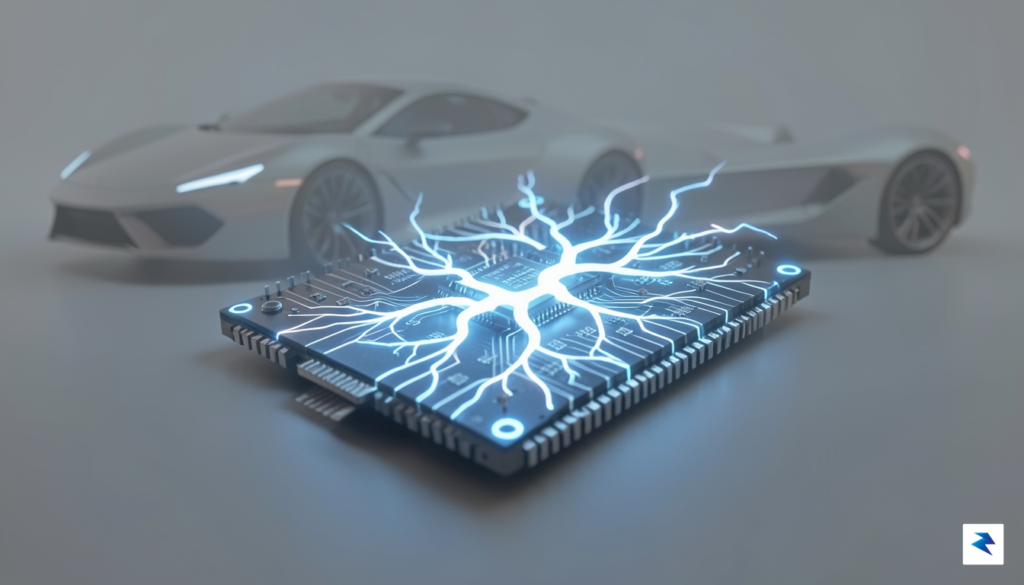
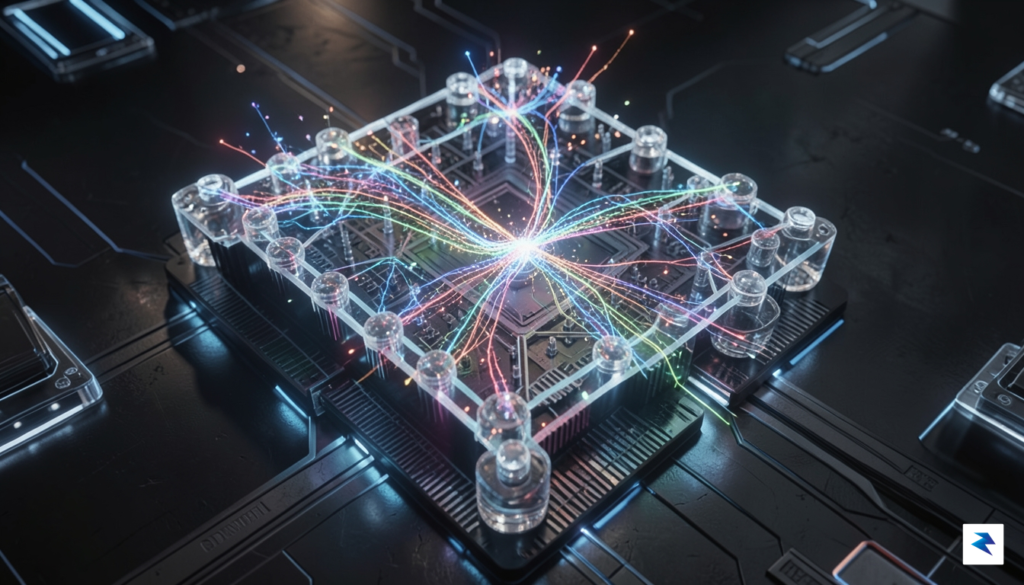
To transform a standard vehicle into a self-driving machine, Apple’s engineers were tasked with solving a problem of immense computational density. An autonomous car is essentially a high-speed data center on wheels, constantly ingesting a torrent of information from Lidar arrays, high-resolution cameras, and ultrasonic sensors. Processing this raw input requires more than just raw speed; it demands a sophisticated architecture capable of “sensor fusion,” where disparate data streams are synthesized in real-time to create a coherent, three-dimensional map of the surrounding environment. The margin for error is non-existent, as the system must identify pedestrians, cyclists, and traffic signals with near-zero latency to ensure passenger safety.
Early in the development phase, it became painfully clear that existing off-the-shelf mobile processors were entirely insufficient for these Herculean demands. Standard chips, while efficient for smartphones, struggled to manage the thermal output and power consumption required to perform deep learning inference at the scale necessary for safe navigation. Relying on third-party silicon meant accepting bottlenecks that could delay reaction times by critical milliseconds—a life-or-death compromise in the context of high-speed urban traffic. Apple’s leadership realized that if they wanted to build a car that could truly navigate the complexities of the physical world, they could not simply buy their way to the finish line; they had to invent a new kind of brain for the vehicle.
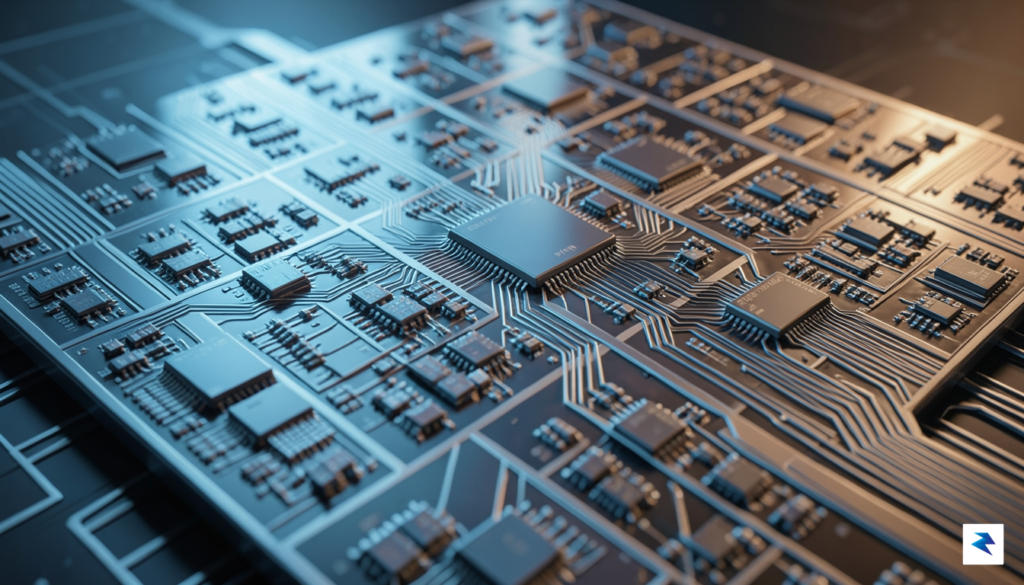
This realization sparked a pivotal shift in Apple’s internal culture, accelerating a transition toward deep vertical integration. By bringing chip design in-house, the company moved away from the constraints of general-purpose hardware and toward highly specialized silicon optimized for AI workloads. This meant developing custom Neural Engines—dedicated hardware blocks specifically designed to accelerate matrix multiplication and other mathematical operations fundamental to neural networks. This approach allowed Apple to achieve a level of efficiency and performance that was previously thought impossible for a mobile-class system.
The pivot toward custom silicon proved that Apple’s ambition was never just about building a car; it was about mastering the fundamental building blocks of intelligence that would eventually power everything from personal devices to future autonomous infrastructure.
Ultimately, the rigorous demands of the autonomous vehicle project acted as a crucible for Apple’s silicon team. By forcing engineers to optimize for the extreme constraints of real-time AI processing, the project laid the groundwork for the M-series chips that now power the Mac lineup. The legacy of the failed car project lives on in the specialized AI hardware that allows modern Apple devices to handle sophisticated tasks like real-time image processing and voice recognition locally, without needing to offload data to a remote cloud server. The failure to launch a car did not stem from a lack of technical progress, but rather from the massive, successful evolution of the silicon that was designed to drive it.
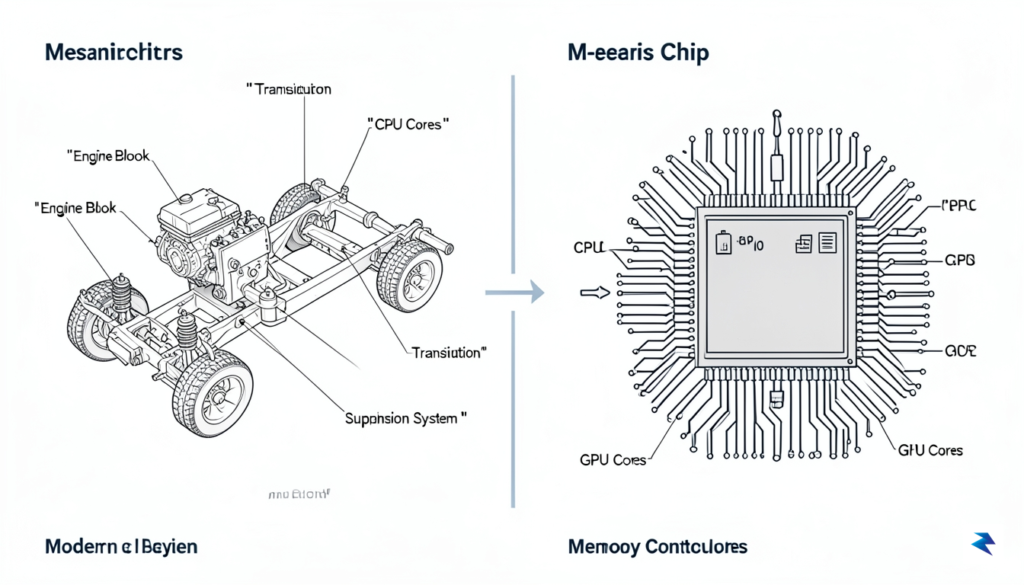
When Apple’s ambitious autonomous vehicle initiative, internally known as Project Titan, was officially shuttered, many observers assumed that a decade of research and development had simply hit a dead end. However, the reality within Apple’s silicon labs was far more strategic. The immense engineering challenge of building a “brain” capable of processing real-time sensor data from cameras, LiDAR, and radar in a power-constrained vehicle environment required a radical rethinking of processor architecture. Rather than discarding these advancements, Apple successfully transitioned the core intellectual property and the specialized engineering talent from the automotive division into its Mac and iPhone silicon teams, effectively seeding the next generation of Apple’s custom chips.
The technical bridge between the car project and today’s consumer devices is the Apple Neural Engine (ANE). In the automotive context, the requirement was to perform complex machine learning inference at the edge—meaning the car had to make split-second decisions without relying on a remote cloud server. This necessitated dedicated, high-efficiency compute blocks capable of handling massive matrix multiplication tasks with minimal thermal output. When these design principles were miniaturized, they became the foundation for the Neural Engine, a dedicated co-processor now standard in every A-series and M-series chip. By pivoting this technology, Apple transformed the car’s theoretical safety system into the powerhouse that drives modern photographic processing, biometric security, and on-device natural language models.
The architectural parallels between the two projects are profound, particularly concerning memory bandwidth and power efficiency. A self-driving car cannot afford to be throttled by the latency of moving data between a separate CPU and a discrete GPU; it requires a unified, high-bandwidth architecture. Apple applied these exact lessons to its Silicon transition, utilizing Unified Memory Architecture (UMA) to ensure that the Neural Engine could access massive datasets instantly. This design choice is what currently allows a MacBook Air to run sophisticated Large Language Models (LLMs) locally, an feat that would be impossible without the high-speed, low-latency data pathways originally envisioned to keep a vehicle safely on the road.
The pivot from automotive AI to personal computing proves that even unsuccessful R&D programs can yield transformative technology when integrated into a broader hardware ecosystem.
Ultimately, the legacy of the failed vehicle project is visible every time a user interacts with Siri, edits a photo, or utilizes real-time dictation. By embedding the automotive-grade neural compute blocks into its consumer silicon, Apple effectively democratized high-performance machine learning. What was once intended to navigate a multi-ton vehicle through complex urban environments is now the backbone of a sophisticated software stack that powers the modern Mac and iPhone experience, proving that the most valuable innovations are often the ones repurposed for entirely new horizons.
The ambitious pursuit of a self-driving car program, internally codenamed Project Titan, instilled in Apple a profound appreciation for a metric often overlooked by general consumers: performance-per-watt. Autonomous vehicles are essentially supercomputers on wheels, tasked with processing petabytes of sensor data in real-time, making instantaneous decisions, and operating reliably for extended periods. This immense computational burden, however, must operate within strict power and thermal envelopes to avoid draining battery reserves instantly or generating dangerous levels of heat in a confined space. This automotive-grade mindset, emphasizing extreme efficiency as a fundamental design principle, profoundly influenced the development of Apple’s custom silicon, eventually manifesting as the incredibly powerful yet remarkably cool-running AI chips found in its consumer hardware today.
At the heart of Apple’s silicon strategy lies an unwavering commitment to maximizing performance within a minimal power budget. Unlike traditional data center AI accelerators that can consume hundreds of watts and rely on elaborate cooling systems, chips designed for a car, or indeed a smartphone or laptop, must deliver massive AI performance without the luxury of unlimited power or space for bulky fans. This focus on “performance-per-watt” became a survival strategy, ensuring that sophisticated AI tasks, from on-device language models to complex image processing, could execute locally without turning a device into a hotplate or rapidly depleting its battery. Consequently, Apple’s Neural Engine, a dedicated AI accelerator, is engineered to process trillions of operations per second with astonishing efficiency, a direct lineage from the stringent requirements of real-time autonomous perception.
Thermal management presents a unique and formidable challenge, especially when dealing with the intensive computations demanded by artificial intelligence. Every watt of power consumed generates heat, and that heat must be dissipated effectively to prevent performance throttling or component damage. In an autonomous vehicle, managing heat is critical not just for component longevity but also for passenger comfort and safety. Apple transferred this rigorous approach to its consumer devices, where silent operation, thin form factors, and extended battery life are paramount. The ability of Apple’s chips to sustain high levels of AI processing without requiring the noisy, power-hungry cooling systems seen in many competing platforms is a testament to this inherited engineering discipline, allowing for breakthroughs like on-device generative AI features that run seamlessly without external power sources.
A crucial architectural decision, born from the demands of autonomous vision processing, is Apple’s preference for a Unified Memory Architecture (UMA). In a UMA design, the Central Processing Unit (CPU), Graphics Processing Unit (GPU), and Neural Engine all share access to a single, high-bandwidth pool of memory. This contrasts sharply with traditional architectures where the CPU and GPU have separate memory pools, necessitating constant, inefficient data transfers between them. For AI workloads, especially those involving large datasets like those found in vision systems, moving data is often more power-intensive and time-consuming than the actual computation itself. UMA dramatically reduces these bottlenecks, allowing different processing units to access the same data instantly, thereby boosting efficiency and reducing latency.
The direct benefits of UMA for AI, particularly in the context of vision processing, cannot be overstated. Autonomous cars rely on an intricate dance of cameras, radar, and lidar, generating continuous streams of visual data that must be analyzed for object detection, lane keeping, pedestrian recognition, and predictive path planning. All these tasks involve vast amounts of data being simultaneously processed by various specialized hardware blocks. With UMA, the Neural Engine can directly access camera frames that the GPU has pre-processed, or the CPU can quickly fetch results from the Neural Engine without incurring costly memory copies. This seamless, low-latency data flow, originally a necessity for the real-time, mission-critical operations of a self-driving car, now serves as an essential foundation for the sophisticated, on-device AI capabilities that define Apple’s modern computing experience, from advanced photo editing to intelligent voice assistants.

For years, the industry viewed Apple’s clandestine automotive project, internally dubbed “Project Titan,” as a costly distraction or a misstep in hardware ambition. However, the reality is that the rigorous demands of autonomous driving—which requires near-instantaneous processing of sensor data, real-time object recognition, and complex spatial reasoning—served as the ultimate crucible for Apple’s chip design teams. The engineering hurdles involved in building a vehicle that could navigate city streets without human intervention necessitated a level of on-device neural processing far beyond what was standard for smartphones at the time. By the time the car program was shuttered, Apple had already perfected the underlying architecture for high-performance, power-efficient AI acceleration that is now the backbone of the M3 and M4 silicon lines.
This legacy of “automotive-grade” intelligence is precisely what gives Apple such a decisive advantage in the current generative AI landscape. While many competitors are struggling to bridge the gap between cloud-based servers and consumer hardware, Apple is seamlessly integrating sophisticated AI models directly into the silicon found in MacBooks and iPads. Because these chips were originally designed to handle the volatile, high-stakes requirements of a moving vehicle, they feature specialized Neural Engines that treat local machine learning as a primary function rather than an afterthought. This means that intensive tasks like image generation, natural language processing, and predictive text can happen entirely on-device, bypassing the latency and security concerns inherent in cloud-based alternatives.
The hardware-software synergy Apple cultivated during the car project has transitioned into the framework now known as Apple Intelligence. By maintaining total control over both the instruction set architecture and the operating system, Apple ensures that its AI features are not just powerful, but deeply private and responsive. When an AI request remains on the device, it minimizes the need for data to travel to a distant server, which is a critical design philosophy that originated from the car team’s obsession with zero-latency safety systems.
The shift toward on-device processing represents a fundamental change in how we interact with technology, turning the laptop from a passive tool into an active, intelligent assistant that never needs to leave your local network to think.
Ultimately, Apple’s current dominance in the AI era is the result of a decade-long investment in neural architecture that was hidden in plain sight. Every time an M4-powered Mac handles a complex, private AI request, it is utilizing the same foundational principles that were meant to steer a vehicle through traffic. This head start is difficult for competitors to replicate, as it requires a massive, vertical integration of hardware design and software optimization that few other companies have the resources or the discipline to maintain. The road to the AI-driven desktop may have started on the asphalt, but it has arrived exactly where Apple intended: at the center of the modern digital workspace.

In the high-stakes world of technology, history is rarely written by the triumphs alone; rather, it is frequently shaped by the ambitious failures that paved the way for future breakthroughs. While the cancellation of Apple’s self-driving car program initially appeared to be a significant retreat, it actually served as a masterclass in strategic redirection. By decoupling from the sunk cost fallacy—the tendency to continue investing in a losing venture simply because of the resources already spent—Apple demonstrated a rare corporate discipline. Instead of pouring more capital into a project that faced insurmountable regulatory and logistical hurdles, the company pivoted, effectively harvesting the intellectual capital and silicon architecture it had painstakingly developed over nearly a decade.
The true legacy of this project lies not in a vehicle on the road, but in the sophisticated neural engines and high-performance silicon that now power the entire Apple ecosystem. The research and development teams tasked with solving the immense computational demands of autonomous navigation inadvertently created a blueprint for efficient, low-power AI processing. This architecture now serves as the backbone for the Neural Engine integrated into Apple’s latest M-series and A-series chips. Because of this pivot, the hardware that once aimed to pilot a car is now fueling the generative AI capabilities of iPhones and MacBooks, proving that the investment was never truly wasted—it was merely repurposed for a broader, more immediate consumer impact.
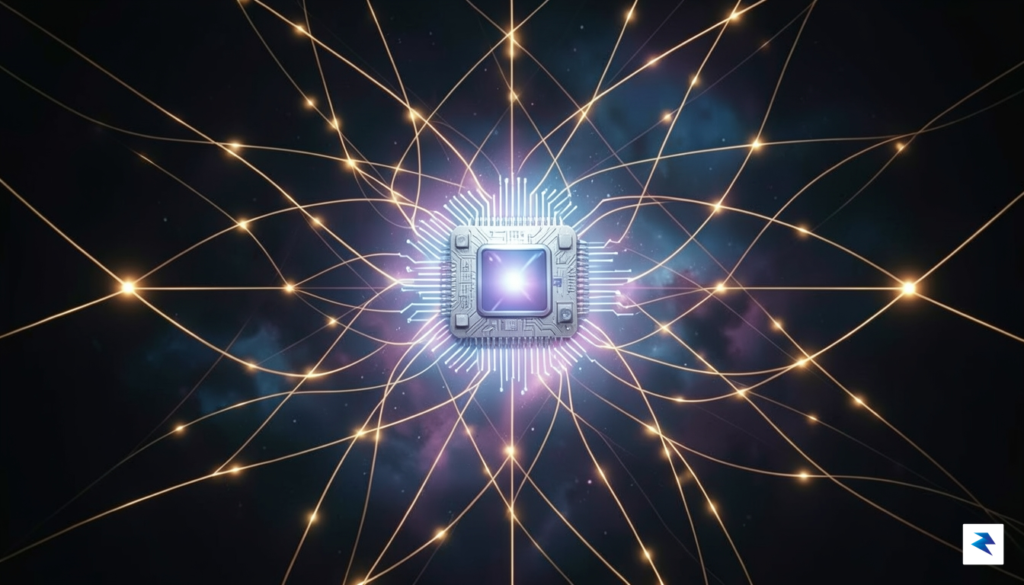
The most valuable assets often emerge from the debris of discarded dreams, provided the organization has the agility to recognize and extract the underlying innovation.
Looking forward, the influence of this failed initiative will continue to ripple through the tech industry as Apple accelerates its integration of artificial intelligence into everyday life. The lessons learned in balancing extreme computational power with the strict thermal and energy constraints of a vehicle have provided Apple with a distinct competitive advantage in the race for edge computing. As consumer demand for on-device AI grows, the company is uniquely positioned to deploy features that are faster, more private, and more efficient than those relying solely on cloud-based processing. Ultimately, the story of the car project is not one of a missed opportunity, but of a calculated evolution that solidified Apple’s future as a dominant player in the landscape of modern artificial intelligence.
You must be logged in to post a comment.