French Employment Data Leak: What 1 Million Affected Workers Need to Know
Understanding the Scope of the French Employment Data Breach The cybersecurity landscape in France is currently reeling from reports of a…
For years, Apple Silicon followed a predictable, clockwork cadence. Much like its iPhone processor cycles, the M-series lineup adhered to a steady iterative rhythm, reliably delivering incremental performance gains and efficiency improvements every twelve to eighteen months. However, the decision to effectively bypass the M6 generation in favor of an accelerated jump to the M7 marks a departure from this conservative stability. This pivot suggests that Apple is no longer satisfied with marginal year-over-year refinements; instead, the company is recalibrating its entire engineering roadmap to meet the aggressive, high-stakes demands of the current artificial intelligence arms race.
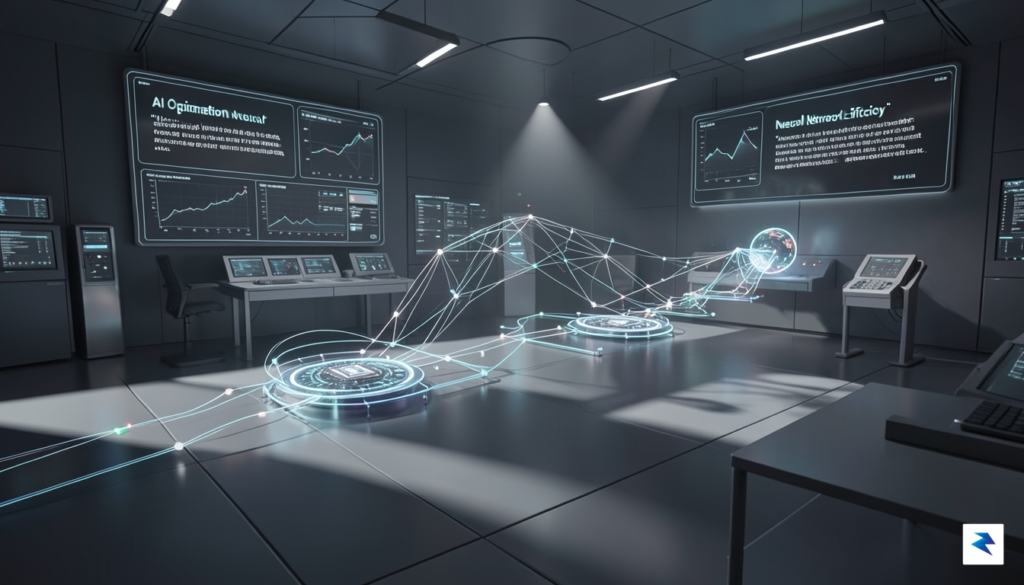
The primary catalyst for this shift is the undeniable pressure to bolster Neural Processing Unit (NPU) capabilities to keep pace with industry rivals. While Apple was an early pioneer in dedicated AI silicon, competitors like Qualcomm—with its Snapdragon X Elite series—and NVIDIA have fundamentally altered the landscape by prioritizing massive, on-device generative AI throughput. Apple’s leadership recognized that a standard M6 upgrade, while technically sound, would have been insufficient to support the next generation of LLMs (Large Language Models) and heavy machine learning workloads expected to become standard in macOS. By skipping the M6, Apple is essentially “clearing the deck” to ensure that the hardware architecture is built from the ground up to accommodate a significantly more powerful, multi-core Neural Engine.
The leap to the M7 generation represents a strategic transition from general-purpose computing to AI-centric silicon, prioritizing specialized neural throughput over traditional raw clock speed.
From a business perspective, the logic of bypassing a generation is rooted in the cost of software-hardware optimization. Developing a new architecture requires immense investment in design, fabrication, and software integration; if the M6 was destined to be a “bridge” chip that would be quickly overshadowed by the sudden rise of transformer-based AI models, it would have been a poor allocation of resources. By funneling those engineering cycles into the M7, Apple ensures that their future hardware lifecycle is perfectly aligned with the needs of Apple Intelligence and future software ecosystems. This move allows the company to reach a critical threshold of transistor density dedicated specifically to AI tasks, effectively leapfrogging the performance bottlenecks that would have plagued a more traditional iterative release.
Ultimately, this change in direction signifies that Apple is prioritizing long-term relevance over short-term release consistency. The industry is currently moving away from an era where CPU and GPU benchmarks are the only metrics that matter. Instead, performance is increasingly measured by how efficiently a system handles complex, local machine learning inferences without exhausting battery life or thermal headroom. By choosing to jump directly to the M7, Apple is betting that the future of personal computing will be defined by silicon that treats AI as a foundational, first-class citizen rather than an afterthought. This transition is not merely a roadmap adjustment; it is a fundamental reassertion of Apple’s ambition to control the silicon stack in an era where AI is the new battleground for hardware supremacy.
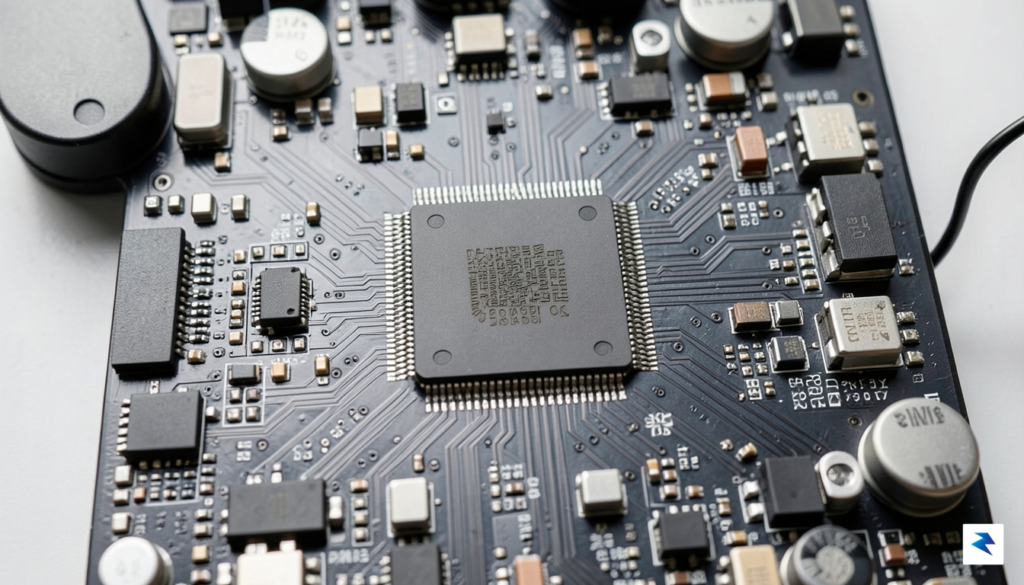
For creative professionals currently tethered to M1 or M2 hardware, the prospect of an accelerated shift toward an M7 architecture creates a complex landscape for upgrade planning. While Apple’s silicon has historically offered substantial generational leaps, skipping the M6 cycle implies that the thermal and architectural foundations of the M4 and M5 chips will need to carry the heavy lifting of professional workflows for a longer duration than originally anticipated. Users who rely on high-bitrate video rendering, complex 3D modeling, or large-scale software compilation may find themselves navigating a performance bottleneck if their current machine begins to show its age before the M7 arrives. Consequently, the reliance on these interim generations necessitates a careful evaluation of whether current software optimization—rather than raw hardware throughput—can sustain high-end productivity needs in the short term.
Whether the M4 and M5 architectures possess the necessary longevity depends heavily on the trajectory of Apple’s unified memory strategy and thermal efficiency. By opting to prioritize the M7, Apple appears to be signaling a pivot toward more radical silicon re-designs rather than incremental iterations. For the power user, this means that the decision to upgrade is no longer just about seeking a marginal increase in clock speed or core counts; it is about betting on the longevity of the current thermal design. If the M4 and M5 maintain their efficiency lead, they will likely remain sufficient for most professional applications, provided that Apple continues to leverage its tight integration between Metal API updates and macOS optimizations.
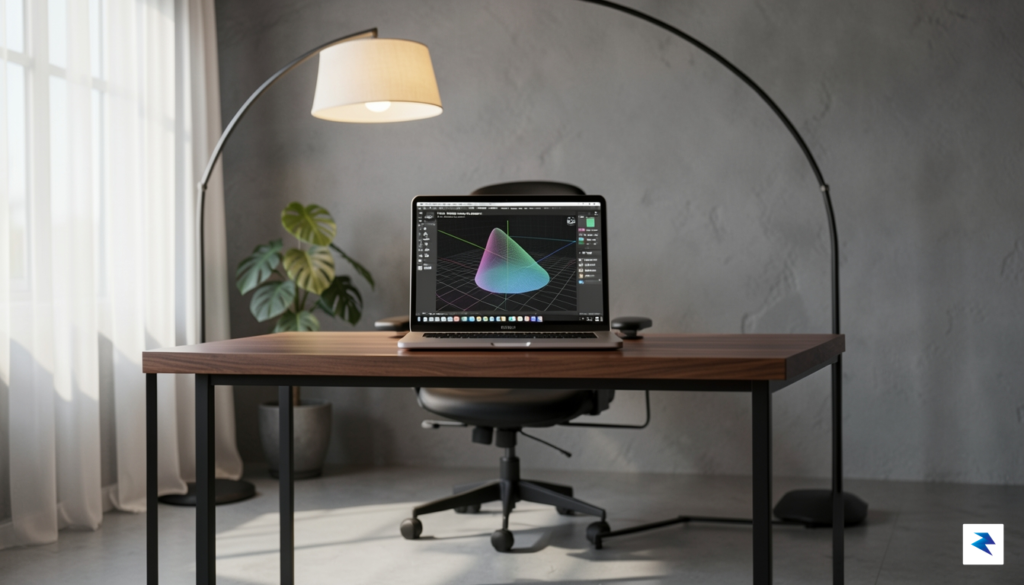
The strategic focus on the M7 generation suggests that Apple is prioritizing a major architectural leap over the iterative improvements typical of a traditional tick-tock cycle, forcing pros to look at their upgrade cycles through the lens of long-term software support rather than annual performance increments.
There is, however, a tangible impact on thermal management for high-end laptops that cannot be ignored. Skipping the M6 Pro and Max chips suggests that Apple is aiming to refine the power-to-performance ratio in a way that minimizes thermal throttling during extended export sessions. By bypassing a generation, the company may be looking to consolidate its manufacturing resources to ensure that the M7 delivers a more significant jump in Neural Engine capabilities and efficiency cores. For professionals who are frustrated by the heat output of their current M1 Max machines under sustained load, the wait for the M7 could eventually provide a more meaningful cooling and efficiency advantage than the minor gains a hypothetical M6 might have offered. Ultimately, while the immediate path feels disjointed, the long-term outlook suggests a more potent, specialized machine that avoids the pitfalls of incremental, heat-heavy design cycles.
The pivot toward the M7 generation represents far more than a routine incremental update to Apple’s silicon portfolio; it marks a strategic departure from traditional performance metrics toward a compute model defined by on-device intelligence. By bypassing the M6 series, Apple is essentially fast-tracking a fundamental architectural overhaul designed to handle the massive computational overhead required by modern large language models (LLMs). This evolution focuses on shifting the bottleneck away from raw clock speeds and toward the efficiency of localized neural processing, ensuring that complex generative AI tasks are no longer tethered to remote server farms but are instead executed natively on the silicon itself.
Central to this transformation is a significant evolution of Apple’s signature Unified Memory Architecture (UMA). In the M7 iteration, engineers are expected to implement a high-bandwidth interconnect that allows the Neural Engine, CPU, and GPU to access a massive, shared pool of memory with virtually zero latency. This is crucial for AI workloads, as the ability to move terabytes of model parameters between the processor and memory without hitting a throughput wall is the primary requirement for running sophisticated models smoothly. By increasing the memory bandwidth ceiling, the M7 will enable the Mac to sustain high-parameter AI models that were previously too memory-intensive to run locally without significant performance degradation.
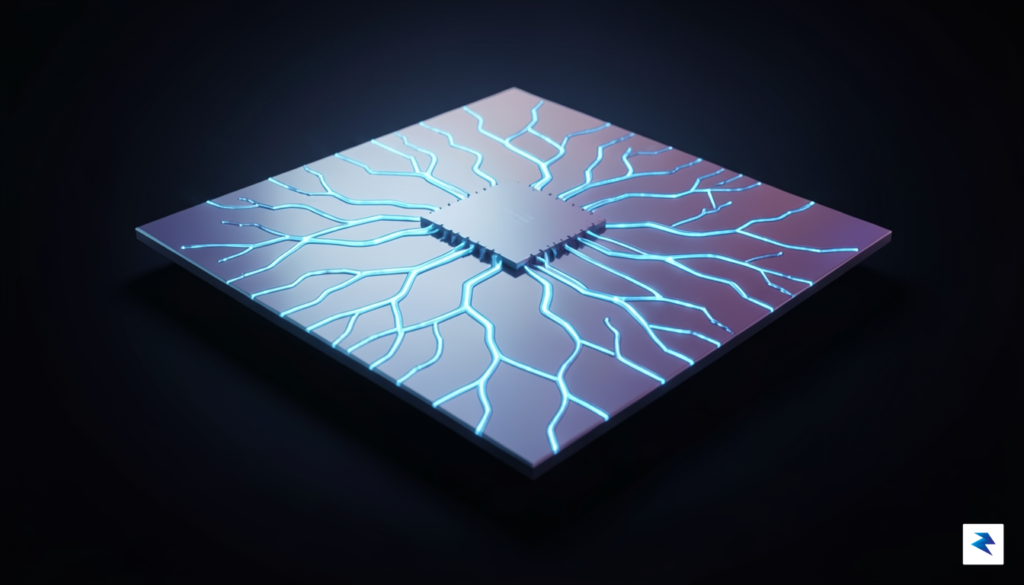
Furthermore, the M7 introduces a massive scaling of the Neural Engine, moving well beyond the core counts seen in previous M-series chips. While previous generations were optimized for image processing and basic machine learning tasks, the new architecture integrates a dedicated matrix-multiplication accelerator that is specifically tuned for the transformer models underpinning modern AI. This hardware-level optimization means that tasks such as real-time language translation, predictive coding assistance, and generative image synthesis will consume significantly less power while delivering vastly higher throughput. The result is a machine that feels perpetually responsive, even when running heavy AI workloads that would typically cause thermal throttling or system sluggishness.
The transition to M7 silicon signifies that Apple is moving beyond “general purpose” computing to build an “AI-first” ecosystem where privacy and speed are preserved through local, on-chip processing power.
Perhaps most importantly, this architectural shift allows Apple to decouple AI performance from cloud dependency. By prioritizing on-device execution, the M7 architecture ensures that sensitive user data remains local, eliminating the privacy concerns and latency issues inherent in cloud-based AI services. As these chips become the foundation of the Mac lineup, the ability to run complex, private, and real-time machine learning models will become a standard expectation rather than a niche feature. By skipping the M6, Apple is effectively condensing its roadmap to deliver this high-efficiency, AI-optimized hardware to users years ahead of the original industry projections.

Determining whether to invest in current Apple silicon or hold out for the upcoming M7 generation requires a strategic assessment of your current workflow and hardware dependencies. For users still clinging to legacy Intel-based Macs, the performance delta between your current machine and any modern M-series chip is so significant that waiting is rarely the most logical path. If your machine is struggling to keep pace with thermal throttling, fan noise, or software incompatibility, the immediate productivity gains of upgrading now will pay for themselves long before the M7 hits the shelves. However, if you are already utilizing an M2 or M3 Pro/Max device, you have reached a plateau where the incremental improvements of the current lineup may not justify a costly mid-cycle refresh.
To simplify this choice, consider where your professional needs fall on the spectrum of computational intensity. If you are a creative professional working in video production, 3D rendering, or heavy software development, your decision should be predicated on your current bottleneck. Upgrading now is highly recommended if you are experiencing frequent crashes, memory exhaustion, or limitations in your export pipelines that impact your billable hours. Conversely, if your current workflow is stable and you rely heavily on emerging generative AI tools, the M7 architecture is rumored to bring significant advancements in localized neural processing. Early adopters and machine learning researchers should likely exercise patience, as the M7 is expected to offer a more robust architecture specifically tuned for large language models and advanced tensor operations.
The best hardware decision is not always the most powerful one; it is the one that removes the specific friction points currently slowing down your creative output.
For those who decide to stay the course with their current hardware, there are several effective strategies to maximize your machine’s longevity until the M7 generation arrives. First, prioritize software hygiene by performing a clean installation of the latest macOS to ensure background processes are not hogging your memory. Second, consider offloading intensive tasks to cloud-based render farms or external storage solutions to alleviate the pressure on your internal SSD and thermal management system. Regularly cleaning your cooling vents and ensuring proper airflow can also prevent the premature degradation of components. By treating your machine as a refined professional tool rather than a disposable commodity, you can effectively extend its utility, ensuring that when you finally do transition to the M7, the leap in performance feels like a monumental shift rather than a minor adjustment.
Apple’s decision to bypass the M6 generation entirely and fast-track to M7, especially with its pronounced AI-centric focus, marks a profound inflection point for the entire Mac software ecosystem. This isn’t merely an incremental performance bump; it signals a fundamental reorientation of how applications will be conceived, designed, and optimized on Apple’s platforms. Developers will now face a significant paradigm shift, moving beyond traditional CPU and GPU optimizations to deeply integrate with specialized neural engines and AI accelerators, which are becoming central to delivering next-generation user experiences. This strategic pivot demands a proactive approach from the developer community to re-evaluate existing codebases and development practices.
The immediate implications for macOS software development are substantial. While Apple traditionally ensures strong backward compatibility, the sheer leap in AI capabilities with the M7 generation will inevitably push developers towards adopting new frameworks and APIs designed to harness these sophisticated neural processing units (NPUs). Applications that fail to leverage these advancements might appear sluggish or feature-deficient compared to their AI-optimized counterparts, potentially creating a bifurcated software landscape. This also presents an immense opportunity for innovation, allowing developers to embed powerful AI features directly into apps, from real-time content creation and intelligent automation to more intuitive user interfaces that anticipate user needs. The Mac, therefore, is poised to become an even more potent platform for AI-driven creativity and productivity.
For developers, the M7 shift isn’t just about faster code; it’s about rethinking app functionality from the ground up, embracing AI as a core component for future user experiences.
This accelerated chip roadmap also has significant ramifications for the broader Apple hardware landscape, extending beyond just the Mac. The M7’s AI-centric design will likely drive a convergence of experiences across Apple’s device portfolio, from iPhones and iPads to the Vision Pro, creating a more unified and intelligent ecosystem. Features powered by on-device AI, such as advanced photo and video editing, sophisticated voice commands, and predictive system behaviors, will likely become standard across all premium Apple devices. This consistent architectural foundation will streamline development efforts for multi-platform applications, ensuring that AI-powered innovations can seamlessly transition between different form factors while maintaining optimal performance.
Apple’s bold move to leapfrog a chip generation and focus heavily on AI silicon will undoubtedly send ripples through the entire tech industry, forcing competitors to re-evaluate their own development timelines and strategies. Companies like Intel, Qualcomm, and even Microsoft, which is investing heavily in its own custom silicon for Copilot+ PCs, will feel immense pressure to accelerate their NPU development and integration. The industry standard for “performance” is rapidly shifting from raw CPU/GPU power to a holistic blend that includes robust AI processing capabilities. This competitive pressure could lead to an overall faster pace of innovation across the PC market, ultimately benefiting consumers with more capable and intelligent hardware sooner than anticipated.
Looking ahead to the next 3-5 years, Apple’s hardware design will likely be fundamentally reshaped by this AI-first chip strategy. We can expect Macs to become even more power-efficient, allowing for thinner, lighter designs without sacrificing performance, especially for AI-intensive tasks. The integration of advanced sensors and
You must be logged in to post a comment.