Why Europeans Are Still Buying Teslas Despite Elon Musk
The Paradox of Tesla Sales in Europe In an increasingly interconnected world, where the personal brand of a CEO often becomes inextricably…


For over half a century, the semiconductor industry has been defined by the relentless pursuit of Moore’s Law—the observation that the number of transistors on a microchip doubles approximately every two years. This trajectory of miniaturization has empowered everything from the pocket calculator to the modern smartphone, transforming global infrastructure and personal computing alike. However, as we have approached the 3nm and 2nm nodes, engineers have faced daunting physical barriers. At these atomic scales, quantum mechanical effects like electron tunneling begin to undermine the stability of traditional transistor architecture, threatening to halt the progress that has fueled the digital age.
IBM’s recent unveiling of sub-1 nanometer chip technology represents far more than a mere incremental step in this ongoing evolution; it is a fundamental paradigm shift that redefines what is physically possible in silicon engineering. By successfully navigating the threshold where conventional fabrication techniques typically falter, this breakthrough suggests that the “death of Moore’s Law” has been greatly exaggerated. Instead, the industry is entering an era of vertical integration and material innovation that allows us to bypass the constraints of planar scaling. This transition moves us away from the limitations of shrinking traditional components and toward a future where computing power is constrained only by our ability to manipulate matter at the near-atomic level.

The significance of crossing the sub-1nm barrier lies in the potential for unprecedented energy efficiency and computational density. As we squeeze more processing power into smaller physical footprints, we reduce the distance data must travel, thereby decreasing latency and power consumption—the two greatest bottlenecks in modern artificial intelligence and data center operations. This shift is essential for the next generation of high-performance computing, which demands massive throughput without the prohibitive thermal output of current-generation hardware.
The sub-1nm milestone signifies a transition from the era of brute-force scaling to an age of sophisticated material science, where the geometry of the transistor is no longer the primary limit of computational growth.
Ultimately, this technological leap serves as a vital bridge toward the future of sustainable, ultra-high-performance electronics. While the transition from research labs to commercial production remains a complex engineering challenge, the fact that this barrier has been breached proves that the foundational limits of silicon are still flexible. By moving into the sub-1nm frontier, IBM has effectively unlocked a new chapter in technological history, ensuring that the trajectory of innovation remains steep, even as the components themselves become almost impossibly small.

The quest to shrink computing power has long been governed by the physical limitations of traditional silicon. For decades, the industry relied on FinFET architectures, which effectively acted as three-dimensional fins to control current flow. However, as we pushed past the 5nm and 3nm thresholds, these structures began to struggle with “leakage”—a phenomenon where electrons escape their intended paths, leading to wasted energy and overheating. To overcome this, IBM pivoted toward Gate-All-Around (GAA) designs, which wrap the transistor channel on all sides. By evolving this concept into a sub-1nm reality, researchers have effectively rewritten the rules of semiconductor architecture by shifting away from standard bulk silicon toward advanced, ultra-thin nanomaterials.
At the heart of this breakthrough is the mastery of atomic-level manipulation. When working at scales smaller than a single nanometer, standard manufacturing techniques fail because the materials themselves begin to behave according to the strange laws of quantum mechanics rather than classical physics. IBM’s engineers addressed this by utilizing novel 2D materials—sheets of matter only a few atoms thick—that provide superior electrical control compared to conventional silicon. By precisely layering these materials, the team created a “nanosheet” structure that maintains high electrical integrity, ensuring that transistors can switch on and off reliably without the interference typically caused by quantum tunneling at such microscopic dimensions.

Achieving stability at this scale required a fundamental rethinking of how we construct the building blocks of a processor. By moving beyond the physical constraints of traditional silicon, IBM demonstrated that performance does not have to be sacrificed for density. The secret lies in the structural engineering of the gate stack, which acts as the “on-off” switch for the transistor. By utilizing high-k dielectric materials and advanced lithography processes, the team was able to shrink the gate dimensions while simultaneously improving the transistor’s ability to drive current. This combination of material science and precision engineering creates a pathway for chips that are not only significantly smaller but also drastically more power-efficient.
The transition to sub-1nm technology is not merely a feat of miniaturization; it represents a fundamental shift in how we control electron movement at the edge of physical possibility.
Looking ahead, this leap suggests that the “death of Moore’s Law” has been greatly exaggerated. By proving that stable, high-performance computing is possible beneath the 1nm mark, IBM has established a new roadmap for the semiconductor industry. This innovation effectively clears the hurdle that many experts feared would permanently stall progress, opening the door for future generations of artificial intelligence, high-performance computing, and mobile technology that will operate with unprecedented speed and minimal power consumption.

The transition into the sub-1 nanometer regime represents far more than a mere incremental improvement in manufacturing; it is a fundamental shift in the geometry of computational power. By packing an unprecedented number of transistors into a single chip, we are witnessing a dramatic surge in TOPS—trillions of operations per second. This jump in density allows hardware designers to move beyond the bottlenecks that have constrained performance for years, enabling chips to execute vastly more complex calculations without requiring a proportional increase in physical footprint or energy consumption. Consequently, the ceiling for what local hardware can achieve is being raised, creating an environment where high-performance computing is no longer tethered to massive, power-hungry data centers.
For the field of artificial intelligence, this technological leap is transformative. Modern machine learning models, particularly large language models and generative AI, often require enormous amounts of memory and processing bandwidth that currently necessitate cloud-based execution. Sub-1nm chips change this calculus by providing the raw density needed to run sophisticated inference engines directly on edge devices. This means that smartphones, autonomous vehicles, and industrial IoT sensors will soon possess the local intelligence to process complex datasets in real-time, drastically reducing latency and reliance on stable internet connections. When an AI can make split-second decisions on the device itself, the reliability and privacy of autonomous systems improve exponentially.

Furthermore, the acceleration of specialized AI hardware—often referred to as AI accelerators or NPUs—will benefit immensely from this increased transistor density. With more room for dedicated logic gates and local memory caches on the silicon die, these accelerators can minimize the movement of data between memory and processing units, which is historically one of the most energy-intensive aspects of computing. By keeping data closer to the compute logic, sub-1nm technology effectively cures the “memory wall” that has slowed down AI training for decades. This shift will likely lead to a new generation of hardware specifically optimized for edge-based training, where devices can continue to learn and adapt to their environments without needing to transmit sensitive information back to a central server.
The true promise of sub-1nm technology lies in the democratization of intelligence; by shrinking the physical requirements of high-performance hardware, we are enabling the next wave of ubiquitous, powerful, and efficient AI applications that will integrate seamlessly into our daily lives.
Ultimately, these advancements herald a future where real-time data processing becomes the standard rather than the exception. Whether it is a wearable health monitor detecting medical anomalies in milliseconds or a smart city infrastructure optimizing traffic patterns in real-time, the sub-1nm threshold provides the necessary foundation for these capabilities. As we push the boundaries of what is physically possible at the atomic scale, we are effectively redefining the limits of our digital world, moving toward an era where intelligence is distributed, private, and incredibly fast.

As the digital backbone of the modern world, data centers have become significant consumers of global electricity, creating an urgent need for hardware that performs more work while drawing less power. IBM’s breakthrough in sub-1 nanometer technology addresses this crisis by fundamentally rethinking the physics of the transistor. By shrinking the architecture to this unprecedented scale, engineers can achieve higher performance at significantly lower operating voltages. Because power consumption in a chip is proportional to the square of the voltage, even marginal reductions in power requirements lead to exponential improvements in total energy efficiency, providing a much-needed lifeline for an industry struggling to curb its carbon footprint.

Beyond the simple reduction of power draw, this new architecture tackles the persistent challenge of thermal throttling, which has long plagued high-performance computing. In older, larger-scale chips, heat accumulation often forces the processor to slow down its operations to prevent physical damage, leading to wasted computational cycles and inefficient power usage. Sub-1nm technology mitigates this by allowing electrons to travel more efficiently through tighter, more optimized pathways, resulting in significantly less heat dissipation per logic gate. When a chip runs cooler, it requires less energy for cooling infrastructure and maintains peak performance for longer durations, effectively turning raw processing power into a sustainable asset rather than a thermal liability.
The shift toward sub-1nm architecture represents a transition from brute-force computing to precision-engineered efficiency, where every electron is utilized to maximize output while minimizing environmental impact.
This leap forward is critical for the future of sustainable computing infrastructure, particularly as the demand for artificial intelligence and massive data processing continues to skyrocket. By integrating these hyper-efficient chips into servers and edge devices, corporations can process complex workloads with a fraction of the energy traditionally required. This is not merely an incremental upgrade; it is a structural change that aligns the trajectory of hardware development with global sustainability goals. As we look toward a future defined by ubiquitous connectivity and data-heavy applications, the ability to decouple computational growth from energy consumption will be the ultimate benchmark of technological success.
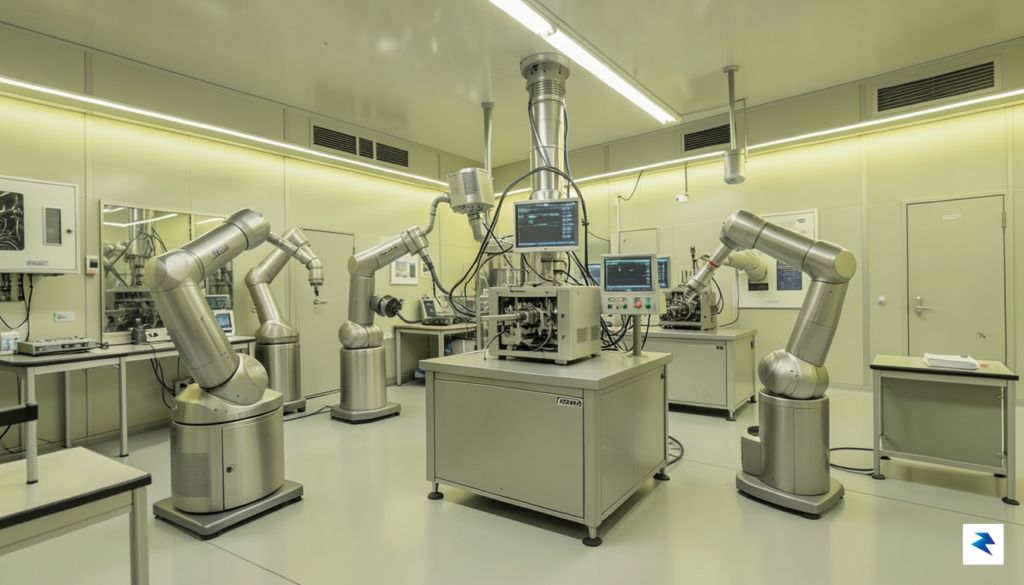
Transitioning from a controlled laboratory environment to the high-stakes world of mass production is an immense undertaking that separates experimental breakthroughs from consumer-ready hardware. While IBM’s sub-1 nanometer achievement is a monumental milestone for semiconductor physics, the journey to commercial viability is fraught with significant engineering obstacles. Current Extreme Ultraviolet (EUV) lithography tools, which serve as the backbone of modern chip fabrication, are already operating at the edge of their technical capabilities. To print features at the sub-1nm scale, manufacturers may require a new generation of “High-NA” (high numerical aperture) EUV machines that are not only exponentially more expensive but also require entirely new cleanroom infrastructure to accommodate their massive size and precision requirements.

Beyond the limitations of lithography, the industry faces daunting challenges regarding manufacturing yields and material stability. At this atomic level, even a single stray molecule or a microscopic fluctuation in temperature can result in a defective chip, which would be financially catastrophic if it occurs during high-volume production. As transistor components shrink to the size of just a few atoms, the physical properties of silicon begin to behave unpredictably, necessitating the development of entirely new, exotic materials that can maintain electrical integrity without suffering from quantum tunneling or excessive heat generation. The economic reality is that moving to these smaller nodes increases the cost per wafer significantly, meaning that companies must balance the desire for performance with the necessity of keeping consumer electronic prices attainable.
The transition to sub-1nm architecture is not merely a task of shrinking existing designs; it represents a fundamental reimagining of how electrons flow through a circuit at the absolute limits of physical reality.
Furthermore, the shift to sub-1nm technology will necessitate a complete overhaul of the global fabrication ecosystem. This includes everything from the chemical precursors used in deposition processes to the specialized testing equipment required to inspect chips at the sub-nanometer level. Building this infrastructure requires multi-billion dollar investments, lengthy lead times for specialized components, and a highly skilled workforce capable of operating such complex machinery. Consequently, while the promise of exponentially more powerful and energy-efficient processors is clear, the path toward integrating this technology into everyday devices—like smartphones and laptops—will likely unfold over the next decade as these manufacturing hurdles are systematically addressed.

The arrival of sub-1 nanometer architecture marks the beginning of a transformative era for the global digital infrastructure, shifting the focus from mere incremental improvements to a fundamental reimagining of computational potential. As we push past the physical limitations that once threatened to stall Moore’s Law, the industry is entering a domain where the energy efficiency and processing density of chips will dictate the pace of innovation across every sector. This transition is not merely a laboratory victory; it is a profound catalyst for the next decade of digital transformation, enabling breakthroughs in artificial intelligence, autonomous systems, and high-performance computing that were previously confined to the realm of theoretical physics.

Beyond the technical specifications, the mastery of sub-1nm technology carries immense weight in the context of global geopolitics and supply chain stability. Semiconductor manufacturing has become the new “oil” of the 21st century, serving as the strategic bedrock upon which national security and economic sovereignty are built. As nations race to secure domestic fabrication capabilities and develop advanced packaging ecosystems, the ability to produce these cutting-edge transistors will likely become the definitive metric of a country’s technological influence. This creates a high-stakes environment where the control over design intellectual property and manufacturing precision dictates the hierarchy of the global economy, forcing governments to rethink their long-term industrial policies and infrastructure investments.
The transition toward sub-1nm fabrication is more than an engineering milestone; it is a defining geopolitical asset that will reshape how nations collaborate and compete on the world stage for decades to come.
Looking ahead, the semiconductor industry is moving toward a highly decentralized yet hyper-specialized future. We are likely to see a convergence of regional manufacturing hubs, each vying to support the massive energy requirements and talent pools necessary for such advanced production. As digital transformation continues to integrate into everything from healthcare diagnostics to sustainable urban planning, the widespread adoption of these ultra-dense chips will provide the necessary overhead to solve increasingly complex global challenges. While the path toward mass-market commercialization remains fraught with manufacturing complexities and capital-intensive hurdles, the vision of a sub-1nm world promises a future where compute is pervasive, efficient, and, above all, the primary engine of human progress.
You must be logged in to post a comment.