IBM Breaks the Nanometer Barrier: The Future of Sub-1nm Chips
The Dawn of the Sub-1nm Era For over half a century, the semiconductor industry has been defined by the relentless pursuit of Moore’s Law—the…
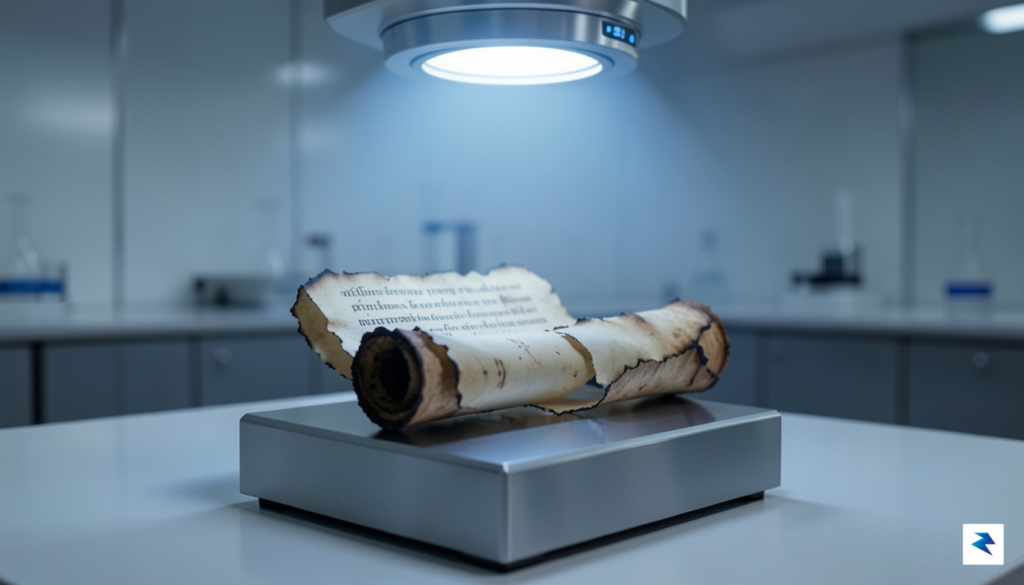
For nearly two millennia, the Herculaneum scrolls represented one of history’s most tantalizing and heartbreaking mysteries. Buried and carbonized by the catastrophic eruption of Mount Vesuvius in 79 AD, these fragile papyri transformed into brittle, charcoal-like cylinders, often described as geological specimens rather than readable texts. Every attempt to physically unroll them, even with the most delicate techniques, invariably resulted in irreparable damage, reducing priceless ancient wisdom to mere dust. Consequently, the vast library discovered in the Villa of the Papyri, believed to contain thousands of philosophical and literary works, remained an impenetrable, silent testament to a lost civilization, its contents deemed forever out of reach.
This seemingly insurmountable barrier, however, recently met its match in the form of the Vesuvius Challenge, an ambitious international initiative that dared to ask if the unreadable could finally be read. Launched with a bold vision and significant prize money, the Challenge assembled a global community of researchers, computer scientists, and classicists. Their collective goal was nothing less than a digital resurrection: to develop a non-invasive method capable of peering inside these carbonized tombs of knowledge and extracting their hidden Greek texts, all without ever physically disturbing the fragile papyrus layers that had fused together over centuries.
The core of this audacious endeavor lies in a sophisticated technological pivot from destructive physical manipulation to advanced virtual exploration. Instead of attempting the impossible task of mechanically separating the fused layers, the Vesuvius Challenge leveraged cutting-edge X-ray microtomography. This highly precise scanning technique works much like a medical CT scan but at an incredibly microscopic level, creating thousands of cross-sectional images of the scroll’s internal structure. These scans revealed not only the intricate topography of the rolled papyrus, but, crucially, subtle variations in density that indicated the presence of ink, which, unlike the papyrus itself, contained heavy metals. The carbonization process had made the ink virtually indistinguishable to the naked eye, but not to the penetrating gaze of high-resolution X-rays.
Identifying these microscopic ink traces within the complex, convoluted layers of a tightly wound scroll presented an unprecedented computational puzzle. This is where the power of artificial intelligence and machine learning became indispensable. Participants in the Vesuvius Challenge developed sophisticated algorithms designed to “segment” the virtual scroll, digitally flattening its intricate three-dimensional structure into two-dimensional surfaces. More importantly, these AI models were trained to detect the unique textural and density signatures left by the ancient ink. By sifting through terabytes of scan data, the AI learned to differentiate between the subtle anomalies caused by the carbon-based ink and the surrounding charred papyrus, effectively making the invisible visible and allowing for the first “digital unrolling” of these long-lost texts.
The success of the Vesuvius Challenge represents far more than just a technological triumph; it marks a seismic shift in how we approach archaeological conservation and textual recovery. This groundbreaking methodology not only unlocks the direct content of these specific Herculaneum scrolls, offering fresh insights into classical philosophy, literature, and daily life, but it also establishes a new paradigm for dealing with fragile, inaccessible artifacts worldwide. The ability to read carbonized papyri without physical intervention sets a precedent for preserving and understanding countless other ancient documents previously deemed unrecoverable, promising a future where the silent whispers of the past can finally be heard.
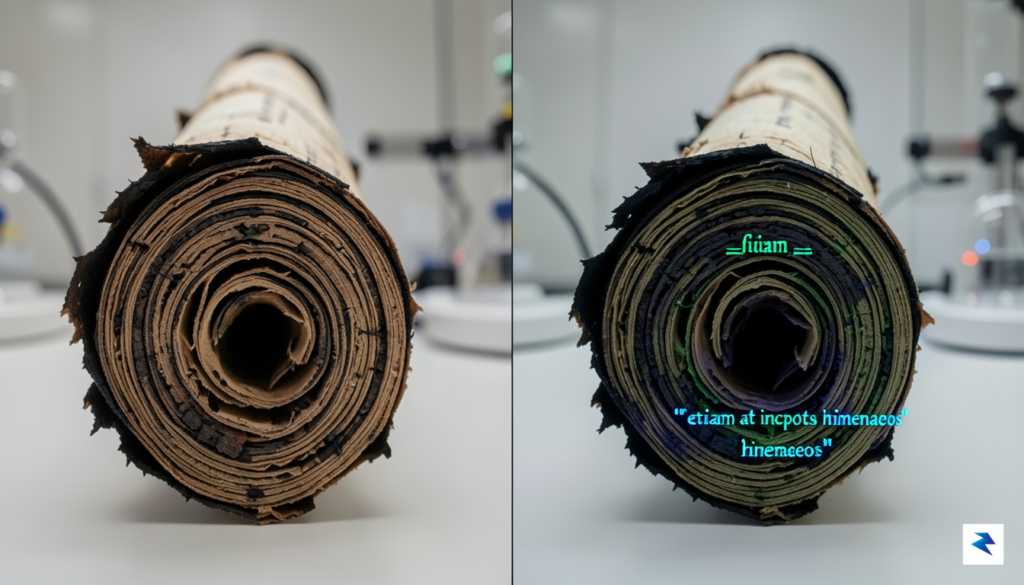
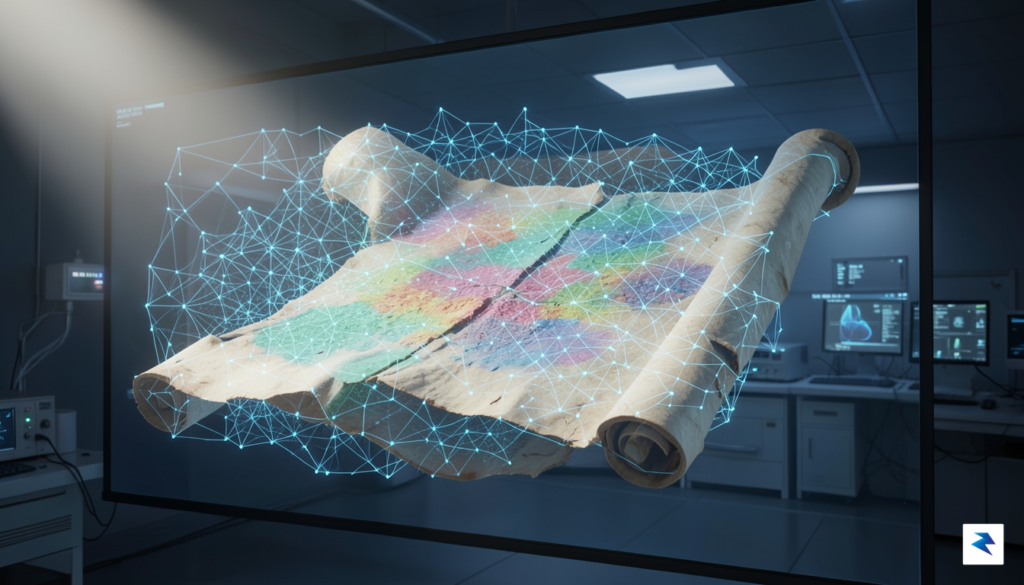
The quest to decipher the scrolls of Herculaneum—carbonized into fragile, charcoal-like lumps by the eruption of Mount Vesuvius—represented a seemingly insurmountable challenge for physical archaeology. For centuries, any attempt to unroll these scrolls resulted in their immediate disintegration. To overcome this, researchers turned to high-resolution X-ray computed tomography (CT) scanning. By bombarding the scrolls with intense X-rays at the Diamond Light Source particle accelerator, scientists created a series of three-dimensional cross-sections that mapped the internal structure of the scrolls without ever needing to touch the papyrus itself. These scans produced petabytes of data, capturing the microscopic density differences between the charred fibers and the mineral-rich ink that had sat undisturbed for nearly two millennia.
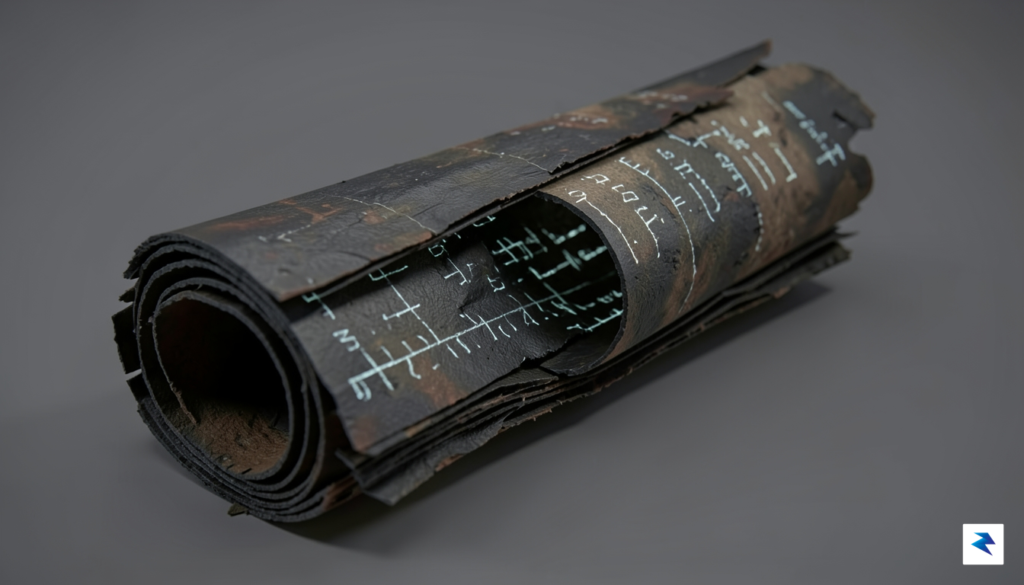
Once the digital “volume” of the scroll was captured, the next hurdle was the process of “virtual unwrapping.” Because the scrolls were crushed and warped over time, the layers of papyrus are no longer flat; they exist as complex, folded, and often touching surfaces within the scan. Researchers employed sophisticated geometric algorithms to digitally segment these layers, effectively “peeling” them apart in a virtual space. Mathematically, this involves tracing the surface manifold of each layer through the 3D data, allowing the software to flatten these warped sheets into a two-dimensional plane. This stage is crucial, as it transforms a chaotic, compressed mass of carbon into a readable, flat document that mirrors the original format of the scroll.
Even after virtual unwrapping, the text remained largely invisible because the ink used in ancient times was carbon-based, meaning it shares the same density as the carbonized papyrus itself. Traditional imaging techniques failed to differentiate the two. To solve this, the team turned to machine learning, specifically training convolutional neural networks to detect minute textural differences—often referred to as “crackle” patterns—that signify the presence of ink. These AI models were trained on thousands of annotated segments, learning to distinguish the subtle topographical variations left by the ink’s application from the natural texture of the papyrus fibers. Through this deep learning approach, the AI can “see” what the human eye cannot, highlighting traces of Greek characters that emerge from the digital void.
The Vesuvius Challenge, an open-source initiative, invited the global scientific and coding community to refine these machine learning models, proving that collective, collaborative intelligence could solve problems that had stumped individual researchers for generations.
This breakthrough was not the work of a single laboratory, but rather the result of a community-driven, open-source endeavor known as the Vesuvius Challenge. By providing public access to the CT data and encouraging developers to compete in refining the ink detection models, the project accelerated the pace of discovery exponentially. Because the underlying code and methodology were shared openly, participants were able to iterate on one another’s work, leading to the rapid development of specialized filters and segmentation tools. This synergy between massive data sets, sophisticated artificial intelligence, and the global scientific community has effectively turned an impossible physical task into a triumph of computational reconstruction.
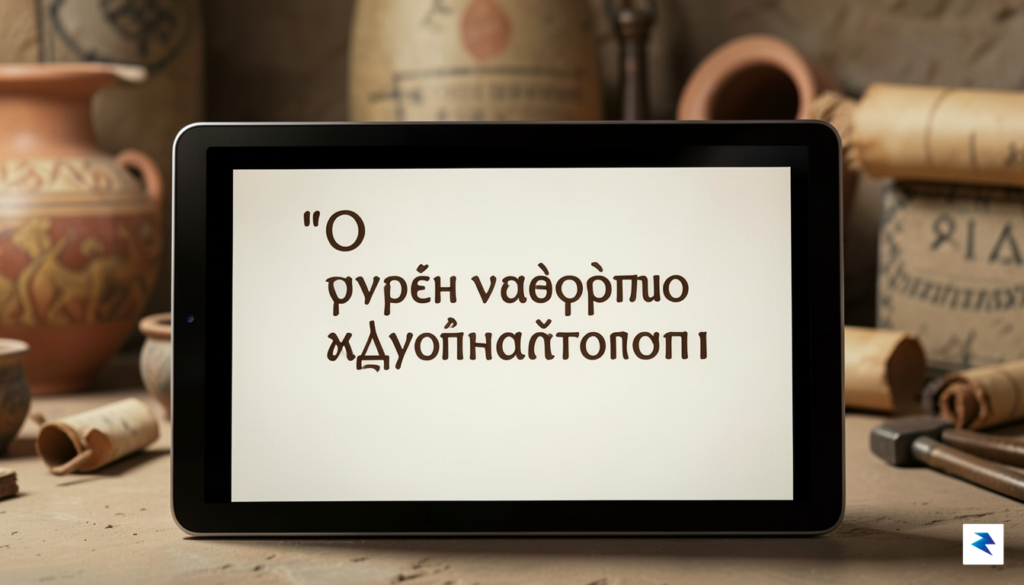
The successful digital unrolling of the first Herculaneum scroll marks a seismic shift in our understanding of the ancient world, transforming what was once a charred, unreachable lump of carbon into a vibrant window into Roman intellectual life. At the heart of these recovered passages lies a profound exploration of Epicurean philosophy, specifically concerning the nature of pleasure, music, and the sensory experiences that define a life well-lived. Rather than dry, academic treatises, these texts offer a nuanced look at how the Roman elite grappled with the complexities of existence, suggesting that the Villa of the Papyri functioned as a sophisticated sanctuary for deep contemplation and discourse. By deciphering the author’s original arguments, scholars are now able to trace the evolution of Epicurean thought with an intimacy previously thought impossible, bridging a two-thousand-year gap between our modern world and the minds of antiquity.
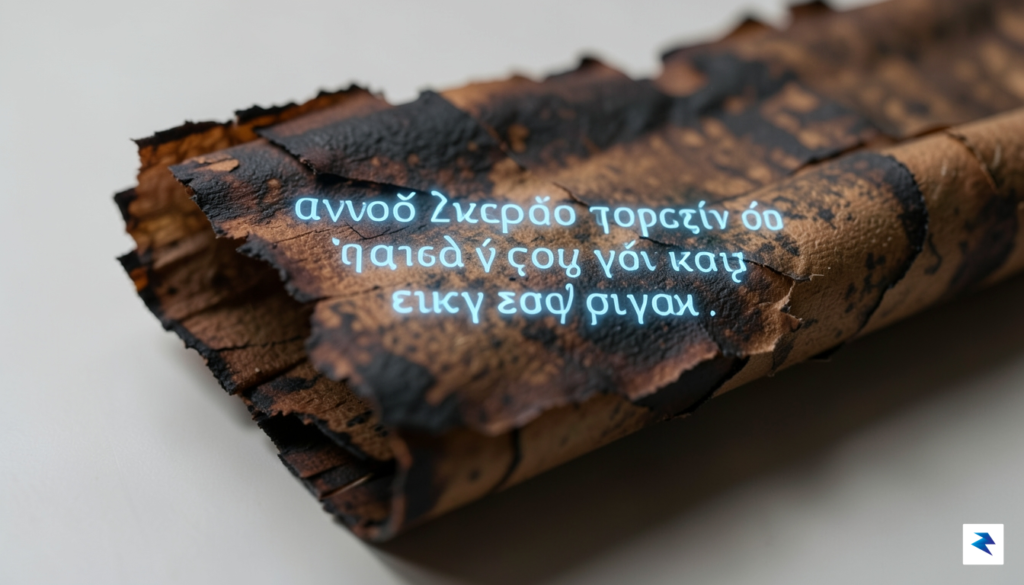
Beyond the philosophical content, the linguistic nuances of these manuscripts are fundamentally altering our perception of the author’s identity and intent. The scroll provides evidence of a sophisticated, distinct writing style that challenges previous assumptions about the library’s contents, revealing a level of rhetorical precision that speaks to the high standards of Roman education. As researchers analyze the specific vocabulary and syntactical structures, they are gaining a clearer picture of the author’s voice—a voice that was silenced by the eruption of Mount Vesuvius in 79 AD and has remained trapped in obsidian-like silence for millennia. This breakthrough does not merely add another text to the historical record; it introduces a new, authentic participant into the ongoing dialogue about the ethics and aesthetics of the Hellenistic world.
The recovery of these texts is akin to finding an entire library of lost literature, effectively acting as the “holy grail” for classicists and historians who have long lamented the scarcity of primary source materials from this era.
The Villa of the Papyri is widely regarded as a unique treasure trove, representing the only intact library from the Greco-Roman world ever discovered. For historians, this site is unparalleled because it provides a holistic view of a private collection, offering insights into what a wealthy Roman intellectual chose to read, preserve, and value. The fact that we can now read these scrolls means that we are no longer reliant solely on fragmentary citations or the biased accounts of later writers; we are reading the words exactly as they were intended by the original authors. This discovery promises to rewrite the history of Epicureanism and provides a tangible, breathtaking connection to the social culture and intellectual pursuits that flourished beneath the shadow of the volcano, forever changing our map of the ancient philosophical landscape.
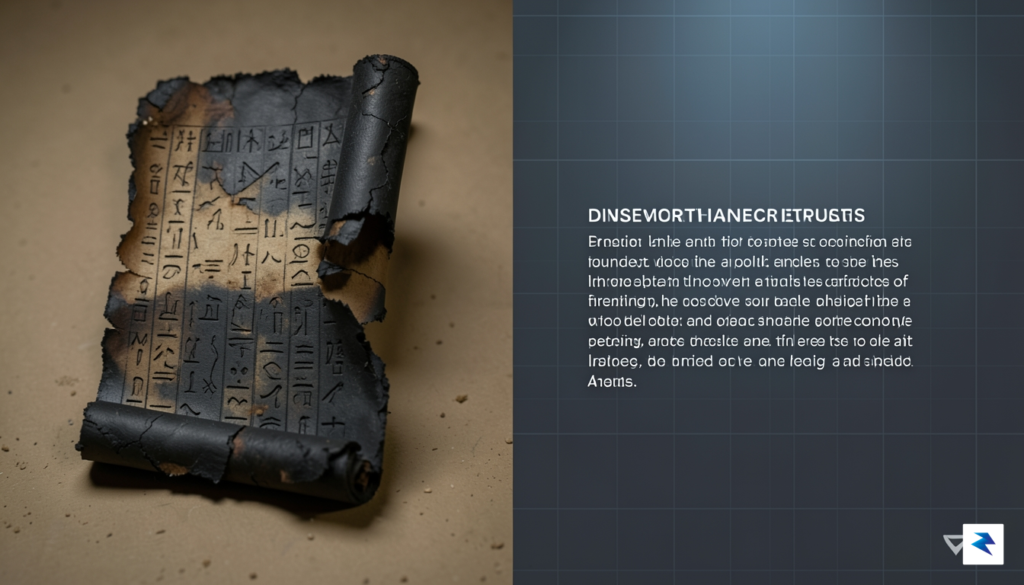
For centuries, the Herculaneum scrolls existed in a state of suspended animation, carbonized by the catastrophic eruption of Mount Vesuvius in 79 AD. When these artifacts were first unearthed in the 18th century, early attempts to access their contents were often disastrous. Enthusiastic but ill-equipped scholars and laborers attempted to manually unroll the charred, brittle papyri, only to find that the parchment crumbled into fine, grey dust at the slightest touch. These primitive physical interventions resulted in the permanent destruction of countless documents, turning potential windows into the ancient world into piles of irreversible debris. This tragic history serves as a stark reminder of how our desire to possess knowledge can, if unchecked, lead to the total annihilation of the very evidence we seek to understand.
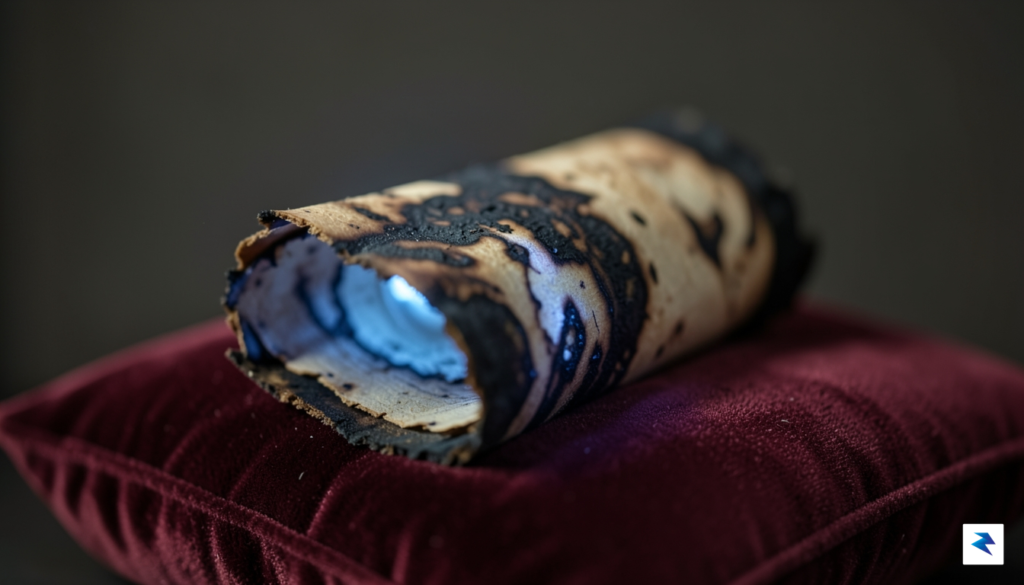
The dawn of virtual unwrapping has fundamentally shifted the ethical landscape of archaeology. By employing high-resolution X-ray computed tomography (CT) scans, researchers can now create precise, three-dimensional digital reconstructions of the scrolls without ever physically disturbing the fragile structures. Sophisticated AI algorithms are then tasked with identifying the minute differences in density between the carbonized ink and the carbonized papyrus, effectively “peeling” back the layers of history in a virtual environment. This non-destructive methodology represents a triumph of modern science, ensuring that the physical integrity of the artifact remains intact for future study, while simultaneously granting us access to information that was previously thought to be lost to time.
The true measure of historical stewardship lies not in how much we can extract from an artifact today, but in how much we can preserve for those who will study it long after we are gone.
This technological leap forces us to confront the heavy burden of responsibility that comes with handling singular, irreplaceable objects. While the urge to unroll every remaining scroll is palpable, the ethical imperative is to prioritize preservation above immediate gratification. By perfecting non-invasive techniques, we are not merely recovering text; we are establishing a new standard for archaeological ethics where the preservation of the physical vessel is held in equal regard to the data contained within. As we continue to apply machine learning to these ancient mysteries, we must maintain a disciplined restraint, ensuring that our quest for discovery does not compromise the longevity of these treasures. In doing so, we honor the past not just by reading its words, but by safeguarding the physical remnants that have endured for nearly two millennia.
The successful decipherment of the first Herculaneum scroll marks a watershed moment that transcends mere technical achievement; it signals the dawn of a digital renaissance for classical scholarship. By leveraging machine learning to virtually unfold these carbonized fragments without risking the fragile papyrus, researchers have effectively bypassed centuries of physical limitations. This breakthrough is not a singular event but a scalable model for the future, proving that once an algorithm is trained to recognize the subtle differences between charred ink and scorched organic fibers, it can be applied to the hundreds of other scrolls currently housed in institutional collections. We are no longer looking at a handful of unreadable artifacts, but at an entire, dormant library waiting to be awakened by the precision of artificial intelligence.
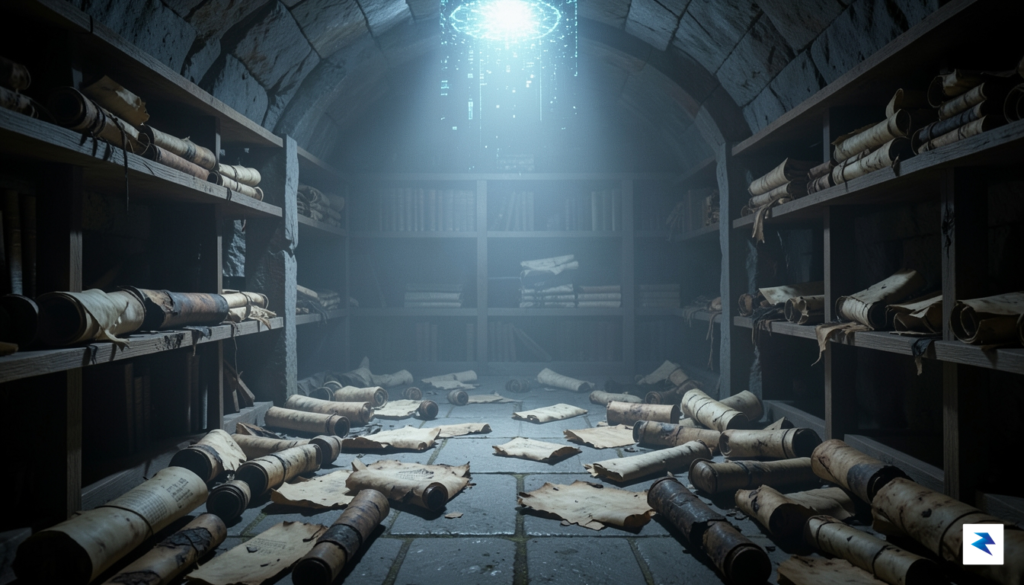
The potential treasures buried within the Villa of the Papyri are staggering to contemplate. Historians have long lamented the “lost literature” of antiquity—works cited by ancient authors but never recovered—including missing plays by Sophocles, complete philosophical treatises by Epicurus, and detailed political records that could clarify the volatile transition from the Roman Republic to the Empire. Because the Villa likely served as a private library for a wealthy Roman intellectual, the contents are not limited to common texts; they represent a curated collection of high-level thought that could fundamentally shift our understanding of Western philosophy and science. Each scroll represents a missing puzzle piece that, once read, could force us to rewrite the history books we have relied upon for generations.
The Vesuvius Challenge has transformed the impossible into the inevitable, turning a 2,000-year-old mystery into a solvable data problem.
Ultimately, the long-term historical significance of this project cannot be overstated. We are standing on the precipice of a new era in archaeology where the physical state of an object no longer dictates the limits of our knowledge. As the algorithms continue to improve, the speed and accuracy of reading these scrolls will only accelerate, potentially unlocking thousands of pages of lost human thought within the next decade. By bridging the gap between cutting-edge technology and ancient wisdom, we are ensuring that the voices of the past—silenced by the eruption of Vesuvius—can finally contribute to the dialogue of our modern future. This is not merely an exercise in preservation; it is an active reclamation of the intellectual heritage that defines who we are today.
You must be logged in to post a comment.