
Why Wildfire Smoke Is Reaching Cities Far From the Source
The New Reality: Why Wildfire Smoke Is Traveling Further Than Ever The transformation of our skies into an unsettling, sepia-toned haze is not…


The cloud computing landscape was briefly thrown into a state of panic when a significant technical glitch within the Amazon Web Services (AWS) billing infrastructure caused several enterprise customers to receive invoices reflecting astronomical, multi-billion-dollar charges. For many organizations, the sight of a nine-figure bill appearing in their account dashboard was not just a technical curiosity but a moment of genuine alarm, as the potential financial implications for automated payment systems could have been catastrophic. These discrepancies, which appeared to stem from a calculation error within the platform’s usage reporting mechanism, underscored the inherent fragility of highly complex, automated cloud management ecosystems that govern the global digital economy.
The timeline of this incident was marked by a rapid escalation of concern across social media platforms and technical forums. As users began sharing screenshots of their inflated invoices, the collective anxiety within the DevOps and IT management communities grew exponentially. It became clear that this was not an isolated display issue but a widespread systemic anomaly that affected users across various regions and service tiers. The discrepancy between actual resource consumption and the reported monetary value suggested a failure in the backend logic responsible for aggregating and pricing cloud usage data, leading to a temporary breakdown in trust for those who rely on the platform’s transparency to manage their operational budgets.
Following the surge of reports, Amazon Web Services issued a swift public acknowledgment to mitigate the growing confusion. The company clarified that the astronomical figures were, in fact, the result of a temporary display error and did not represent actual liability for the affected customers. By proactively communicating the nature of the glitch, AWS was able to stabilize the situation before it could trigger automated payment failures or widespread service suspensions. This incident serves as a poignant reminder of the importance of robust monitoring and the necessity for human oversight in systems that operate at such a massive scale.
The incident highlights a critical reality in modern IT: even the most sophisticated cloud infrastructure, built on layers of automation and abstraction, is susceptible to logic errors that can have profound, real-world financial consequences.
Ultimately, while the situation was resolved without permanent financial damage, it has sparked a broader conversation regarding the transparency of cloud billing. For many businesses, the event acted as a stress test for their internal financial controls. Moving forward, the incident reinforces the need for organizations to implement secondary auditing measures, ensuring that even if an automated system reports a billion-dollar expenditure, there are safeguards in place to verify the legitimacy of such data before any financial transactions are executed.

At the heart of hyperscale cloud computing lies a paradox: the more automated and efficient a system becomes, the more difficult it is to audit its internal logic in real-time. Cloud billing engines are not simple calculators; they are massive, distributed data pipelines that ingest billions of telemetry events every single second. These events—ranging from individual API calls to complex data transfer metrics—must be normalized, aggregated, and mapped against an intricate web of pricing schemas, discounts, and regional variables. When a failure occurs, it is rarely the result of a single “broken” button, but rather a cascading logic error within the ingestion layer where high-velocity data meets legacy pricing rules.
The complexity of these billing systems is further compounded by the nature of distributed microservices. In an infrastructure as vast as AWS, different services report their usage patterns through various telemetry streams. If a specific service experiences a latency spike or a configuration drift in its metering logic, it may transmit corrupted metadata to the centralized billing engine. Because these systems are designed to be “eventually consistent” to maintain performance, a faulty data packet can propagate through the stack before automated safeguards have the chance to validate its integrity. This creates a window of vulnerability where a miscalculated integer—perhaps due to a floating-point error or a misplaced decimal—is processed as a legitimate charge, resulting in the astronomical figures that occasionally shock enterprise accounts.

Even with rigorous CI/CD pipelines and massive automated testing suites, the sheer scale of cloud infrastructure introduces “black swan” events that are nearly impossible to simulate in a staging environment. Billing logic is inherently stateful, meaning it relies on previous interactions and ongoing subscription cycles, which makes testing against every possible permutation of user behavior a mathematical impossibility. When developers introduce new features or update pricing tiers, they must integrate these changes into a system that was built over decades. Sometimes, a seemingly benign update to a database schema or a minor tweak to a load-balancing algorithm can trigger unforeseen edge cases in the billing engine, causing it to misinterpret usage data.
The core challenge in cloud billing is the decoupling of service consumption from financial settlement; the further apart these two systems are in the architecture, the harder it is to maintain a perfect audit trail.
Ultimately, these financial glitches are a byproduct of the same architectural philosophy that makes cloud computing so powerful: modularity and speed. By prioritizing low-latency data processing, the cloud architecture inherently trades off the ability to perform a synchronous, “stop-the-world” validation of every financial transaction. While providers continue to harden these systems with anomaly detection and automated circuit breakers, the speed at which cloud resources are provisioned and decommissioned means that human-in-the-loop oversight will always trail behind the machines. Understanding this technical reality is essential for organizations, as it highlights why maintaining independent, third-party cost monitoring is not just a best practice, but a critical safety net against the inherent volatility of automated high-scale accounting.
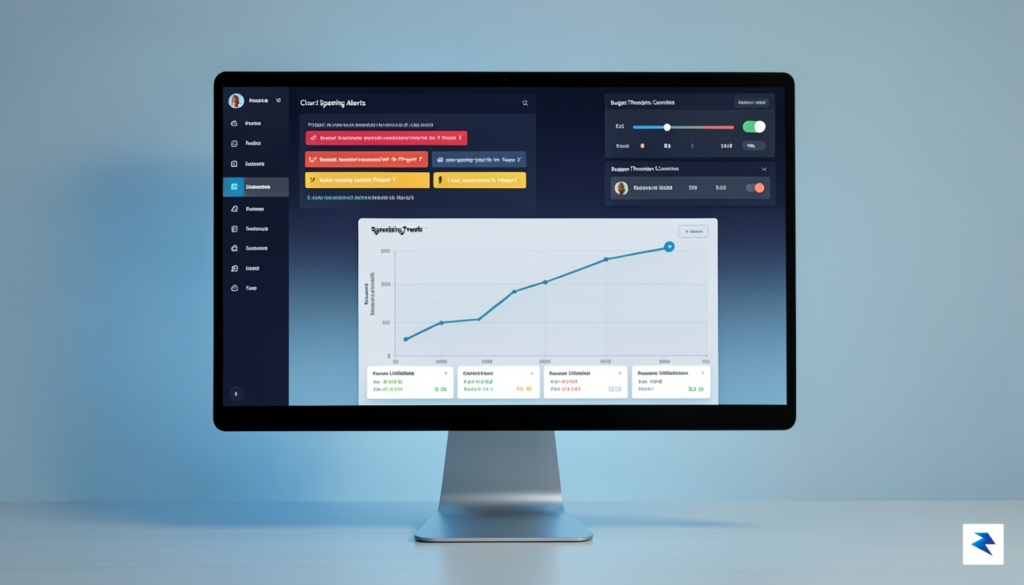
The recent billing anomalies experienced by AWS customers serve as a stark reminder that even the most robust cloud infrastructure requires proactive financial oversight. Relying entirely on a provider’s billing accuracy is a dangerous strategy that leaves organizations vulnerable to everything from configuration errors and runaway scripts to systemic platform glitches. To protect your bottom line, you must transition from a passive monitoring mindset to a proactive, multi-layered defense strategy that treats cloud spend as a critical operational risk rather than a static administrative expense.

The first line of defense involves implementing AWS Budgets, which acts as a primary safety net for your monthly expenditure. By setting granular budget thresholds—not just for your total account, but for specific services and tags—you create a system that triggers immediate alerts when spending patterns deviate from expected norms. Beyond simple alerts, you should configure these budgets to trigger automated actions, such as notifying your DevOps team via SNS or even executing Lambda functions to pause non-critical resources if a cost ceiling is breached. This level of automation ensures that a potential billing spike is addressed in minutes rather than days, preventing a minor misconfiguration from escalating into a fiscal crisis.
Complementing these static budgets, AWS Cost Anomaly Detection utilizes machine learning to identify irregular spending patterns that might otherwise go unnoticed. Unlike manual alerts that rely on fixed numbers, this service continuously monitors your usage patterns to establish a baseline of “normal” behavior, flagging deviations that often precede a massive bill. To maximize the effectiveness of these tools, consider the following best practices:
Financial guardrails are not just a tool for cost optimization; they are an essential component of modern cloud governance that ensures organizational continuity during unforeseen platform instability.
Ultimately, technical safeguards must be paired with clear internal communication. Your cloud architecture and finance teams should hold regular “cost synchronization” meetings to review recent billing data and discuss upcoming infrastructure changes. When teams communicate effectively and leverage the native alerting tools provided by AWS, they transform from being reactive victims of billing glitches to proactive stewards of their organization’s cloud budget. By treating cloud spend with the same rigor as security and performance monitoring, you ensure that your business remains resilient against both human error and systemic provider volatility.

When a technical failure impacts the financial integrity of a customer’s account, the stakes shift from mere operational inconvenience to a fundamental crisis of confidence. In the cloud computing era, where billing is automated and often opaque, an erroneous invoice displaying a figure in the billions acts as a massive shock to the system. The immediate response from a service provider in such moments is not just about correcting a database record; it is about managing the psychological state of the user base. Companies must prioritize rapid, human-centric communication over automated ticketing systems, acknowledging the error before users have the chance to panic or, worse, lose faith in the platform’s financial controls.
Industry standards for incident reporting dictate that transparency is the most effective tool for mitigating fallout. A company’s first responsibility is to provide an immediate, clear explanation of the scope of the error, confirming exactly what went wrong and, crucially, what is being done to reverse it. When dealing with financial data, silence is often interpreted by stakeholders as systemic instability. By proactively addressing these fears through dedicated status pages and direct outreach, organizations demonstrate that they respect the client’s bottom line as much as their own. Establishing this level of transparency is essential for maintaining Service Level Agreements (SLAs), which are designed to protect both the provider and the customer during periods of service degradation or technical failure.
The true measure of a cloud provider’s reliability is not found in their uptime, but in how they handle the rare, high-stakes errors that threaten their customers’ financial peace of mind.
Furthermore, crisis management in the cloud space requires a nuanced approach to the “financial panic” that naturally follows a billing glitch. It is not enough to simply send an automated email stating that the error is being investigated; companies should offer concrete timelines and assurances that the incorrect charges have been quarantined from payment processing cycles. This prevents the nightmare scenario of automated bank drafts or credit card charges being triggered by a buggy system. Effective crisis management involves:
Ultimately, the long-term trust of a customer base is built on the willingness of a corporation to own its mistakes without deflection. When a company treats a billion-dollar glitch with the same level of urgency as a complete infrastructure outage, it signals that they understand the gravity of their role as a financial steward. By refining their communication protocols and prioritizing human clarity, providers can transform a potentially catastrophic PR failure into a demonstration of robust, accountable service management.

Moving beyond reactive firefighting requires a fundamental shift in how organizations perceive their cloud infrastructure. Rather than viewing the cloud as a static utility, forward-thinking teams must embrace a FinOps culture, where financial accountability is treated as a core component of engineering excellence. By integrating cloud cost management into the software development lifecycle, businesses can transform unpredictable invoices into a strategic advantage, ensuring that every dollar spent directly supports value-driven business objectives.
The foundation of any robust financial governance strategy begins with a granular, strictly enforced tagging policy. Without clear labels on resources—identifying the owner, the environment (e.g., development, staging, production), and the specific product or project—it is nearly impossible to correlate costs with business output. Implementing automated tagging policies ensures that no resource can be provisioned unless it adheres to these naming conventions, thereby providing the visibility necessary to identify cost drivers and eliminate “zombie” infrastructure that continues to accrue charges long after its utility has expired.

Proactive cost management also demands a rigorous lifecycle strategy for cloud assets. Organizations should utilize automated policies to prune unattached volumes, decommission idle compute instances, and downsize over-provisioned services that consistently run below capacity. Regular financial audits of the entire cloud footprint should be conducted at least monthly, not just as a defensive measure against billing errors, but as an opportunity to reassess architectural efficiency. By treating these audits as a standard operating procedure, engineering teams can identify architectural waste early, preventing the exponential accumulation of unnecessary expenses.
True cloud financial health is achieved when engineering, finance, and product teams speak the same language, transforming cloud spend from a mysterious operational burden into a transparent, managed investment.
While native cloud provider tools provide the necessary data, they are often insufficient for large-scale, multi-account environments. Integrating third-party cost-monitoring and anomaly detection software is essential for maintaining a real-time pulse on spending patterns. These platforms offer sophisticated alerting mechanisms that notify stakeholders the moment a spending threshold is breached or an unusual usage spike occurs, acting as a vital safety net against the kind of catastrophic billing glitches that occasionally plague large-scale providers. When these tools are coupled with a regular cadence of internal reviews, they create a comprehensive feedback loop that keeps cloud financial health aligned with shifting business goals.
You must be logged in to post a comment.