
AWS Billing Glitch: What Happened and How to Protect Your Cloud Spend
Understanding the AWS Billing Anomaly The cloud computing landscape was briefly thrown into a state of panic when a significant technical…

The barrier to entry for creating hyper-realistic synthetic media has plummeted, transforming what was once a complex endeavor for visual effects experts into a task that anyone with a smartphone can accomplish in seconds. As generative AI models become increasingly sophisticated, the digital landscape has seen a sudden, uncontrollable surge in unauthorized deepfakes, ranging from harmless parodies to malicious impersonations. For many content creators, this represents a direct threat to their personal brand and professional integrity; when an AI can mimic a creator’s voice, mannerisms, and physical appearance with unnerving precision, the line between authentic human expression and manufactured deception blurs. This evolution in technology has created a precarious environment where trust is easily compromised, and the potential for reputational damage has reached an all-time high.
Beyond the personal stakes for individual creators, there is a mounting systemic pressure on major social media platforms to serve as the front line of defense for digital identity. As the primary hosts of global creative content, platforms like TikTok find themselves in a complex position: they must foster an environment that encourages innovative AI experimentation while simultaneously shielding their users from the harms of non-consensual synthetic replicas. For years, moderation efforts were largely reactive, relying on human reports and delayed algorithmic flagging to remove harmful content after it had already caused damage. However, the sheer volume of AI-generated content flooding the internet has made this manual approach unsustainable, necessitating a transition toward proactive, automated solutions that can identify synthetic likenesses before they proliferate across the platform.

The transition toward built-in, automated detection tools marks a pivotal shift in the social media industry, moving away from simple content moderation and toward a more robust architecture of identity verification and digital provenance.
This proactive shift is not merely a technical upgrade; it is a fundamental acknowledgment that the current landscape requires a more rigorous approach to intellectual property and personal safety. By testing advanced likeness detection tools, TikTok is attempting to build a system that can distinguish between organic creativity and synthetic manipulation at the point of upload. These tools aim to flag or label content that uses another person’s likeness without authorization, providing creators with a layer of protection that was previously unavailable. As this technology matures, it will likely become a standard feature for all social media ecosystems, forcing a broader conversation about how we define authenticity in an era where seeing is no longer necessarily believing.
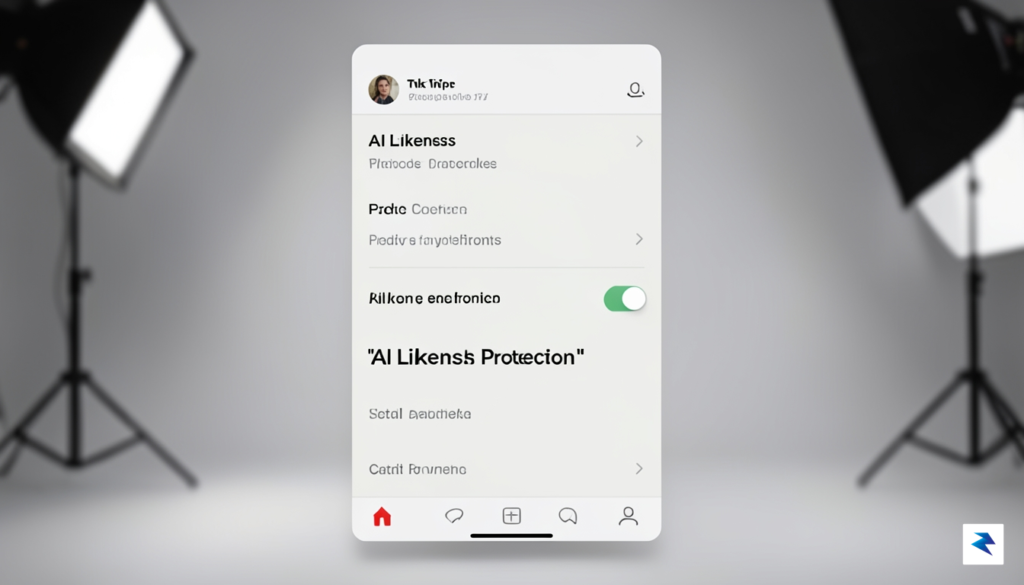
The core of this new initiative is a voluntary, opt-in layer of protection designed specifically for creators who wish to safeguard their digital identity. By enabling this feature, users grant TikTok permission to actively scan their uploaded content to build a digital baseline of their unique facial features and vocal patterns. Once this baseline is established, the platform’s sophisticated detection engine continuously monitors the site for other uploads that mirror these specific characteristics. This proactive approach shifts the burden of policing deepfakes away from the individual creator, as the system works in the background to flag content that attempts to synthesize or replicate their likeness without authorization.
Technically, the detection tool operates by analyzing the biometric markers and acoustic signatures inherent in a user’s authorized content. When the system identifies a video that bears a high degree of mathematical similarity to a creator’s registered data, it triggers a specialized review process. This scanning process is designed to be highly granular, focusing on subtle nuances—such as the way a person’s face moves during speech or the unique cadence of their voice—that AI models often struggle to replicate perfectly. By identifying these discrepancies, the system can distinguish between a genuine video of the creator and a synthetic replica, even when the fabrication is high-fidelity.

Currently, the pilot program is restricted to a small cohort of creators within the United States, allowing the platform to calibrate its algorithms before a potential global rollout. A significant challenge for this technology lies in the delicate balance between preventing malicious impersonation and protecting creative expression. To address this, the tool is being trained to differentiate between harmful deepfakes intended to deceive viewers and transformative content, such as parody, satire, or fan-made edits. The system evaluates the context and intent behind the content to ensure that creators who are merely being referenced or spoofed in a non-malicious way are not unfairly penalized or silenced by overly aggressive automated takedowns.
The success of this tool hinges on its ability to distinguish between identity theft and artistic expression, ensuring that creators maintain agency over their likeness without stifling the platform’s vibrant culture of remixing and parody.
As the pilot progresses, TikTok is refining the feedback loops that allow creators to report false positives or request manual interventions if the AI misidentifies a legitimate post as an impersonation. This human-in-the-loop component is essential, as it acknowledges that automated detection is rarely flawless and that digital rights are often too nuanced for code alone to resolve. By prioritizing transparency and user control, the company aims to establish a standard where creators feel secure enough to innovate, knowing that their most valuable asset—their own identity—is protected by a robust, evolving layer of digital defense.

When a creator discovers that their likeness has been misappropriated through generative AI, the path to resolution is designed to be as intuitive as the platform’s standard moderation tools. By integrating this new detection technology directly into the existing reporting ecosystem, TikTok ensures that users do not need to navigate complex legal jargon or external support tickets to protect their digital identity. If a creator identifies a video that uses their face or voice without consent, they can simply access the “Report” menu, where a specific category for AI-generated impersonation will now appear. This streamlined interface prompts the user to provide necessary context, effectively flagging the content for an accelerated review process that prioritizes the protection of personal rights.
Once a report is submitted, the workflow shifts from automated detection to a robust verification cycle. While the platform’s underlying algorithms are sophisticated enough to identify high-probability matches of a creator’s likeness, TikTok maintains a vital human-in-the-loop component to ensure accuracy. Trained moderation teams examine the flagged content to determine if the material constitutes a violation of community standards regarding deceptive practices or non-consensual deepfakes. This human oversight is crucial for distinguishing between malicious impersonation and benign creative expression, such as fan edits or parody, which may not always trigger a removal penalty depending on the platform’s evolving policies on creative appropriation.

The potential outcomes for accounts found in violation are structured to discourage the proliferation of deceptive AI media. Depending on the severity of the infraction and the user’s history on the platform, consequences can range from the forced removal of the offending video to temporary account suspension or permanent bans for repeat offenders. In cases where the content is deemed deceptive but not necessarily harmful, TikTok may instead require the user to add a clear, prominent disclosure label indicating that the content is AI-generated, thereby ensuring transparency for the viewer. This nuanced approach allows the platform to maintain a balance between fostering creative freedom and upholding the fundamental right of creators to control their own digital presence.
The integration of AI-detection into the reporting flow marks a pivotal shift in how social platforms handle synthetic media, moving from reactive moderation to proactive enforcement of creator rights.
Ultimately, this reporting mechanism serves as a necessary safety net in an era where synthetic media is becoming increasingly indistinguishable from reality. By providing a clear, actionable path for creators to reclaim their likeness, TikTok is reinforcing a culture of accountability. As these tools continue to evolve, the goal is to make the digital environment safer for everyone, ensuring that technological progress does not come at the expense of an individual’s right to their own identity.
TikTok’s recent foray into AI likeness detection does not exist in a vacuum; rather, it represents a critical chapter in a broader, high-stakes arms race across the social media landscape. As generative AI tools become increasingly sophisticated and accessible to the average user, major platforms are finding themselves in a collective scramble to protect the integrity of their ecosystems. This movement is spearheaded by industry giants like YouTube, which has already begun rolling out mandatory disclosure requirements for creators who use AI to produce realistic content. By comparing TikTok’s emerging detection tools with YouTube’s existing content labeling policies, it becomes clear that the industry is pivoting toward a standardized form of digital fingerprinting—a necessary infrastructure designed to distinguish between authentic human expression and synthetic manipulation.
The urgency behind these initiatives is driven by a shared fear of eroding user trust. If social media platforms become flooded with hyper-realistic deepfakes or AI-generated personas, the perceived value of human-centered content threatens to plummet. Consequently, these companies are prioritizing technical solutions that can automatically identify and flag synthetic media, ensuring that audiences can navigate their feeds without being deceived by sophisticated algorithms. This is not merely a competitive effort to see who can build the better mousetrap; it is a collaborative necessity. By establishing industry-wide norms for how AI content is labeled and detected, platforms are attempting to set a baseline of safety that will help mitigate the potential for misinformation and identity fraud on a global scale.
The shift toward standardized AI detection is a fundamental turning point for digital media, marking the transition from a “wild west” of generative content to an era of enforced transparency and digital provenance.
Beyond the technical mechanics of these detection tools, there is a strategic race to define the “gold standard” of authenticity. While YouTube has focused heavily on creator-led disclosures—relying on the uploader to be honest about their process—TikTok’s move toward automated likeness detection suggests a shift toward more proactive, platform-side policing. This dual approach of self-reporting and automated verification creates a multi-layered defense strategy. As these platforms continue to iterate, the goal remains the same: preserving the humanity of the user experience. By integrating these safety features now, these tech giants are signaling to both regulators and users that they are taking the threat of synthetic media seriously, effectively laying the groundwork for a future where content provenance is just as important as the content itself.

While TikTok’s move to implement AI likeness detection is a commendable step toward platform integrity, it is vital to recognize that technology is rarely a silver bullet. The primary obstacle lies in the perpetual cat-and-mouse game between detection software and generative models. As soon as a detection tool identifies a specific pattern or digital fingerprint inherent to AI-generated content, developers of those generative tools often refine their algorithms to obscure those very markers. This means that even the most sophisticated detection systems are constantly playing catch-up, forced to evolve at the same breakneck speed as the synthetic media they are designed to flag.
Furthermore, the risk of false positives remains a significant technical and ethical hurdle. Automated systems analyze content using probabilistic models, which means they do not always achieve 100% accuracy. There is a tangible danger that authentic, human-created content—or even transformative, high-quality edits—could be incorrectly flagged as synthetic. Such misidentification can lead to unnecessary reach suppression or account strikes, which can be devastating for creators who rely on their digital reputation. Achieving a balance where the system is sensitive enough to catch malicious deepfakes but precise enough to avoid punishing legitimate creativity is an incredibly delicate engineering feat.
The challenge extends beyond the purely technical into the realm of creative expression and digital rights. AI is increasingly used for satire, parody, and artistic interpretation, all of which are cornerstones of internet culture. If detection tools become too aggressive or blunt in their application, they risk stifling creative freedom by automatically penalizing content that is clearly intended as a joke or a transformative work. Distinguishing between a malicious deepfake designed to deceive and a harmless parody intended to entertain requires a level of nuance that algorithms currently struggle to replicate without human oversight.
The core difficulty lies in the fact that detection is a reactive science, whereas generative AI is a proactive, rapidly iterating art form.
Finally, we must acknowledge the current limitations of the opt-in model. If a detection system is not universally applied to every piece of content uploaded to the platform, bad actors can simply choose not to utilize the labeling features. This creates a fragmented landscape where users are left to wonder whether an unlabelled video is truly organic or simply an AI-generated clip that bypassed the detection filter. For these tools to be truly effective, the industry will need to move toward more standardized, transparent, and perhaps even mandatory watermarking protocols that exist independently of individual creator settings.

As we stand on the precipice of a new era in digital expression, the implementation of AI likeness detection is likely just the beginning of a much broader structural shift. Moving forward, the boundary between authentic human expression and synthetically generated content will continue to blur, making the verification of one’s digital presence a fundamental requirement for every creator. We are shifting toward a landscape where provenance—the history of who created a piece of content and how it was made—will be just as valuable as the creative work itself. In this environment, creators will need to rely on sophisticated technological safeguards, such as blockchain-based digital signatures or cryptographic watermarking, to prove that their content belongs to them and has not been altered by malicious actors.

This evolution will inevitably reshape the economics of the creator industry, particularly regarding how likenesses are monetized. Instead of merely licensing traditional image rights, creators may soon begin to offer “officially licensed” AI avatars, allowing them to scale their output while retaining strict control over their digital likeness. By utilizing secure platforms that distinguish between authorized AI-generated clones and unauthorized deepfakes, creators can open up new revenue streams that protect their brand equity while simultaneously increasing their reach. This shift effectively turns a creator’s identity into a verified asset that can be safely traded, licensed, and utilized in collaborative partnerships without the risk of identity theft or misinformation.
The long-term health of the creator economy depends on our ability to distinguish between a genuine human connection and a hollow, algorithmic simulation.
Ultimately, the long-term impact of these tools will be a massive restoration of trust across social media ecosystems. When audiences know that the content they are consuming has been authenticated, the value of human-led storytelling will be reinforced rather than diminished. While the rise of sophisticated AI tools initially threatened to undermine the credibility of influencers and brands, this push toward verification brings us closer to a more transparent digital world. By prioritizing content integrity today, platforms are laying the groundwork for a future where digital identity is not just a collection of uploads, but a secure, verifiable testament to the individual behind the screen.
You must be logged in to post a comment.