
Is That Really Your Family? How the New Savi App Fights AI Voice Scams
The Rise of Hyper-Realistic AI Scams The landscape of digital deception has undergone a seismic shift, moving rapidly away from the clunky,…


At the heart of the recent BONK treasury breach lies the inherent vulnerability of token-weighted governance, a mechanism where voting power is directly proportional to the number of tokens held. In a standard Decentralized Autonomous Organization (DAO), this model is intended to ensure that those with the most “skin in the game” have the greatest influence over the project’s direction. However, this system inadvertently creates an attack vector for bad actors who can commodify voting power. By strategically accumulating a vast quantity of BONK tokens—effectively purchasing the right to dictate policy—the attacker was able to circumvent the democratic safeguards meant to protect community assets.
The execution of this exploit was as calculated as it was costly. The attacker deployed approximately $4 million in capital to amass a significant enough stake in the governance process to overwhelm legitimate community participation. Once this threshold of voting power was secured, the attacker introduced a malicious proposal designed to look like routine administrative maintenance. Because the proposal met the technical requirements for a majority vote, the DAO’s smart contracts automatically executed the transaction, viewing the attacker’s massive influx of votes as a legitimate mandate from the community. This effectively turned the treasury’s own security protocols against itself, allowing for the unauthorized transfer of $20 million in digital assets.

The fundamental flaw in this scenario is the reliance on token-weighted voting without robust, multi-layered defense mechanisms. When voting power is purely transactional, the DAO becomes vulnerable to any entity with enough capital to buy the majority of the room.
To understand the fragility of this setup, one must contrast it with more secure governance models that require time-weighted voting or identity verification. In many current DAO frameworks, there is little distinction between a long-term community member and a high-frequency trader who happens to hold a large balance at the time of a vote. This lack of nuance allows attackers to initiate “flash” attacks, where they acquire tokens specifically to push through a proposal and then dump the tokens shortly thereafter. By failing to implement anti-sybil measures or quorum requirements that account for the duration of token ownership, the BONK governance structure provided a clear path for this $20 million drain, highlighting a critical need for more sophisticated, resilient decentralized decision-making architectures.

The recent exploitation of the BONK treasury highlights a fundamental flaw in the prevailing “one-token-one-vote” governance model that currently dominates the decentralized finance landscape. By tying voting power directly to token quantity, projects inadvertently transform governance into a marketplace where influence is bought rather than earned. This structure creates a “tyranny of whales,” where individuals or entities with massive financial resources can unilaterally dictate the future of a protocol, often at the expense of smaller stakeholders and the long-term health of the ecosystem. When governance is commoditized, bad actors do not need to persuade the community of their vision; they simply need to acquire enough liquidity to force through malicious proposals, effectively turning a decentralized structure into a playground for hostile takeovers.
The systemic vulnerability here is exacerbated by the ease with which attackers can leverage financial primitives like flash loans or stealth accumulation strategies to bypass democratic guardrails. In many instances, an attacker can borrow massive amounts of capital to temporarily inflate their voting power, execute a malicious transaction, and return the borrowed funds within a single block. This reality reveals that traditional token-weighted voting is ill-equipped to handle the agility of modern DeFi attacks. To combat this, many DAOs are beginning to explore alternative mechanisms, such as quadratic voting, which diminishes the marginal influence of large holdings, or reputation-based systems that require long-term commitment and verified participation rather than simple asset ownership.

To move beyond these structural weaknesses, projects must adopt a multi-layered approach to security that separates financial ownership from decision-making authority. One of the most effective strategies is the implementation of multi-signature requirements, which mandate that sensitive treasury movements be approved by a diverse set of trusted signers rather than a single automated vote. This introduces a human layer of verification that can identify and block anomalous or malicious requests, even if they technically pass a governance vote. By requiring consensus among multiple parties, DAOs can create a buffer that prevents single-point-of-failure scenarios.
True decentralization requires more than just distributed tokens; it requires distributed trust and time-locked mechanisms that prioritize protocol stability over rapid, unchecked changes.
Furthermore, projects should move toward time-locked governance transitions, where any passed proposal must sit in a pending state for a set period before execution. This “cooldown” phase allows the community, security auditors, and developers to review the proposed changes and provides an emergency window to pause the execution if a malicious intent is detected. When protocols prioritize these safeguards, they shift the power dynamic away from predatory accumulation and toward sustainable, community-driven development. Security in the DAO era is no longer just about writing secure code; it is about building governance frameworks that can withstand the adversarial nature of open-market influence.
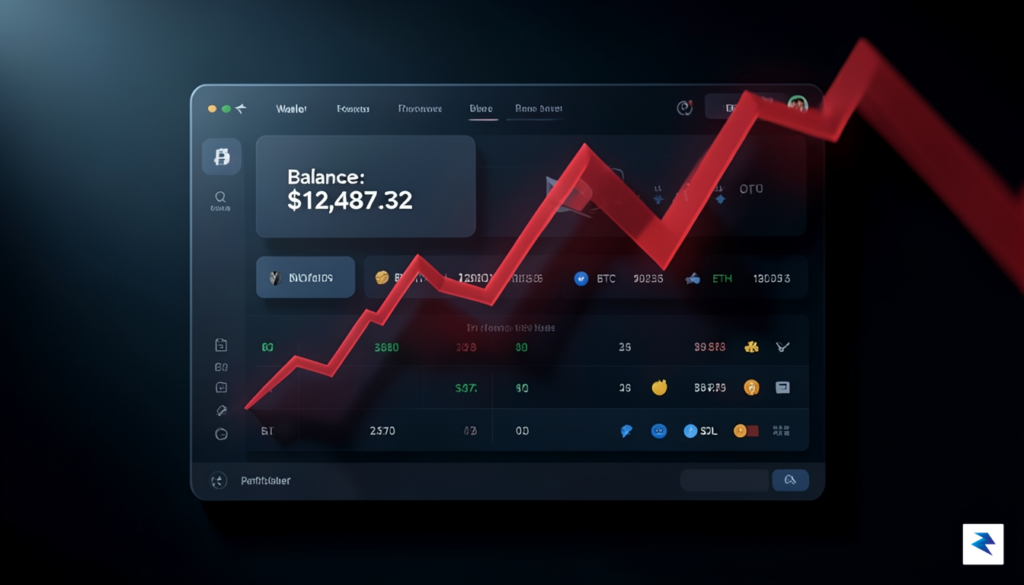
The unauthorized extraction of $20 million from the BONK treasury represents far more than a simple accounting error; it is a structural shock to the ecosystem that threatens the project’s long-term roadmap. By forcing through a malicious governance proposal using a $4 million capital injection, the attacker effectively hijacked the project’s decentralized decision-making apparatus to drain its reserves. This maneuver not only liquidated substantial portions of the treasury but also triggered immediate, cascading volatility across the BONK token price. As the stolen assets were offloaded into secondary markets, the resulting sell pressure overwhelmed existing liquidity pools, creating a sharp downward trend that punished retail holders and eroded the project’s market depth.

Beyond the immediate market mechanics, the breach raises serious questions about the sustainability of the BONK development pipeline. Treasury funds are typically earmarked for ecosystem grants, liquidity incentives, and marketing initiatives—all of which act as the lifeblood of a memecoin’s longevity. When $20 million is siphoned away, the project’s ability to fund these vital growth engines is severely compromised, potentially leading to a stagnation in community engagement and developer participation. If stakeholders begin to perceive the treasury as insecure, the willingness to commit capital to liquidity pools diminishes, creating a “liquidity trap” that makes the token increasingly susceptible to future price manipulation.
The true cost of a governance attack is measured not just in the tokens lost, but in the evaporation of the community’s collective confidence in the project’s foundational infrastructure.
Transparency and communication remain the most critical factors in determining whether the ecosystem can recover from such a significant blow. In the immediate aftermath, the speed and clarity with which the BONK core team addressed the breach serve as a litmus test for institutional trust. If the project’s leadership fails to provide a comprehensive post-mortem or, more importantly, a robust plan to secure the governance mechanisms against future “flash-vote” attacks, the psychological damage may prove irreversible. For the broader memecoin market, this incident serves as a stark reminder that decentralization is a double-edged sword; while it fosters community participation, it also introduces significant governance vulnerabilities that sophisticated actors are increasingly eager to exploit.
Ultimately, the long-term viability of the BONK ecosystem now hinges on how effectively the remaining treasury assets are ring-fenced and how decisively the governance protocols are hardened. Investors are currently watching for concrete changes—such as the implementation of time-locks for major treasury outflows or the introduction of multi-signature requirements for governance changes—that would signal a departure from the vulnerability that permitted this heist. Without these structural safeguards, the $20 million loss may be viewed historically as the beginning of a decline, rather than a singular, contained event.

The recent exploitation of the BONK treasury serves as a sobering wake-up call for the entire decentralized finance ecosystem, illustrating that governance mechanisms are just as susceptible to attack as smart contract code. As the industry transitions from experimental prototypes to managing hundreds of millions of dollars in capital, relying solely on basic token-weighted voting models has proven to be a strategic liability. To prevent future incidents, protocols must adopt a multi-layered security architecture that acknowledges human error and malicious intent as inevitable variables rather than edge cases.

One of the most immediate takeaways from this incident is the urgent need for an emergency pause mechanism governed by a specialized, multi-signature Security Council. While the ethos of decentralization often resists centralized intervention, the BONK hack demonstrates that a “dead-man’s switch” or a time-locked delay can be the difference between a minor hiccup and a total treasury collapse. By empowering a trusted group of community-elected experts to freeze suspicious proposals or transaction flows, DAOs can create a vital buffer zone that buys time for developers to investigate and mitigate potential threats before irreversible damage occurs.
“True decentralization should not come at the cost of catastrophic failure; it must instead be fortified by rigorous, real-time oversight that can act decisively when governance is weaponized.”
Beyond emergency protocols, the industry must embrace a more sophisticated approach to governance auditing. Just as we conduct deep-dive audits on smart contracts, governance parameters themselves—such as voting thresholds, quorum requirements, and proposal execution logic—must undergo formal verification and stress testing. Relying on simple majority voting is no longer sufficient when an attacker can accumulate enough capital to force through a malicious proposal. Instead, DAOs should implement:
Ultimately, the future of decentralized governance depends on the successful marriage of autonomy and security. It is not enough to build a system that is trustless; it must also be resilient in the face of adversarial manipulation. By fostering transparent community oversight and integrating robust fail-safes, projects can protect their treasuries while maintaining the core mission of distributed control. As we move forward, the goal must be to design systems that are not only resistant to technical bugs but also hardened against the sophisticated financial engineering that defines modern governance attacks.
You must be logged in to post a comment.