
Are You Suffering from LLM Burnout? Here Is How to Reclaim Your Focus
The Emergence of LLM Fatigue For many knowledge workers, the initial integration of Large Language Models (LLMs) into daily workflows felt…

For years, our interactions with voice-activated AI have been a study in frustration, often feeling more like interrogations than natural conversations. These early iterations of AI assistants, while revolutionary in their time, were fundamentally designed around a rigid command-and-response structure. We grew accustomed to awkward, unnatural pauses as the AI waited for a definitive end to our utterance, unable to predict or manage the subtle conversational cues that humans inherently understand. This meant that any deviation from a clear, concise instruction, or any attempt at a more fluid exchange, often resulted in misunderstanding or, worse, a complete breakdown in communication. The experience was characterized by strict turn-taking, where one party had to completely finish before the other could begin, much like a stilted walk

The evolution of AI voice assistants has long been a tale of two separate worlds attempting to converse: the human realm of fluid speech and the machine realm of segmented processing. Historically, engaging with an AI vocally involved a multi-stage pipeline. First, your spoken words would be converted into text by an Automatic Speech Recognition (ASR) model. This text would then be sent to a large language model (LLM) for understanding and generating a response. Finally, that textual response would be transformed back into synthetic speech by a Text-to-Speech (TTS) engine for you to hear. This sequential, hand-off approach, while functional, inherently introduced noticeable latency. Each step added its own processing delay, creating an unnatural, stop-start rhythm that often made interactions feel less like a conversation and more like shouting commands into a void and waiting for a delayed echo.
The breakthrough we’re witnessing with advanced models, exemplified by systems like GPT-Live-1, represents a profound departure from this traditional architecture. Instead of distinct, isolated modules passing data along like a relay race, these next-generation models operate with a far more integrated, often end-to-end design. This means the speech input is processed more holistically and dynamically, with the model potentially generating parts of its response even as you are still speaking. This parallel and predictive processing capability drastically slashes the cumulative latency that plagued earlier systems. The result is not just a marginal speed improvement, but a fundamental transformation in the responsiveness and fluidity of the AI’s vocal interactions.
This dramatic reduction in latency isn’t merely a technical feat; it profoundly impacts how we perceive the AI’s intelligence and conversational aptitude. In human-to-human conversations, quick turn-taking and minimal pauses are hallmarks of engagement and understanding. Even a fraction of a second’s delay can make a human interlocutor seem hesitant, disengaged, or slow to grasp concepts. The same principle applies, perhaps even more acutely, to AI. When an AI
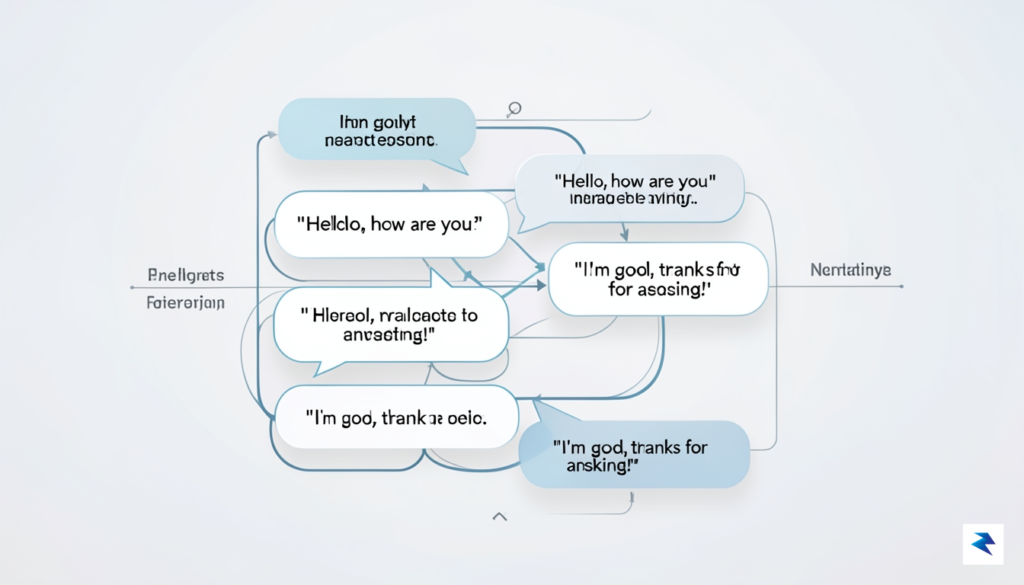
Achieving truly fluid, human-like conversation with an artificial intelligence has long been a holy grail in the tech world. One of the most glaring hurdles has been the AI’s inability to gracefully handle interruptions. Historically, if you spoke while an AI was mid-sentence, the experience was jarring at best; the AI might simply stop, repeat itself, or even “crash” its output, forcing you to wait for it to finish or restart the entire interaction. This created an unnatural, often frustrating dynamic, where the user felt more like they were commanding a machine than conversing with an intelligent entity. The latest advancements, however, introduce a sophisticated layer of “conversational awareness,” fundamentally changing this interaction paradigm.
The technical challenge of real-time interruption detection is far more complex than simply recognizing that someone has made a sound. It requires the AI to differentiate between background noise, a user speaking to the AI with an intent to interject, and merely talking over it accidentally. This involves an intricate dance of advanced voice activity detection (VAD), speaker diarization (identifying who is speaking), and crucially, real-time natural language understanding (NLU) to grasp the semantic intent of the interruption. The system must process incoming audio, transcribe it, and analyze its meaning while simultaneously generating its own spoken response. This multi-layered, concurrent processing demands incredible computational efficiency and precision, allowing the AI to not just hear you, but to understand that you’re taking the floor.
This sophisticated capability starkly contrasts with the “turn-taking” model that has defined legacy voice assistants for years. Think of older systems like those in your smartphone or smart speaker: you typically activate them with a wake word, wait for an audible cue, then speak your full command, and finally, wait for their complete response. This rigid, sequential interaction feels less like a conversation and more like a series of discrete commands and replies. There’s little room for spontaneous interjections, clarifying questions mid-sentence, or the natural back-and-forth flow that characterizes genuine human debate. The new approach moves beyond this static model, enabling a dynamic, responsive exchange where the AI truly yields the floor, much like a polite and engaged human counterpart.
Enabling this seamless responsiveness necessitates low-latency inference at a massive scale, a monumental engineering feat. The AI isn’t just generating its own speech; it’s concurrently listening, transcribing, and interpreting incoming user speech with minimal delay. This means that the underlying language models, which are vast and computationally intensive, must be capable of processing information and making decisions in milliseconds. Every word spoken by the user needs to be analyzed almost instantly to determine if it’s an interruption, a new command, or just background noise, and then the AI’s own output stream must be adjusted accordingly, often by cutting off its sentence cleanly. This real-time, bidirectional processing demands highly optimized neural network architectures, efficient data pipelines, and a distributed infrastructure capable of handling immense loads with unprecedented speed and precision, ensuring the AI can react as quickly as a human mind.
The profound implications of this engineering breakthrough cannot be overstated. By overcoming the technical barriers to natural interruption, AI conversations transcend the realm of mere command-response systems and enter a space of genuine, fluid interaction. This capability transforms the user experience from a somewhat stilted dialogue into a more intuitive and comfortable exchange, mirroring the effortless rhythm of human discussion

In the landscape of human communication, silence is rarely just an absence of sound; it is a profound carrier of meaning. When we speak to one another, the pauses we take to collect our thoughts or wait for an interlocutor to conclude their point act as silent punctuation, signaling respect, patience, and active processing. For years, AI-driven voice assistants struggled with this nuance, often jumping in with rapid-fire responses that felt less like a conversation and more like a high-speed data dump. By refining the “wait-and-see” mechanism in the latest voice model, OpenAI has moved beyond mere transcription and into the realm of behavioral psychology, recognizing that knowing when to stay quiet is just as important as knowing what to say.
The psychological impact of this shift cannot be overstated. When an AI responds the millisecond a user stops talking—or worse, interrupts them mid-sentence—it creates a jarring, mechanical experience that effectively kills the user’s train of thought. This artificial aggression, born from an over-eager desire to fulfill a request, creates a barrier to empathy. By intentionally introducing a more natural latency, the model mimics the rhythmic flow of a real human dialogue. This breathing room allows the user to feel heard rather than processed, transforming a utility into a partner. When the system waits for that extra beat before responding, it signals to the user that it is genuinely considering the nuances of their request, which builds a necessary layer of trust.

True empathy in technology is not found in the speed of the answer, but in the grace of the silence that precedes it.
Achieving this balance—knowing exactly when to hold back and when to interject—requires a sophisticated understanding of conversational cadence. The updated model utilizes advanced predictive markers to distinguish between a user who has finished their thought and one who is merely pausing to breathe or organize their next sentence. This ability to discern intent through timing is what separates a sterile digital interface from a truly conversational agent. By mastering this “wait-and-see” approach, the model prevents the awkward over-talking that previously plagued voice interactions, allowing for a more fluid, organic back-and-forth that respects the emotional weight of the human user’s input.
Ultimately, this evolution in latency represents a fundamental shift in how we define artificial intelligence. It suggests that the future of human-AI interaction lies not in raw processing speed, but in the ability to mirror the social cues that make human relationships functional. As the model becomes better at “shutting up,” it actually becomes more capable of listening, creating a feedback loop where the user feels more comfortable expressing complex, messy, or emotional ideas. This isn’t just a technical upgrade; it is a core behavioral refinement that brings the experience of talking to a machine closer to the experience of talking to a friend.

For years, interacting with voice assistants has felt like a rigid, performative dance. We have all experienced the frustration of attempting to explain a nuanced idea to a legacy AI, only to have it interrupt mid-sentence because it misinterpreted a pause for the end of a command. This “interrupt-and-reset” cycle often turned what should have been a collaborative brainstorming session into a tedious exercise in linguistic precision. By contrast, the refined responsiveness of ChatGPT’s upgraded voice mode transforms the AI from a mere command-line tool into a genuine conversational partner. This shift in capability means that the AI now respects the natural cadence of human speech, allowing for pauses, reflective breaths, and mid-thought corrections without prematurely cutting you off or ignoring the remainder of your premise.
In a professional context, this fluid interaction is a massive boon for rapid-fire brainstorming. When you are deep in the creative process, your thoughts rarely arrive in perfectly structured, single-sentence prompts. Instead, you might find yourself rambling, layering context, or pivoting between complex variables as you speak. Because the new voice mode maintains an active listening state, you can effectively “think out loud” with the AI. It acts as an intellectual sounding board that waits for you to signal completion rather than jumping the gun. This allows for a more iterative workflow where you can explore abstract concepts, receive real-time feedback, and refine your strategy without the constant friction of restarting your train of thought every time the system decides you have spoken for too long.

Beyond professional productivity, this responsiveness opens the door to more intimate and effective use cases, such as language learning and personal reflection. If you are practicing a foreign language, the ability to stumble through a sentence, pause to search for a word, and finish your thought without the assistant “timing out” is invaluable. It mimics the patience of a human tutor, creating a safe environment where you can prioritize fluency and expression over the fear of being interrupted by a timer. Similarly, those using the technology for therapy-style reflection or journaling find that the AI’s ability to remain silent while you process complex emotions makes the experience feel significantly more grounded and human.
The true measure of a conversational AI is not just how well it speaks, but how gracefully it knows when to listen. By mastering the art of the pause, ChatGPT has moved from a utilitarian gadget to a reliable creative companion.
Ultimately, this evolution in voice interaction signifies a transition from static command-response models to a dynamic, collaborative ecosystem. When you remove the anxiety of being interrupted, the barrier between human intent and machine execution dissolves. You no longer have to optimize your speech patterns to fit the software; the software has finally learned to adapt to the inherent messiness and beauty of human communication. Whether you are outlining a novel, debugging a complex code structure, or simply decompressing after a long day, the experience is now defined by flow rather than frustration.

The days of barking commands at a digital assistant, only to be met with a frustrating misunderstanding or a robotic, unhelpful response, are rapidly drawing to a close. The latest advancements in AI voice technology, particularly those that prioritize natural conversational flow and contextual understanding, signal nothing less than the definitive end of the ‘robotic assistant’ era. This isn’t merely an incremental upgrade; it’s a fundamental shift towards interfaces that understand nuance, anticipate needs, and truly listen, transforming our interactions from transactional commands into genuine, almost human-like dialogues. We are witnessing the evolution from a tool we operate to a presence we converse with, marking a profound turning point in human-computer interaction.
Looking ahead, this sophisticated evolution of voice AI is poised to become the ubiquitous interface across nearly every facet of our daily lives. Imagine a world where accessing information, managing schedules, controlling smart environments, or even performing complex tasks at work requires nothing more than speaking naturally, just as you would to another person. This isn’t about screens disappearing entirely, but about the human voice becoming the primary, almost unconscious, conduit for interacting with the vast digital world. As these models become deeply integrated into everyday hardware—from our vehicles and wearables to our homes and offices—the technology will increasingly fade into the background, operating with such seamless efficiency that the interface itself becomes effectively invisible, leaving only the conversation.
Such a profound shift towards voice-first interaction carries immense implications for accessibility and universal design. For individuals with visual impairments, motor disabilities, or even those facing literacy challenges, a truly natural and intuitive voice interface can be a transformative equalizer. It lowers the barrier to entry for countless digital services and information sources, enabling broader participation and independence than ever before. Moreover, the principles driving these advancements—clarity, responsiveness, and contextual understanding—inherently contribute to universal design, creating systems that are simply better and more intuitive for everyone, regardless of their background, abilities, or even language preferences as multi-lingual capabilities mature.
As we embrace this exciting future where our primary interface with information is the human voice, the responsibility resting on developers and creators becomes paramount. It is crucial that these powerful conversational AI models are designed not just for technological prowess, but with a deep commitment to grounding their interactions in helpfulness, accuracy, and ethical considerations. The goal should always be to augment human capability and understanding, ensuring that the conversations fostered are productive, respectful, and genuinely beneficial, rather than merely sophisticated simulations. Building this future thoughtfully means prioritizing user well-being, transparency, and creating AI that truly serves humanity in a meaningful and responsible way.
You must be logged in to post a comment.