Air Canada Names Anko van der Werff CEO Following Leadership Language Crisis
The Shift at Air Canada: A New Era of Leadership Air Canada is embarking on a defining chapter of its corporate journey as it officially…


The modern American healthcare landscape has undergone a profound transformation over the past two decades, evolving from a fragmented ecosystem of independent providers into a tightly woven web of massive, diversified conglomerates. Industry titans like UnitedHealth Group, CVS Health, and Cigna have systematically expanded their reach, moving far beyond their traditional roles as mere insurance underwriters. By acquiring pharmacy benefit managers (PBMs), specialty pharmacies, and primary care clinics, these organizations have created a vertically integrated structure that touches nearly every stage of a patient’s journey. While these corporations often argue that this consolidation streamlines care and reduces administrative friction, the reality on the ground has sparked deep concern among economists and patient advocates alike.

At the heart of this shift is the concept of vertical integration, a business strategy where a single company owns and controls multiple stages of a supply chain. In the context of healthcare, this means an entity may simultaneously act as the insurer paying for a medication, the pharmacy benefit manager negotiating the price of that medication, and the retail pharmacy dispensing it. When these functions are housed under one corporate roof, the system effectively becomes a closed loop. Critics argue that this level of integration creates an inherent conflict of interest; for instance, a PBM owned by a massive insurer might prioritize the use of high-cost drugs from its own subsidiaries rather than seeking the most cost-effective alternatives for patients. This lack of transparency has made it increasingly difficult for independent pharmacies and smaller clinics to compete, effectively cementing the market dominance of the top-tier players.
The consolidation of insurance, pharmacy services, and clinical care has effectively turned healthcare into a high-stakes ecosystem where the incentives of the provider are often misaligned with the needs of the patient.
Consequently, the federal government has begun to view this market structure through a lens of antitrust scrutiny. Legislative bodies and the Federal Trade Commission (FTC) are currently investigating whether these corporate structures function as de facto monopolies that restrict consumer choice and artificially inflate costs. By controlling the data, the pricing, and the access points of medical care, these conglomerates possess the power to steer patients toward their own proprietary networks, often to the detriment of independent practitioners. As lawmakers debate new regulations aimed at increasing transparency and decoupling these business units, the future of these massive entities remains a focal point of national policy discussions. The fundamental question is whether the current model serves the efficiency of the patient or merely the profit margins of the parent company.
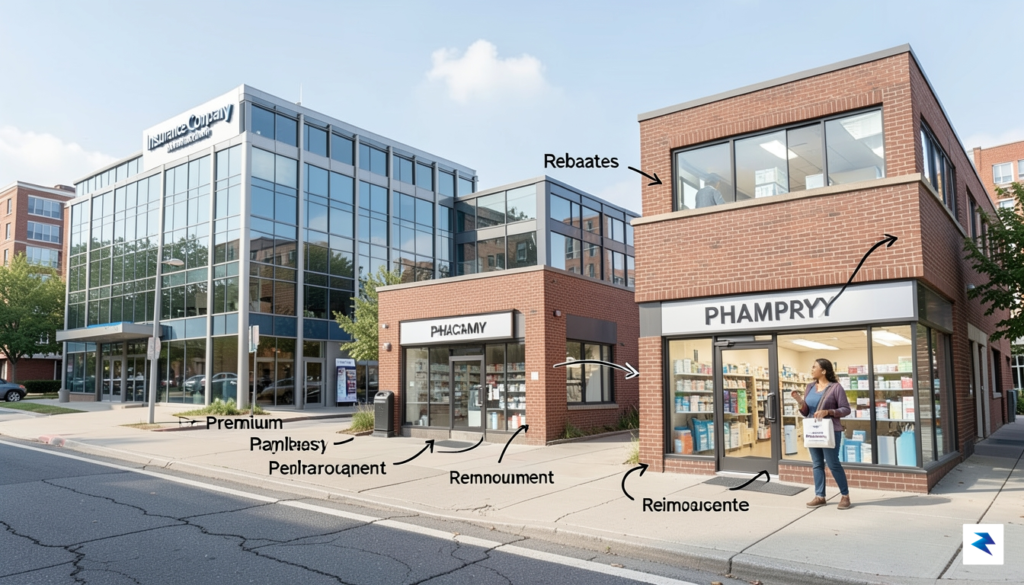
At the center of the current pharmaceutical landscape lies a group of intermediaries known as Pharmacy Benefit Managers (PBMs). Originally conceived as administrative facilitators designed to help insurance companies manage drug claims and negotiate better prices with manufacturers, these entities have evolved into massive, opaque power brokers. In theory, their purpose was to leverage collective bargaining power to lower costs for employers and patients alike. However, over the past two decades, the industry has consolidated into a handful of dominant firms, many of which are now owned by the very health insurance giants they were meant to regulate. This vertical integration has transformed PBMs from simple cost-managers into architects of a complex, often confusing pricing system that frequently prioritizes corporate revenue over consumer affordability.
The core of this controversy rests on the mechanism of the rebate system. PBMs negotiate with drug manufacturers to secure rebates—essentially discounts—in exchange for placing specific medications on a health plan’s “formulary,” or list of covered drugs. Paradoxically, this system often incentivizes high list prices rather than low ones. Because PBMs frequently base their compensation on a percentage of the rebate, they have a financial motivation to favor more expensive drugs that offer larger rebates, even if cheaper, generic, or equally effective alternatives are available. Consequently, patients—especially those with high-deductible plans—often find themselves paying out-of-pocket costs based on the inflated “sticker price” of a drug, while the PBM and the insurer retain the back-end discount.

This structure creates an inherent conflict of interest that is increasingly difficult to ignore. When an insurance giant owns its own PBM, it effectively acts as both the judge and the jury in the pharmaceutical spending process. These companies decide which medications are covered, how much they cost, and which pharmacies a patient is allowed to visit, all while keeping the specifics of their rebate contracts shielded by claims of proprietary information. This lack of transparency means that employers and the public are often left in the dark about how much of a drug’s cost is actually going to the manufacturer versus how much is being captured as “spread pricing” or administrative fees by the PBM.
The consolidation of the healthcare market has created a system where intermediaries have mastered the art of extracting value from the supply chain, often at the direct expense of the patient’s bottom line.
As lawmakers begin to turn their attention toward these giants, the push for reform is centered on demanding greater transparency and demanding that PBMs act as true fiduciaries for their clients. By requiring PBMs to disclose the true net costs of drugs and potentially decoupling their compensation from the price of the medication itself, advocates hope to realign the system with its original goal: making life-saving treatments accessible rather than profitable. Until these structural incentives are addressed, the “hidden hand” of the PBM will likely continue to exert significant upward pressure on drug prices, leaving patients to navigate a labyrinthine system where the true cost of their health is rarely what it appears to be.

Legislative efforts to rein in the immense influence of health insurance giants and their pharmacy benefit manager (PBM) subsidiaries have transcended traditional party lines, marking a rare moment of bipartisan consensus in Washington. Lawmakers are increasingly focused on the opaque nature of drug pricing, where PBMs—the middlemen who negotiate between drug manufacturers and insurance plans—are accused of inflating costs to maximize their own profit margins. Recent legislative proposals, such as the bipartisan Pharmacy Benefit Manager Reform Act, aim to mandate greater transparency by requiring these entities to disclose their rebate structures and fee arrangements. By peeling back the layers of these complex financial incentives, proponents argue that Congress can finally expose the mechanisms that contribute to the skyrocketing cost of life-saving medications for everyday patients.

The legal landscape is shifting in tandem with these legislative pushes, as federal and state regulators launch aggressive antitrust investigations into the vertical integration of these healthcare conglomerates. The core of the government’s argument rests on the premise that when a single entity owns the insurance provider, the pharmacy, and the PBM, it creates an inherent conflict of interest that stifles competition. Antitrust lawsuits currently winding through the courts allege that these firms engage in “self-preferencing,” where they steer patients toward their own affiliated pharmacies while simultaneously squeezing independent rivals out of the market. Regulators contend that this behavior constitutes market manipulation, effectively creating a closed-loop system where the giant corporation captures value at every stage of the patient’s journey.
“The current structure of the healthcare market creates an environment where patient outcomes are often secondary to the optimization of corporate revenue streams, necessitating a fundamental shift in oversight.”
In contrast, the industry’s defense consistently emphasizes the virtues of efficiency and the benefits of coordinated care. Insurance giants argue that their integrated model allows for a more seamless exchange of patient data, which they claim leads to better health management and reduced administrative costs. They maintain that their negotiating power is a crucial tool in curbing high pharmaceutical prices, suggesting that breaking up these companies would inadvertently lead to fragmented services and higher costs for employers and consumers alike. However, as the momentum for reform grows, the conversation has moved beyond minor regulatory tweaks toward the potential for forced structural changes. Many policymakers are now openly discussing the possibility of mandating divestitures, forcing these giants to separate their PBM operations from their insurance arms to restore true market competition and prioritize patient welfare over corporate consolidation.

If regulators successfully pursue a restructuring of the nation’s dominant health insurance companies, the implications for the average consumer’s health coverage could be truly profound. On one hand, advocates for such changes envision a future where increased competition among more numerous, smaller entities drives down costs and fosters greater innovation. Conversely, a significant portion of the healthcare community expresses deep concern over the potential for widespread disruption to established care networks, as well as the loss of convenience associated with the currently integrated pharmacy services that millions of patients have come to rely on for seamless healthcare management. Navigating this potential shift requires a careful examination of both the promised benefits and the inherent risks to patient access and the quality of care.
One of the most compelling arguments for breaking up these massive health insurance conglomerates, particularly by divesting their powerful Pharmacy Benefit Managers (PBMs), centers on the promise of lower drug prices. Proponents contend that the current integrated model allows these giants to exert undue influence over the pharmaceutical supply chain, often through opaque rebate negotiations and formularies that favor higher-cost drugs. By separating PBMs from their parent insurers, the hope is to foster a more competitive environment where independent PBMs must genuinely compete on price and transparency. This could theoretically lead to more aggressive negotiations with drug manufacturers, ultimately translating into reduced out-of-pocket costs for patients at the pharmacy counter, a welcome relief for many struggling with the rising expense of essential medications.
However, the potential for lower drug prices must be weighed against the very real risk of increased administrative complexity for patients. Currently, many consumers benefit from a streamlined system where their health insurance and prescription drug benefits are managed by a single entity, often accessible through one member portal or customer service line. Should PBMs be forced to operate independently, patients might find themselves interacting with separate companies for their medical claims and their prescription drug claims, leading to fragmented billing, multiple points of contact for inquiries, and potentially different appeal processes. This could complicate what is already a challenging system for many, increasing the burden of navigating healthcare and potentially creating confusion that delays access to necessary care or medication.
Furthermore, the impact on the “one-stop-shop” healthcare services that patients have increasingly come to expect cannot be overstated. Many integrated health systems and insurance plans offer a comprehensive suite of services, from primary care coordination to specialized pharmacy programs and even telemedicine, all under a unified administrative umbrella. A forced divestiture could unravel these integrated care models, leading to a less cohesive patient experience. For example, a doctor might prescribe a medication, but the patient’s insurance plan and their separate PBM might have different formularies or prior authorization requirements, creating friction and delays. The convenience of a single point of contact for benefit questions, appeals, and even disease management programs could be significantly diminished, potentially eroding the quality of coordinated care.
Finally, the long-term stability of the health insurance market itself during a period of forced divestiture is a significant concern. Breaking up large, established entities is not a simple process; it involves complex legal, financial, and operational challenges that could introduce considerable uncertainty. During such a transition, there’s a risk of market volatility, as new entities emerge, existing ones adapt, and provider networks potentially shift or face renegotiations. While the ultimate goal is a more competitive and efficient market, the immediate aftermath could involve temporary disruptions in plan offerings, changes in provider networks, or even confusion regarding covered services. Regulators would need to carefully manage this transition to ensure that patients do not experience a lapse in coverage or a sudden reduction in access to their preferred doctors and hospitals, maintaining trust and stability throughout the reform process.


The ongoing legislative crusade against the dominance of health insurance giants and pharmacy benefit managers (PBMs) represents a pivotal inflection point for the American medical landscape. As lawmakers sharpen their focus on the vertically integrated models that currently dictate drug pricing and patient access, the industry finds itself in the midst of a profound identity crisis. For years, these massive corporations have operated with limited oversight, leveraging their size to control virtually every touchpoint of the patient journey. However, the current regulatory momentum suggests that the era of unfettered consolidation may be approaching a significant, policy-driven correction.
Looking ahead, the evolution of the healthcare marketplace will likely be defined by a tension between established corporate structures and the growing demand for radical transparency. If current legislative efforts succeed, we may see a transition toward a more decentralized model that favors smaller, more agile providers and independent pharmacies. This shift would force major insurers to justify their administrative costs and pricing strategies under the harsh glare of public scrutiny. Consequently, the power dynamic could gradually tilt away from centralized monopolies and back toward the stakeholders who have been sidelined for too long: the patients and the providers who care for them.

Key Takeaways for the Evolving Marketplace:
- For Employers: Expect increased pressure to demand transparency in benefit contracts and move away from opaque, rebate-driven PBM arrangements.
- For Patients: Anticipate potential shifts in drug accessibility as pricing structures are unbundled and the hidden costs of middleman negotiations are exposed.
- For Providers: Prepare for a landscape where administrative burdens may fluctuate as regulations seek to streamline the interaction between insurance carriers and clinical practices.
Ultimately, the outcome of these legal and legislative challenges will set the trajectory for the next decade of American healthcare. While institutional resistance from insurance giants remains fierce, the bipartisan appetite for reform is unprecedented. As these policy frameworks take shape, stakeholders must remain vigilant, as the transition will likely be marked by significant market volatility. By prioritizing patient outcomes over the preservation of complex corporate structures, policymakers have the opportunity to foster a more equitable, efficient, and navigable system for everyone involved.
You must be logged in to post a comment.