X to Alert Users via DM When Posts They Engaged With Are Corrected
The Evolution of Community Notes on X What began as a modest, experimental initiative under the name "Birdwatch" has rapidly matured into the…
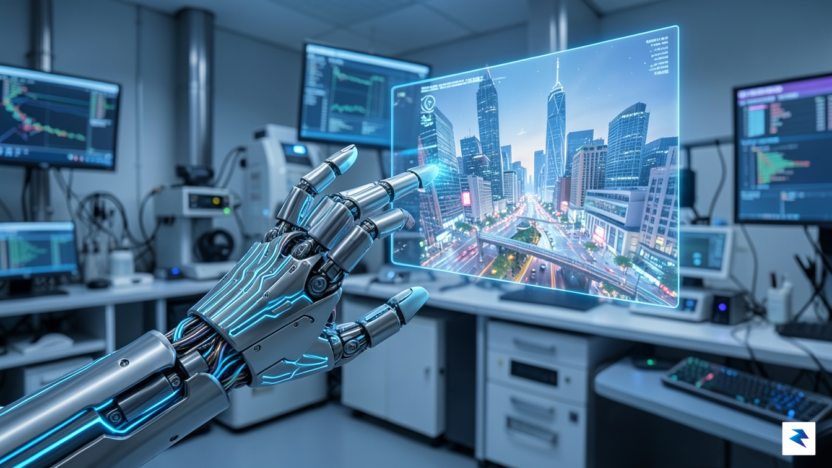
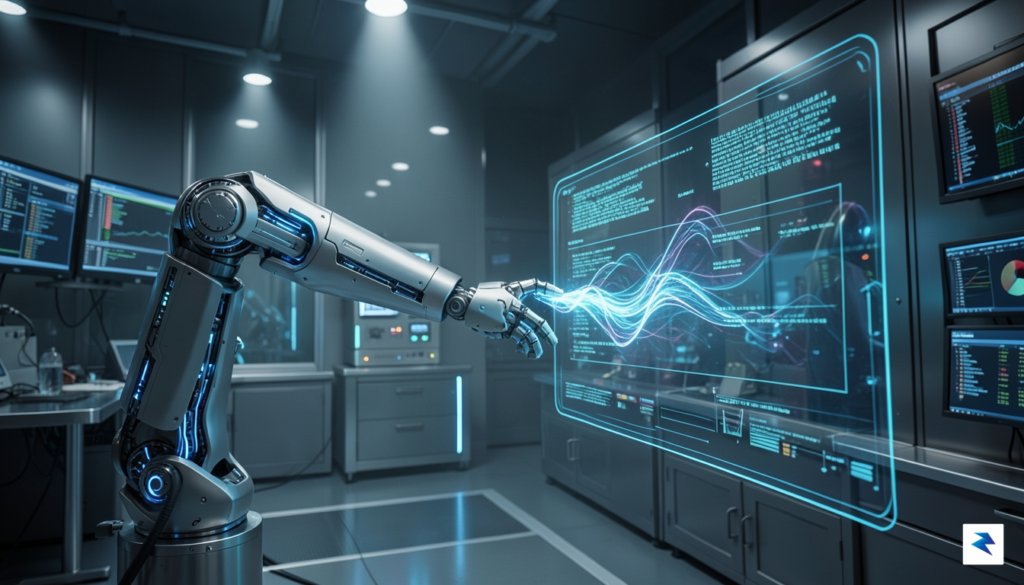
For decades, the field of robotics was defined by the rigidity of its programming. Engineers were forced to map out every single movement, coordinate, and reaction within a strictly controlled environment. If a robot encountered an object slightly out of place or a change in lighting, the entire system would often fail, as it lacked the flexibility to interpret the world beyond its pre-scripted parameters. This deterministic approach required thousands of hours of painstaking manual coding, effectively tethering robots to repetitive, static tasks where the unexpected was simply not an option.
We are now witnessing a fundamental departure from this “if-this-then-that” architecture. The emergence of Physical AI marks the shift toward foundation models—massive, neural networks trained on vast datasets that allow robots to comprehend the world through pattern recognition rather than explicit commands. Much like how a Large Language Model (LLM) predicts the next word in a sentence based on context, these new robotic models predict the next optimal physical action based on the environment. This represents a transition from rigid, rule-based systems to probabilistic, general-purpose intelligence capable of navigating the chaos of the real world.
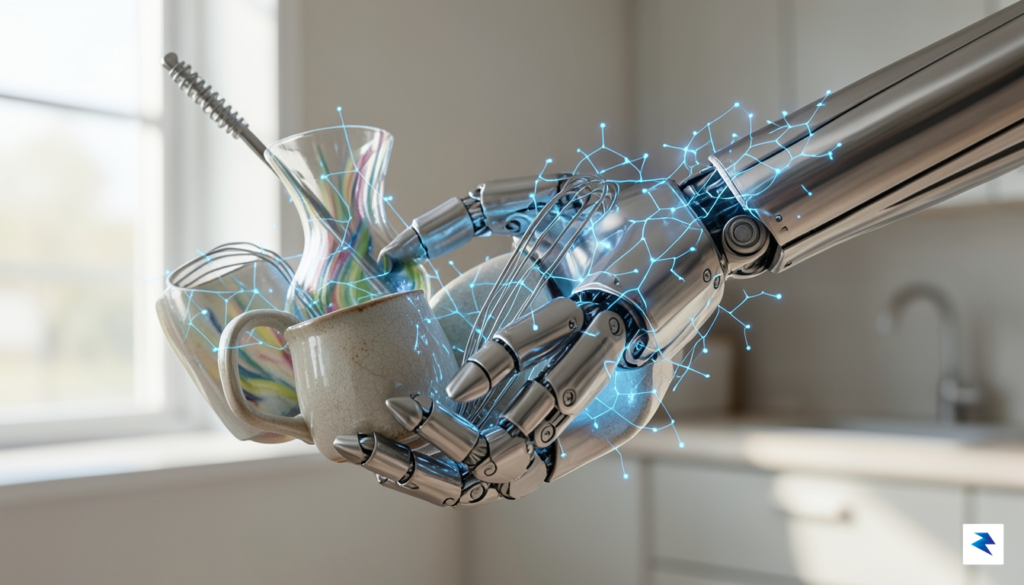
The “ChatGPT moment” for robotics is not merely a metaphor; it describes a profound leap in how we teach machines. Just as generative AI democratized the ability to create complex text and code, foundation models for robotics allow machines to generalize their skills across diverse, unseen scenarios. Instead of being programmed to pick up a specific cup, a robot can now understand the concept of “grasping” by observing millions of interactions, enabling it to handle objects it has never encountered before. This capability to extrapolate knowledge from one situation to another is the hallmark of true adaptability.
The leap from hard-coded automation to foundation models means robots no longer need to be told how to move; they are beginning to understand why they are moving.
Ultimately, this evolution signals the end of the era of the “specialized machine” and the birth of the “generalist robot.” By leveraging massive datasets—often sourced from simulations or gaming environments—these systems can practice millions of trial-and-error cycles in a virtual space before ever touching a physical object. This iterative, learning-based approach mimics the way humans acquire motor skills, allowing robots to become more autonomous, more reliable, and significantly more capable of working alongside us in unpredictable, human-centric spaces.
The primary bottleneck in the advancement of robotics has long been a profound scarcity of high-quality data. Unlike Large Language Models (LLMs) that can scrape the entirety of the internet for text, physical robots operate in a messy, unpredictable world where gathering data is slow, expensive, and potentially dangerous. Collecting thousands of hours of real-world physical interactions requires armies of robots, constant maintenance, and significant energy expenditure. General Intuition is bypassing this traditional limitation by turning toward an unexpected, yet vast, repository of human experience: the digital landscapes of modern video games.
Video games provide a unique, highly controlled environment that functions as a surrogate for physical reality. Because modern game engines are built upon sophisticated physics simulations, they offer a consistent “ground truth” regarding gravity, friction, momentum, and object persistence. When an AI agent watches a character traverse a complex environment or manipulate an object, it isn’t just seeing pixels; it is observing a mathematical representation of how the world behaves. By training on thousands of hours of gameplay, these models learn to internalize the fundamental laws of physics and spatial awareness without needing to deploy a physical robot into a hazardous, real-world scenario for every iteration of the learning process.
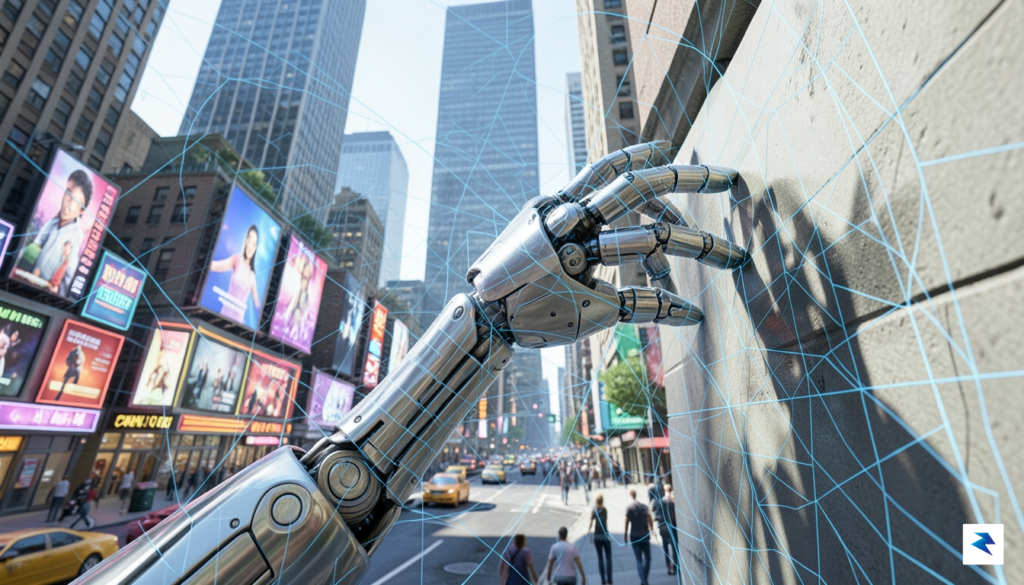
Furthermore, video games offer a diversity of scenarios that would be functionally impossible to replicate in a laboratory setting. A single player might navigate a forest, pilot a spacecraft, or organize a cluttered room—all within the span of a few hours. Traditional sensor datasets, which typically consist of repetitive, clean-room robot operations, lack the “long-tail” edge cases that define real-world utility. Gaming data, by contrast, is saturated with the chaotic variables of human behavior, presenting the AI with unexpected obstacles and complex decision-making pathways. This variety is critical for creating agents that are not just trained to perform a single, repetitive task, but are instead capable of generalizing their knowledge to new, unseen environments.
By leveraging the simulated chaos of gaming, developers can simulate years of physical experience in a matter of weeks, effectively fast-tracking the “childhood” phase of a robot’s development.
Ultimately, the marriage of gaming engines and robotics marks a fundamental shift in how we conceive of “physical intelligence.” Instead of struggling to build better sensors to collect more real-world data, the field is moving toward the realization that the digital world already contains the blueprint for physical interaction. By treating these virtual worlds as massive, interactive training grounds, companies like General Intuition are essentially allowing their robotic models to play their way to intelligence, gaining the intuition necessary to navigate the physical world with the same fluidity and confidence as a human being.
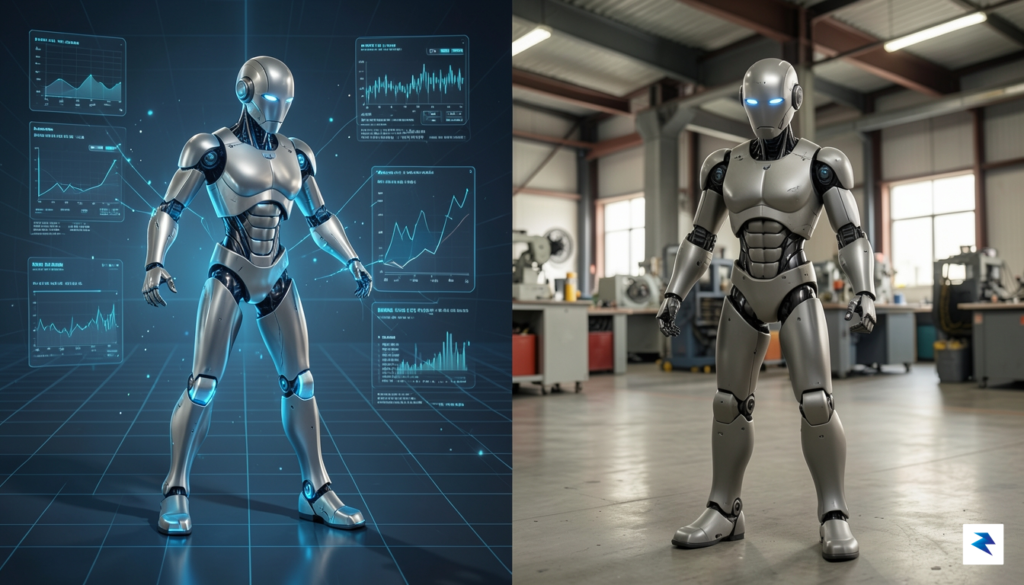
For decades, the field of robotics has been haunted by the sim-to-real gap, a persistent technical barrier that prevents virtual intelligence from manifesting in physical space. Historically, roboticists would spend thousands of hours programming agents in pristine, physics-accurate simulations, only to watch those same agents falter the moment they encountered the “noisy” chaos of the real world. In a simulation, friction is constant and lighting is predictable, but the physical environment is defined by irregularities, fluctuating textures, and unpredictable kinetic feedback. Because traditional AI models were fragile and over-fitted to their virtual environments, they lacked the generalization capabilities required to handle the messy reality of a warehouse floor or a kitchen countertop.
The paradigm shift we are witnessing today is driven by the application of massive-scale foundation models, which act as a bridge across this divide. Rather than attempting to program every possible physical interaction, developers are now leveraging the power of scale to “ignore” the minor discrepancies between simulation and reality. By training models on vast, diverse datasets that encompass countless variations of virtual physics, these systems learn to extract the underlying logic of movement rather than memorizing the specific quirks of a controlled environment. Much like large language models learn to ignore grammatical typos to focus on the semantic intent of a sentence, modern robotics models have developed a robust internal representation of physics that remains stable even when the visual fidelity or sensor data shifts.
The core breakthrough is that these models no longer view the world through rigid, hard-coded rules, but through a probabilistic understanding of cause and effect that is resilient to environmental noise.
This evolution from virtual pixels to physical motor control represents the most significant leap in the field since the inception of the robotic arm. In previous years, the transition from a virtual simulation to a physical motor required complex, manual calibration that often failed as soon as a component experienced wear and tear. Today, the underlying foundation models treat motor commands as a generative task: they predict the next logical state of the robot based on the desired outcome. Because these models have been exposed to such immense variety during their training phase, they are far more capable of improvising when they encounter a surface that is slightly slicker or an object that is heavier than what was seen in the simulation. By treating the physical world not as a set of static obstacles, but as a dynamic space to be navigated through learned experience, we are finally seeing robots move with the fluid, adaptive intelligence that was once reserved for the realm of science fiction.
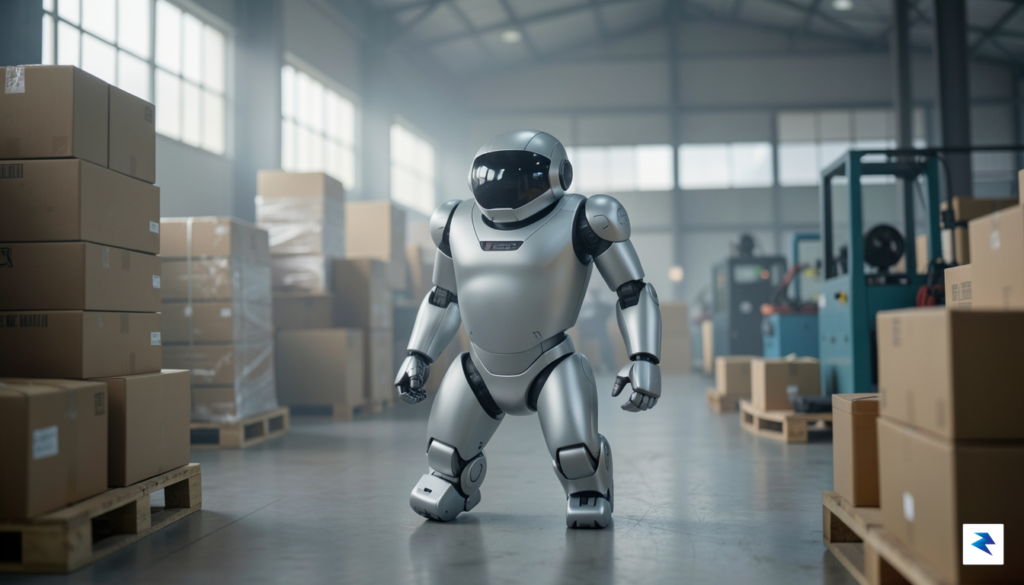
For decades, industrial robotics has been defined by rigidity; machines were bolted to factory floors, designed to perform a single, repetitive motion with superhuman precision. However, we are currently witnessing a pivotal transition toward general-purpose agents that can perceive, interpret, and act within unpredictable spaces. By utilizing advanced neural networks that mimic the way large language models process information, these new robots are learning to generalize their skills across different objects and layouts. This shift means that a robot no longer needs to be explicitly programmed for every specific coordinate in a room. Instead, it can rely on a foundational understanding of physics and spatial awareness to handle novel tasks, effectively breaking free from the confines of traditional safety cages.
The impact of this evolution on logistics and manufacturing will be profound, as businesses move away from bespoke automation toward flexible, scalable fleets. In a modern warehouse, for instance, a robot that can “see” a shipping box, understand its weight, and intuitively decide the best way to grasp it—without a human coder defining the grip—drastically reduces setup time and operational friction. This is powered by the rise of “few-shot” learning, where a robot observes a human performing a task just a handful of times and then successfully replicates the logic behind it. Consequently, small businesses that previously found automation prohibitively expensive or technically complex will gain access to tools that can adapt to their unique, messy, and constantly changing workflows.
The true revolution in robotics isn’t just about faster motors or stronger actuators; it is about the transition from hard-coded scripts to intelligent, adaptive software that understands the intent behind a command.
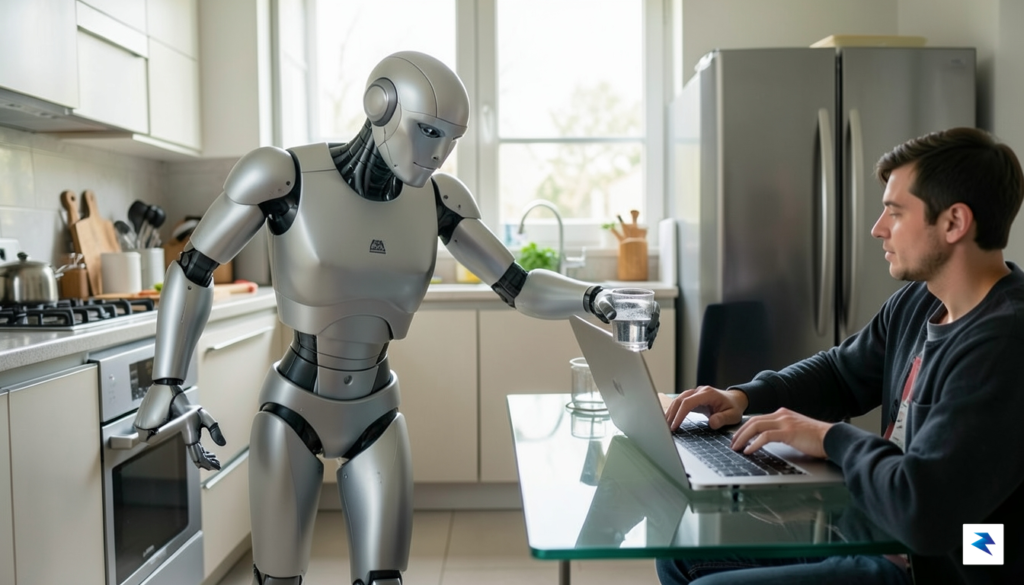
Beyond the factory walls, this intelligence is poised to redefine domestic life. The dream of a functional household robot—long relegated to science fiction—is becoming a technical reality because these machines can finally navigate the chaotic, human-centric environment of a home. Whether it is folding laundry, clearing a dinner table, or organizing a cluttered playroom, these robots will act as general assistants capable of handling a variety of chores that were previously impossible for machines to manage. As these systems become more adept at identifying household items and adapting to the unique architecture of our living spaces, the barrier between specialized industrial technology and everyday domestic help will continue to dissolve, ushering in an era where robots serve as collaborative partners in our daily routines.
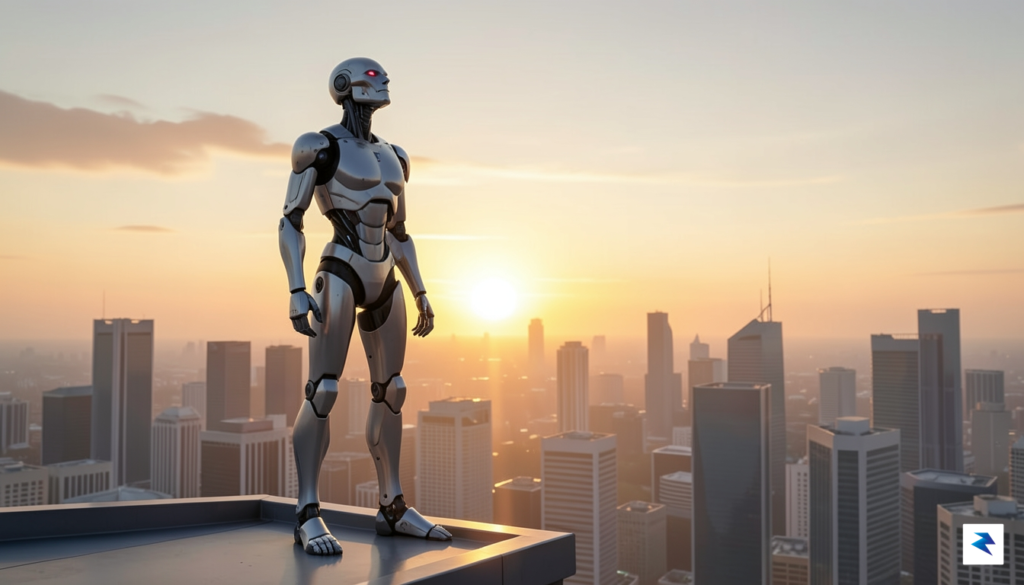
The race to construct a sophisticated “brain” for physical agents has ignited a fierce, multi-billion-dollar competitive landscape. Today, the industry is transitioning from brittle, hard-coded automation toward general-purpose foundation models that can reason, adapt, and learn from human interaction. By leveraging massive datasets—many of which originate from the high-fidelity environments of the gaming industry—researchers are finally bridging the gap between digital intelligence and physical execution. This synergy allows robots to simulate millions of scenarios before they ever touch the real world, effectively shrinking the traditional developmental timeline from decades to mere years.
However, as these agents transition from controlled laboratory settings to the unpredictable chaos of our daily lives, the ethical and safety implications become paramount. We are moving toward a future where autonomous machines will navigate shared spaces, making split-second decisions that carry real-world consequences. Developers are currently grappling with the “alignment problem”—ensuring that the goals and behaviors of these physical AI systems remain strictly bounded by human intent and safety protocols. Transparency in decision-making and robust error-correction frameworks are no longer just optional technical features; they are foundational requirements for public trust and regulatory approval.
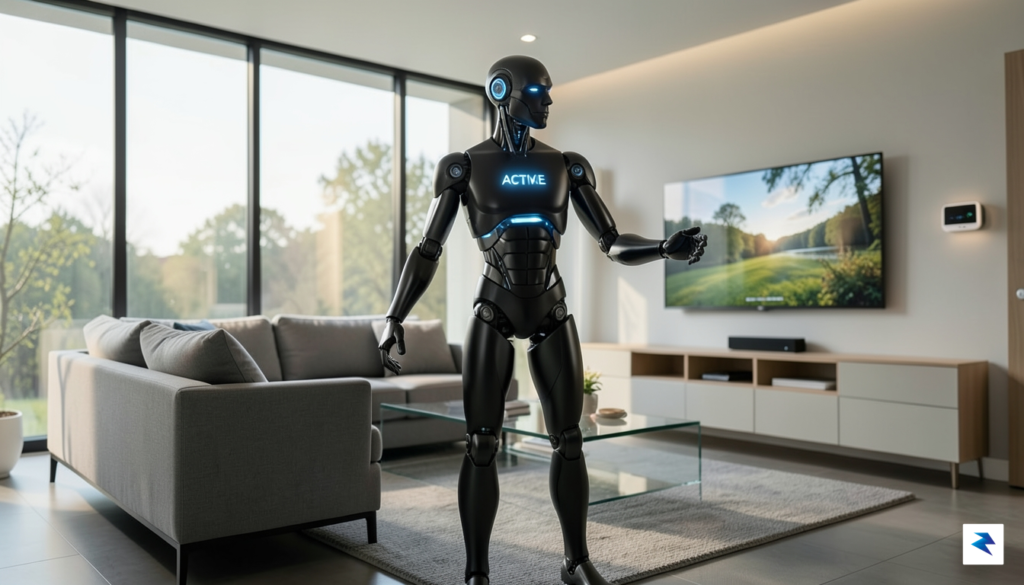
The true “ChatGPT moment” for robotics will not be defined by a single breakthrough, but by the moment these machines move from performing static, repetitive tasks to demonstrating fluid, context-aware utility in our homes and workplaces.
Looking ahead to the next decade, the trajectory of human-robot interaction promises to shift from command-based utility to collaborative partnership. Within five to ten years, we can expect to see AI-driven hardware that acts as a digital twin of our intentions, capable of interpreting subtle non-verbal cues and responding to complex, multi-step requests. As the cost of sensing hardware drops and the efficiency of large-scale foundation models improves, these agents will likely become as ubiquitous as the smartphone. This evolution will not only redefine labor and productivity but will fundamentally reshape how we perceive the boundary between the digital realm and the physical world we inhabit.
You must be logged in to post a comment.