
Why ChatGPT’s New Voice Mode is a Game-Changer for Human-AI Conversation
The Evolution of Natural AI Conversation For years, our interactions with voice-activated AI have been a study in frustration, often feeling…


The modern digital landscape often feels like a relentless torrent of information, where notification pings constantly vie for our attention and the infinite scroll promises an endless stream of content. What began as a tool for connection has, for many, morphed into a source of pervasive mental fatigue and anxiety. This “always-on” culture demands our perpetual presence, fostering a subtle yet persistent pressure to be updated, engaged, and instantly responsive, ultimately eroding our capacity for deep focus and genuine presence, both online and off. The constant exposure to carefully curated highlight reels and the pressure to maintain a digital persona can leave individuals feeling overwhelmed, inadequate, and utterly drained, prompting a collective reevaluation of our relationship with technology.
Amidst this growing digital exhaustion, a quiet yet powerful philosophical shift is taking hold, leading many to seek what can only be described as ‘digital sanctuaries.’ This movement, often encapsulated by the term “digital minimalism,” prioritizes intentional usage over compulsive consumption, advocating for a more deliberate and thoughtful engagement with our online lives. It’s within this context that “Slow-cial” apps are emerging, not merely as alternatives, but as a direct counter-narrative to the prevailing dopamine loop mechanics of mainstream social media. These platforms champion quality interactions over constant availability, encouraging users to cultivate meaningful connections in a calmer, more reflective environment, fundamentally reshaping expectations of what social networking can and should be.
Traditional social media platforms are meticulously engineered with an almost singular focus: to maximize engagement and screen time. Their mechanics are built on instant gratification, rapid-fire content delivery, and algorithmic feeds that are designed to keep users perpetually scrolling, tapping into our innate desire for novelty and social validation. This system, while effective at capturing attention, often inadvertently fosters superficial interactions and a sense of hurried obligation. In stark contrast, “Slow-cial” alternatives actively introduce elements that encourage deliberation and patience. They might feature delayed messaging, limited content updates, or a design that emphasizes thoughtful contributions over fleeting reactions, thereby fostering environments where genuine connection and deeper conversations can flourish. This intentional friction is not about exclusion, but about creating space for more authentic, less frantic, and ultimately more rewarding digital experiences, moving away from the anxiety of constant performance towards a sense of calm, curated community.

In an era dominated by instant notifications, rapidly scrolling feeds, and the expectation of immediate digital gratification, Roost emerges as a defiant counterpoint. This isn’t just another social networking application; it’s a meticulously crafted design experiment, intentionally built with friction at its core. Rather than striving for lightning-fast communication, Roost deliberately slows users down, challenging the ingrained habits that modern social media has fostered. Its unique premise revolves around the charmingly anachronistic concept of a ‘carrier pigeon’ system, transforming every digital message into a journey rather than an instantaneous transmission.
The ingenious ‘carrier pigeon’ mechanic is central to Roost’s philosophy. When a user composes a message, it doesn’t immediately appear in the recipient’s inbox. Instead, it embarks on a digital journey, mirroring the unhurried pace of its avian namesake. While the exact technical implementation might vary in its specifics, the core principle is that messages are subject to a significant, predetermined delay before delivery. This could mean a message takes several hours, or even a full day, to reach its destination, creating an unavoidable waiting period. This artificial latency is not a bug; it is the foundational feature, demanding patience and a conscious investment in each interaction from both sender and receiver.
This enforced delay fundamentally reshapes the dynamics of digital conversation. Gone is the impulsive, often superficial back-and-forth typical of instant messaging platforms, where quick replies can be fired off without much consideration. With Roost, users are compelled to pause, reflect, and carefully construct their thoughts before hitting send, knowing that their words will carry weight and have a longer shelf life before a response can even be initiated. The necessity of waiting cultivates a greater appreciation for each incoming message, transforming what might otherwise be a fleeting notification into a significant event. Consequently, conversations on Roost tend to be more deliberate, thoughtful, and substantive, fostering a depth rarely found in

Our brains are remarkably adept at seeking out and responding to immediate rewards, a trait heavily exploited by the prevailing design of most digital platforms. The instant gratification loop—a quick ‘like,’ a new follower notification, or an immediate reply—triggers dopamine releases that keep us checking and engaging. However, this constant pursuit of fleeting validation often leaves us feeling mentally drained rather than genuinely connected. Emerging ‘slow-cial’ apps like Roost deliberately introduce friction into this process, challenging our ingrained habits by removing the expectation of instant feedback and thus forcing a profound psychological shift.
When we send a message on a platform that doesn’t offer an immediate ping of acknowledgment, our cognitive processes begin to reorient themselves. The absence of instant feedback encourages a shift from reactive communication to a more reflective and thoughtful engagement. Instead of constantly monitoring for a response, or feeling the urge to immediately check for new notifications, our minds are freed to focus on other tasks, engage with our immediate surroundings, or simply be present. This deliberate delay reintroduces a sense of anticipation and value into digital correspondence, akin to the days when receiving a letter was a significant event, making each interaction feel more substantial and less disposable.
Moreover, the relentless pressure to be “always on” and instantly responsive in our hyper-connected digital lives is a significant source of cognitive load and anxiety. There’s a pervasive, albeit often unspoken, expectation that if you’ve seen a message, you should reply almost immediately, lest you appear rude, disengaged, or uninterested. By consciously slowing down the communication cycle, platforms like Roost effectively dismantle this deeply ingrained stressor, liberating users from the tyranny of the instant reply. This reduction in the perceived urgency of communication can lead to demonstrably lower stress levels, improved focus, and a greater sense of autonomy and control over one’s digital interactions, fostering a healthier mental landscape.
This intentional deceleration also compels us to re-evaluate the true nature of our communications, helping us differentiate between genuinely urgent matters and those that simply feel urgent due to the pace of digital life. Not all communication is created equal; much of what we perceive as immediately necessary online is, in reality, merely ephemeral noise. Slower communication channels help us critically assess the purpose and importance of our messages, encouraging us to reserve real-time channels for truly time-sensitive issues and to dedicate slower platforms for deeper, more thoughtful exchanges that truly benefit from reflection. This deliberate pace allows for more considered responses, fostering conversations that are richer, more intentional, and ultimately, more meaningful.
Ultimately, intentionally moving away from the paradigm of instant gratification cultivates patience, mindfulness, and a deeper sense of intentionality in our digital lives. It encourages us to craft our messages with greater care and precision, knowing that there isn’t an immediate opportunity to correct or undo a hasty thought. This fundamental shift can lead to the formation of stronger, more authentic connections, as interactions become less about fleeting validation and more about genuine, considered exchange. Embracing a slower digital pace, therefore, has the power to rewire our brains to appreciate depth over speed, fostering a more balanced and fulfilling relationship with both technology and with one another.
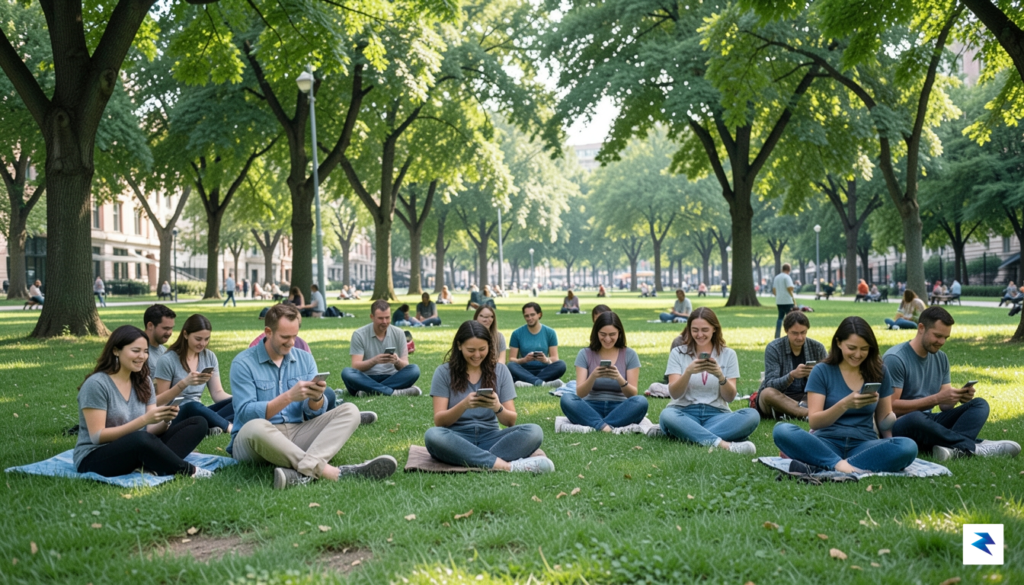
What began as a modest weekend experiment—a digital sandbox designed to challenge the relentless pace of modern communication—has blossomed into a cultural phenomenon that few predicted. The developers behind Roost initially envisioned a niche tool for a handful of friends who were exhausted by the frantic cadence of instant messaging and algorithmic feeds. Yet, against all expectations, the platform has surged past 300,000 active users. This rapid expansion proves that while the app was built to operate at the speed of a carrier pigeon, the appetite for a more deliberate digital experience is moving at the speed of light.

The demographic makeup of this growing community is surprisingly broad, spanning from burnt-out creative professionals looking for a creative outlet to Gen Z students seeking an antidote to the anxiety-inducing nature of traditional social media. These users share a collective realization that the quality of their digital interactions has plummeted in direct proportion to the speed at which they occur. By stripping away the pressure to respond instantly and removing the metrics that gamify human connection, Roost has managed to capture an audience that is fundamentally tired of being “on.” They are not looking for another platform to manage; they are looking for a place to breathe.
The irony of our viral growth is not lost on us; it suggests that the hunger for intentionality is so profound that people will flock to any platform that promises a reprieve from the constant noise of the attention economy.
This success highlights a critical shift in market demand that many tech giants have overlooked. For years, the industry operated under the assumption that “more” and “faster” were the only metrics for success. However, the rise of this platform demonstrates that users are increasingly willing to trade convenience for clarity. The viral nature of the app serves as a loud, collective vote of confidence in the “slow-cial” movement. It suggests that if you build a digital space that respects the user’s mental bandwidth rather than attempting to hijack it, the community will naturally follow. Ultimately, the rapid adoption of this tool is not merely a trend, but a signal that the digital world is reaching a saturation point where the most valuable feature a developer can offer is the permission to simply slow down.

As our digital world accelerates at an unprecedented pace, increasingly populated by sophisticated AI-generated content and a relentless stream of rapid-fire interactions, applications like Roost emerge as a compelling counter-narrative. They offer more than just a different platform; they present a potential roadmap for a more human-centered internet, one that prioritizes meaningful connection over fleeting engagement. This burgeoning “slow-cial” movement isn’t just about reducing notifications or delaying messages; it’s about intentionally reintroducing friction into our online lives, forcing a pause, and encouraging deeper thought before we share or react. The question then becomes, is this a niche appeal for a select few, or does it signal a fundamental shift in how we design and interact with social technology?
The allure of slow-cial apps lies in their promise of respite from the digital cacophony. By design, they challenge the prevailing metrics of success – virality, endless scrolling, and instant gratification – that have come to define mainstream social media. Imagine a future where platforms are not just vying for your attention, but for your thoughtful presence. If this model proves sustainable and scalable, it could inspire a wave of innovation focused on well-being rather than just engagement. However, the path to widespread adoption for “friction-first” features in mainstream applications is fraught with challenges. Giant platforms are built on algorithms optimized for speed and volume, and any feature that slows down interaction could be seen as counterproductive to their core business models, which often rely on maximizing screen time and ad impressions. It would require a significant re-evaluation of what success looks like in the digital space, potentially prioritizing quality of interaction over sheer quantity.
Nevertheless, the pressure for mainstream platforms to adapt could come from user demand. As digital fatigue grows and the mental health implications of always-on, high-intensity social media become clearer, users might actively seek out or demand features that promote a healthier relationship with technology. We could see hybrid models emerge, where existing platforms offer “slow modes” or curated, less immediate feeds as optional features. This would allow users to toggle between the fast-paced, real-time interactions and more deliberate, thoughtful exchanges. Ultimately, the future of networking may not hinge solely on whether Roost itself becomes a global phenomenon, but on whether its underlying philosophy — valuing presence, intention, and human connection — permeates the broader digital ecosystem.
Regardless of how platforms evolve, the responsibility for cultivating a balanced digital life ultimately rests with the individual. Slow-cial apps provide tools and a philosophy, but it’s up to us to integrate those principles into our daily habits. This means being more intentional about when and how we engage online, actively seeking out meaningful interactions, and consciously disengaging to foster real-world connections. It’s about understanding that while the digital realm offers unparalleled connectivity, true richness in life often comes from experiences that unfold at the speed of human interaction, not algorithmic efficiency. Whether Roost is a passing trend or the vanguard of a new digital era, it certainly provides a valuable moment for reflection on the kind of internet we truly want to build and inhabit.

You must be logged in to post a comment.