
Why 300,000 People Are Switching to ‘Slow-cial’ Apps
The Rise of Digital Minimalism: Why We Are Tired of Being Always-On The modern digital landscape often feels like a relentless torrent of…


SpaceXAI has officially pulled back the curtain on its latest innovation, Grok 4.5, a development that immediately reverberated across the technology world. Described by Elon Musk himself as an “Opus-class model,” this release marks a significant moment for the burgeoning AI venture. The designation alone signals a profound ambition, positioning Grok 4.5 not merely as an incremental update, but as a foundational work designed to redefine benchmarks within the artificial intelligence landscape. This unveiling is more than just another product launch; it’s a bold statement about the future trajectory of premium-tier language models, setting a new bar for what users can anticipate.
The “Opus-class” moniker chosen by Musk is loaded with implications, suggesting a complete, masterful creation rather than a mere iteration. In the realm of AI, this typically translates to a model demonstrating exceptional breadth of capability, unparalleled reliability, and a meticulously optimized architecture that pushes the boundaries of current understanding. It challenges the prevailing notion that cutting-edge performance must invariably come with exorbitant computational demands and resource overhead. By framing Grok 4.5 in this way, SpaceXAI is directly asserting its model’s capacity to deliver a superior, more holistic AI experience that could potentially set new industry standards for what users should expect from top-tier generative AI, emphasizing both power and refined design.
This release arrives at a pivotal moment in what many observers have dubbed the global AI arms race, a fierce competition among tech giants and innovative startups to develop the most advanced and impactful artificial intelligence. Companies are pouring immense resources into training ever-larger models, often prioritizing raw scale and parameter count in a race for perceived dominance. Grok 4.5’s introduction, therefore, is strategically timed, aiming to carve out a distinct identity amidst this intense rivalry by offering a compelling alternative. It suggests a focus not just on sheer power, but on a smarter, more integrated approach that could yield significant competitive advantages in practical applications where efficiency is paramount. The market is increasingly hungry for models that offer both prowess and pragmatism in equal measure.
At its core, Grok 4.5 promises to bridge a critical gap that has long existed in the AI ecosystem: the divide between heavy-duty computational power and operational efficiency. Previous generations of highly capable models often demanded substantial resources, making them less accessible or sustainable for widespread deployment across various industries and budgets. Grok 4.5 aims to shatter this paradigm by delivering premium, state-of-the-art performance while simultaneously optimizing for resource utilization and streamlined operations. This focus on efficiency without compromise is poised to differentiate it significantly from predecessors and contemporaries alike, making advanced AI not just incredibly powerful, but also practical, scalable, and more environmentally conscious for a much broader array of real-world challenges and enterprise solutions.
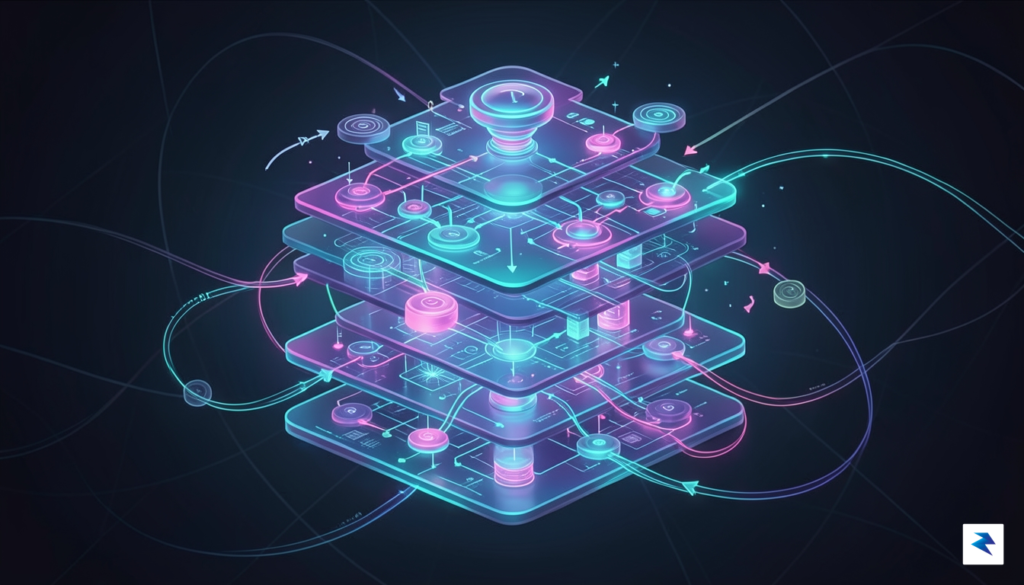
The designation of Grok 4.5 as an ‘Opus-class’ model by SpaceXAI signals a profound advancement in artificial intelligence architecture, pushing the boundaries of what’s achievable in highly nuanced reasoning while maintaining remarkable efficiency. At its core, this label signifies a paradigm shift towards models that can tackle complex, abstract problems with a depth of understanding previously reserved for much larger, resource-intensive systems. This new class emphasizes not just the volume of data processed, but the *quality* of the intellectual work performed, allowing the AI to discern subtle implications, draw intricate connections, and understand context with unprecedented clarity across various data forms.
Technically, the architectural improvements in Grok 4.5 are significant, moving beyond simple increases in parameter count to more sophisticated processing methods. Rather than merely scaling up, the ‘Opus-class’ design likely incorporates novel transformer variants and optimized attention mechanisms that allow for a more selective and efficient processing of information. This enables the model to focus computational resources on the most critical parts of a given input, leading to a smaller overall footprint compared to its direct competitors, which often require vast computational power and memory for similar tasks. Consequently, this leaner architecture translates into faster inference speeds and reduced operational costs, making advanced AI capabilities more accessible and sustainable.
A cornerstone of the ‘Opus-class’ capability is its leap in multi-modal reasoning. This doesn’t simply mean processing text, code, or potentially other forms of data individually; instead, it refers to the AI’s ability to seamlessly integrate and understand the interdependencies between these different modalities. For instance, Grok 4.5 can interpret a piece of code in the context of a natural language problem description, or understand nuanced human emotion conveyed through textual cues and relate it to a broader scenario. This deep contextual understanding allows the model to perform highly sophisticated tasks, from generating more coherent and relevant content to assisting in complex problem-solving across diverse domains.
Furthermore, Grok 4.5 represents a significant evolution from previous iterations, particularly in its capacity for what are known as “reasoning-heavy” tasks. Earlier models often excelled at pattern recognition and information retrieval but sometimes struggled with multi-step logical deductions, abstract concepts, or tasks requiring genuine ‘understanding’ beyond surface-level correlations. The ‘Opus-class’ architecture directly addresses these limitations, demonstrating improved capabilities in tasks that demand strategic thinking, critical analysis, and the synthesis of disparate pieces of information into a cohesive insight. This enhanced reasoning dramatically reduces instances of “hallucination” and improves the overall reliability and accuracy of the model’s outputs.
The meticulous balance struck between parameter count and inference speed is another defining characteristic of Grok 4.5’s ‘Opus-class’ status. While larger parameter counts traditionally correlate with greater model capabilities, they also demand exponentially more computational power for both training and deployment. Grok 4.5 appears to defy this trade-off by achieving superior reasoning and multi-modal understanding without a proportional increase in resource consumption. This efficiency means that advanced AI intelligence can be deployed more broadly, offering powerful analytical tools and conversational interfaces that are not only highly capable but also practical and economical for a wider range of applications.
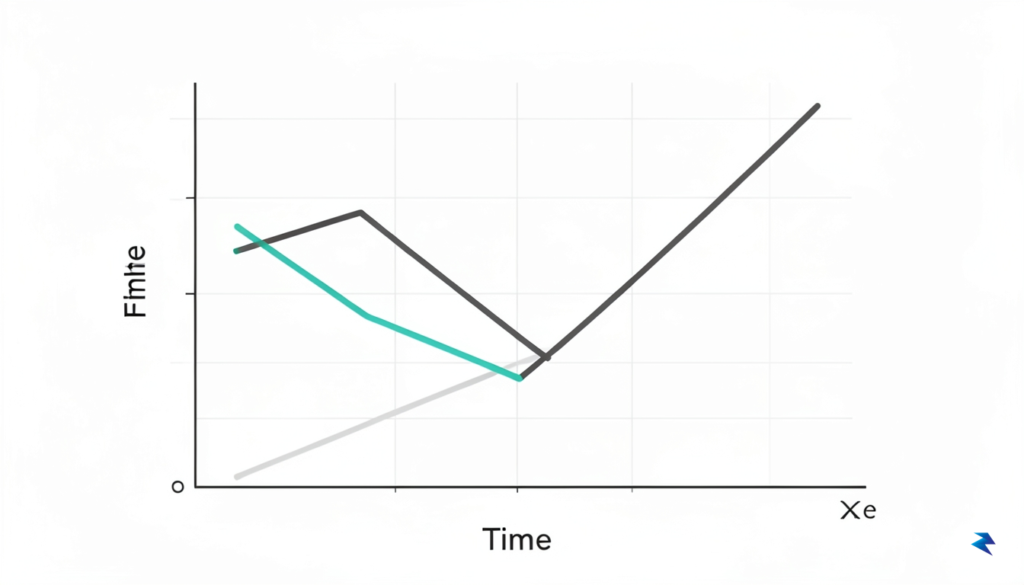
One of the most compelling narratives emerging from the release of Grok 4.5 centers on its strategic emphasis on economic efficiency, fundamentally reshaping the landscape of high-level artificial intelligence. By meticulously optimizing its underlying inference engine, SpaceXAI has not merely pushed the boundaries of AI capability but has also engineered a pathway for developers and businesses to integrate top-tier reasoning into their applications without the prohibitive costs typically associated with large-scale model deployment. This approach signals a significant pivot in the industry, moving beyond raw computational power to focus on delivering intelligence that is both sophisticated and sustainably affordable for a wider audience.
Crucially, this optimization translates directly into a more favorable pricing model for consumers of AI services. Rather than demanding vast computational resources for every complex query, Grok 4.5’s architecture is designed to perform advanced tasks with significantly reduced overhead. This paradigm shift towards what might be termed ‘efficient intelligence’ means that the cost per meaningful output or per complex reasoning task could see a substantial reduction. For enterprises, this implies a lower total cost of ownership for AI integrations, making it feasible to deploy advanced natural language processing, intricate data analysis, or sophisticated automation across more departments and at greater scales than previously imaginable.
Furthermore, these reduced computational requirements serve as a powerful democratizing force within the AI ecosystem. Historically, access to cutting-edge AI models was often reserved for well-funded tech giants or established corporations with deep pockets and extensive cloud computing budgets. Grok 4.5’s focus on efficiency opens doors for smaller startups, independent developers, and medium-sized businesses to leverage ‘Opus-class’ capabilities without burning through their seed funding. This newfound accessibility levels the playing field, fostering innovation by enabling a broader range of creators to build sophisticated AI-powered solutions, from personalized educational tools to niche industry analytics platforms, without the daunting financial barrier.
When considering the prevailing market, the potential cost-to-performance ratio of Grok 4.5 stands poised to be a significant disruptor. While specific pricing details are still evolving, the very promise of an “Opus-class model” that prioritizes efficiency suggests a formidable challenge to existing benchmarks like GPT-4o or Claude 3.5, which, while powerful, often come with substantial operational costs for intensive use. If Grok 4.5 can indeed deliver comparable or even superior reasoning abilities at a fraction of the computational expense, it will compel the entire industry to re-evaluate its approach to AI development and pricing, ultimately benefiting the end-users through more competitive offerings across the board.
In essence, Grok 4.5 isn’t just an advancement in AI capability; it represents a strategic economic play that could accelerate the integration of advanced AI into countless new applications and industries. By making high-level intelligence more affordable and accessible, SpaceXAI is not only enhancing productivity for current users but also unlocking a wave of innovation from previously underserved segments of the market. This economic impact alone could prove to be one of the most transformative aspects of Grok 4.5, driving a new era of widespread AI adoption and creative development.
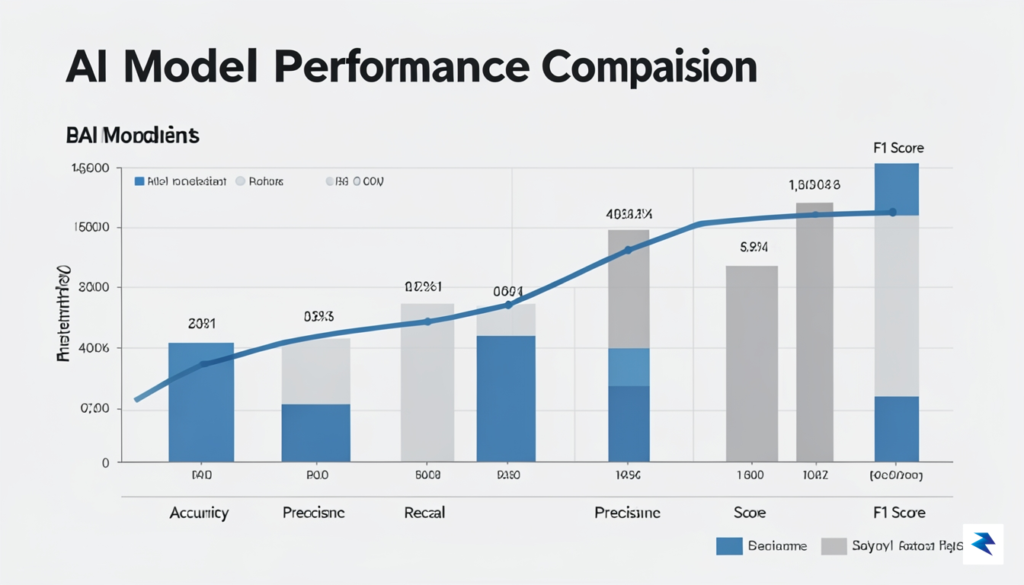
While the artificial intelligence landscape is increasingly crowded with powerful, generalist models vying for supremacy in broad applications, Grok 4.5 carves out a distinct and compelling niche. Rather than solely prioritizing sheer breadth of knowledge or expansive creative output, Grok 4.5 displays a unique performance profile, leaning heavily into real-time adaptability and logic-based problem-solving. This strategic focus positions it not as a direct competitor across all metrics, but as a specialized, precision tool for users with specific, high-demand requirements, offering a compelling alternative to the more generalized verbosity found elsewhere.
Upon closer examination of its benchmarks, Grok 4.5 truly distinguishes itself in domains requiring rigorous logical deduction and structured output. Its prowess in coding and debugging, for instance, is notably robust, often outperforming peers in complex algorithmic challenges and generating cleaner, more efficient code. This capability extends beyond mere syntax generation; the model demonstrates a deep understanding of problem constraints and optimal solution paths, indicating a sophisticated reasoning engine at its core. Consequently, developers and technical professionals will find Grok 4.5 an exceptionally valuable co-pilot for intricate programming tasks and system design.
Furthermore, Grok 4.5’s real-time data integration capabilities mark a significant departure from many existing models, which often rely on periodically updated training data sets. This “live” aspect allows Grok 4.5 to process and synthesize information from dynamic sources, offering insights and responses that are remarkably current and contextually relevant. Whether analyzing rapidly evolving market trends, tracking breaking news, or responding to fast-changing operational data, its ability to adapt and provide immediate, actionable intelligence is a game-changer for critical decision-making environments. This immediacy provides an unparalleled advantage for applications where stale information is simply not an option.
However, it is crucial to acknowledge that this specialized focus comes with a nuanced set of characteristics. While Grok 4.5 excels in precision and real-time logic, it might not always match the sheer imaginative breadth or the encyclopedic factual recall of some of its larger, more broadly trained counterparts, such as GPT-4 or Claude 3 Opus, particularly in tasks demanding highly creative narrative generation or exhaustive historical data retrieval. Its design philosophy prioritizes accuracy and actionable intelligence over expansive, free-form ideation, making it a powerful specialist rather than a universal generalist. Therefore, users seeking vast creative brainstorming partners might find other models more aligned with those particular needs.
Ultimately, Grok 4.5 is engineered for power users who demand precision, logical rigor, and up-to-the-minute relevance. Its strengths in coding, complex problem-solving, and real-time data integration make it an indispensable asset for fields like finance, advanced software development, cybersecurity, and dynamic data analysis. Rather than attempting to be everything to everyone, Grok 4.5 confidently carves out a significant space as an “Opus-class” model defined by its efficiency and focused intelligence, demonstrating that true innovation often lies in thoughtful specialization rather than just scale.


The advent of Grok 4.5, described by Elon as an ‘Opus-class model,’ signals far more than just an advancement for consumer-facing AI applications; it ushers in a significant paradigm shift for enterprises navigating the complexities of modern business. This refined model represents a critical leap for organizations aiming to automate intricate workflows with unprecedented efficiency and reliability. Companies can now envision scaling intelligent agents across their entire operational footprint, benefiting from a new level of predictability concerning both processing latency and budgetary outlays. This capability transforms the conversation from merely adopting AI to strategically integrating highly performant, cost-effective artificial intelligence into core business processes.
A cornerstone of this enterprise applicability lies in Grok 4.5’s robust and developer-friendly API integration capabilities. Designed for seamless embedding, the model offers comprehensive APIs and SDKs that allow businesses to effortlessly integrate its advanced intelligence into their existing software ecosystems, whether it’s an ERP system, CRM platform, or proprietary internal applications. This ease of integration democratizes access to sophisticated AI, enabling development teams to build bespoke solutions tailored to specific industry needs without requiring extensive foundational AI research. Consequently, companies can rapidly prototype and deploy AI-powered features, accelerating innovation cycles and enhancing competitive edge.
Furthermore, Grok 4.5’s designation as an ‘Opus-class’ model speaks directly to its suitability for demanding, enterprise-grade tasks. Its improved efficiency translates into superior performance for mission-critical applications where accuracy, speed, and reliability are paramount. Businesses can leverage Grok 4.5 for advanced data analysis, hyper-personalized customer engagement at scale, optimizing complex supply chain logistics, and even generating high-quality, contextually relevant content for marketing and internal communications. The model’s capacity to handle diverse data types and perform sophisticated reasoning makes it an invaluable asset for critical decision-making processes across various sectors, from finance to healthcare.
The developer ecosystem is already buzzing with excitement over this new toolset. Developers are reacting by exploring novel ways to leverage Grok 4.5’s capabilities, from building more sophisticated autonomous agents to creating innovative interaction paradigms that push the boundaries of human-computer interaction. The availability of comprehensive documentation, active community forums, and potentially new developer challenges fostered by SpaceXAI will undoubtedly catalyze a wave of creative solutions and specialized applications. This vibrant environment empowers developers to experiment, iterate, and ultimately build the next generation of intelligent business tools.
Ultimately, the release of Grok 4.5 significantly strengthens the broader SpaceXAI ecosystem, solidifying its position as a formidable player in the global AI landscape. This ‘Opus-class’ model is not merely a standalone product but a strategic component that integrates into a larger vision, fostering innovation within the SpaceXAI platform. By offering an AI model that combines cutting-edge performance with unprecedented efficiency, SpaceXAI is attracting a wider array of developers and enterprises, encouraging further investment and talent into its orbit. This strategic move ensures that SpaceXAI remains at the forefront of AI innovation, driving the future of intelligent automation across industries.

The unveiling of Grok 4.5, proudly dubbed an ‘Opus-class model’ by its creators, represents far more than just another incremental update in the rapidly evolving world of artificial intelligence. It stands as a pivotal milestone in the grand, ambitious quest for Artificial General Intelligence (AGI), a vision where AI systems can perform any intellectual task a human can. This release underscores SpaceXAI’s deep commitment to not just pushing the boundaries of what current large language models can achieve, but also to laying down critical groundwork for the truly autonomous and deeply integrated AI systems of tomorrow. Each iteration brings us closer to a future where AI is not merely a tool, but a genuine collaborator and enabler across countless domains.
Looking ahead, the trajectory suggests that Grok 4.5 is a powerful precursor to even more sophisticated iterations, with Grok 5 undoubtedly on the horizon. We can anticipate these future models to exhibit unprecedented levels of reasoning, perhaps moving beyond mere pattern recognition to genuine causal understanding and abstract thought. Expect significant advancements in multimodal capabilities, allowing AI to seamlessly process and generate information across text, images, audio, and video, mimicking human perception more closely. Such capabilities will unlock new frontiers in scientific research, creative endeavors, and complex problem-solving, moving AI from reactive assistance to proactive foresight and innovation, profoundly altering how we interact with technology and the world around us.
SpaceXAI’s long-term vision extends well beyond merely developing powerful language models; it encompasses building AI systems that are inherently smarter, more reliable, and seamlessly integrated into the very fabric of daily digital and physical interaction. This involves creating sophisticated agents that can manage intricate schedules, orchestrate complex projects, and even contribute to the operation of intricate systems like autonomous vehicles or advanced robotics. The ultimate goal is to pave the way for the next generation of AI autonomy, where intelligent systems can operate with minimal human oversight, adapting to novel situations and learning continuously from their environment, thereby freeing human potential for higher-level strategic thinking and creativity. This integration means AI will become an invisible, yet indispensable, partner in virtually every aspect of our lives.
This ‘Opus-class’ release from SpaceXAI also significantly reshapes the competitive landscape within the AI industry, intensifying the race among tech giants. By demonstrating a model of such efficiency and capability, SpaceXAI not only validates its unique architectural and training philosophies but also challenges competitors like OpenAI, Google, and Anthropic to accelerate their own research and development. This healthy competition ultimately benefits the end-user, driving rapid innovation in model performance, ethical considerations, and accessibility. The ongoing push for more efficient, scalable, and versatile AI models ensures that the pace of technological advancement will remain blistering, leading to a constant cycle of breakthroughs that redefine what’s possible with artificial intelligence.
The future of AI accessibility hinges on these continuous advancements, promising a world where sophisticated intelligence is not confined to specialized labs but is ubiquitously available, personalized, and deeply embedded into our daily lives, transforming how we work, learn, and connect.
Ultimately, the future of AI accessibility hinges on these continuous advancements, promising a world where sophisticated intelligence is not confined to specialized labs but is ubiquitously available, personalized, and deeply embedded into our daily lives, transforming how we work, learn, and connect. Imagine AI becoming an intuitive extension of our own cognitive abilities, capable of understanding context, anticipating needs, and facilitating tasks with unprecedented ease. Grok 4.5 is a powerful testament to this impending reality, signaling a future where AI is not just a tool we use, but an intelligent layer that enhances and optimizes virtually every digital and physical interaction, making human-computer symbiosis a tangible, everyday experience for everyone.
You must be logged in to post a comment.