
Grok 4.5 Released: SpaceXAI Launches New ‘Opus-Class’ Efficient AI Model
Introduction to Grok 4.5: Redefining Efficiency SpaceXAI has officially pulled back the curtain on its latest innovation, Grok 4.5, a…

For decades, the San Francisco real estate market has functioned as the ultimate barometer for Silicon Valley’s collective prosperity. Historically, the transaction flow was predictable: equity from a public company or a successful exit was converted into liquid cash, which was then deployed into the competitive Bay Area housing market. However, we are currently witnessing a profound architectural shift in how these deals are structured. In an era defined by the meteoric rise of generative artificial intelligence, some property owners are bypassing the traditional liquidity cycle entirely. Instead of demanding a standard down payment composed of fiat currency, a growing segment of sellers is expressing a willingness to accept private equity in high-flying firms such as OpenAI and Anthropic as a legitimate component of the purchase price.
This evolution represents a departure from the “sweat equity” model of the past, where founders might have leveraged personal stakes to secure lines of credit. Today, the dynamic has flipped; it is the sellers who are now acting as venture capitalists, actively seeking exposure to the AI sector’s projected valuation growth. These transactions are rooted in the belief that the scarcity of shares in AI “unicorns” outweighs the immediate utility of cash. By accepting equity as collateral or as a direct substitute for a portion of the transaction, sellers are effectively placing a speculative bet on the long-term IPO trajectory of these companies, viewing the stock not merely as a financial instrument, but as a high-growth asset class that promises greater returns than a standard high-yield savings account or traditional index fund.
The psychological shift underpinning this trend cannot be overstated. For many years, private stock was treated with caution due to its illiquidity and the inherent risks of a startup failing. However, the current dominance of large-scale AI players has fundamentally altered this risk-reward calculation. Sellers now perceive shares in these dominant tech entities as “near-cash” assets, provided the buyer has a verifiable stake in a company currently shaping the global technological landscape. This normalization of private equity as a transactional currency mirrors the broader professionalization of the startup ecosystem, where employee compensation packages increasingly prioritize long-term equity over base salary.
The willingness to trade physical property for digital equity signifies a new era of trust in the AI economy, where the promise of a future liquidity event is being treated with the same confidence as a wire transfer.
Ultimately, this movement signals a deeper transformation in buyer-seller dynamics. When a seller accepts equity, they are entering a partnership of sorts with the buyer, tethering their personal wealth to the success of the buyer’s professional endeavors. This creates a fascinating feedback loop within the San Francisco real estate market: the homes themselves are becoming proxies for the very technology sector that drives the city’s economy. As competition for prime real estate remains fierce, those possessing rare, high-value private stock are finding themselves with a distinct competitive advantage, wielding their equity as a powerful tool to secure property in one of the most exclusive markets in the world.

The intoxicating growth trajectories of generative AI leaders have fundamentally altered the financial psyche of Silicon Valley, transforming private equity from a long-term retirement vehicle into a highly liquid, aggressive currency. For employees and early stakeholders at firms like OpenAI and Anthropic, these shares are no longer viewed merely as paper gains; they are perceived as golden tickets to generational wealth that can be leveraged today. This shift is driven by a profound Fear of Missing Out (FOMO) that permeates the tech ecosystem, where the belief that these companies will reshape the global economy makes pre-IPO stock feel more stable and promising than traditional cash, which continues to lose purchasing power against the backdrop of inflating San Francisco property values.
Confidence in upcoming IPO timelines remains the bedrock of this trend, as holders gamble that the company’s future valuation will far outpace the current market rate for luxury real estate. By trading equity for property, these individuals are essentially executing a high-stakes hedge: they are securing a tangible asset in one of the world’s most expensive housing markets while maintaining their upside exposure to the AI boom. This willingness to part with equity suggests a deep-seated belief that their company’s ascent is not a bubble, but a foundational shift in technological history. For the sellers—who are often developers or long-time homeowners looking to exit the market—accepting such equity is a strategic move to gain a stake in the next generation of tech giants, essentially buying into the “next big thing” without having to navigate the opaque secondary private equity markets.
However, this transition from cash-heavy offers to equity-backed proposals brings significant tax and legal complexities that both parties must carefully navigate. Utilizing pre-IPO stock in a real estate transaction requires a sophisticated understanding of capital gains, tax withholdings, and the specific transfer restrictions embedded in corporate bylaws. Despite these hurdles, the allure of bypassing traditional liquidity events—such as waiting years for an IPO or a secondary share sale—is proving too powerful to ignore. The shift signals a departure from the traditional wealth-building model where one waits for a “liquidity event” to diversify; instead, the modern AI employee is treating their compensation package as an active investment portfolio that can be deployed at a moment’s notice to acquire real-world, hard assets.
The willingness to exchange equity for brick-and-mortar reflects a belief that in the new AI-driven economy, ownership in the right firm is a more reliable store of value than fiat currency.
Ultimately, this trend represents a broader cultural phenomenon where tech equity is becoming the de facto standard of value exchange among the elite. As the lines between corporate ownership and personal net worth continue to blur, we are likely to see more creative financial maneuvers that treat private stock as readily spendable capital. Whether this bet pays off in the long term depends entirely on the public market reception of these AI firms, but for now, the sheer momentum of the industry is enough to convince buyers and sellers alike that the era of the “AI-backed down payment” has officially arrived.

The allure of leveraging high-growth private company stock to acquire a piece of San Francisco’s coveted real estate is undeniably strong, offering a seemingly innovative path to homeownership or an intriguing exit strategy for sellers. However, beneath this veneer of Silicon Valley ingenuity lies a complex landscape fraught with substantial legal and financial risks that demand rigorous scrutiny. Unlike conventional transactions involving cash or traditional mortgages, these equity-for-property exchanges introduce a multitude of uncertainties, transforming a typically straightforward process into a high-stakes gamble for both parties involved. Understanding these inherent pitfalls is crucial before contemplating such an unconventional arrangement.
One of the most significant hurdles stems from the inherently illiquid nature of private company stock. Unlike shares traded on public exchanges, which can be bought or sold almost instantly, private equity lacks an open, regulated market. This means that a seller accepting stock as payment effectively holds an asset that cannot be easily converted into cash, which is typically the ultimate goal of a home sale. Should the seller need funds for a subsequent home purchase, renovation, or simply for living expenses, they could find themselves holding valuable shares that are impossible to liquidate quickly, leaving them financially constrained and potentially unable to meet their own obligations. This lack of immediate market access poses a fundamental challenge to the perceived value of such stock.
Furthermore, the valuation of pre-IPO companies is notoriously volatile and often speculative, presenting another layer of profound risk. Without the transparent pricing mechanisms of public markets, private company valuations are typically derived from recent funding rounds, internal projections, or comparable private deals. These valuations can fluctuate wildly based on market sentiment, technological breakthroughs, competitive shifts, or even news cycles. A home seller who agrees to a valuation today might find the underlying stock’s value drastically different within months, potentially diminishing the actual return on their significant real estate asset. This inherent unpredictability makes it incredibly difficult to accurately assess the long-term value of the “payment” received.
Navigating these uncharted waters necessitates the involvement of specialized legal and financial intermediaries, far beyond what a typical real estate agent or escrow company can provide. Traditional real estate transactions operate within well-defined legal frameworks, but equity-for-property deals require bespoke contracts that address the nuances of stock transfer, vesting schedules, shareholder agreements, and potential future events like IPOs or acquisitions. Escrow, which traditionally holds funds, must now contend with holding illiquid securities, requiring innovative and potentially costly arrangements to protect both the buyer and seller. Without robust, meticulously drafted legal agreements, both parties are exposed to enormous liability should disputes arise over valuation, transfer of ownership, or compliance with securities regulations.

Perhaps the most catastrophic risk lies in the potential for an IPO to fail or be indefinitely delayed. For many private companies, an initial public offering is the primary path to liquidity and value realization for shareholders. If the highly anticipated IPO never materializes, or if market conditions force significant delays, the seller could be left holding shares with no immediate prospect of conversion to cash. Worse still, if the company’s fortunes turn south—perhaps due to a failed product, market competition, or regulatory setbacks—the stock could plummet in value, leaving the seller with an asset worth a fraction of the home they sold, or even rendered effectively worthless. This is a stark contrast to a traditional cash sale, where funds are guaranteed and immediately available, safeguarding the seller from such severe financial depreciation.
Finally, the tax implications for both buyer and seller in these non-traditional transactions are complex and require expert consultation. For the seller, the stock received may be subject to capital gains tax based on its fair market value at the time of the transaction, and establishing that value for IRS purposes can be challenging. For the buyer, the property transfer itself, along with any subsequent appreciation or depreciation of the stock, introduces unique tax scenarios. These deals do not fit neatly into standard tax codes, necessitating careful planning and professional guidance to avoid unexpected liabilities and ensure compliance with both real estate and securities regulations. Ultimately, while innovative, the integration of private equity into real estate transactions demands an extremely cautious approach and a deep understanding of the multifaceted risks involved.
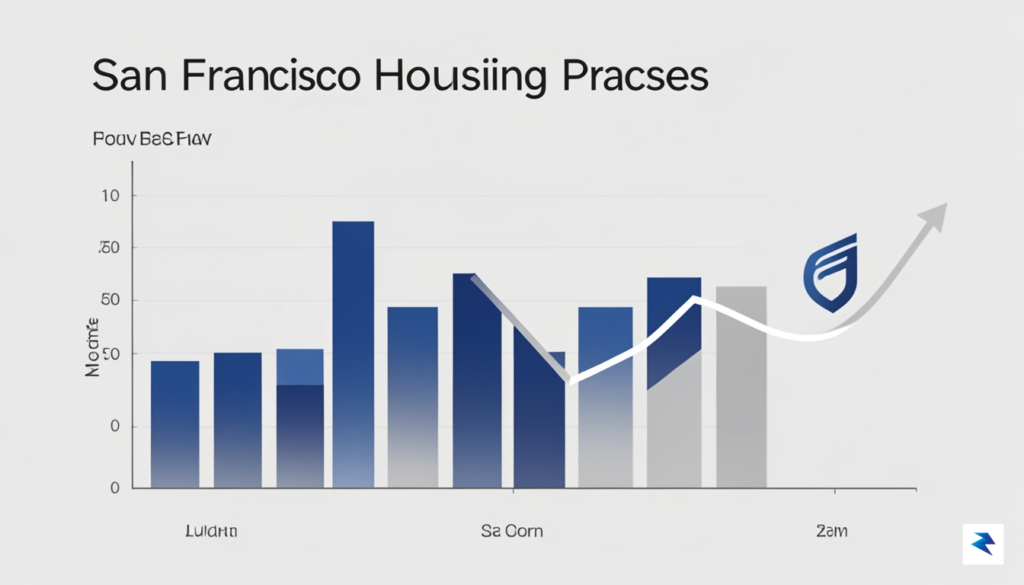
When the accepted tender for a multi-million dollar property shifts from liquid capital to speculative private equity, the traditional mechanisms of market valuation begin to fray. By decoupling home prices from current bank appraisals and relying instead on the projected future worth of firms like OpenAI or Anthropic, sellers are essentially introducing a volatile, non-fungible asset into a sector that has historically relied on stability. This shift fundamentally alters the pricing landscape; properties are no longer indexed strictly by comparable sales, square footage, or neighborhood amenities, but rather by the perceived “upside” of the buyer’s professional portfolio. Consequently, the local housing market is fragmenting into a two-tiered system where assets are priced not by their utility, but by the specific currency offered at the closing table.
This trend introduces significant complications for municipal data and tax assessment structures. Because private stock is notoriously difficult to value precisely—lacking the transparent, minute-by-minute pricing of public markets—median home price data becomes increasingly untrustworthy. When a home sells for a combination of cash and equity, the “true” sale price is often obscured, making it difficult for tax assessors to determine fair market value. This can lead to a ripple effect where property tax rolls become disconnected from actual market conditions, potentially penalizing neighbors whose valuations are dragged upward by these idiosyncratic, equity-heavy deals that do not reflect the liquid purchasing power of the average buyer.
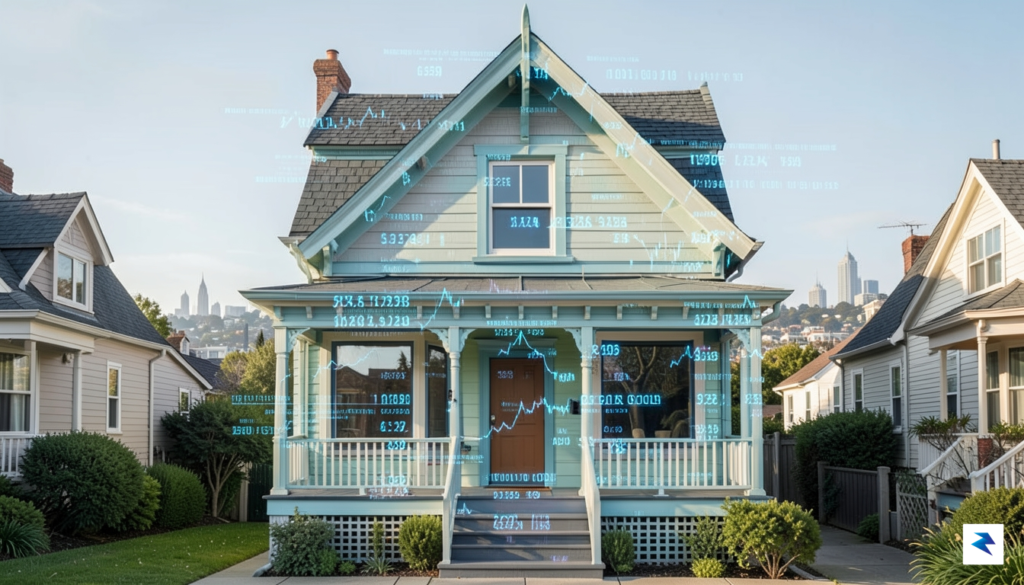
For traditional buyers—those relying on conventional financing or standard cash savings—this environment creates a formidable, often insurmountable, barrier to entry. Sellers who are actively seeking equity in “unicorn” startups view these assets as high-reward investment vehicles, effectively pricing out anyone whose net worth is tied to more traditional industries or diversified, low-risk portfolios. This competitive disadvantage does more than just exclude segments of the population; it shrinks the pool of potential buyers to a narrow, hyper-specialized demographic. As a result, the market risks becoming an echo chamber where homes are traded primarily among those within the AI inner circle, further insulating the city’s real estate from broader economic reality.
The normalization of using unvested or private equity as a down payment or purchase supplement signals a shift from treating housing as shelter or a stable asset to treating it as a speculative venture-capital play.
Ultimately, one must question whether this phenomenon is a localized anomaly or a harbinger of a broader economic bubble. History suggests that when real estate becomes a proxy for speculative bets on unproven technologies, the risk of market correction increases exponentially. If the underlying valuations of these AI giants face a downturn, the “value” of the real estate portfolios built upon them could evaporate, leaving sellers holding assets that are far less liquid and valuable than they once calculated. As these unconventional deals become more frequent, the San Francisco housing market is not just reflecting the tech industry’s growth; it is effectively underwriting the industry’s risk, a gamble that could have profound implications for the city’s future financial stability.

The emergence of private AI equity as a substitute for traditional currency in the San Francisco housing market marks a profound shift in how the ultra-wealthy conceptualize liquidity. By treating shares in companies like OpenAI or Anthropic as legitimate down payments, buyers and sellers are essentially betting on the indefinite acceleration of the artificial intelligence sector. This practice signals a move away from the “cash is king” mentality, suggesting that for a select tier of tech insiders, equity has become a more potent store of value than the depreciating dollar. However, this transition is not without its risks; it relies heavily on the assumption that these private valuations will continue their meteoric rise without encountering significant regulatory or market-driven corrections.
As this trend gains traction, we should anticipate a inevitable collision with institutional oversight. Financial regulators and tax authorities are unlikely to view these private-equity-for-real-estate transactions as simple barter exchanges for long. The complexities surrounding capital gains taxation, the valuation of illiquid assets, and the potential for money laundering create a minefield that could lead to stringent new disclosure requirements. While these transactions are currently occurring in the shadows of high-end private sales, increased scrutiny could eventually force the real estate industry to standardize how it handles non-cash assets, potentially cooling the enthusiasm for using volatile tech shares as a residential transaction medium.

The transition from fiat currency to equity as a primary vehicle for physical asset acquisition is a testament to the digital age’s reconfiguration of wealth. It represents a bold, if speculative, belief that the future of the global economy will be written entirely in code.
Ultimately, the long-term viability of trading AI stock for property hinges on whether this practice is a structural evolution of wealth transfer or merely a symptom of a localized speculative fever. If the AI boom matures into a stable utility, these shares may indeed become the “gold standard” for the next generation of Silicon Valley elite. Conversely, should the market experience a significant correction, the individuals who traded their tangible, physical homes for these digital promises may find themselves holding the bag on depreciated paper wealth. Whether or not this becomes the new standard, it serves as a powerful indicator that the line between digital valuation and physical reality is blurring faster than ever before, permanently changing the landscape of high-stakes real estate negotiation.
You must be logged in to post a comment.