
The New Silicon Valley Currency: Trading AI Stock for San Francisco Real Estate
The New Currency: Equity as Collateral in Bay Area Real Estate For decades, the San Francisco real estate market has functioned as the…

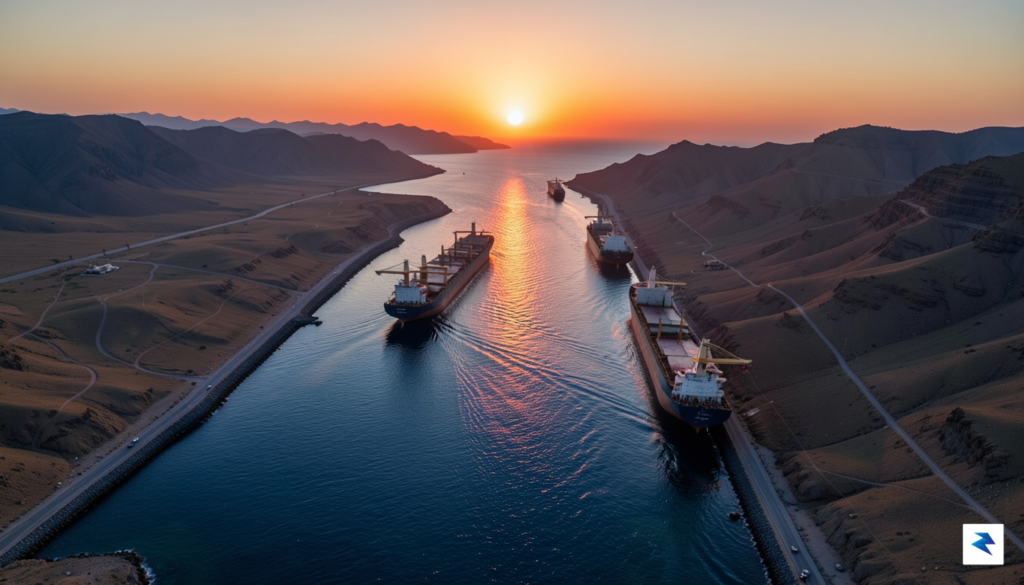
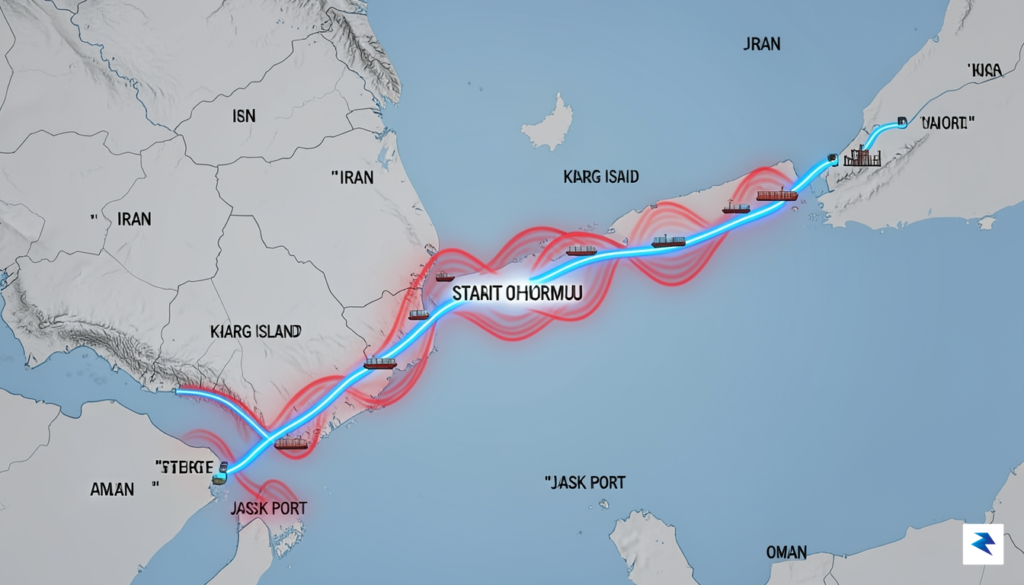
At its narrowest point, the Strait of Hormuz spans a mere 21 miles, yet this sliver of water serves as the jugular vein of the global economy. Every day, roughly 20 to 21 million barrels of petroleum—amounting to approximately one-fifth of the world’s total liquid petroleum consumption—traverse this corridor. When tankers laden with crude oil depart from the ports of Saudi Arabia, Iraq, the United Arab Emirates, and Kuwait, they must navigate this maritime bottleneck to reach international waters. Because there are no viable alternative pipelines capable of bypassing this route entirely, any physical obstruction or military posturing in the region acts as a direct threat to the steady flow of energy that powers modern civilization.

The strategic stakes are amplified by the heavy reliance of major Asian economies on this specific maritime artery. Countries such as China, India, Japan, and South Korea source a staggering majority of their crude oil imports directly from the Persian Gulf. For these nations, the Strait is not merely a geographic convenience; it is a critical lifeline for their industrial sectors, power grids, and transportation networks. Consequently, a prolonged closure or even a temporary spike in insurance premiums for tankers traveling through the Strait forces these importers to face immediate inflationary pressures. When the supply chain is threatened in such a sensitive region, the ripple effects are felt instantly in gas stations and manufacturing plants thousands of miles away.
The vulnerability of the Strait of Hormuz acts as the ultimate barometer for global energy stability; when tensions flare in the Persian Gulf, the price of a barrel of oil becomes a direct reflection of geopolitical anxiety rather than supply and demand fundamentals.
Beyond the sheer volume of trade, the Strait’s vulnerability to military escalation makes it a focal point for international diplomacy and naval strategy. Because the route is so narrow, it is uniquely susceptible to asymmetric warfare, including the use of sea mines, fast-attack craft, or targeted drone strikes. The persistent threat of interference creates a perpetual state of “risk premium” in the oil markets, where traders instinctively inflate prices at the mere rumor of renewed hostilities between the United States and Iran. This psychological sensitivity demonstrates that the Strait is more than a transit point; it is a geopolitical pivot upon which the economic health of the entire planet relies. As long as global industry remains tethered to fossil fuels, the security of this corridor will remain the most significant variable in the equation of global energy risk.
The relationship between the United States and Iran has long been defined by a precarious dance of military posturing and maritime brinkmanship, particularly concerning the Strait of Hormuz. As a critical maritime chokepoint through which roughly 20% of the world’s total petroleum consumption passes, this narrow waterway serves as the ultimate geopolitical pressure point. Whenever tensions flare—whether through naval drills, the seizure of commercial tankers, or the exchange of rhetoric regarding regional proxies—the global energy market experiences an almost instantaneous ripple effect. History has taught traders that any disruption here is not merely a regional skirmish but a potential global supply catastrophe, causing institutional investors to recalibrate their positions long before a single drop of oil is actually kept from reaching the market.
This phenomenon is best understood through the lens of the “risk premium,” a psychological surcharge that energy traders bake into the price of a barrel of crude the moment diplomatic channels appear to fray. Unlike fundamentals such as domestic production levels or seasonal refinery demand, which move with relative predictability, geopolitical volatility operates on the speed of a news headline. Traders are not necessarily reacting to a physical blockade of tankers; rather, they are reacting to the increased probability of one. This forward-looking behavior creates a feedback loop where the mere anticipation of conflict drives prices upward, often decoupling the cost of oil from the actual physical availability of the commodity.
The role of speculative trading in these high-stakes environments cannot be overstated. In times of relative calm, energy markets are driven by data-heavy analysis of supply and demand. However, when hostilities between Washington and Tehran escalate, the market shifts from a data-driven environment to one fueled by sentiment and hedging strategies. Speculators and algorithmic trading models often amplify price swings, front-running potential escalations to secure insurance against future volatility. This rapid-fire trading environment means that price spikes frequently outpace the underlying reality of global inventory levels, leaving ordinary consumers to face the consequences of a market that is pricing in a “worst-case scenario” that has yet to materialize.
The energy market’s reaction to US-Iran tensions is rarely about what is happening on the ground today, but rather what traders fear might happen tomorrow. This inherent uncertainty is the primary driver of the volatility we see at the pump.
Ultimately, the vulnerability of the global energy supply chain to these specific geopolitical flashpoints highlights the fragility of our dependence on narrow maritime corridors. As long as this region remains a theater for systemic conflict, energy prices will remain tethered to the diplomatic climate of the Persian Gulf. Whether through direct military confrontation or the subtle use of economic sanctions, the ebb and flow of this relationship serves as a constant reminder that the global economy is, in many ways, held hostage by the stability of a narrow stretch of water that links oil producers to the rest of the world.
While the dramatic movements of crude oil futures often play out in the abstract realm of global financial exchanges, the real-world consequences of price volatility are both immediate and pervasive. At its core, energy functions as a foundational input for almost every sector of the modern economy, meaning that sharp spikes in the cost of a barrel act as a de facto tax on global productivity. When geopolitical tensions disrupt supply chains or create uncertainty regarding future availability, that cost is rapidly transmitted through the economy, shifting from refineries to transportation networks and, eventually, to the household budget of the average consumer.
The transmission mechanism from global oil markets to retail prices is rarely instantaneous, but it is remarkably consistent. As oil prices climb, the refining process becomes more expensive, which immediately impacts the retail price of gasoline, diesel, and jet fuel. For the average consumer, this manifests as a contraction of disposable income; every extra dollar spent at the pump is a dollar diverted away from retail spending, dining, or savings. Simultaneously, industries that rely heavily on logistics—such as e-commerce, food distribution, and heavy manufacturing—face surging operating expenses. Because transportation costs represent a significant percentage of the final price of consumer goods, businesses are often forced to pass these expenses onto the end-user, thereby fueling broader inflationary pressures that can complicate central bank policies and interest rate decisions.
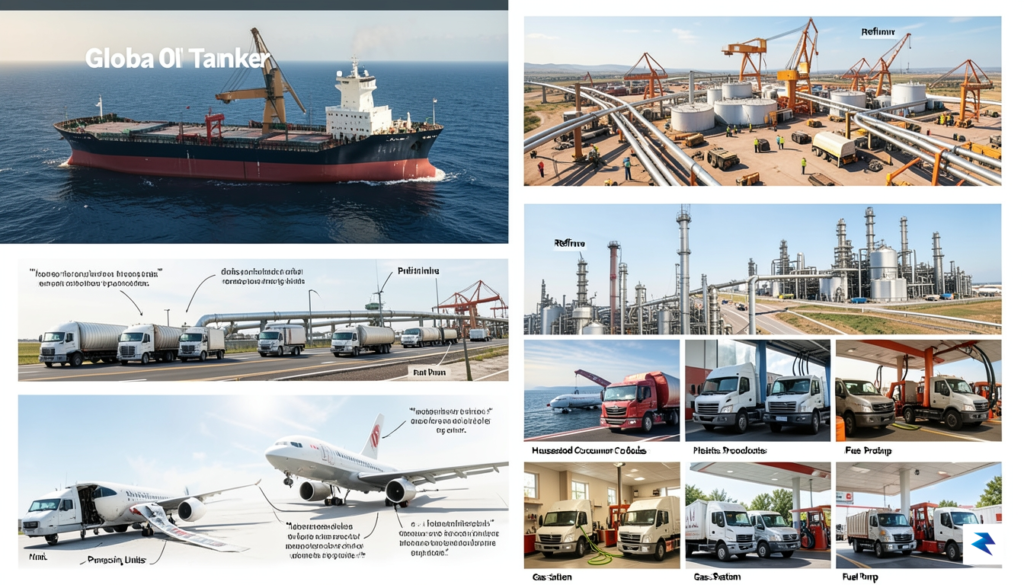
Energy volatility does more than just raise the price of a gallon of gasoline; it acts as a silent drag on innovation by creating a climate of uncertainty that prevents corporations from committing to long-term capital projects.
Furthermore, prolonged periods of market instability have a chilling effect on corporate investment and industrial growth. When energy costs are unpredictable, manufacturers struggle to forecast their margins, making it exceedingly difficult to plan for capital expenditures or scale production. In sectors like steel, chemicals, and aviation, energy is a primary overhead cost; when that cost fluctuates wildly, companies often choose to pause expansion or delay the implementation of new technology to protect their balance sheets. This cautious approach slows down the velocity of economic growth, as the hesitation of private investment leads to a contraction in job creation and industrial output. Ultimately, the fragility of the energy market serves as a constant tether on the global economy, reminding us that even distant geopolitical flare-ups have the power to reshape the financial landscape of our daily lives.
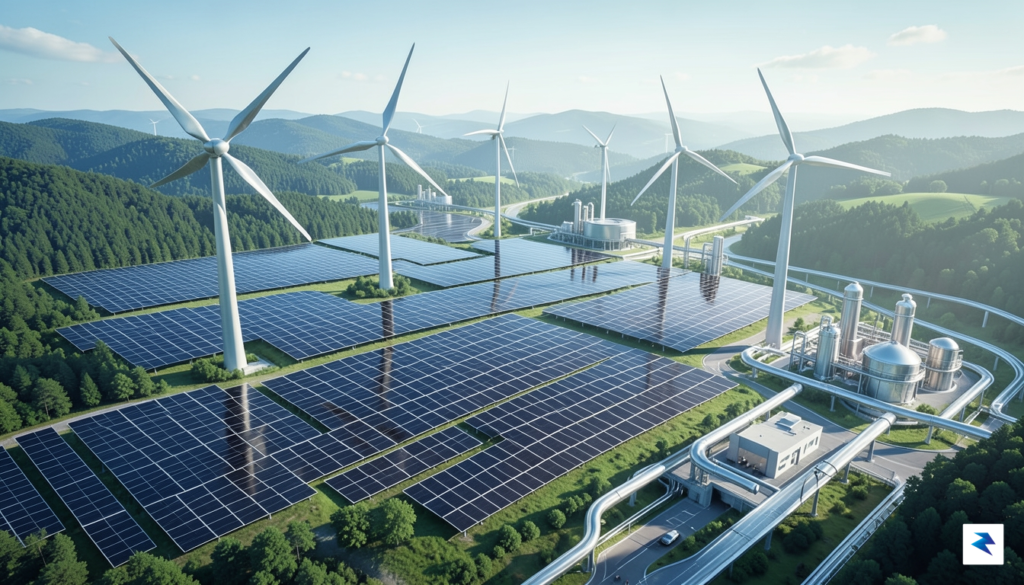
The persistent volatility in the Middle East serves as a stark reminder that as long as the global economy remains tethered to oil extracted from regions prone to systemic instability, true energy security will remain an elusive goal. For decades, the reliance on narrow maritime transit points like the Strait of Hormuz has created a single point of failure that can send shockwaves through the global economy in an instant. Consequently, major powers are now being forced to move beyond reactive policy-making, instead aggressively re-evaluating their energy portfolios to balance immediate consumption needs with the urgent necessity for supply chain diversification. This shift is not merely an environmental preference; it is a fundamental pillar of national defense strategy in a world where energy flows are increasingly used as tools of geopolitical leverage.

In the interim, nations are leaning heavily on Strategic Petroleum Reserves (SPRs) to act as a buffer against sudden supply shocks. While these stockpiles provide a crucial psychological and physical safety net during periods of acute conflict, they are, by definition, a finite solution. Relying solely on reserves is akin to applying a bandage to a chronic injury; it treats the symptoms of price spikes but fails to address the underlying structural dependency. To achieve lasting resilience, governments are increasingly incentivizing the development of domestic extraction capabilities—where feasible—and accelerating the integration of alternative energy sources. By diversifying the “energy mix,” countries can isolate their industrial output from the localized conflicts that threaten traditional crude oil corridors.
True energy independence is not found in the mastery of a single fuel source, but in the creation of a redundant, multi-faceted grid that cannot be held hostage by a localized regional skirmish.
Looking toward the future, the transition away from fossil fuel dependence has evolved from an ecological objective into a critical geopolitical imperative. The long-term outlook suggests that the most secure nations will be those that successfully decouple their economic growth from the price volatility of the global oil market. This involves a dual-track strategy: investing in decentralized renewable energy infrastructure—such as solar, wind, and advanced nuclear—while simultaneously securing reliable supply chains for the minerals and technologies required for this transition. Ultimately, mitigating geopolitical leverage requires a fundamental shift in how we power our societies. As the world navigates this era of uncertainty, the move toward energy sovereignty will likely dictate the winners and losers of the next century, transforming energy policy from a backend administrative task into the very centerpiece of international diplomacy and national security.
You must be logged in to post a comment.