
Why the Strait of Hormuz Remains the World’s Biggest Energy Risk
The Strategic Importance of the Strait of Hormuz At its narrowest point, the Strait of Hormuz spans a mere 21 miles, yet this sliver of water…
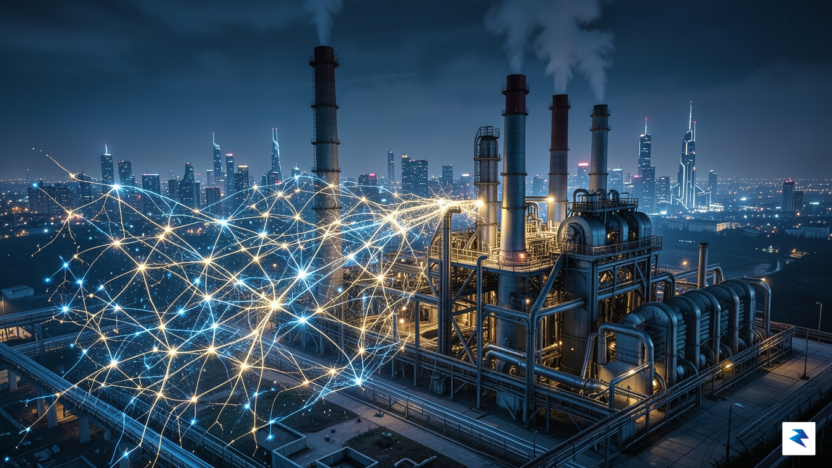
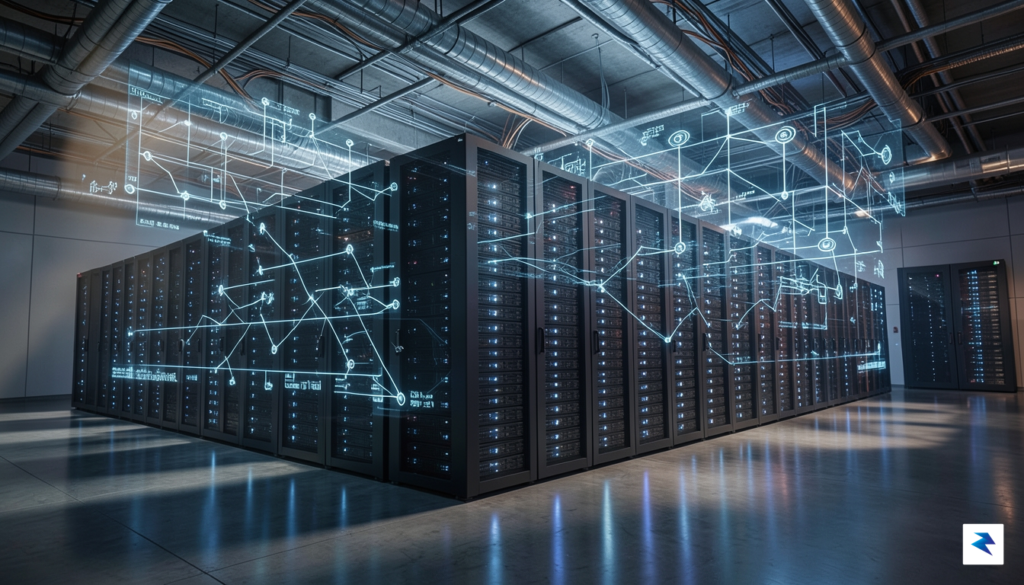
For the past few years, the narrative surrounding the artificial intelligence boom has been dominated by the scarcity of silicon. Headlines have fixated on the race to secure thousands of Nvidia H100 or B200 GPUs, treating the availability of specialized chips as the primary gatekeeper for innovation. However, as these clusters reach unprecedented scales, a far more stubborn and physical limitation is coming into sharp focus: the electrical grid. We have reached a point where the bottleneck of the intelligence revolution is no longer just the logic carved onto a wafer, but the raw, unadorned power required to keep those chips humming.
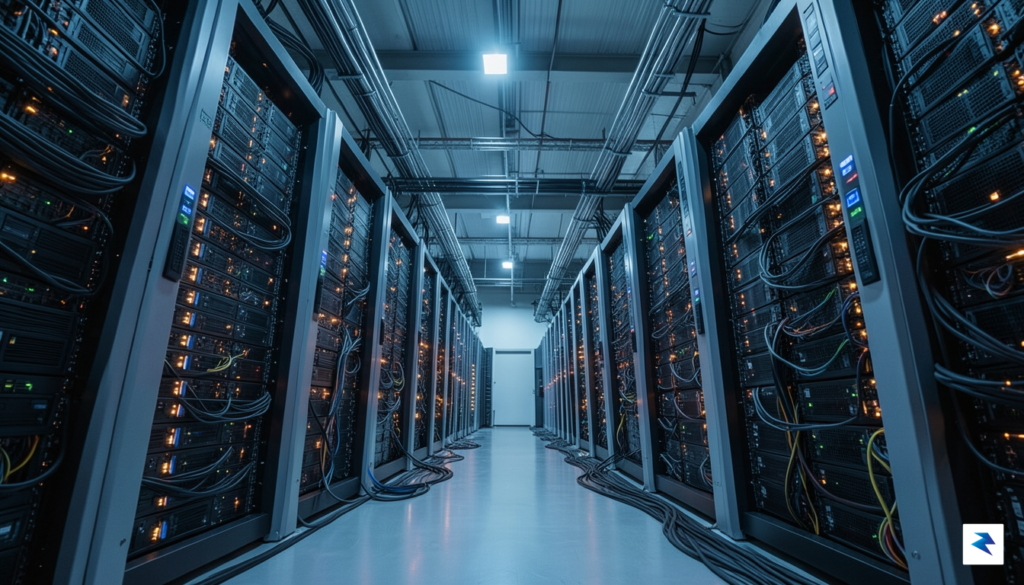
The fundamental shift lies in the sheer energy density demanded by modern AI data centers. Unlike traditional cloud workloads—which involve disparate, intermittent tasks like hosting websites or streaming video—large language model (LLM) training and inference represent a continuous, high-intensity draw. When you aggregate tens of thousands of GPUs into a single facility, you are essentially building a localized industrial plant that requires a constant, unwavering supply of electricity. These facilities are not merely “data centers” in the historical sense; they are massive energy sinks that push the thermal and electrical limits of the regional grids they plug into.
The transition to AI-scale computing marks a pivot from software-optimized efficiency to industrial-scale energy procurement. We are moving from a world where compute is measured in clock cycles to a world where it is measured in megawatts.
This transition presents a unique challenge for utility providers who have spent decades managing grids designed for predictable, distributed consumer demand. Training a state-of-the-art model requires weeks or months of non-stop computation, during which the hardware must operate at near-peak utilization to justify the immense capital expenditure. This creates a “baseload” demand that is remarkably difficult to satisfy with intermittent renewable sources alone, often forcing operators to rely on fossil-fuel-backed infrastructure to ensure the stability these sensitive silicon arrays require. Consequently, the progress of AI is now inextricably tethered to the slow, bureaucratic, and physically constrained process of upgrading high-voltage transmission lines and building new power generation facilities.
Ultimately, the dream of infinite intelligence is colliding with the harsh realities of thermodynamic and infrastructure limits. As companies push to scale models by another order of magnitude, the conversation is shifting from algorithmic breakthroughs to the logistics of transformers, substations, and grid capacity. If the power cannot reach the server, the GPU sits idle, regardless of how advanced the underlying model architecture might be. We are no longer just building software; we are attempting to rewire the physical foundation of our civilization to sustain the ravenous appetite of our own creations.
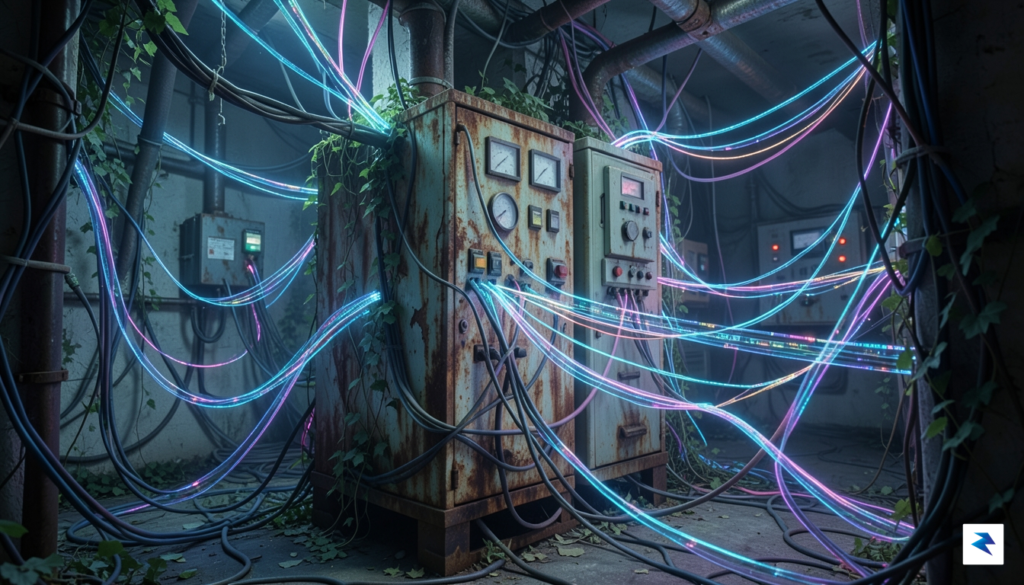
The electrical grid that powers modern civilization was engineered for a bygone era, designed around the predictable, decentralized demand of households and light manufacturing. For decades, utilities relied on a steady rhythm of consumption where peak loads were manageable and the flow of electricity was largely unidirectional. However, the rapid proliferation of massive, hyperscale data centers—which function as industrial-sized vacuum cleaners for electricity—has fundamentally shattered this architectural model. These facilities require constant, 24/7 power, often demanding hundreds of megawatts in a single location. This shift creates an acute “baseload” crisis, as our current infrastructure struggles to reconcile the high-intensity, unwavering needs of AI clusters with an energy mix that is increasingly reliant on intermittent renewable sources like wind and solar.
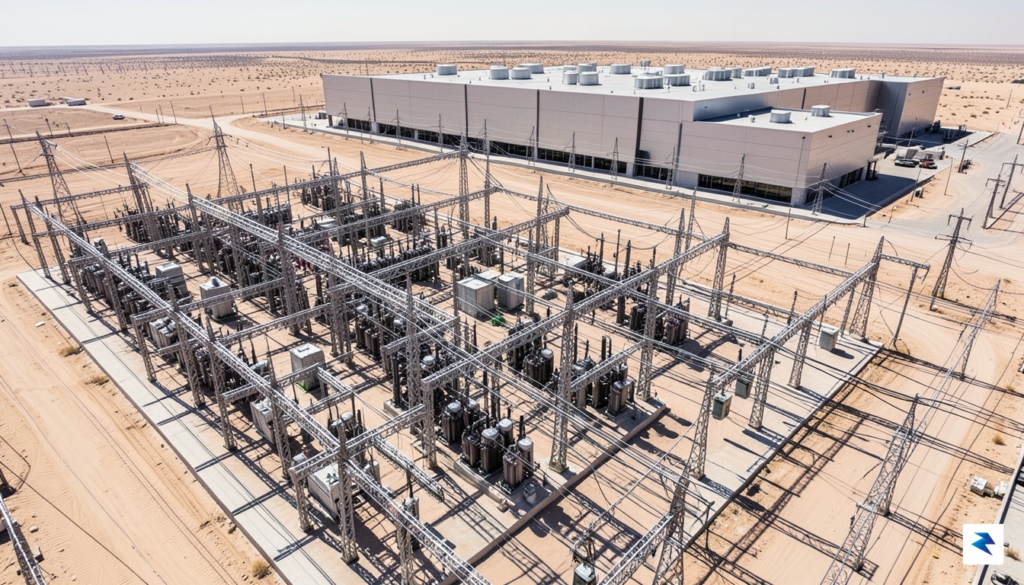
Beyond the mismatch in energy generation, the physical transmission network is hitting a hard ceiling. High-voltage transmission lines are currently operating near their thermal limits, and the process of upgrading or expanding these lines is notoriously slow, often bogged down by years of regulatory permitting and land-use disputes. Furthermore, the hardware at the heart of our distribution system is showing its age. Industrial transformers, the critical components that step down voltage for local use, are custom-built, heavy machinery with lead times that can span years. When a transformer fails or reaches capacity, there is no “off-the-shelf” solution; we are essentially trying to run a 21st-century digital revolution on hardware that was designed for the industrial capabilities of the mid-20th century.
The structural bottleneck isn’t just about generating more power; it is about the physical inability of our aging transmission network to move that power from the point of generation to the point of consumption without catastrophic thermal overload.
Because the centralized grid is proving too rigid to accommodate these concentrated industrial loads, localized power generation is rapidly shifting from an optional efficiency measure to a strategic necessity. Companies are increasingly exploring “behind-the-meter” solutions, such as microgrids, dedicated small modular reactors (SMRs), or massive battery energy storage systems located directly on-site at data center campuses. By bypassing the public grid, these entities hope to achieve the energy independence required to keep their GPUs running without triggering regional blackouts. However, this transition toward localized generation creates a new set of risks, as it threatens to hollow out the tax base that funds grid maintenance, potentially accelerating the decline of the very infrastructure upon which the rest of the economy still relies.
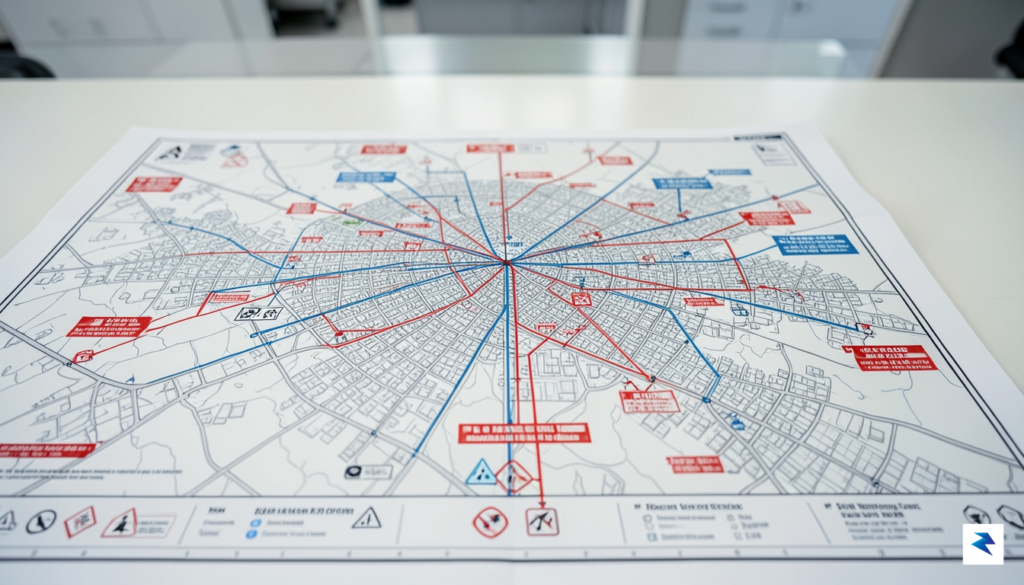
The ambition to power a global AI revolution is currently colliding with the sobering reality of twentieth-century infrastructure constraints. While tech giants are pouring billions into high-performance GPUs and massive data centers, the physical transmission lines required to feed these facilities remain stuck in a bureaucratic quagmire. Across the United States, the interconnection queue—the list of power projects waiting for approval to plug into the grid—has ballooned to historic proportions. Today, most proposed energy projects face wait times of several years, not because of a lack of capital or technology, but because the regulatory framework governing the grid was designed for a slower, more predictable era of utility development.
Environmental regulations and permitting requirements, while essential for protecting public interests and local ecosystems, have evolved into a formidable barrier to rapid deployment. Constructing a high-voltage transmission line is rarely a simple engineering challenge; it is a legal marathon. Developers must navigate a labyrinthine process involving federal impact studies, state-level environmental reviews, and the inevitable pushback from local communities—a phenomenon commonly known as NIMBY, or “Not In My Backyard.” When these legal hurdles are compounded by lengthy zoning disputes and fragmented jurisdiction across local, state, and federal lines, the timeline for a project can easily stretch from an urgent necessity to a multi-decade endeavor. Consequently, the grid is effectively frozen in place, unable to scale at the pace required by the exponential growth of AI.
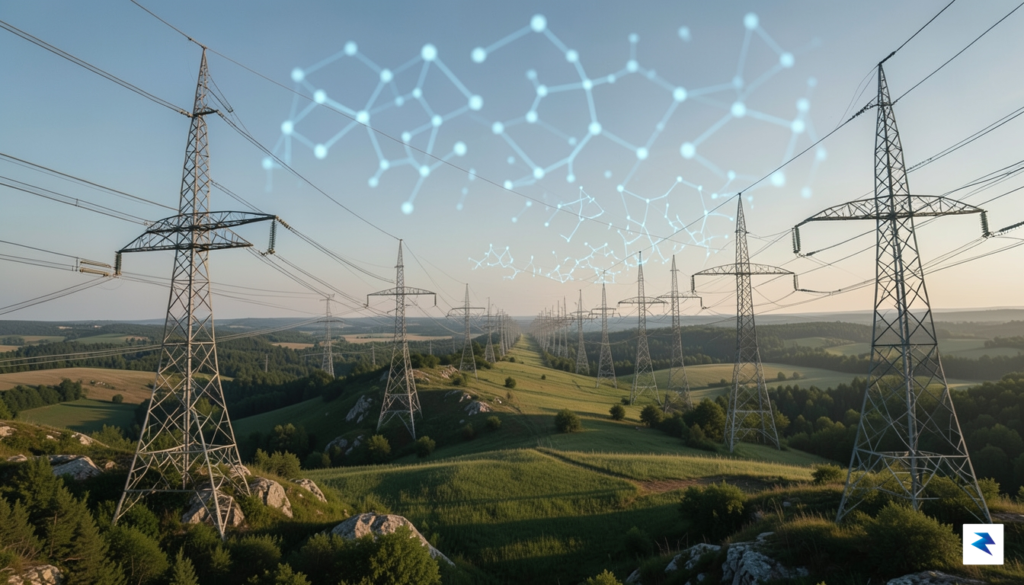
This systemic paralysis is pushing major AI companies toward a risky and potentially disruptive strategy: energy independence. Rather than waiting for public utilities to navigate the permitting quagmire, some tech leaders are exploring ways to bypass the traditional grid entirely by investing in private microgrids, dedicated nuclear small modular reactors (SMRs), or direct-to-generation power purchase agreements. While this might solve the immediate power needs of a specific data center, it creates a dangerous economic precedent. By decoupling themselves from the public utility model, these companies may inadvertently weaken the broader energy market, leading to higher costs for residential consumers and reducing the incentive for utility companies to modernize the common infrastructure that everyone relies upon.
The core tension lies in a paradox: the more AI companies seek to guarantee their own power security through private infrastructure, the less urgency exists to solve the grid-wide bottlenecks that are stifling the rest of the economy.
Ultimately, the physical deployment of power capacity has become the single most significant bottleneck for the future of artificial intelligence. Unless there is a massive overhaul of the regulatory landscape—streamlining the permitting process for transmission infrastructure without discarding environmental oversight—the AI buildout will remain tethered to the slow pace of legacy legal systems. We are currently witnessing a race between the near-instantaneous speed of software innovation and the glacial, grinding pace of industrial-age permitting, and for now, the grid is losing the race.
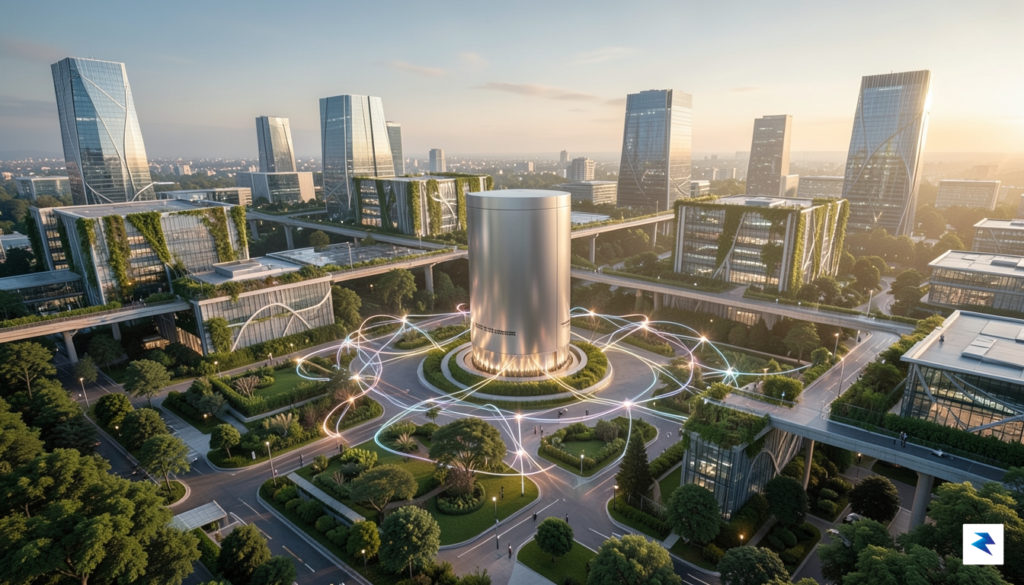
The growing chasm between energy supply and the computational demands of large-scale AI models is forcing a fundamental rethink of infrastructure. As the traditional power grid struggles to keep pace with the exponential scaling of data centers, the industry is increasingly looking toward self-contained, high-density power solutions. Small Modular Reactors (SMRs) have emerged as the frontrunners in this transition, offering the promise of carbon-free, baseload power that can be deployed directly at or near the site of large-scale AI clusters. Unlike traditional nuclear power plants, which require decades of planning and massive footprints, SMRs are designed for modular manufacturing and easier integration into industrial zones, providing a dedicated, consistent energy flow that frees AI firms from the volatility and congestion of the public grid.

Beyond generating new power, the future of infrastructure hinges on the ability to manage existing energy with unprecedented precision. We are seeing a shift toward localized microgrids that act as intelligent, autonomous ecosystems. By utilizing AI-driven grid optimization software, data centers can balance their own consumption patterns against real-time grid availability, effectively turning themselves into “prosumers” that can sell excess energy back to the community during peak demand or throttle non-essential training tasks during periods of grid stress. This shift transforms the data center from a passive consumer into an active participant in energy stability, creating a symbiotic relationship between the tech industry and municipal utility providers.
In the coming decade, the most successful AI companies will be those that treat energy as a primary constraint rather than an infinite utility. The firms that secure their own power sovereignty—through SMRs, onsite renewables, or advanced load-balancing—will be the only ones capable of scaling their models without hitting the proverbial ‘energy wall.’
Ultimately, the ‘energy-constrained’ era will act as a natural filter for the AI market. Companies that rely exclusively on the aging, overburdened public utility network will face mounting costs and unpredictable downtime, likely stalling their development cycles. In contrast, those that invest early in self-sustaining industrial ecosystems will achieve the computational reliability necessary for true innovation. As the industry matures, the distinction between a software company and an energy infrastructure company will continue to blur, marking a transition toward a future where the ability to power an AI model is just as important as the model’s architectural design itself.
You must be logged in to post a comment.