
Hands-On with AMD Ryzen AI Halo: The Future of Mobile Power?
The Evolution of Integrated Graphics: Meet Ryzen AI Halo For years, the term "integrated graphics" carried a specific, often limiting…

The journey from C++ to Rust represents more than just a language switch; it signifies a fundamental paradigm shift in how software is designed, built, and maintained. At its core, C++ offers unparalleled performance and control, but this power comes with a significant cognitive load, particularly concerning manual memory management, intricate pointer arithmetic, and the complexities of ensuring thread safety. Rust, conversely, introduces a revolutionary ownership and borrowing system that enforces memory safety and concurrency guarantees at compile time, eliminating entire classes of bugs that plague C++ applications. This shift from runtime vigilance to compile-time guarantees is profound, promising superior reliability and security, but it also means that simply translating C++ syntax directly into Rust is often insufficient; a deeper architectural rethinking is frequently required.
Historically, organizations grappling with the desire to modernize their extensive C++ codebases have faced an insurmountable hurdle: the prospect of manual migration. Imagine hundreds of thousands, or even millions, of lines of complex C++ code, meticulously crafted over decades, needing to be rewritten by hand. This undertaking is not merely time-consuming; it’s extraordinarily costly and fraught with peril. Each line rewritten manually introduces the potential for human error, leading to new bugs, regressions, and security vulnerabilities that can undermine the very benefits sought from the migration. The sheer scale and inherent complexity often lead to project stagnation, developer fatigue, and ultimately, the abandonment of modernization efforts, leaving critical systems anchored to older, less secure foundations.
The risks associated with manual rewrites extend far beyond simple bug introduction. Development teams attempting such a monumental task often experience significant productivity dips as they context-switch between understanding legacy C++ logic and implementing it idiomatically in Rust. This process is slow, expensive, and can introduce inconsistencies in the new Rust codebase, making future maintenance difficult. Moreover, the lack of a clear, automated translation path means that even if a manual rewrite is completed, verifying its correctness against the original C++ behavior becomes an exhaustive and often incomplete process, leaving lingering doubts about the integrity of the migrated system. This often transforms a modernization initiative into a costly, high-risk endeavor with an uncertain return on investment.
This is precisely where automated tooling emerges as an indispensable game-changer. Rather than embarking on a perilous manual rewrite, advanced source-to-source translation tools like Cpp2Rust provide a structured, systematic approach to migration. These tools are designed not just to convert syntax but to understand the underlying semantic logic of C++ code and translate it into safe, idiomatic Rust. By automating the bulk of this transformation, they drastically reduce the potential for human error, ensuring that the core business logic remains intact while simultaneously adapting it to Rust’s strict safety models, including its rigorous borrow checker. This automation ensures a consistent output quality and significantly accelerates the migration timeline, turning what was once an impossible dream into a tangible reality.
In essence, automated migration tools are the missing piece for organizations eager to leverage Rust’s unparalleled safety and performance without the prohibitive costs and risks of traditional manual rewrites. They act as a bridge, preserving the valuable intellectual property embedded in legacy C++ systems while propelling them into a modern, secure, and maintainable future. By streamlining the most challenging aspects of the transition, these tools empower companies to unlock the full potential of their tech stacks, fostering innovation and resilience in an ever-evolving technological landscape. The era of C++ to Rust migration is no longer a distant, daunting prospect but an achievable, strategic advantage thanks to intelligent automation.

Transitioning a legacy codebase from C++ to Rust is often perceived as a monumental task, frequently requiring thousands of hours of manual refactoring, careful memory management auditing, and syntax conversion. Cpp2Rust emerges as a sophisticated architectural bridge designed to alleviate this burden by automating the translation process. By leveraging advanced compiler infrastructure, the tool systematically decomposes C++ code into an intermediate representation before reconstructing it into idiomatic Rust. This approach transforms what was once a daunting, error-prone manual migration into a structured, repeatable pipeline that allows developers to focus on high-level logic rather than the tedious minutiae of language-specific syntax mapping.
The core of Cpp2Rust’s utility lies in its intelligent handling of both header and source files. When an engineer initiates a migration, the tool first parses the C++ header files to extract essential type definitions, class structures, and function signatures, ensuring that the interface contracts remain consistent during the transition. Once the headers are mapped, the tool proceeds to analyze the implementation details within the source files. By understanding the underlying semantics of C++ constructs—such as pointers, templates, and inheritance patterns—the tool maps these features to their closest, safest Rust equivalents. This architectural design ensures that the generated code is not merely a literal translation, but one that adheres to the strict borrow-checking rules and safety guarantees inherent to Rust.
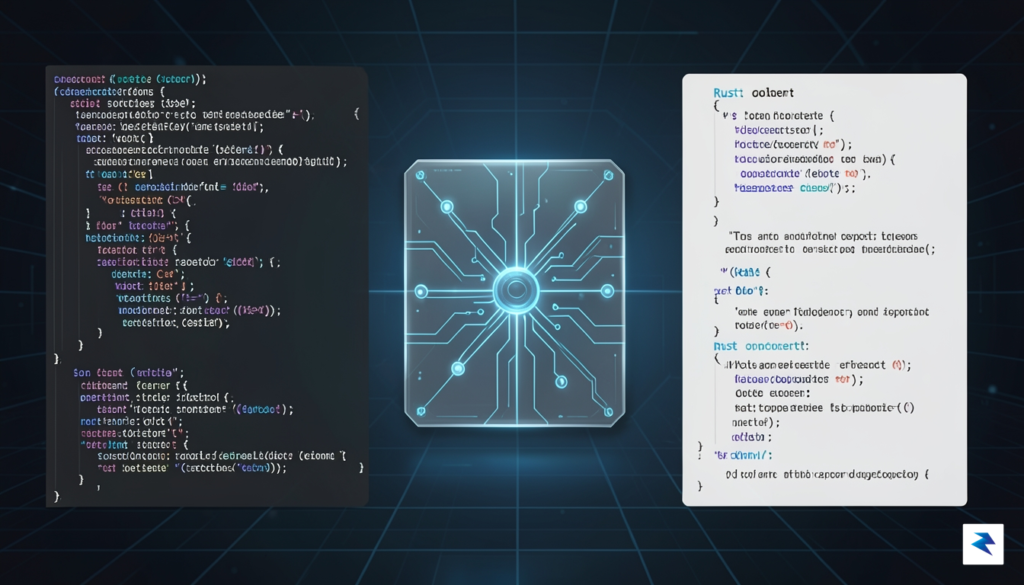
Integrating Cpp2Rust into a standard development workflow is designed to be as seamless as possible, fitting naturally into existing CI/CD pipelines. The process begins with the input phase, where developers provide the tool with their C++ source directory and necessary build configurations. Behind the scenes, the parser analyzes the abstract syntax tree of the C++ code, identifying memory-unsafe patterns that are the primary targets for Rust’s ownership model. This parsing phase is critical, as it acts as a diagnostic layer that flags potential issues before the code is ever rewritten into a new language.
The true value of automated migration lies in its ability to preserve functional parity while simultaneously upgrading the security posture of the codebase through Rust’s compile-time safety checks.
Following the initial analysis, the tool generates a draft version of the Rust project, complete with appropriate module structures and dependency management files. While no automated tool can currently achieve a 100% perfect transition for highly complex, non-idiomatic C++ code, Cpp2Rust significantly lowers the barrier to entry by handling the heavy lifting of boilerplate conversion. Developers are then empowered to spend their remaining time performing final code reviews and adjusting architecture to fully utilize Rust’s unique features, such as traits and enums, rather than wasting time on the mechanical aspects of translating lines of code.
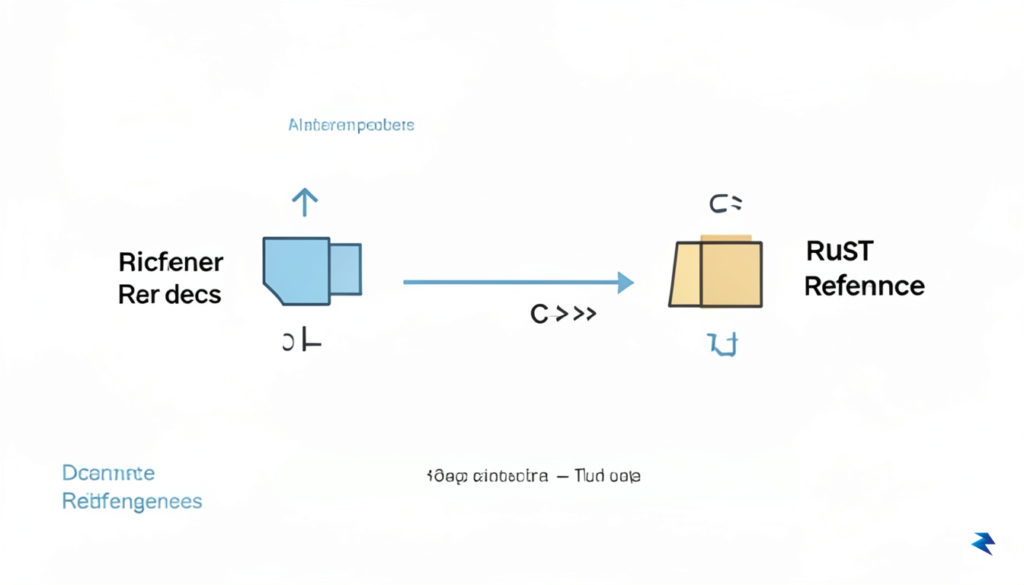
The core challenge in migrating from C++ to Rust lies in the fundamental disagreement between C++’s manual memory management and Rust’s strict, compile-time ownership model. Cpp2Rust navigates this by performing a deep static analysis of the source code, tracking the provenance of every pointer and reference to infer their intended lifetimes. When the tool encounters a raw pointer, it must determine whether the pointer signifies temporary access—which can be safely mapped to a Rust reference—or true ownership, which requires the creation of a smart pointer like Box or Rc. By reconstructing these implicit object lifecycles, the tool effectively builds a dependency graph that satisfies the borrow checker’s rigorous demands.
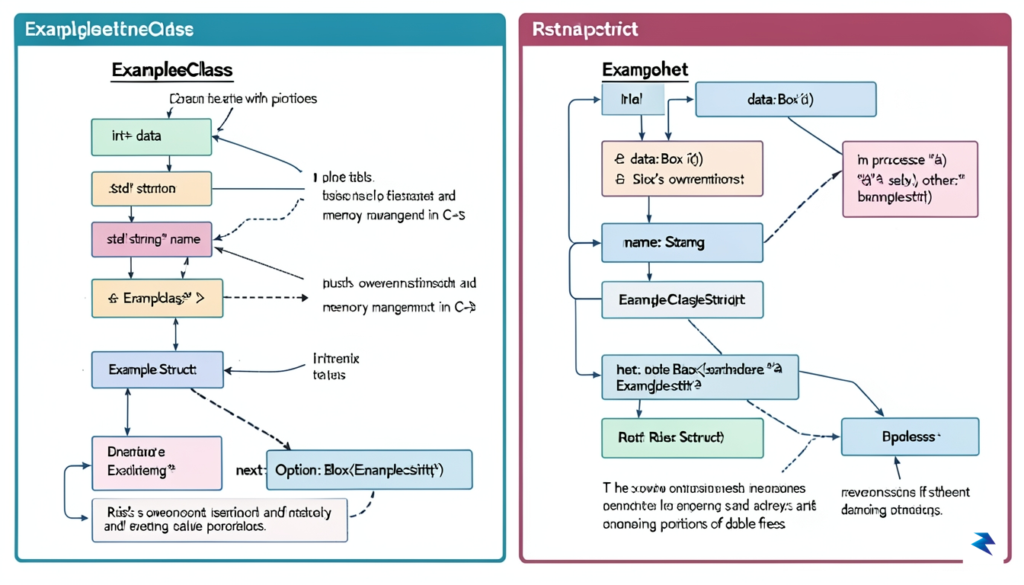
Translating C++ templates into Rust requires a sophisticated understanding of how generic code behaves across both languages. While C++ uses compile-time template instantiation, Rust relies on monomorphization via generics and trait bounds. Cpp2Rust approaches this by flattening the template hierarchy, transforming class methods into standalone implementations that utilize Rust’s impl blocks and trait system. When a C++ class contains complex member pointers, the tool often injects lifetime parameters into the resulting Rust struct. This ensures that the struct cannot outlive the data it references, mirroring the safety guarantees that C++ developers often maintain through discipline rather than compiler enforcement.
Beyond memory, the tool must reconcile the structural differences between C++ namespaces and Rust’s module system. In C++, namespaces act as a flat organizational tool, whereas Rust uses a hierarchical file-based module structure. Cpp2Rust handles this transition by mapping namespace scopes to logical Rust modules, ensuring that public and private visibility modifiers are preserved during the shift. This process involves:
public and private keywords into Rust’s pub and crate-local visibility scopes.impl blocks associated with the relevant data types.Drop trait implementations, ensuring that resource cleanup remains deterministic.The ultimate goal of this translation logic is not just to produce code that compiles, but to produce idiomatic Rust that leverages the language’s safety features without incurring unnecessary overhead or hidden runtime costs.
By automating these structural conversions, Cpp2Rust removes the manual burden of refactoring legacy codebases, allowing developers to focus on the business logic rather than the minutiae of reference counting or pointer validation. As the tool matures, its ability to infer complex lifetime relationships grows, increasingly bridging the gap between C++’s “trust the programmer” ethos and Rust’s “prove the safety” paradigm.

While automated migration tools like Cpp2Rust represent a monumental leap forward in developer productivity, it is essential to approach them as assistants rather than autonomous replacements for human expertise. No translation software currently exists that can seamlessly bridge the fundamental architectural differences between C++ and Rust without creating a degree of technical debt. When you rely solely on machine-generated output, you risk inheriting code that, while syntactically correct, fails to leverage Rust’s unique safety guarantees or performance idioms. Consequently, the transition process must be viewed as a collaborative effort where the tool handles the heavy lifting of boilerplate conversion, but the engineer provides the critical oversight necessary to ensure the final codebase is robust, maintainable, and truly idiomatic.

The primary challenge in automated translation lies in the vast disparity between how these two languages handle complex memory management and macro-heavy logic. C++ often relies on intricate, manual pointer arithmetic and custom lifecycle management that does not have a one-to-one equivalent in Rust’s strict ownership and borrowing model. When Cpp2Rust encounters these patterns, it may default to using unsafe blocks to satisfy the compiler, which effectively bypasses the very safety benefits you are migrating to Rust to achieve. Furthermore, complex C++ macros—which can perform arbitrary text manipulation—are notoriously difficult to map into Rust’s procedural or declarative macro systems, frequently resulting in code that is either unreadable or functionally divergent from the original intent.
Automation is a force multiplier, not a substitute for architectural design; the machine can translate the syntax, but only a developer can ensure the system’s soul remains intact.
To move beyond simple conversion, manual refactoring is an unavoidable necessity in the migration lifecycle. Once the initial translation is complete, your team must perform rigorous code reviews to identify these “unsafe” hotspots and determine if they can be refactored into idiomatic, safe Rust code. This phase often involves re-architecting parts of the application to better fit the borrow checker’s requirements, which may even lead to discovering latent bugs or inefficiencies that were previously hidden in the original C++ implementation. By treating the output of Cpp2Rust as a high-quality starting point rather than a final product, you ensure that your team is building a foundation of quality that will pay dividends in long-term stability and security.
Ultimately, the success of a migration project depends on a disciplined strategy that prioritizes comprehensive testing alongside human review. Automated tests should be written before the migration begins to establish a baseline of expected behavior, allowing you to verify that the translated code maintains parity with the original. By combining the speed of automated tooling with the discerning eye of an experienced engineer, you can effectively manage the limitations of the technology while reaping the immense benefits of the Rust ecosystem.

Transitioning a legacy codebase from C++ to Rust is a significant undertaking that requires more than just a powerful translation tool; it demands a disciplined, incremental strategy. Rather than attempting a high-risk “big bang” migration, which often leads to architectural regression and extended downtime, engineering teams should prioritize a modular approach. Start by identifying self-contained, low-dependency components—such as utility libraries or data parsing modules—that can be migrated, tested, and deployed in isolation. This strategy allows your team to gain confidence in the automated output while limiting the blast radius of any potential logic errors that might emerge during the conversion process.
Before initiating any translation, ensure that your existing C++ modules are wrapped in a robust suite of unit tests. These tests serve as your “ground truth,” guaranteeing that the functional behavior of the original code is preserved throughout the migration. If a module lacks sufficient test coverage, treat the implementation of those tests as the first phase of your migration project. Once the Rust code is generated, run your original test suite against the new implementation to verify parity. If discrepancies arise, use them as opportunities to refine your configuration settings within the translation tool, ensuring that the generated code aligns with your project’s specific memory safety and performance requirements.

A successful migration is not defined by the speed of the code conversion, but by the reliability and maintainability of the resulting Rust ecosystem.
During the transitional period, maintaining dual-build systems is an essential safety net for complex projects. By configuring your CI/CD pipeline to compile both C++ and Rust artifacts side-by-side, you can perform integration testing that validates how the newly translated Rust modules interact with the remaining legacy C++ code. This approach enables a gradual “strangler fig” pattern where individual components are swapped out one by one, allowing for continuous integration and immediate feedback cycles. Over time, as more modules are converted, you can slowly decommission the legacy build steps until the entire project is unified under a standard Rust toolchain.
To make the translation process repeatable and sustainable, integrate your automated tool directly into your development workflow rather than running it as a one-off task. By incorporating the translation and subsequent verification steps into your CI pipeline, you ensure that any manual changes made to the source C++ are tracked and reconciled during the next build cycle. This automation prevents “drift” between the two languages and encourages developers to view the translated Rust code as a first-class citizen in the codebase. Ultimately, by treating migration as a continuous, automated process rather than a static conversion event, you transform a daunting technical debt challenge into a structured path toward a safer, more performant software architecture.
You must be logged in to post a comment.