Microsoft Dynamics 365 Review: Is It the Right CRM for Your Business?
Understanding the Microsoft Dynamics 365 Ecosystem For many years, businesses struggled with fragmented software landscapes where customer…
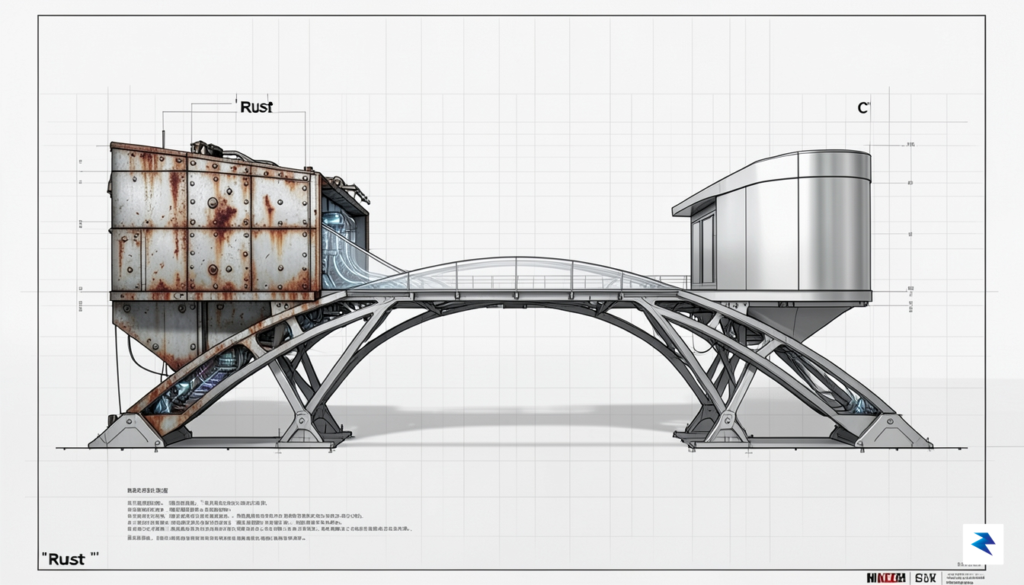
At its core, the project represents a daring intersection of modern language design and the bedrock of legacy computing. By attempting to mechanically translate the entirety of rustc—the complex, feature-rich compiler for the Rust programming language—into C, developers are effectively running an experiment in compiler portability and cross-platform longevity. This is not merely an exercise in code conversion; it is a systematic attempt to prove that the high-level abstractions and safety guarantees of Rust can be represented within the rigid, manual memory management constraints of the C ecosystem. By mapping Rust’s intricate trait system, ownership models, and borrow checker logic into functional C, the project seeks to decouple the compiler from the specific requirements of the Rust toolchain itself.

The primary value proposition for systems developers lies in the pursuit of ultimate cross-platform accessibility. While rustc is a marvel of modern engineering, its reliance on LLVM and specific hardware targets can occasionally limit its reach into highly specialized, resource-constrained, or legacy-bound environments. By transpiling the compiler into C, the Crustc project aims to make the Rust compiler effectively “portable to anything that has a C compiler.” This shift transforms the compiler from a heavy, specialized binary into a portable artifact that can be integrated into environments where deploying a full Rust toolchain would be technically impossible or architecturally prohibited, thereby bridging the gap between cutting-edge safety features and the most fundamental of computer architectures.
The goal of Crustc is not to replace Rust as a language, but to ensure that the logic of its compiler—and by extension, the ability to compile Rust—is as ubiquitous as the C language itself.
However, this endeavor carries profound philosophical implications regarding the evolution of software. It asks a provocative question: can the memory-safe guarantees that define modern Rust be preserved when expressed in the notoriously permissive environment of C? The translation process forces a rigorous audit of the compiler’s own logic, stripping away the comfort of automated safety and exposing the underlying mechanics of how a language processes itself. For developers in the ecosystem, this experiment serves as a stress test for the limits of language interoperability. It suggests a future where the choice between “safe” and “portable” is no longer a binary trade-off, but rather a spectrum where the logic of a modern language can be safely projected onto the foundational, time-tested reliability of C.
Translating the Rust compiler into C is not a matter of simple syntactic substitution; it represents a fundamental collision between two distinct philosophies of memory safety. Rust’s core value proposition—the borrow checker—enforces strict rules at compile time to ensure memory is never accessed after it has been freed or mutated in ways that lead to data races. In contrast, C operates on a model of manual memory management, where the burden of tracking ownership and lifecycle rests entirely on the developer. To bridge this gap, crustc must perform a sophisticated semantic transformation that effectively “compiles away” the borrow checker, replacing high-level abstractions with explicit, low-level operational patterns that reflect the final machine code behavior Rust would have produced.
The primary technical challenge lies in how crustc handles the concept of lifetimes. In Rust, a lifetime is a compile-time construct that the compiler uses to verify that references remain valid; however, C has no native equivalent. To resolve this, the transpilation process must track the scope of every variable and reference, often injecting manual free or drop calls at the exact points where a Rust variable would have gone out of scope. This requires the tool to maintain a complex internal graph of ownership, ensuring that every move, copy, and borrow operation in the original Rust source is mapped to a logically equivalent sequence of C operations that maintain memory integrity without relying on a garbage collector.
The core difficulty in transpiling Rust to C is that the borrow checker’s logic must be converted from a validation tool into a set of explicit instructions that the C compiler can execute without losing safety guarantees.
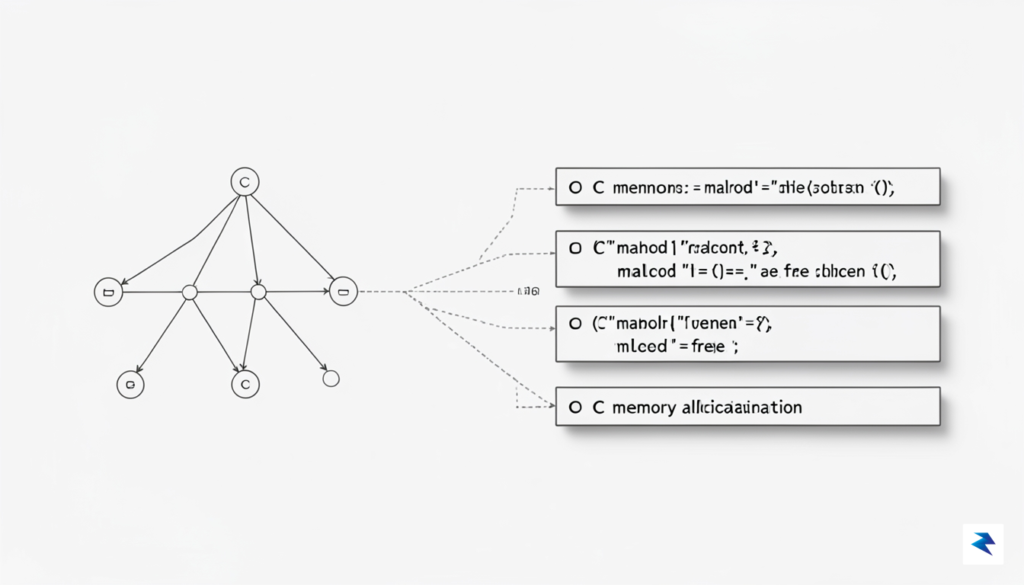
Developers working on crustc essentially face two divergent paths for managing these memory abstractions. One approach involves building a massive, heavy-duty runtime library in C that attempts to emulate Rust’s ownership semantics, including reference counting or runtime borrow tracking. While this makes the transpiled code safer, it introduces a significant performance overhead and complicates the binary footprint. Alternatively, the project can opt for an unsafe C pattern, where the transpiler emits raw pointer arithmetic and manual memory management code that mimics exactly what the Rust compiler would have emitted for the final machine code. This second approach is significantly more efficient but places immense pressure on the transpiler’s correctness; if the translation logic has even a single flaw, it can lead to classic C-style vulnerabilities like use-after-free errors or double-free bugs.
Ultimately, the success of crustc hinges on its ability to perform this transformation with absolute precision. By meticulously mapping Rust’s type-safe ownership model to C’s permissive pointer model, the tool effectively simulates the behavior of the borrow checker within the constraints of the C environment. This requires not only a deep understanding of how LLVM intermediate representation (IR) handles memory but also a rigorous method for ensuring that the transpiled C code does not deviate from the original Rust compiler’s intent. Through this process, crustc proves that even the most complex safety features of modern systems languages can be expressed in C, provided the translation logic is sufficiently robust and unforgiving.

The primary appeal of translating rustc into C lies in the democratization of the language’s core infrastructure. By decoupling the compiler from a pre-existing Rust environment, we effectively solve the “chicken-and-egg” problem inherent in bootstrapping a language on novel or legacy hardware. Currently, to bring Rust to a new processor architecture, one must first cross-compile the entire compiler suite, a task that is notoriously complex and resource-intensive. A C-based version of the compiler acts as a universal bridge, allowing developers to port the language to obscure embedded systems, specialized research hardware, or proprietary architectures where a mature Rust toolchain simply does not exist. By reducing the entry barrier to a standard C compiler, we open the door for Rust to penetrate computing environments that have historically been walled off from modern memory-safe languages.
Beyond simple portability, the translation of the compiler into C provides an unprecedented layer of long-term archival stability. Software ecosystems are notoriously fragile, and as dependencies evolve, the original source code of a compiler can become difficult to build against newer host systems. By converting the compiler’s logic into C—a language defined by its extreme stability and backward compatibility—we create a “frozen” snapshot of the compiler’s intelligence that remains buildable for decades to come. This is not merely an exercise in preservation; it ensures that the core logic of the Rust compiler can be audited, verified, and re-compiled using the most fundamental tools in the computing stack, shielding the language’s evolution from the shifting sands of modern build-system entropy.
“Translating
rustcinto C transforms the compiler from a complex, high-level dependency into a portable asset, ensuring that the guarantee of memory safety can be extended to virtually any computing platform capable of executing machine code.”
Furthermore, the “write once, compile everywhere” potential of C as an intermediate representation cannot be overstated. In high-stakes environments—such as aerospace, medical device engineering, or critical infrastructure—the ability to verify the entire build chain is often a legal or safety requirement. When the compiler itself is represented as portable C, teams can perform deep static analysis and formal verification on the compiler’s own source code using established C-centric toolchains. This level of transparency simplifies the certification process for safety-critical systems, as developers no longer need to trust a black-box binary blob provided by a third party. Instead, they gain the power to inspect, compile, and validate the very tool that produces their software, reinforcing the promise of reliability that Rust aims to provide at the application level.

Automated transpilation—the process of programmatically converting code from one language to another—is often viewed as a technological shortcut, but it frequently introduces a profound readability gap that can paralyze long-term maintenance. When rustc is translated into C, the resulting codebase often loses the high-level semantic abstractions that define modern Rust, such as sophisticated ownership models, lifetimes, and trait-based polymorphism. Instead, these concepts are often flattened into complex pointer arithmetic, explicit memory management, and manually reconstructed dispatch tables. For a developer accustomed to the safety guarantees of Rust, the resulting C code can appear alien and opaque, making it significantly harder to reason about edge cases or implement new features without inadvertently breaking the fragile scaffolding created by the transpiler.
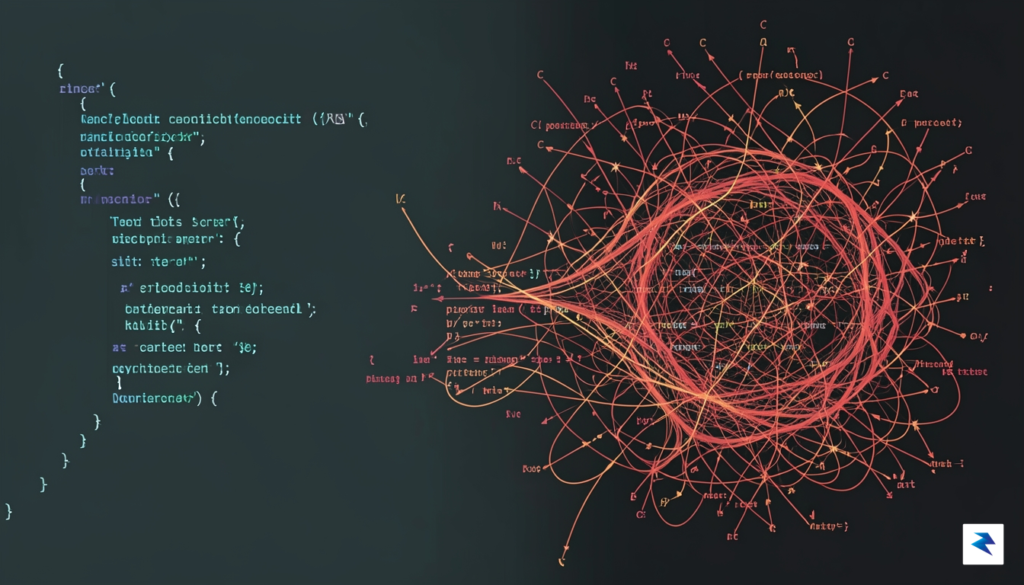
The challenge of upstream synchronization further complicates the viability of a transpiled compiler. The official Rust compiler undergoes a rapid, relentless release cycle, with constant refactoring, feature additions, and performance optimizations occurring daily. If the C version of rustc is a static snapshot, it quickly becomes obsolete; however, if it attempts to track the original repository, it faces the daunting task of re-running the transpilation pipeline for every pull request. This requires a near-perfect automated toolchain that can handle non-trivial code changes without introducing regressions. Any divergence between the source and the target codebase risks creating a “forking nightmare,” where security patches and critical bug fixes in the upstream version cannot be easily ported back to the C implementation.
The core risk of automated translation is the introduction of silent, semantic bugs that are invisible to traditional testing suites but lethal to compiler reliability.
Furthermore, we must address the persistent risk of silent bugs injected during the transformation process. Transpilers are complex software systems themselves, and they can occasionally misinterpret the nuances of Rust’s borrow checker or its complex macro expansion system. While the transpiled code might compile and run successfully, it may harbor subtle memory safety vulnerabilities or undefined behaviors that were completely absent in the original Rust source. Because the generated C code is often structurally divorced from the original logic, debugging these issues requires developers to possess deep expertise in both languages—a rare combination that makes troubleshooting an incredibly resource-intensive endeavor. Ultimately, while translating rustc into C may offer theoretical portability to legacy environments, the cost of maintaining such a complex, auto-generated artifact often outweighs the benefits of the original goal.

Whether or not the crustc project ever achieves status as a mainstream tool for daily development, its existence serves as a definitive litmus test for the future of language interoperability. By attempting the wholesale translation of the Rust compiler into C, the project pushes past the traditional, often fragile boundaries of Foreign Function Interfaces (FFI). For decades, interoperability has been limited to passing pointers and managing ABI compatibility at the edges of a program; however, crustc demonstrates a pivot toward deeper, structural translation where the semantic richness of one language is mapped onto the primitives of another. This transition signals a potential shift in compiler theory, suggesting that the barrier between high-level safety guarantees and low-level execution models is becoming increasingly porous.
The broader implications for both the Rust and C communities are profound, as this experiment challenges the assumption that languages must exist in isolated silos. When we translate complex, borrow-checked logic into C, we are forced to confront the mechanical reality of how memory safety is enforced, effectively creating a bridge for developers who might be entrenched in legacy environments but crave modern safety features. This process does more than just move code; it creates a common language for debugging and architectural reasoning. If we can reliably map the complex state machines of a modern compiler into C, we essentially prove that the “safety tax” of newer languages can be audited, understood, and perhaps even adopted incrementally by those who have historically been skeptical of high-level abstractions.
Radical experimentation in open-source software is rarely about the immediate utility of the end product; it is about mapping the boundaries of the possible so that future generations can build upon the discoveries made in the fringes.
Ultimately, the value of this endeavor lies in its audacity. By attempting to translate rustc, the project provides a masterclass in the technical limitations and structural similarities between two of the most important languages in existence. It forces us to ask whether our current tools are truly rigid, or if we have simply lacked the ambition to bridge their gaps through advanced static analysis and automated refactoring. As systems programming continues to evolve, the lessons learned from this translation will likely inform the next generation of transpilers, cross-language linkers, and formal verification tools, proving that the most meaningful progress often happens when engineers refuse to accept the status quo of language incompatibility.
You must be logged in to post a comment.